


In October, Russia lost up to 9 Su-34s, while its production capacity is up to 18 aircraft per year
Kyiv • UNN
Ukraine destroyed or damaged up to nine Su-34s, while the Russian Federation produces 14–18 such aircraft per year. The Russian Federation’s total aviation losses amounted to 14 aircraft.

In October, Ukraine’s Defense Forces destroyed or damaged as many Russian Su-34 fighter-bombers as Russia’s defense industry is capable of producing in six months. Overall, Russian aviation lost 14 aircraft last month, UNN writes.
Details
As reported by the Main Directorate of Intelligence of the Ministry of Defense of Ukraine in response to a request from UNN, the Russian Aerospace Forces currently have around 140 Su-34 fighter-bombers of various modifications (the basic version and the modernized Su-34M and Su-34NVO versions).
Since the beginning of the full-scale war, losses of this aircraft fleet have amounted to approximately 43 aircraft destroyed and 7 damaged (taking into account the data announced by Ukrainian President Volodymyr Zelenskyy on October 15)
According to intelligence, Russia’s defense industry has the capacity to produce up to 14–18 aircraft per year. Production is concentrated at the V. P. Chkalov Novosibirsk Aircraft Plant (part of Russia’s United Aircraft Corporation), which focuses on producing modernized Su-34Ms with improved onboard systems and expanded capabilities for using air weapons.
In addition to the domestic market, the plant operates for export—in particular, it is fulfilling a contract with Algeria to supply the Su-34ME modification.
Intelligence also reported that between October 2025 and October 2026, the Russian Aerospace Forces received up to 11 new fighter-bombers. Most of the aircraft delivered were the upgraded Su-34M version.
Losses in October
On October 2, the Security Service of Ukraine successfully attacked the Khanskaya military airfield in Russia’s Republic of Adygea, approximately 500 km from Ukraine.
In particular, according to available information, drones operated by the Alfa Special Operations Center of the SBU struck a Russian Su-34 fighter-bomber, as well as a Su-35 multirole fighter.
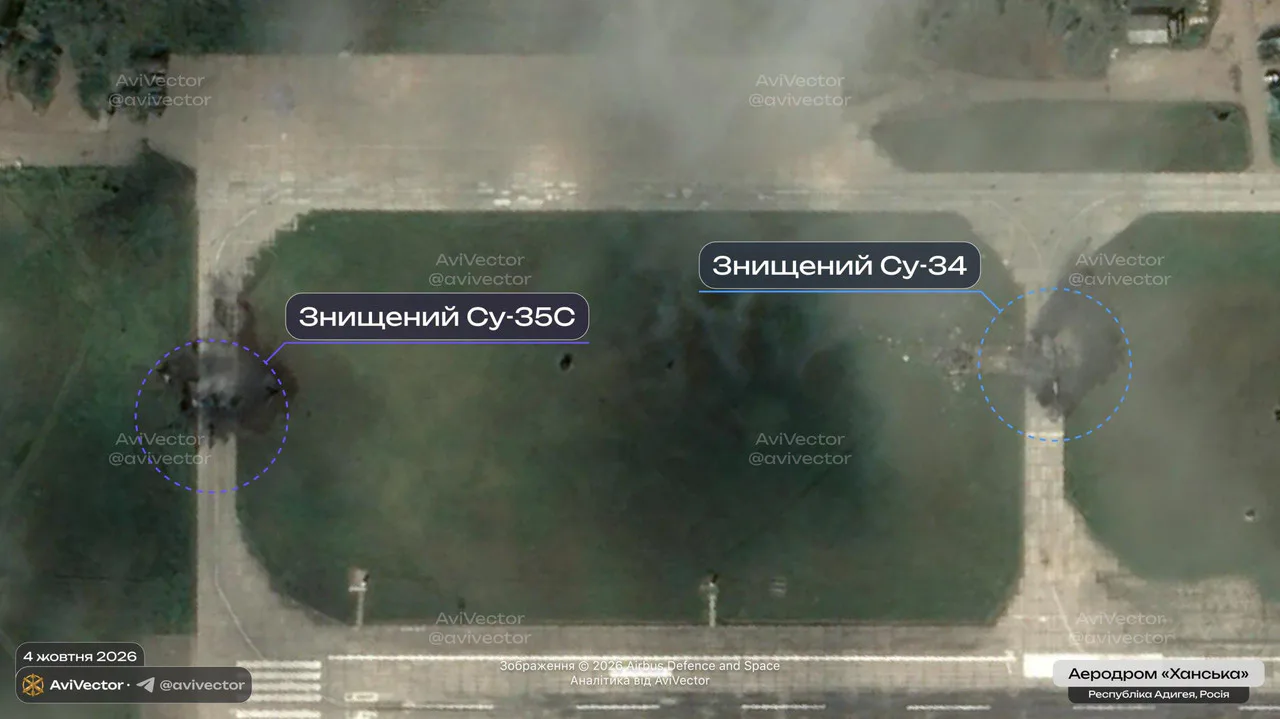
The SBU struck two enemy fighter jets at an airfield in Adygea04.10.26, 16:58 • 24073 views
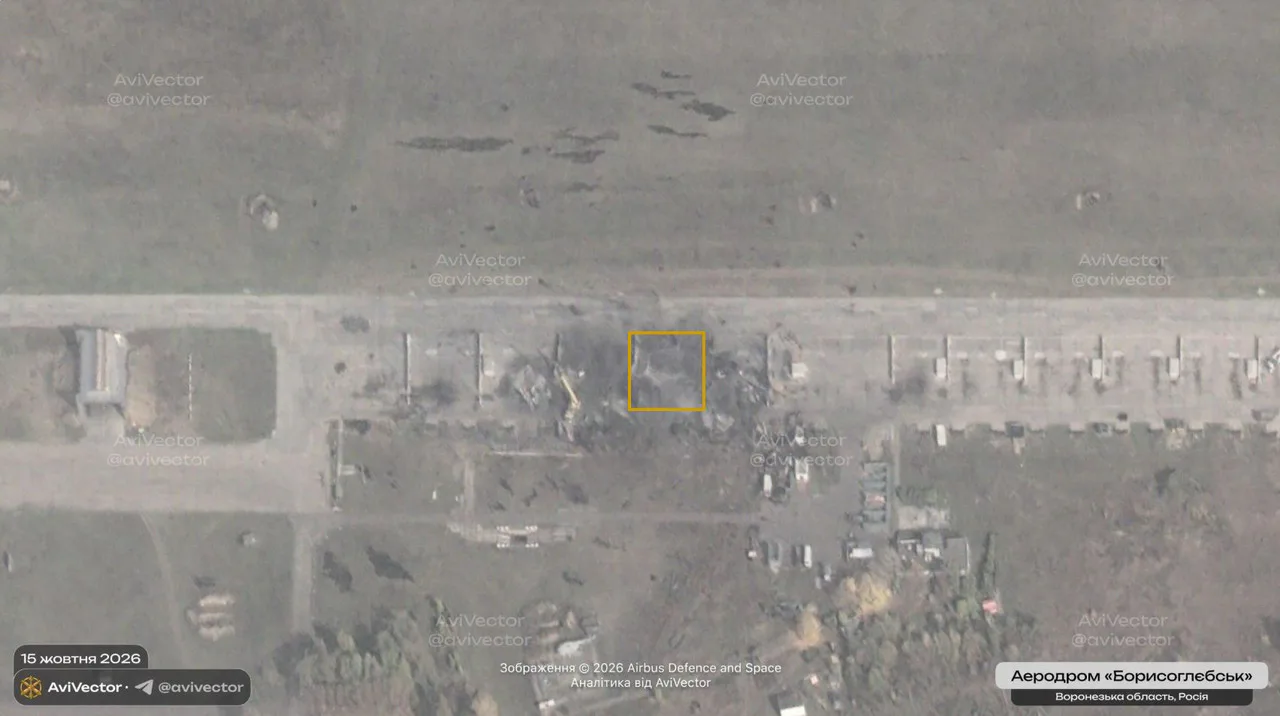
On October 15, the Ukrainian Navy struck six Su-34 aircraft at Borysoglebsk airport.
During the night of October 15, the Ukrainian Navy, using the Neptune coastal missile system, struck the Borysoglebsk military airfield in Russia’s Voronezh Region. As a result of the strike, six Su-34M bombers were destroyed. Technical equipment used to support aviation flights was also destroyed, while secondary detonations and a fire were recorded on the airfield’s territory
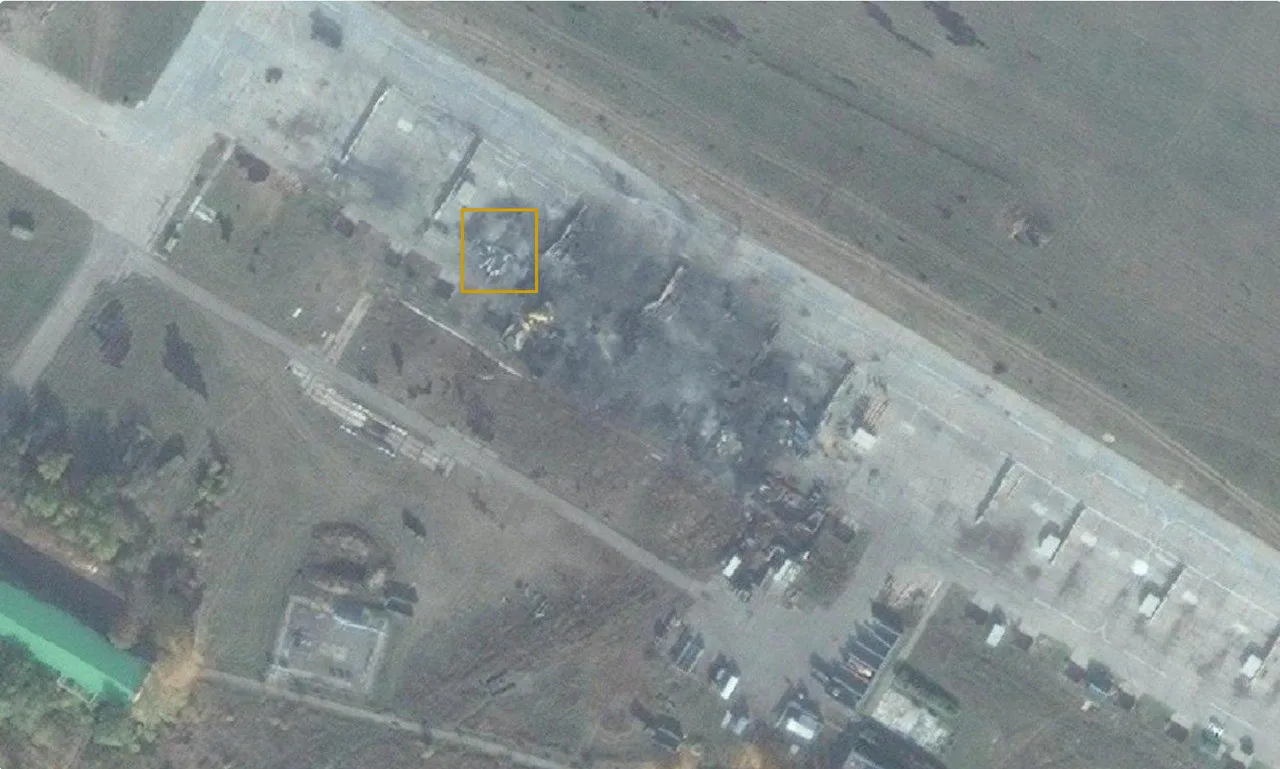
However, Ukrainian President Volodymyr Zelenskyy clarified that four Su-34 aircraft had been destroyed and two Su-34 aircraft had been hit.
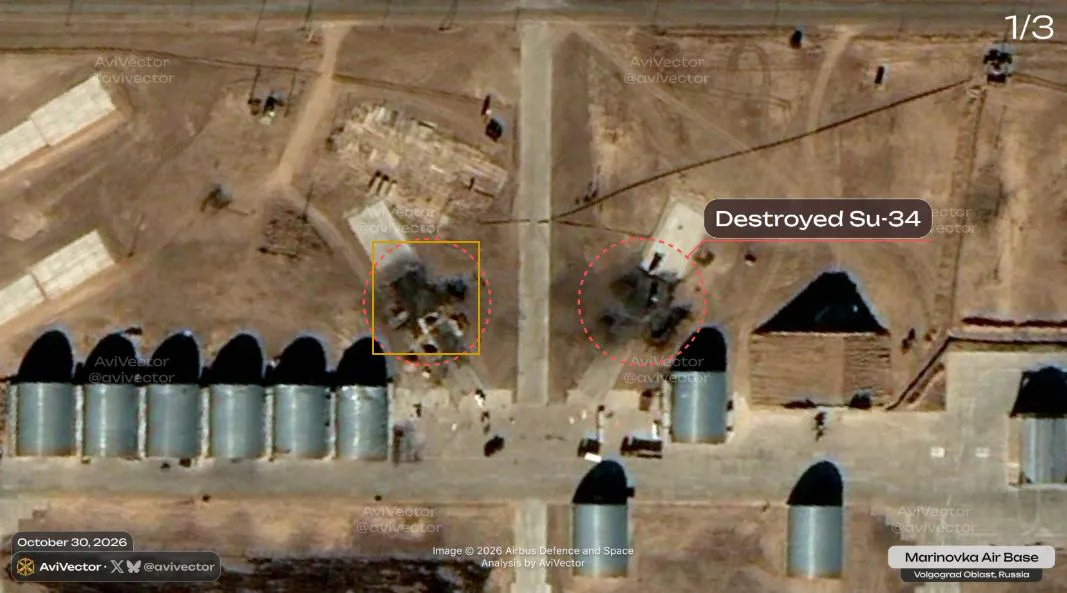
On October 29, for the second time in a month, the Ukrainian Navy used the "long Neptune" to destroy two Russian Su-34s at the 11th Mixed Aviation Regiment in the Volgograd Region.
Earlier, UNN reported that Su-34 and Su-34M aircraft (the deeply modernized version) are the primary carriers of guided aerial bombs and precision-guided missiles used by the enemy to attack Ukraine’s frontline regions.
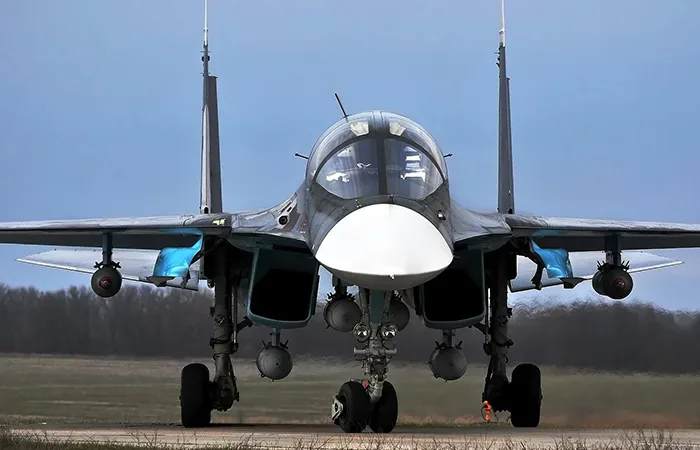
These are the aircraft that "terrorize" Ukraine’s frontline regions. Thus, a bomber can carry high-explosive bombs of various calibers—FAB-250, FAB-500, FAB-1500, and FAB-3000 with the UMPK, as well as KAB-500 and KAB-1500 bombs.
It can also carry air-to-surface missiles such as the Kh-38, Kh-29, Kh-59MK2, and Kh-69, as well as anti-radiation missiles: Kh-31P / Kh-31PD, and anti-ship missiles: Kh-31A and Kh-35U.
In addition, the bomber can be equipped with "self-defense" missiles, that is, air-to-air missiles, including medium-/long-range missiles with active radar homing, such as the R-77, and short-range missiles with infrared homing heads for close-range maneuvering combat, such as the R-73.
In addition to Su-34 aircraft, Russia also lost a Su-35 in October, as previously noted, as well as a Su-30 during a training flight in the Kaliningrad Region.
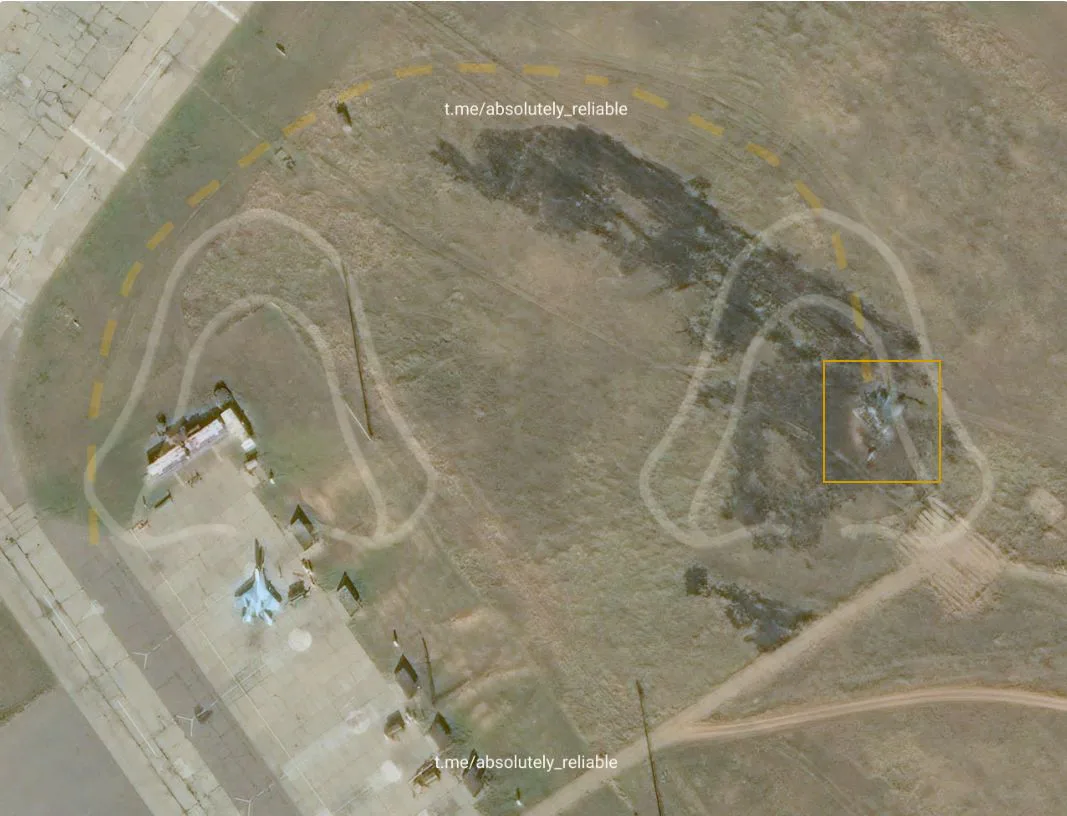
Moreover, on October 29, 2026, the aggressor state’s newest multirole fighter, the Su-57, exploded on the grounds of the Russian military airfield "Akhtubinsk"—this happened while the engines were being started. The cost of the combat aircraft is estimated at approximately $150 million.
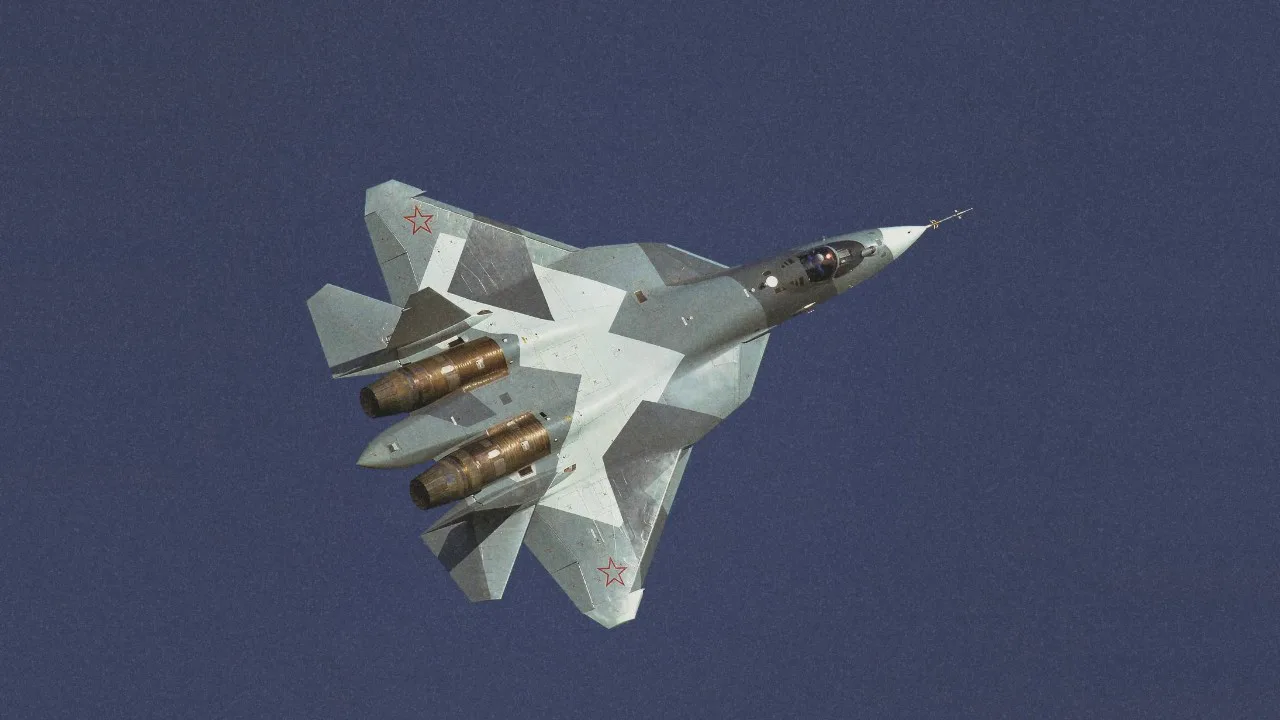
As the Main Intelligence Directorate reported, the Su-57 is equipped with an AL-41F1 bypass turbojet aircraft engine (the so-called "Product 117"). One of the reasons engines of this type may explode or suffer catastrophic destruction is fuel of inadequate quality.
It is also worth noting that, according to OSINT analysts, Russia lost six helicopters. Thus, on October 1, while repelling a massive drone attack, a Russian Su-35 fighter struck a helicopter. The fighter’s crew mistakenly identified the Mi-8 helicopter as an enemy drone and opened fire to destroy it.
On October 30, during a raid on enemy logistics, a crew operating Hornet kamikaze UAVs from the SKYFOM assault wing platoon of the Battalion of Unmanned Systems detected an enemy Mi-8 and flew to intercept it. The adversary was forced to change its direction of movement in the sky.
"The helicopter’s cruising speed exceeded that of the attack drones, but as soon as the Russian aircraft landed, the soldiers struck the area around the fuel tanks. The second Hornet successfully finished off the target. As a result of the attack, the military helicopter used by the Russian army to transport personnel and cargo, conduct evacuations, and provide fire support burned to the ground—which we congratulate them on," the Third Army Corps reported.
Thus, Russia’s aviation losses in October amounted to 14 pieces of equipment worth a total of nearly $600–700 million. October became one of the record months in terms of Russian aviation losses.
According to the General Staff of the Armed Forces of Ukraine, as of November 3, Russia had lost 452 aircraft and 356 helicopters since the start of the full-scale invasion. However, OSINT analysts, based on verified data, confirm losses of 200 aircraft and 185 helicopters.
The enemy’s most intense aviation losses occurred in the first weeks of the war, when Ukraine’s Air Force and MANPADS teams shot down up to 5–10 aerial targets per day during Russia’s attempts to establish air superiority.
Thus, in March 2022, Ukrainian troops shot down two helicopters with MANPADS as they were flying toward the airfield in Hostomel.
February 2024 became one of the most productive periods for Ukrainian air defense. In less than two weeks, 13 Russian combat aircraft were destroyed (including 10 Su-34s, two Su-35s, and one A-50 AEW&C aircraft).
June 2025 should also not be forgotten, when the Security Service of Ukraine carried out the swift "Spiderweb" operation, during which approximately 40 Russian strategic aviation aircraft were destroyed or struck.