


An Incredible Volcanic Eruption Discovered in the Deepest Part of the Ocean
Kyiv • UNN
Fragments from an explosive eruption were discovered in the Challenger Deep at a depth of more than 6,000 meters. This is the deepest such discovery in history.

An underwater mission to the deepest ocean trench on Earth made a shocking discovery: the deepest pyroclastic volcanic flow ever found on the planet, in a place where geologists did not expect to see any volcanic activity. UNN reports this, citing Live Science.
Details
Evidence of a powerful underwater eruption was found at a depth of 6,148 meters below the ocean surface, on the walls of Challenger Deep, the deepest point of the Mariana Trench and the deepest part of the ocean. It was a "complete surprise," said Robert Stern, professor emeritus of geological sciences at the University of Texas at Dallas and the lead author of a new study describing the discovery.
As National Geographic notes, remnants of an explosive volcanic eruption—"something new and strange" in this underwater world—were discovered with the help of robotic submersibles. As reported in the journal Frontiers in Earth Science, these strange rocky fragments are the deepest deposits from an explosive volcanic eruption ever discovered.
And that is something of a problem, because, in theory, they should not exist, the publication notes.
Volcanic activity on the seafloor is not unusual. In fact, this phenomenon is widespread: chains of volcanic islands and seamounts are found in the middle of tectonic plates, while mid-ocean ridges contain numerous lava vents. But explosive volcanism should occur only at shallower depths. It should not appear in the Mariana Trench, because the extreme weight of the ocean above it should suppress it.
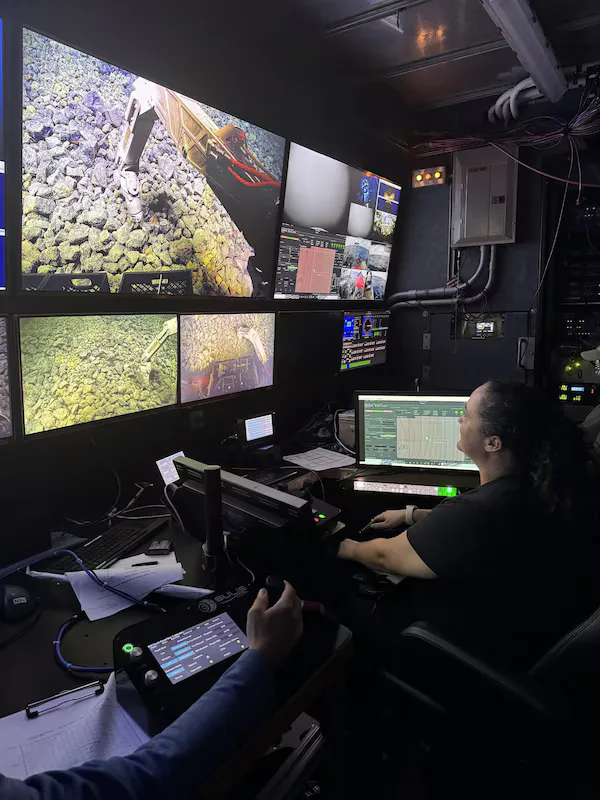
Down there, if a volcano erupts, it "physically cannot explode and eject anything," Robert Stern said. And yet there it was: a robotic explorer discovered a jagged accumulation of fragments at a depth of more than 6,000 meters, formed as a result of some kind of volcanic explosion.
"This study has touched upon a true frontier of volcanology. How deep magma can erupt explosively or, at the very least, fragment is truly an open question," said Jonas Prehn, a marine geophysicist and volcanologist at the National Oceanography Centre in England, who was not involved in the new study. Deposits from explosive eruptions in deep-sea areas are extremely rare and had never before been found at such a depth. In 2008, evidence of explosive volcanism was discovered at a depth of more than 3,900 meters below sea level—almost half the depth of the new record-holder. "That is precisely why this discovery is so exciting," Prehn added. It "raises many questions to which we do not yet have definitive answers."
Challenger Deep is part of the Mariana Trench, a depression in the western Pacific Ocean. The trench formed when the Pacific tectonic plate began sinking (or "subducting") beneath the Philippine Sea Plate about 52 million years ago. Challenger Deep itself is not a single point but a group of three separate depressions known as basins, with the deepest point lying deeper than the height of Mount Everest.
The pressure there is approximately a thousand times higher than at sea level. This makes visiting the trench difficult and, if you are human, extremely dangerous. Only a few dozen people have made the journey and survived. The first people to travel to the Mariana Trench were Don Walsh and Jacques Piccard in 1960. National Geographic explorer James Cameron accomplished the same feat alone in 2012.