









Does Ukrainian weaponry have an advantage over Western weaponry, and what does battle-proven have to do with it
Kyiv • UNN
Ukrainian weaponry is being tested in a real war and is rapidly adapting to electronic warfare, air defense, and the enemy’s new tactics. Why battle-proven is becoming a competitive advantage for Ukraine’s defense industry in Europe.

Europe is investing hundreds of billions of euros in rearmament, but money cannot buy the experience of modern warfare or the daily adaptation of weapons to electronic warfare, air defense, and the enemy’s new tactics. UNN examined what the main advantage of Ukraine’s battle-proven technology is.
Details
European preparations for war extend beyond military headquarters. As European Commission President Ursula von der Leyen noted, countries must be prepared for hybrid Russian attacks. Polish Prime Minister Donald Tusk said that the country’s intelligence indicates that Russia is preparing attacks using drones or missiles against NATO countries that support Ukraine. Germany’s Foreign Ministry, for its part, speaks of a "long series" of Russian attempts to destabilize, intimidate, and attack Europe.
In Denmark, the situation escalated into a dangerous incident: in September, a Russian warship fired signal flares toward a Danish military helicopter that was photographing the vessel in international waters. Copenhagen subsequently accelerated the next military aid package for Ukraine.
At the same time, at the end of August, NATO said that it did not currently see a threat of an actual attack. However, countries on the Alliance’s eastern flank are investing increasingly more in preparations for a potential war.
And these preparations are becoming increasingly concrete. Germany is working on a scenario in which, in wartime, it may need to treat up to one thousand wounded soldiers per day, and is preparing evacuations by rail, bus, and aircraft. In July, Poland held nationwide ALARM-26 exercises to test warning systems and sirens. Ten Northern European and Baltic countries have already agreed to jointly plan the cross-border evacuation of civilians in the event of a major crisis or war. Lithuania, meanwhile, is building a fortified power substation near the Suwałki Gap, whose key equipment will be protected from potential drone strikes by reinforced concrete structures.
Germany and Sweden conduct the Silver Wotan exercise on Gotland20.09.26, 20:28 • 4462 views
Clearly, Europe is preparing for a new security reality and is ready to invest hundreds of billions of euros in it. With this money, it is possible to build factories, purchase equipment, expand armies and ammunition production, and fund new developments. But there is something that cannot be purchased even with an unlimited budget—the experience of a real high-intensity war.
Ukraine already has this experience. And this concerns not only the military, who have been fighting against one of the world’s largest arsenals for more than four years, but also Ukrainian weapons manufacturers.
Battle-proven
Their developments are tested every day not on training grounds, but under conditions of real confrontation with Russian electronic warfare, air defense, and reconnaissance, as well as the enemy’s constantly changing tactics. It is this experience that today forms one of the main competitive advantages of Ukrainian defence tech—being battle-proven.
Andrii Yakovchuk, co-founder of Fly Group Ukraine, TM Contra Dron, explains: the simplest indicator of genuine combat hardening is a repeat request for the weapon from military personnel.
Genuine battle-proven status is determined not by a mention in a press release of "testing at the front," but by a steady, organic demand from the military themselves—when units systematically come back with the request: "Give us more of this exact product"
Moreover, a weapon must not only perform its stated function, but also operate within a real combat ecosystem: integrate with situational-awareness and communications systems, withstand field conditions, be quick to repair, and have a cost appropriate for a war of attrition.
That is why Ukrainian experience today consists not only of data on the range, accuracy, or speed of weapons. It includes thousands of minor factors that cannot be fully modeled at a test range: operation under real electronic warfare, the enemy changing frequencies, weather conditions, operator errors, repairs in field workshops, the interaction of different systems, and the constant emergence of new countermeasures.
How the Front Changes Weapons
Anton Zemlianyi, a senior analyst at the Ukrainian Center for Security and Cooperation, identifies the main advantage of Ukraine’s defense industry as the extremely short distance between a problem at the front and the engineer tasked with solving it.
When we take a product and test it in real combat conditions—in countering electronic warfare, air defense, or other enemy capabilities—we get the shortest possible link along the line of "manufacturer - front - response - feedback - manufacturer again." Based on combat experience, Ukrainian manufacturers can constantly strengthen our combat capabilities and improve their weapons
The problem for the conventional defense industry is that the pace of technological change in modern warfare has in some cases become faster than the traditional weapons development and procurement cycle.
According to Zemlianyi, for certain systems, especially unmanned vehicles, the relevance of a specific technical solution may be lost within as little as three to six months.
A modernization cycle is constantly taking place: a countermeasure appears, and the weapon must be modernized again. Within this cycle, Ukrainian capabilities are improved and their resilience to countermeasures increases
As an example, he cited the American Switchblade. When these unmanned vehicles appeared in Ukraine, they were among the technologically advanced tactical strike systems in their class. However, according to Zemlianyi, the real war revealed problems, particularly with navigation. This is precisely where the line lies between a well-designed product and a system capable of surviving in a technological race with the enemy.
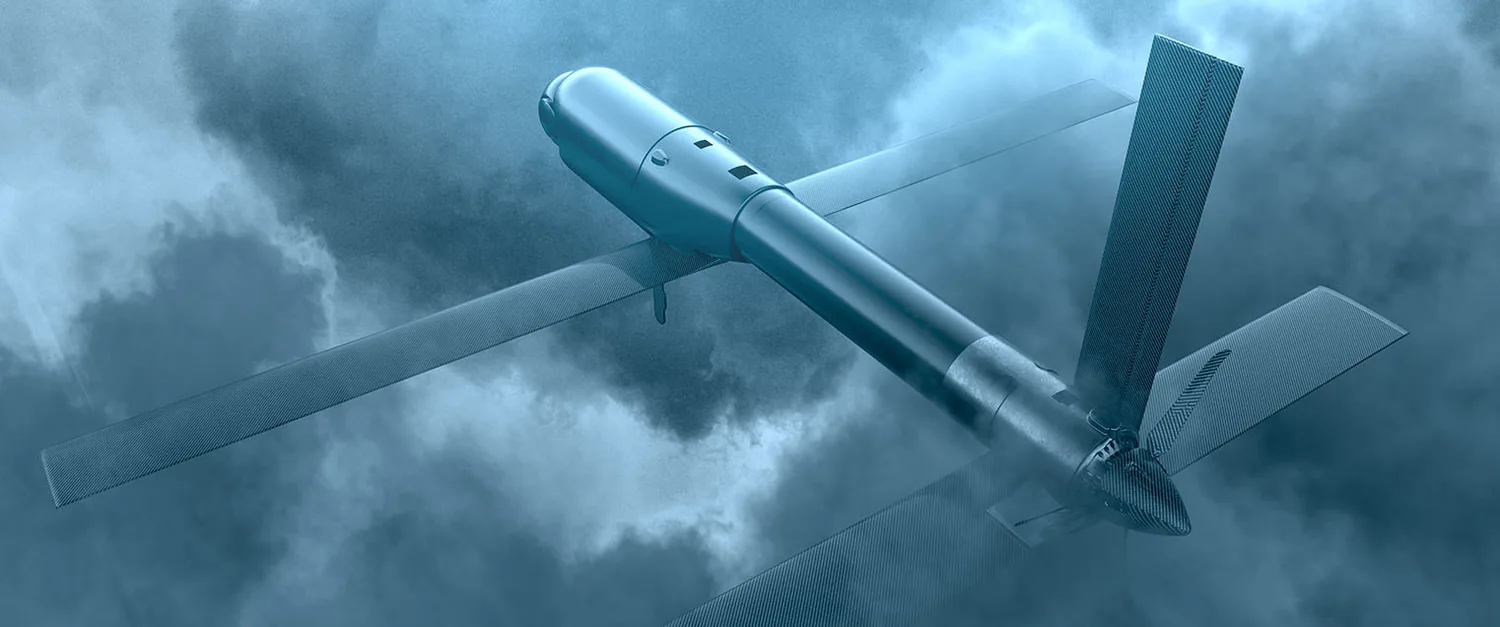
Switchblade 600. Image from open sources
When the real front generates new nonlinear threats every month, the life cycle of any technological solution is reduced to a matter of weeks, and the key competitive advantage becomes not the flawlessness of the initial design, but the speed of the feedback loop
This is precisely the model that Ukraine could potentially sell along with its weapons. Not merely a drone, an electronic warfare system, or an interceptor, but the ability to continuously update it as the conditions of use change.
Yakovchuk compares this to defense DevOps: the customer effectively receives not "hardware" whose specifications will remain unchanged for ten years, but a system designed for regular evolution.
The War of Frequencies: How Ukrainian Electronic Warfare Systems Adapt
This process can be traced through the example of electronic warfare. According to Andrii Yakovchuk, Ukrainian manufacturers have already realized that systems with fixed frequency bands may lose their effectiveness even before delivery of a batch is completed. Therefore, the industry is moving toward modular SDR architectures and rapidly replaceable frequency modules that can be promptly adapted to new enemy capabilities.
The hardware has already learned to be adaptive, but turning it into a coordinated digital spectrum-management system is precisely the experience that we have yet to transform into a generally accepted technology
Therefore, the mere fact that a weapon has been used at the front does not yet make it battle-proven. The key question is whether the manufacturer can quickly turn feedback from military personnel into serial technical changes.

Image from open sources
Europe Needs Not Only Ukrainian Weapons, but Also Experience in Their Use
European countries are increasing defense budgets and production, but combat experience cannot be quickly replicated even with substantial investment.
Even with unlimited financial resources and after hiring the best Ukrainian minds, no Western defense giant would be able to artificially recreate a physical presence on the line of contact
This concerns knowledge that is difficult to acquire at a training ground: how equipment behaves after nearby explosions, in freezing temperatures, dust or under the influence of electronic warfare, how easy it is to repair directly at positions, and how quickly the enemy finds a countermeasure to a new solution.
That is why, according to Anton Zemlianyi, foreign partners increasingly need not only a Ukrainian product but also experience in using it.
Partners are interested not only in obtaining the drones themselves, but also in understanding the ecosystem—how to use and deploy them and how to streamline this process
Ukraine as Part of the European Defense Industry
Ukrainian defence-tech is already expanding beyond its domestic market. Fire Point’s subsidiary is building a solid-fuel rocket engine plant in Denmark with an area of more than 120,000 square meters and a cost of over €150 million. The plant’s capacity will range from 800 to more than 4,100 missiles per year. This is the first case in NATO in which an Alliance member has allowed a Ukrainian defense company to establish such production on its territory.
At the same time, Ukraine is developing the Freyja anti-ballistic shield project jointly with its partners. Ten countries and more than a dozen European defense companies have already joined the program. The project is built around the Ukrainian FP-7.x interceptor missile, while European manufacturers provide other elements of the system—radars, sensors and components.
Andrii Yakovchuk calls this very model the most promising one: Ukrainian combat experience and speed of adaptation are combined with the industrial base, standardization and financial capabilities of the European defense industry.