


Preserving the capital’s historic character: which of Kyiv’s architectural landmarks have been saved and returned to the community
Kyiv • UNN
The prosecutor’s office and activists defended the Tereshchenko and Dmytriiev mansions, the Rodina House, and the “Flowers of Ukraine” building. Attempts were made to destroy or develop them.

The struggle to preserve Kyiv’s historic buildings has been going on for years. Developers see office centers and high-rises on the sites of old estates and modernist buildings, while activists take to the streets in protest. Despite this, many cases end in the city’s favor. UNN reports on the landmarks that have been saved from complete destruction.
The Tereshchenko Estate
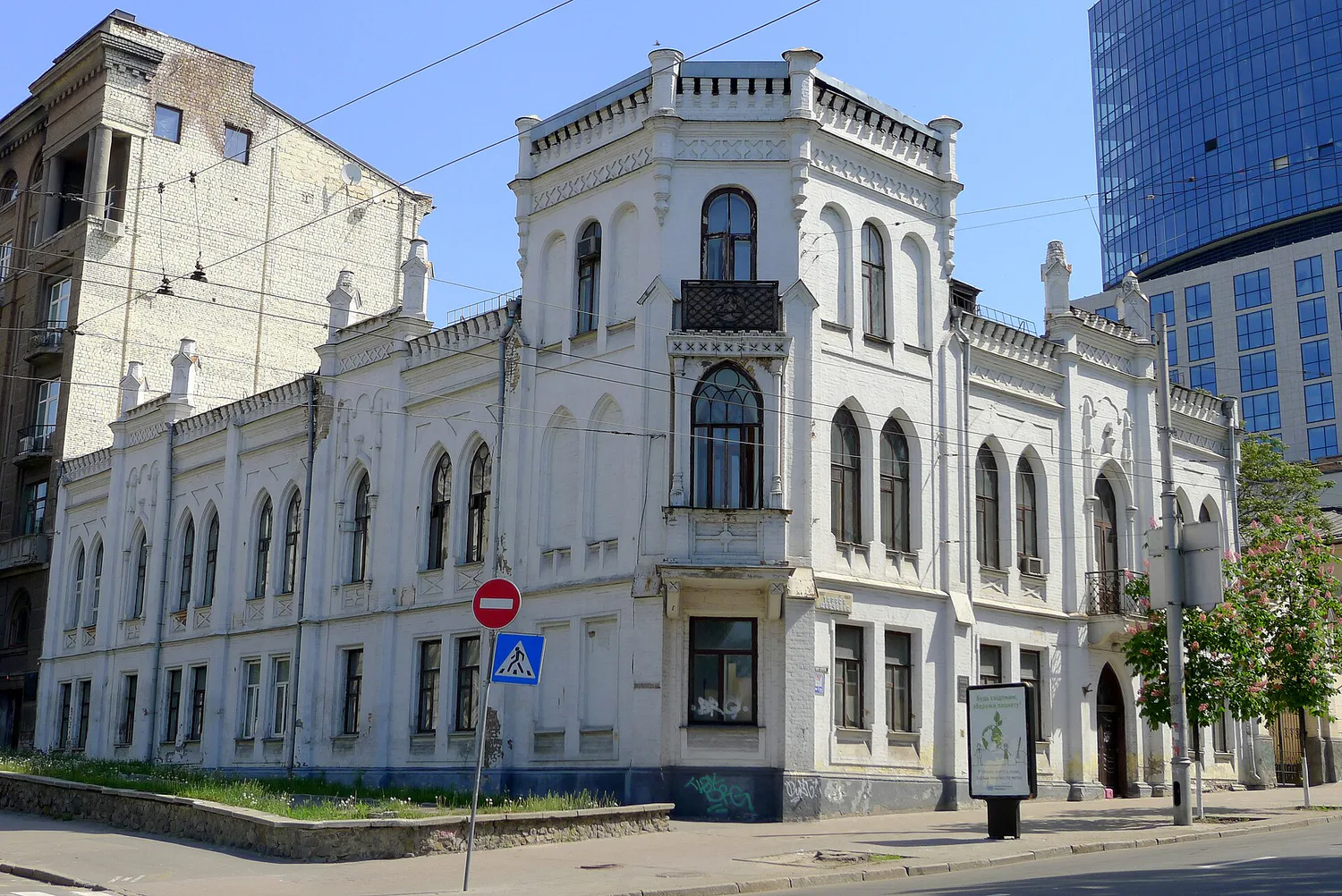
The estate of patron of the arts Ivan Tereshchenko is located on Taras Shevchenko Boulevard in Kyiv. It is an integrated architectural ensemble in the Venetian Gothic style, built in the second half of the 19th century. It has the status of an architectural landmark.
The mansion was built to order of Felitsia Adamivna, the wife of justice official and collegiate assessor Modzelevsky. After her husband’s death in 1875, she sold the estate to sugar industrialist Ivan Tereshchenko. In 1917–1918, the Tereshchenko family provided part of the premises for the General Secretariat of Communications of the Ukrainian Central Rada, and later for the Ministry of Communications of the Ukrainian People’s Republic. On the night of November 14, 1918, it was in this building that the Directorate decided to begin the war with Bolshevik Russia.
When the Bolsheviks arrived, the estate, which housed a large collection of works of art, was looted. Some of the paintings were simply destroyed, while the mansion itself was nationalized. During the Soviet era, various government institutions were located there. In 1986, the estate was recognized as an architectural landmark.
In 2006–2008, through a series of transactions and despite the statutory prohibition on alienation, the estate and its annex were registered as the property of a private entity, PJSC "Tsentrelevatormlynbud." The company was supposed to fully restore the building, but a comprehensive restoration never began. The firm carried out only certain works and stated that it was looking for investors.
In 2016, the capital’s cultural heritage protection department forced the then owners to sign a protection agreement, that is, to undertake to restore the building. By that time, it was already in unsatisfactory condition.
In 2020, the Kyiv City State Administration approved a project to reconstruct the site. It later emerged that the project involved converting the estate into an office center.
The Kyiv City Prosecutor’s Office defended the community’s right to this landmark for years. In 2023, following a lawsuit filed by the capital’s prosecutors, the Supreme Court returned the mansion, with a total area of more than 1,000 square meters, from private ownership. The following year, the Prosecutor’s Office filed a lawsuit with the commercial court seeking to cancel the company’s state registration of ownership of the non-residential premises in the annex and return them to the Kyiv territorial community. The court granted the claim, and the Northern Commercial Court of Appeal upheld the decision.
In May 2026, on the initiative of the city authorities, a community cleanup was held at the estate. Participants carried out priority works to preserve the building and its grounds. In particular, they covered damaged window openings with OSB boards to protect the building from precipitation, unauthorized entry, and further deterioration.
The Osyp Rodin House
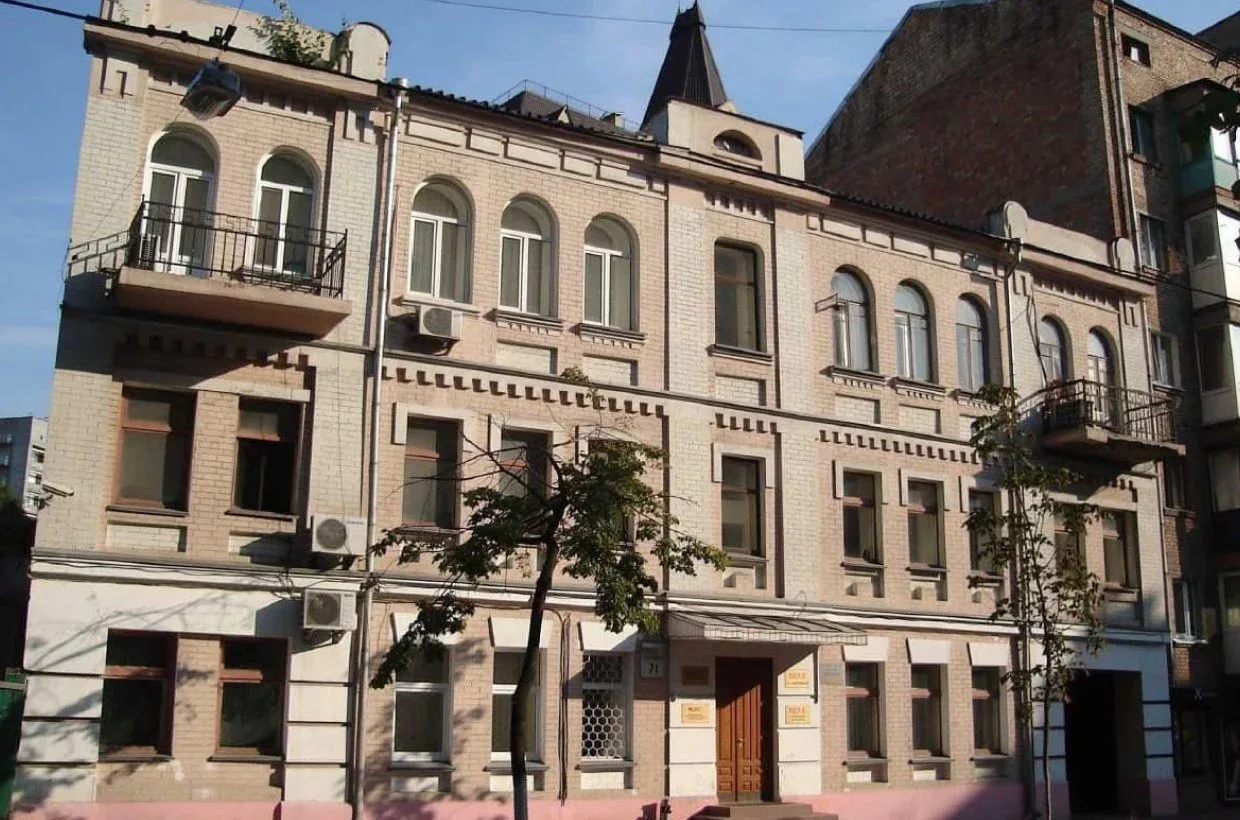
Another historic landmark of the capital is the Osyp Rodin House on Olesia Honchara Street, a stone estate dating from 1882. In September 2020, the Kyiv City State Administration’s Department for the Protection of Cultural Heritage included it on the list of newly identified sites. However, in 2021, LLC "Ariks" succeeded in having this status revoked through the courts. The Kyiv District Administrative Court relied on an expert opinion by the Ukrainian Society for the Protection of Historical and Cultural Monuments. According to this opinion, the building has no historical or architectural value, so "the site can be classified as an ordinary historic building." It also stated that the building was highly deteriorated—approximately 70%—and had significant damage of an emergency nature.
As soon as the building’s protected status was removed, construction began almost immediately on the neighboring plot. The Franklin Concept House residential complex, 5 + 19 stories high, was to be built there. This was despite the fact that the area belongs to the capital’s Central Planning Zone, where a height restriction of no more than 27 meters—up to 9 stories—applies.
According to media reports, the residential complex was to be built by Perfect Group, owned by Dmytro Isaienko, an MP from the Opposition Platform — For Life, together with Saga Development, owned by former Kyiv City State Administration official Andrii Vavrуsh, and Kyivproject Development. The construction client was "Concept Plaza," 25% of which belongs to "Spetsbudinvest-17," part of Isaienko's group. Later, information emerged about plans to build an office-and-hotel complex, which threatened the demolition of the historic building itself.
This year, the Prosecutor General's Office managed to protect the landmark from destruction through the courts.
"Flowers of Ukraine"
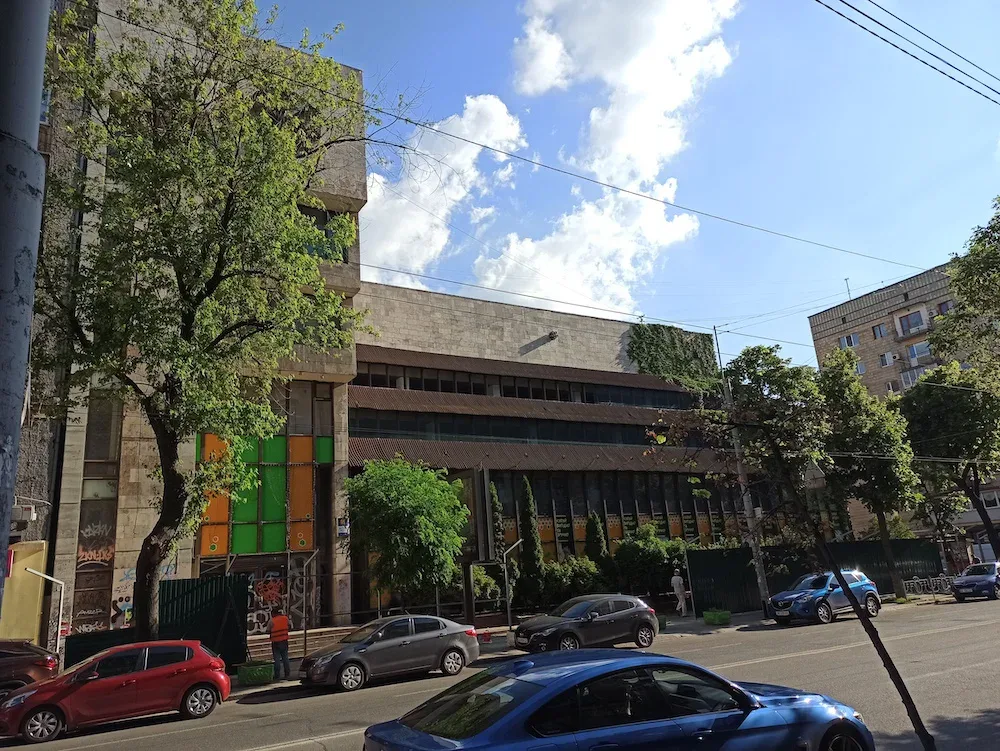
The 1985 modernist building (architect Mykola Levchuk) stands on Sichovykh Striltsiv Street in Kyiv. In 2021, a developer attempted to demolish it. Rockwill Group planned to reconstruct the building and turn it into an office center with an additional upper structure and underground parking.
Kyiv residents actively stood up in defense of the building. The activists' struggle even became the basis for a documentary directed by Anhelina Borets.
In August 2021, the Kyiv City State Administration's Department for the Protection of Cultural Heritage included "Flowers of Ukraine" on the list of Kyiv's cultural heritage sites. Almost simultaneously, the Ministry of Culture included the building in the State Register of Immovable Monuments. But already on December 2, 2022, the Kyiv District Administrative Court upheld the developer's lawsuit. The court revoked the Ministry of Culture's orders banning construction and its decision granting "Flowers" protected status.
In 2023, the company put the building up for sale, although court proceedings over its return to the community were still ongoing.
In 2026, following a complaint by the Kyiv City Prosecutor's Office, the court prohibited the restoration of the dismantling of the facade, which a commercial entity had unlawfully begun. The court also prevented the building from being removed from the list of cultural heritage sites and from the State Register of Immovable Monuments.
The Dmitriev Merchant's Estate

The Dmitriev Merchant's Estate is a complex of architectural landmarks dating from 1830–1895 in Podil. Back in 2010, the municipal enterprise "Podil-InvestReconstruction" concluded an investment agreement with the private enterprise "Konvalia-Nerukhomist" for the reconstruction of eight 19th-century buildings with a total area of approximately 3,100 square meters. The company was registered on August 27, 2010, two months before the competition at which it was selected as the investor. The reconstruction never began, but in 2017 the company registered the buildings in its own name.
The company planned to build an office-and-public complex with retail premises and underground parking on the site of the historic buildings. In addition, it attempted through the courts to strip the buildings of their protected landmark status.
The media linked "Konvalia-Nerukhomist" to former Central Election Commission Chairman Mykhailo Okhendovskyi.
In 2019, activists protested against the transfer of the land.
In November 2021, the court cancelled the registration of ownership rights in the name of "Konvalia-Nerukhomist," which had effectively been registered on the basis of an unfulfilled investment agreement. On May 17, 2024, six of the eight buildings were placed under arrest as part of criminal proceedings. The company failed to challenge the landmark status: on October 6, 2025, the cassation court rejected its appeal. Ultimately, the prosecutor's office succeeded in defending the capital community's right to these buildings.