


“Kuyalnyk” is emerging from debt and preparing to expand veterans’ rehabilitation: the sanatorium’s director spoke about changes in the facility’s operations
Kyiv • UNN
With the support of the Federation of Trade Unions of Ukraine, the “Kuyalnyk” sanatorium is gradually overcoming financial difficulties, upgrading its facilities and equipment, and preparing to expand rehabilitation services for military personnel and veterans. The sanatorium’s director, Rahim Babaiev, spoke about changes in the facility’s operations and development plans.

More than UAH 30 million in debt, outdated facilities, salary problems, and the need to restore damaged infrastructure—with this burden, the Odesa-based Kuyalnyk sanatorium is attempting to return to full operation. Today, the facility is gradually reducing its debt, upgrading its equipment, and preparing to expand rehabilitation services for military personnel and veterans. In an interview with UNN, its director, Rahim Babaiev, spoke about how the facility is managing to resume operations amid the war, what assistance it receives from the Federation of Trade Unions of Ukraine, and how Kuyalnyk’s future is linked to the development of rehabilitation for military personnel.
From financial problems to systematic recovery
Since 2022, salary arrears had been accumulating in the sanatorium’s accounts. When Rahim Babaiev took over management of the sanatorium, the total debt exceeded UAH 30 million.
Employees’ salaries were low, comprehensive repair work was practically not being carried out, and the facility itself was gradually deteriorating. Of course, we understand that the country is at war, but the sanatorium had to be saved and returned to normal operation
According to him, one of the first challenges was retaining the staff. About 160 people work at the sanatorium, but attracting and retaining qualified specialists is not easy: medical workers are looking for better pay and stability.
It is extremely difficult to find qualified employees, as specialists are looking for employment opportunities where they can receive higher salaries and deferment from mobilization. Therefore, we decided to raise employees’ salaries by 30%. This is a necessary step to retain the staff and ensure the facility’s stable operation. People need to understand that their work is needed and properly compensated

At the same time, work is continuing to reduce the debt. According to the director, during the first two quarters it was reduced by approximately 35%, while more than UAH 5 million in utility-service debt was repaid.
We understand that it is impossible to solve all the problems at once, but we are moving forward and trying to systematically improve the situation—the sanatorium’s director emphasized.
At the same time, financial recovery requires not only internal management decisions. The sanatorium needs to restore its facilities, renovate its premises, and provide proper conditions for patients and employees.
According to the director, the role of the Federation of Trade Unions of Ukraine became particularly noticeable in addressing these problems.
On the sanatorium’s cooperation with the FPU
As Rahim Babaiev noted, significant changes in cooperation with the Federation of Trade Unions of Ukraine took place after Serhii Byzov was appointed its head. According to the director, sanatoriums began receiving more attention from the Federation, and its involvement in resolving the facilities’ problems became more practical. This concerns not only general support but also specific assistance that makes it possible to address the sanatorium’s urgent needs and gradually upgrade its facilities.
According to him, the sanatorium receives assistance with equipment and supplies through the Federation’s cooperation with European partners and trade union organizations. In particular, thanks to the FPU, the facility received more than 30 computers, 20 laptops, televisions, furniture, and other necessary property.
Humanitarian aid was also delivered to the Kuyalnyk premises with the assistance of Serhii Byzov. His position is that sanatoriums need to be provided with the necessary resources, as they should play an important role in the rehabilitation of military personnel and veterans. We understand that proper conditions must be created for this, and such assistance makes it possible to gradually move forward
The Federation of Trade Unions of Ukraine (FPU) is also involved in organizing and financing the restoration of damaged infrastructure. According to the sanatorium's director, following Russian shelling, some of the windows in the buildings had to be temporarily covered with plywood. They need to be replaced to ensure normal conditions for people staying there, especially during the cold season. The Federation is helping organize this process and finance the necessary work.
For us, it is important that the Federation is not limited to general promises but is involved in resolving practical issues. This may include assistance with equipment, restoring premises, providing material support, or developing medical services. All of this, taken together, helps maintain the sanatorium's operations and creates a foundation for its further recovery
Rehabilitation of veterans as a key priority
The restoration of "Kuyalnyk" is important not only for the institution itself. The sanatorium has natural therapeutic resources—mud and brine—which are used in health-resort treatment, particularly for people with musculoskeletal disorders. These resources may also be useful for people who need recovery after injuries.
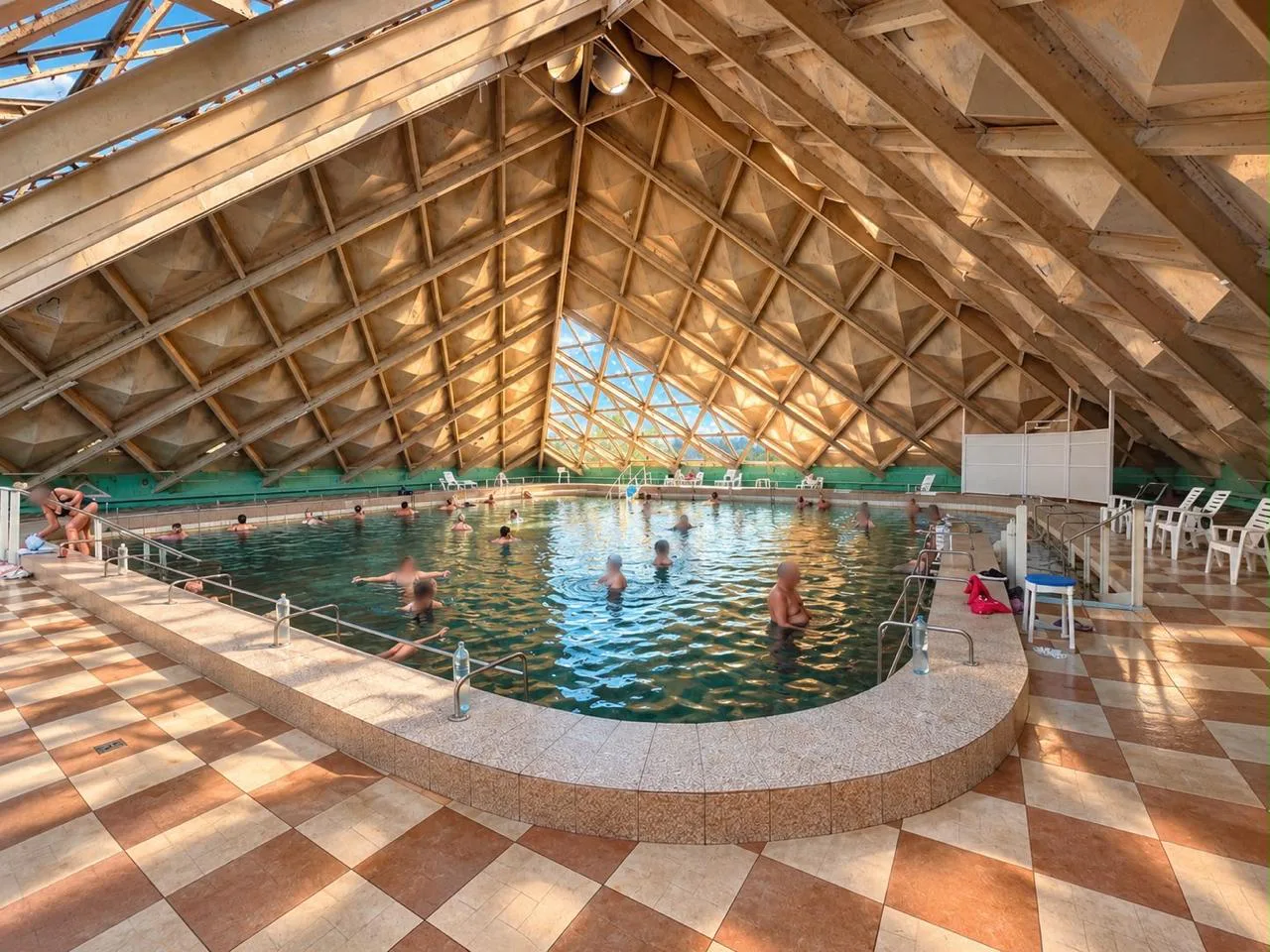
Therefore, the administration sees the rehabilitation of military personnel and veterans as one of the institution's promising areas of development.
I instructed them to prepare opportunities for expanding the relevant programs. This requires properly equipped premises, trained medical professionals, and specialized equipment. This cannot be done in one day, but we are already working to increase the sanatorium's capacity to receive people who need recovery after wounds and injuries
According to him, the goal for next year is to significantly increase the sanatorium's capacity in this area.
We would like the share of veterans who can undergo rehabilitation at the sanatorium to increase to 70–75%. This is our goal, and we need to start working toward it now
To implement such a plan, it is necessary to prepare the infrastructure and ensure that the institution has the capacity to provide the relevant services.
In this context, the support of the FPU is also important. As Rahim Babaiev notes, the Federation is involved in efforts to expand medical services and helps provide the sanatorium with the necessary resources.
One of the important areas is assistance with developing medical services and rehabilitation. The Federation supports us in working to expand the packages of medical services through which we will be able to receive patients. This is important because developing rehabilitation services requires not only specialists and equipment, but also proper organization of work and the institution's corresponding capabilities
At the same time, the institution is working on accessibility. For veterans and people with disabilities, access to treatment should begin not at the doctor's office, but with the ability to enter the grounds and move around them without obstacles.
At the sanatorium, restrooms are being modernized, sidewalks are being repaired, and public-transport stops are being adapted so that people in wheelchairs can independently board buses. Plans include constructing covered walkways to make it easier to move around the grounds during rain or snow.
These changes require time and resources, but without them, expanding rehabilitation programs would be incomplete.
Plans for the future restoration of "Kuyalnyk"
Despite financial difficulties and security risks, the administration seeks to change perceptions of the sanatorium, which in recent years has often been viewed as an institution in decline.
For me, it is fundamentally important to change the perception of "Kuyalnyk" itself. Over the past three or four years, one could often hear that the sanatorium had fallen into decline, was destroyed, and was effectively not operating. We want to show that this is not the case. The sanatorium is alive, developing, and has prospects. We are working to promote the institution, organizing concerts, art exhibitions, and cultural events. We need "Kuyalnyk" to be known not only in Odesa but throughout Ukraine
"Kuyalnyk" continues to operate under the programs of the National Health Service of Ukraine and cooperate with communities and regions that can refer veterans and other people in need of assistance to the facility. Trade union organizations and enterprises also purchase vouchers for their employees.
For the sanatorium, it is important to preserve these areas of work while simultaneously expanding opportunities for patients who need rehabilitation.
According to the director, the uniqueness of "Kuyalnyk" lies in combining natural therapeutic resources with medical procedures.
We want to develop this area, improve the quality of services, and create conditions in which people can receive comprehensive assistance. I am also studying the experience of other sanatoriums and rehabilitation centers in Ukraine. Recently, I visited facilities in the Carpathians to see how they organize their work, what solutions they implement, and what we can use ourselves. Due to the security situation, some people choose the western regions of the country for recovery, so it is important for us to adopt the best practices and develop partnerships
The sanatorium director added that his goal is to restore "Kuyalnyk" to its proper place among Ukrainian health and rehabilitation facilities, expand access to services, and ensure that its natural therapeutic capabilities benefit as many people as possible.
Thus, for "Kuyalnyk," it is important not merely to resume operations after years of financial difficulties, but also to define a new role in the system of health improvement and rehabilitation for Ukrainians. The Federation of Trade Unions of Ukraine plays an important role in this process by contributing to the modernization of the material base, the restoration of damaged premises, and the development of medical services. This approach demonstrates that trade union sanatorium infrastructure can be not merely property that needs to be preserved, but an effective resource for the health improvement and rehabilitation of Ukrainians, including military personnel and veterans.