










In 2026, a cascade of double solar eclipses will begin: when and where to see them in three years
Kyiv • UNN
From 2026 to 2028, Earth will experience a cascade of double solar eclipses, including three total and three annular solar eclipses. This is a repetition of a pattern last observed from 2008 to 2010.

From 2026 to 2028, Earth will experience a cascade of double solar eclipses – three total solar eclipses (August 2026, August 2027, and July 2028) and three annular solar eclipses (February 2026, February 2027, and January 2028) – a repetition of a pattern last observed from 2008 to 2010, writes UNN with reference to Space.com.
Details
"2026 marks the beginning of a short golden age of opportunity for solar eclipse chasers," the publication writes.
It begins with the total solar eclipse on August 12, 2026. This will be the first total eclipse visible from Europe since 2015, and the first from mainland Europe since 1999.
The path of the total solar eclipse in August 2026 will begin in remote Siberia, cross eastern Greenland and western Iceland, and then pass through northern Spain before exiting slightly east of the Balearic Islands in the Mediterranean Sea. Observers on the peninsulas of Scoresby Sund in Greenland, Reykjanes and Snæfellsnes in Iceland, and in the Spanish cities of León, Burgos, and Valladolid will be within the path and will see the ghostly corona of the Sun. Although the total eclipse will last just over two minutes at its maximum, the low position of the eclipsed sun, especially in Spain, will provide some spectacular photographic opportunities.
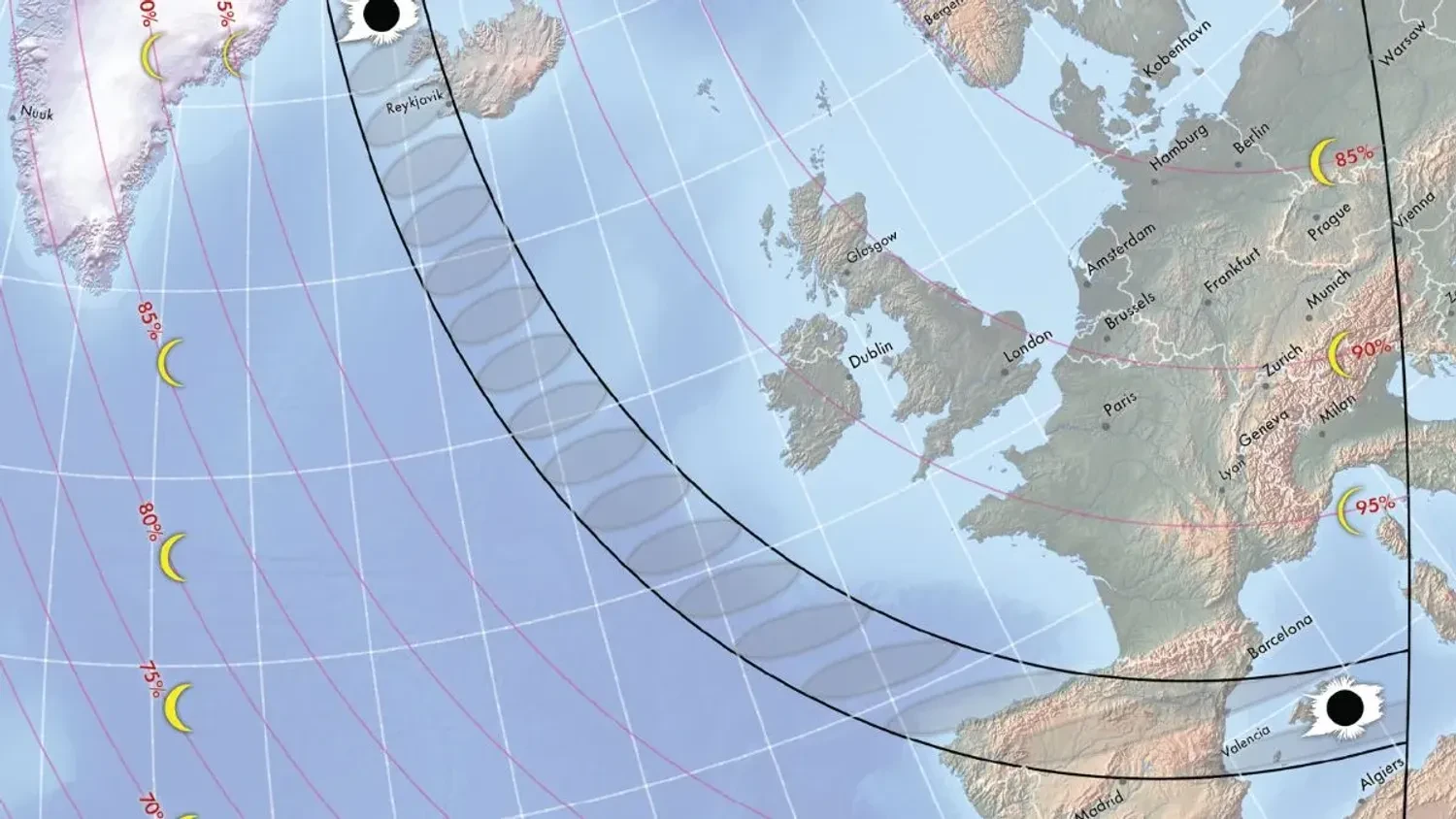
And then comes the truly great eclipse.
On August 2, 2027, a total solar eclipse lasting up to 6 minutes and 22 seconds will slowly move the Moon's shadow over southern Spain, North Africa, and the Middle East. The total solar eclipse will be visible from historical and cultural sites, including Luxor (Egypt), dotted with temples and monuments, almost guaranteed to provide a view of the solar corona under clear skies (although dust storms are possible). It's no surprise that it's being called the "eclipse of the century," the publication writes.
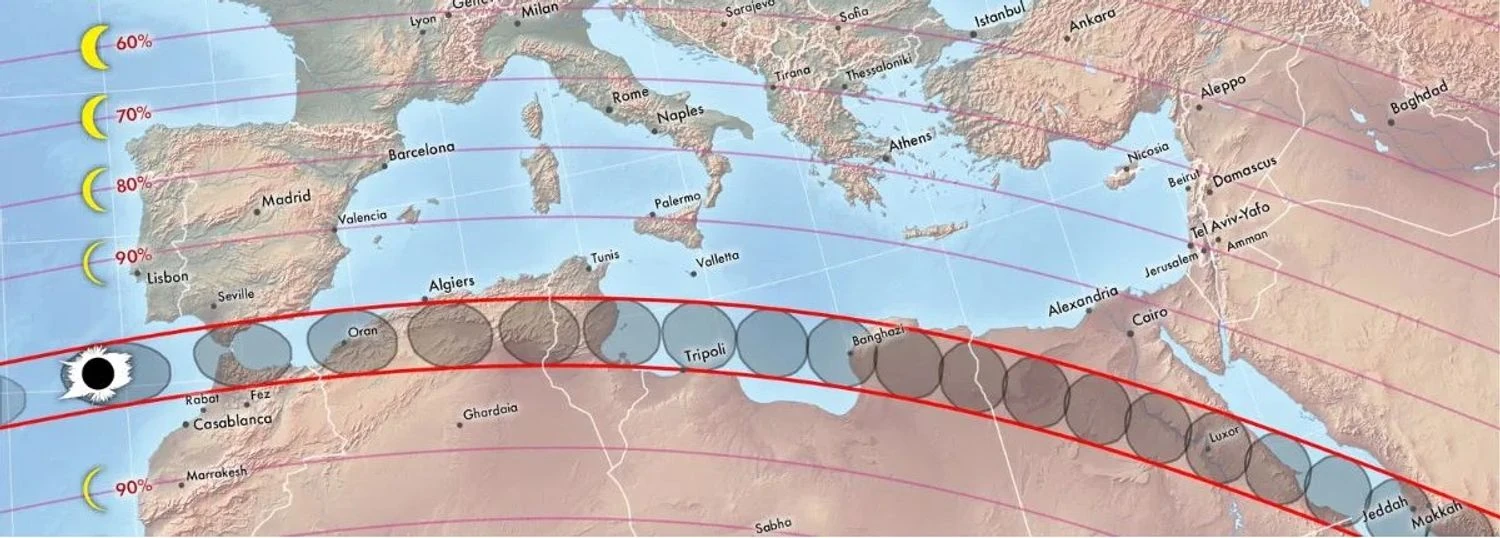
Less than a year later, on July 22, 2028, another total solar eclipse will pass through the Australian Outback and New Zealand. For the first time since 1857, a total solar eclipse will be observed in Sydney, Australia's largest city, while remote areas of Western Australia will enjoy over five minutes of totality with likely clear skies.
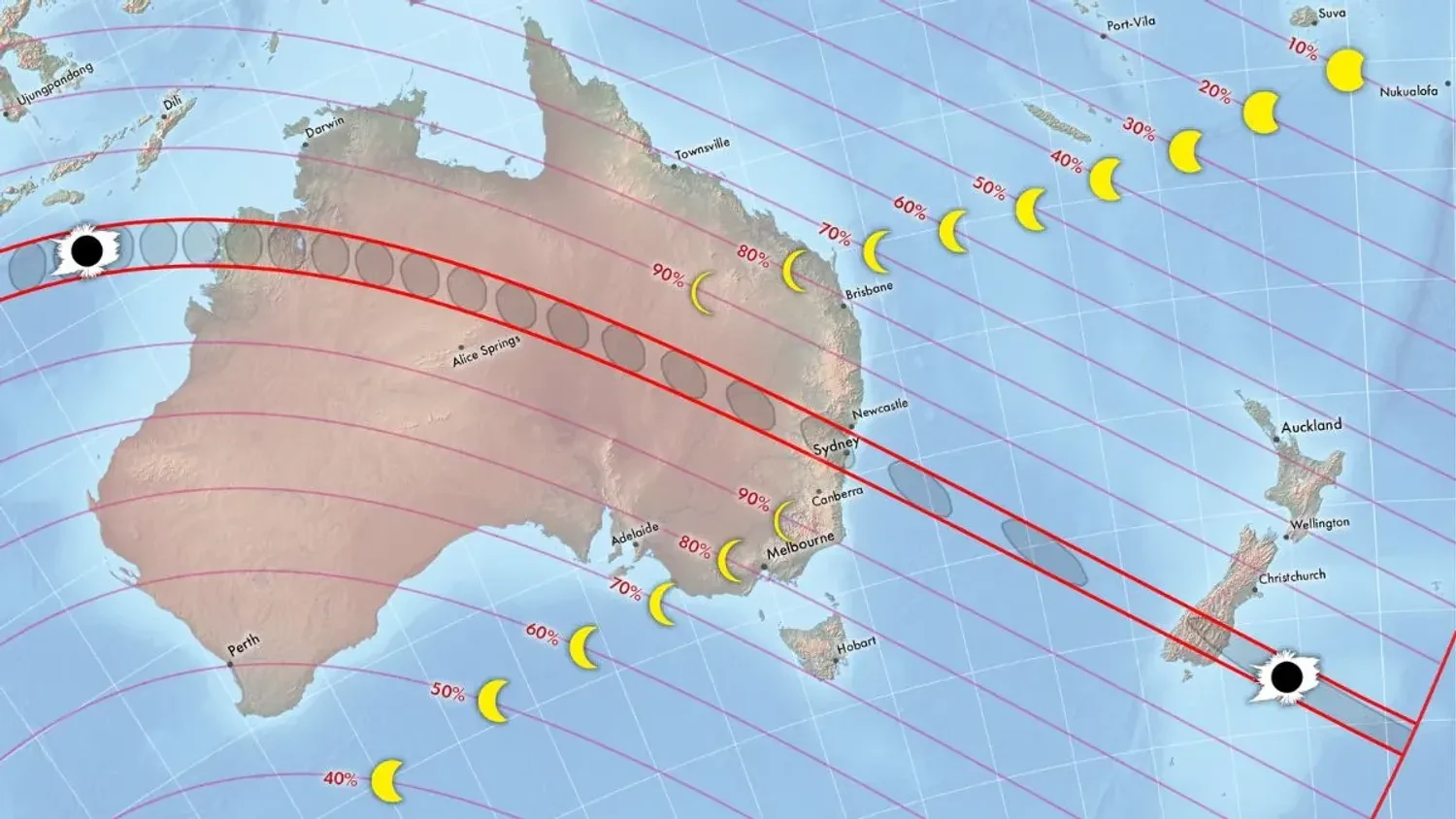
Addition
Most people consider themselves lucky to have seen at least one total solar eclipse in their lifetime. But from August 2026 to July 2028, dedicated eclipse chasers can see three shows on three continents.
The trio also offers diverse travel styles, such as observing eclipses from Arctic and Mediterranean cruise ships in 2026, photographing the eclipsed sun over ancient temples in 2027, and combining stargazing with SUV travel in 2028. All three eclipses occur in the Northern Hemisphere summer, when it is easier for many people to travel.
While rare, this sequence of three total solar eclipses within a two-year period is not unique. In fact, a trio of total solar eclipses begins every 18 years, 11 days, and eight hours – the duration of one Saros, a cycle of the sun and moon that determines when and where solar eclipses occur. After one Saros cycle, the Earth-Moon-Sun geometry is almost identical, so a similar eclipse happens again.
From 2026 to 2028, three separate Saros cycles, each resulting in a total solar eclipse, are in resonance. Looking back in time, similar trios can be seen – from 1990 to 1992 and from 2008 to 2010, although most of these eclipses occurred in remote regions that were difficult to access or were obscured by clouds. The trio will occur again from 2044 to 2046, with two of them in North America.