










Military contingent: which countries are ready to send troops to Ukraine and under what conditions
Kyiv • UNN
A number of countries in Europe, North America, and other regions are reportedly ready to send a military contingent to Ukraine. France, Britain, Canada, and Australia support the idea of a peacekeeping mission after a peace agreement is reached.

MFA spokesman Heorhiy Tykhyi recently stated that there are a number of specific states in Europe, North America, and beyond Europe and North America, that are hypothetically, preliminarily, ready to participate in sending a contingent to ensure peace and security in Ukraine. UNN has compiled statements from allies regarding the provision of a military contingent.
What is the current situation regarding the contingent?
Tykhyi explained on March 7 that the discussion regarding a foreign military contingent is ongoing.
It is still quite general. Certain figures are mentioned at closed meetings, but this discussion is still about various possible figures, because there are many unknowns in this formula, who and where to deploy. We believe that it is very important to expand this discussion not only to land, but also to the sky and sea.
The MFA spokesman emphasized that for a decision on the contingent to be made, a broad consensus of various countries, including the US, is needed.
That is, this does not happen, I think, by individual countries. It must be understood that for this to happen, a broad consensus is needed. We are working to create this consensus.
Tykhyi noted that there are a number of specific states in Europe, North America, and even beyond Europe and North America, that are hypothetically, preliminarily, ready to participate in such contingents to ensure peace and security.
Allies' statements regarding the contingent
French President Emmanuel Macron emphasized that he supports the deployment of European troops in Ukraine, and added that a meeting of commanders-in-chief and chiefs of staff of European armed forces is planned this week to discuss the war in Ukraine.
Macron explained that the European contingent in Ukraine will not be sent to occupied territories or to the front line; its purpose is to ensure peace and the implementation of a future peace agreement.
French Finance Minister Eric Lombard stated that Great Britain, Germany, France, and other European countries are ready to send troops to guarantee a truce in Russia's war against Ukraine.
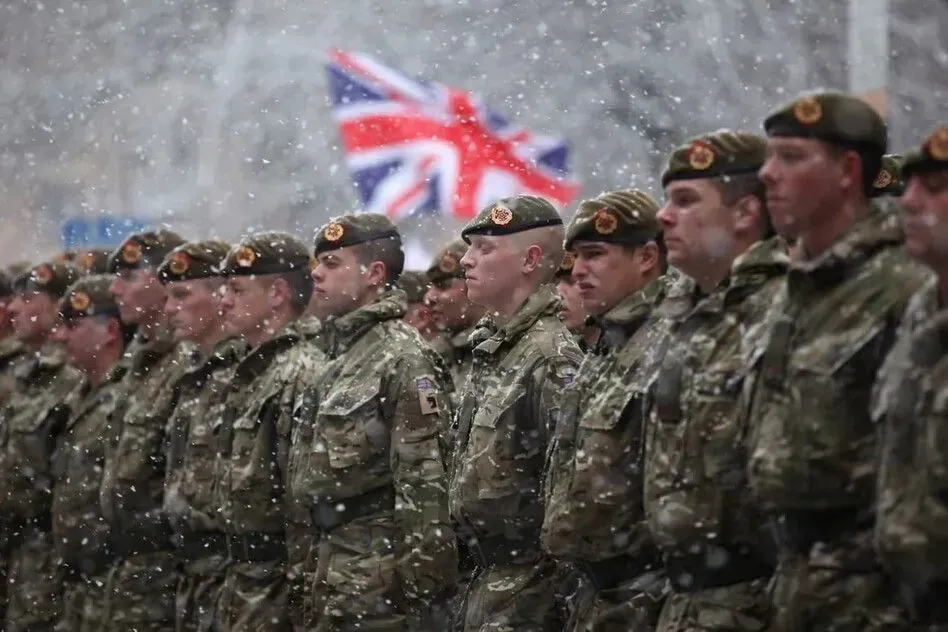
In March, British Prime Minister Keir Starmer stated that his country would send a military contingent to Ukraine to protect the implementation of a future peace agreement.
Meanwhile, Italian Foreign Minister Antonio Tajani stated that Italy hopes that what French President Emmanuel Macron is proposing with a military contingent for Ukraine will not be needed, while indicating that another option would be a UN mission "as an intermediary force after peace is achieved."
Polish President Andrzej Duda also spoke about the UN. He stated that a military contingent in the event of a peace agreement is not an absolute necessity. Perhaps certain monitoring forces will be needed, and it is not excluded that Russia and Ukraine will agree to UN forces.
We can discuss NATO or European peacekeeping forces, whether they will be needed. Some projects talk about this. This is not an absolute necessity. We can look at the situation regarding the demarcation line between Russia and Ukraine. Perhaps we will need certain monitoring forces, but I do not rule out the possibility that both sides will agree to UN forces. I believe that Russia will agree, and many other countries think so.
Prime Minister Anthony Albanese said that Australia is considering sending peacekeeping forces to Ukraine.
Discussions are currently underway regarding potential peacekeeping, and from my government's position, we are open to considering any proposals in the future.
Defense Minister Bill Blair also stated that Canada is ready to join a foreign peacekeeping contingent if it is deployed in Ukraine.
What Turkey says about the contingent
Turkish Defense Ministry representative Zeki Aktürk noted that Turkey is following "multidimensional" diplomatic initiatives regarding the settlement of the Russian-Ukrainian war.
President Volodymyr Zelenskyy stated that Ukraine, Europe, and Turkey should be involved in talks and developing the necessary security guarantees together with the US.
In February, US President Donald Trump stated that he is not against the deployment of a European contingent in Ukraine.
Trump also stated that Russian dictator Vladimir Putin is not against a European military contingent in Ukraine after the end of the war.
Bloomberg reported, citing sources, that Putin is ready for a temporary truce in Ukraine provided that progress is made towards a final peace settlement.
Bloomberg sources reported that to agree on a cessation of hostilities, there must be a clear understanding of the framework principles of a final peace agreement. Russia will insist, in particular, on establishing the parameters of a possible peacekeeping mission, including an agreement on which countries will participate.
Sources also stated that Russia said it would not accept the presence of NATO troops on Ukrainian soil, rejecting the proposal of European countries to create a "coalition of the willing" to monitor any peace agreement. It does not object to countries like China, which are neutral in the conflict, deploying their forces in Ukraine.
Ukrainian President Volodymyr Zelenskyy stated that Ukraine is not against the deployment of a European military contingent in Ukraine if it is part of security guarantees, but it is impossible without the US.