










The Iskander missile: range, speed, and modifications
Kyiv • UNN
The Russian Iskander OTRK uses ballistic and cruise missiles with a range of up to 500 km. Ukrainian forces have struck its launchers and vehicles.

The Iskander OTRK is one of the key missile systems Russia uses to strike Ukraine. The system’s ballistic and cruise missiles differ in flight trajectory, range, and guidance methods, while the maneuvering of ballistic missiles and the low altitude of cruise missiles complicate their interception. UNN reports on the missiles’ operation, speed, and modifications.
Details
"Iskander" (9K720, SS-26 Stone according to NATO codification) is a family of operational-tactical missile systems (OTRK) in the "surface-to-surface" class. It was developed by the Machine-Building Design Bureau (Kolomna; part of the Rostec corporation).
Characteristics and structure
Each system consists of six vehicles, including the 9P78-1 self-propelled launcher, the 9T250 transporter-loader, the 9S552 command-and-staff vehicle, a regulation and maintenance vehicle, an information-preparation center, and a life-support vehicle.
They can carry both 9M720, 9M723, and 9M723M ballistic missiles and 9M728 and 9M729 cruise missiles, including in nuclear configurations. The missiles have a range of 50–500 km.
Types of missile systems
This series includes the Iskander-M systems (the main modification), Iskander-K, and Iskander-E — a simplified export version with reduced tactical and technical characteristics (a range of up to 280 km).
According to "Militarnyi", the ballistic (or aeroballistic) missiles for Iskander-M have the designations 9M720, 9M723, and 9M723M. The missile’s launch weight is 3,800 kilograms, while the warhead weight, depending on the version, averages 480 kilograms.
The flight trajectory is not ballistic but controlled, which is why such missiles are called quasi-ballistic.
The missile constantly changes the plane of its trajectory; it begins actively maneuvering during its acceleration and approach to the target, with overloads of 20 to 30 G.
The difficulty of intercepting it lies precisely in these maneuvers, because the interceptor missile must travel along a trajectory with overloads two to three times higher, which is extremely difficult.
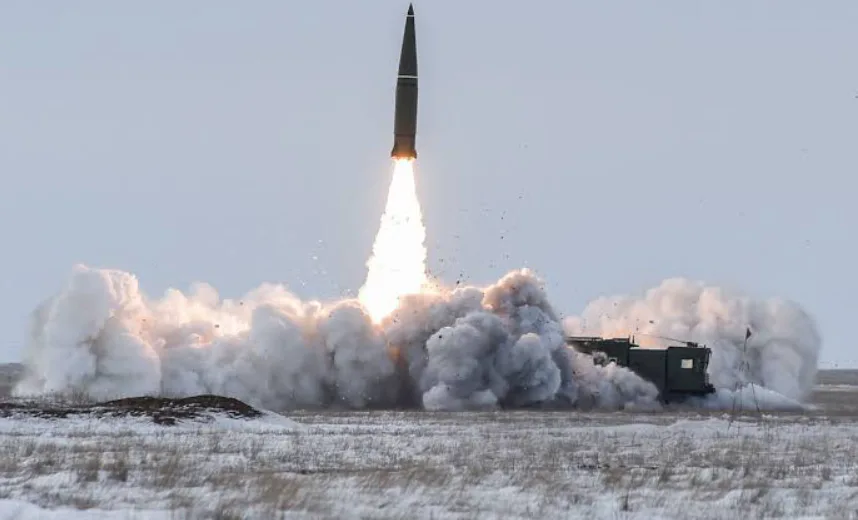
In addition, the difficulty of intercepting the missile lies in its flight altitude, which at some points is about 50 kilometers. Moreover, the missile is designed with a small radar cross-section and is covered with a special coating.
The missile may be equipped with electronic-warfare modules, which can also significantly complicate its interception. The missile is guided to the target using an inertial control system, after which the target is acquired by the 9B918 active correlation-extreme optical homing head.
The Iskander-M missile can be fitted with the following warheads:
- a cluster warhead with fragmentation submunitions
for proximity detonation;
- a cluster warhead with PTAB-2.5KO shaped-charge fragmentation
submunitions;
- a cluster warhead with self-targeting
submunitions;
- a cluster warhead with a volumetric-detonating effect;
- a fragmentation high-explosive warhead;
- a high-explosive incendiary warhead;
- a penetrating warhead.
The Iskander-K cruise missiles have the designations 9M728 (R-500, SSC-7 according to NATO codification) and its modification 9M729 (SSC-8), with ranges of 480 and 490 km, respectively. These are subsonic cruise missiles with a turbojet sustainer engine that fly at extremely low altitudes, follow the terrain, and can maneuver in flight.
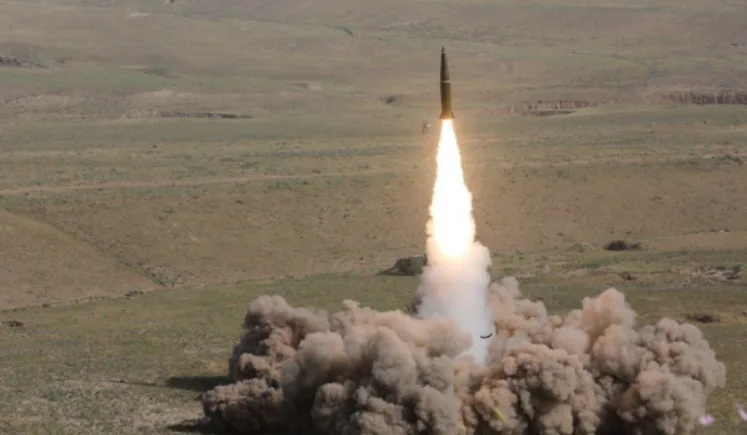
Launch of an Iskander-K cruise missile
During the initial stages of flight, the missile follows a ballistic trajectory to increase its range. The missile flies at an average altitude of 6 kilometers and descends to 7 meters when approaching the target. It is automatically corrected throughout the flight and automatically follows the terrain.
The Iskander OTRK has become one of the tools of Russian missile terrorism against Ukraine’s civilian population. According to the Ukrainian Armed Forces Air Force, during August 2026, 8 Iskander-M/KN-23 ballistic missiles and 4 Iskander-K cruise missiles were destroyed.
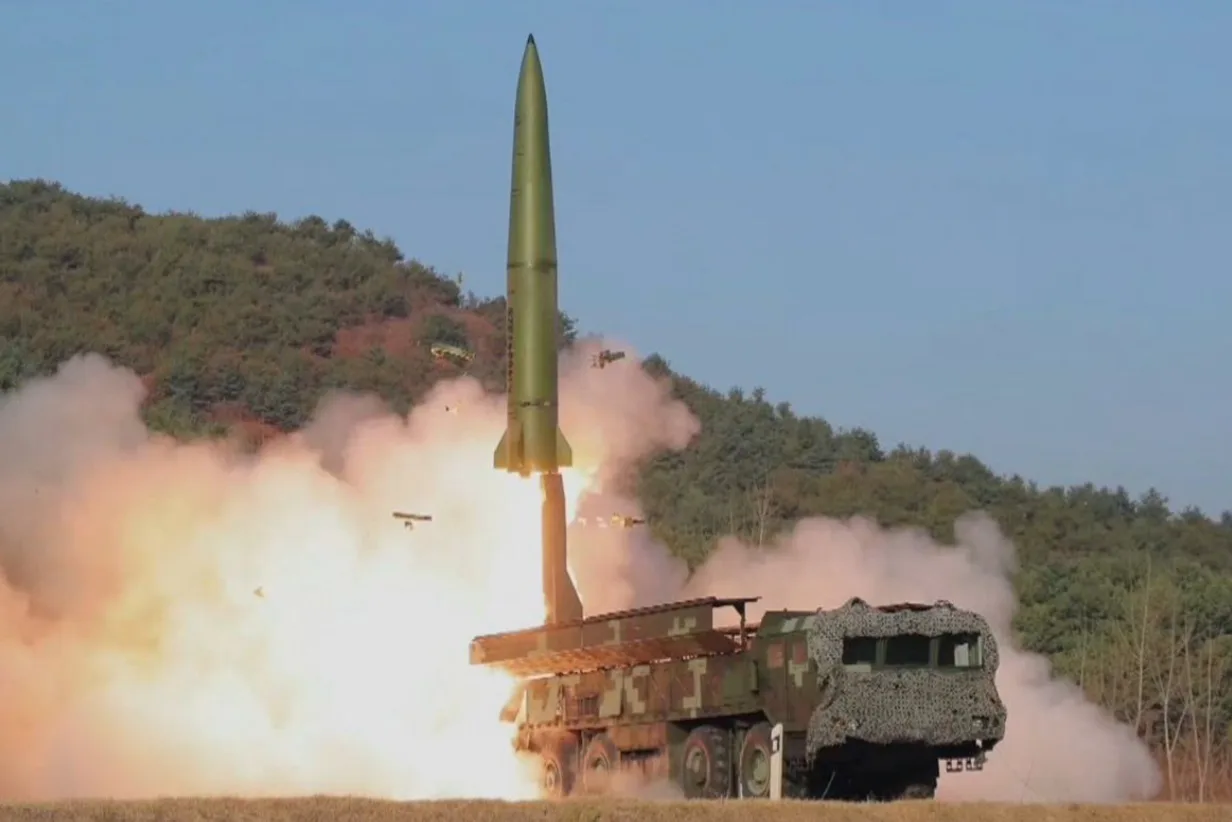
During July — 10 Iskander-M/KN-23 ballistic missiles and 1 Iskander-K cruise missile. During May — 10 Iskander-M/KN-23 ballistic missiles and 24 Iskander-K cruise missiles.
Given the acute shortage of air defense capabilities, during a meeting of the National Security and Defense Council, President of Ukraine Volodymyr Zelenskyy stated that Ukraine would destroy Russian launchers.
Zelenskyy: Ukraine will destroy the Russians’ ballistic launchers05.08.26, 18:49 • 8530 views
In particular, the Defense Forces struck several pieces of equipment belonging to the Iskander operational-tactical missile system. In March, the Special Operations Forces struck a 9P78-1 launch vehicle.
In May, the Unmanned Systems Forces also struck a 9P78-1 at a military airfield in Taganrog, Rostov region, Russia, as well as two Tu-142 aircraft.
Last year, the Russian Telegram channel Dossier of the Spy, which is linked to the Russian special services, reported that Ukraine’s Defense Forces had destroyed several pieces of equipment belonging to the Iskander system.
In particular, the published images show that five 9T250-1 transport-loader vehicles and a life-support vehicle based on a KamAZ 43118 were destroyed. The latter is intended to accommodate, provide rest for, and serve meals to combat crews. The vehicle consists of a rest compartment and a domestic-support compartment. The rest compartment has six train-carriage-style sleeping berths with folding upper berths, two storage chests, and built-in cabinets.