










European factories are closing despite cheap gas: experts explain the reasons
Kyiv • UNN
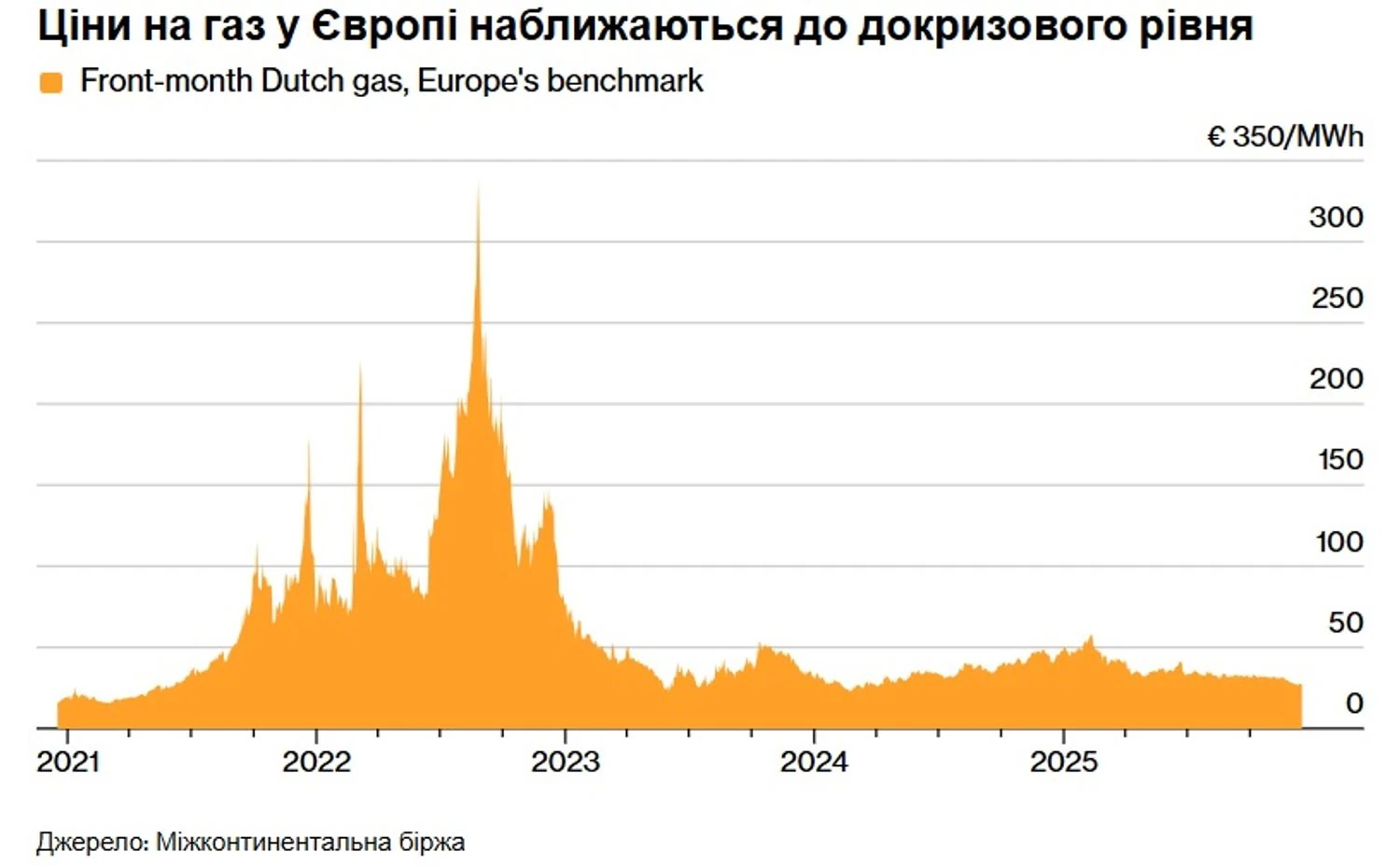
Gas prices in Europe have fallen to pre-war levels, but European factories continue to close or relocate. Experts believe that relief came too late, and businesses have lost faith in stability on the continent.

Gas prices in Europe have fallen to pre-full-scale war levels in Ukraine, but the expected "miracle" has not happened. Despite cheap fuel, European factories continue to close en masse or move to other countries. Experts say that relief came too late, and businesses no longer believe in stability on the continent. This is stated in the Bloomberg material, writes UNN.
Details
Over the past two years, European industry has been so exhausted by astronomical bills that a simple price reduction now changes nothing. Many businesses have already made a strategic decision: working in Europe is too expensive and risky. Chemical giants, such as Germany's BASF, are closing their plants at home and investing in building factories in China. Last year alone, more than 190,000 companies went bankrupt in Western Europe – a record for the last ten years.
If you've made the decision to move production elsewhere or move to a lower-cost jurisdiction, you're not going to automatically move back there just because of short-term changes in energy prices.
Competitors are breathing down their necks
The main problem is not even the price itself, but the fact that it is still cheaper in other parts of the world.
For example, American factories pay three times less for gas than European ones. In addition, Europe has strict and expensive environmental taxes that are not present in China or the United States. Adding to this new trade restrictions from Donald Trump – it turns out that producing goods in Europe simply becomes unprofitable.
Unclear future of "green" energy
Europe is trying to save itself with windmills and solar panels, and they really provide a lot of energy. However, industry cannot work only when the sun shines or the wind blows. For stable operation of factories, gas is still needed, and since Europe has almost no gas of its own, it is forced to buy expensive liquefied gas in tankers. This drives the European economy into a vicious circle from which there is no way out yet.