










China is preparing a large-scale study of space objects in the Solar System
Kyiv • UNN
The Chinese mission Tianwen-2 intends to deliver a sample of the asteroid Kamoʻoalewa to Earth. The mission will also make a six-year journey to comet 311P/Panstarrs.

China's ambitious "Tianwen-2" mission aims to expand and improve China's capabilities in planetary exploration.
UNN reports with reference to NewScientist.
Details
"Tianwen-2" (Tianwen-2) is the second mission of the Chinese program, which began in 2020 with "Tianwen-1", which delivered the "Zhurong" rover to Mars. The current plans are to obtain a 100-gram sample from the asteroid Kamoʻoalewa and return it to Earth. This will be the first goal of the mission. The second is to make a trip of about six years to the comet 311P/Panstarrs. Scientists expect that "Tianwen-2" of this comet by 2034.
It should be noted that this will not be the first mission to try to return asteroid samples to Earth. NASA's OSIRIS-REx and JAXA's Hayabusa missions have already done so.
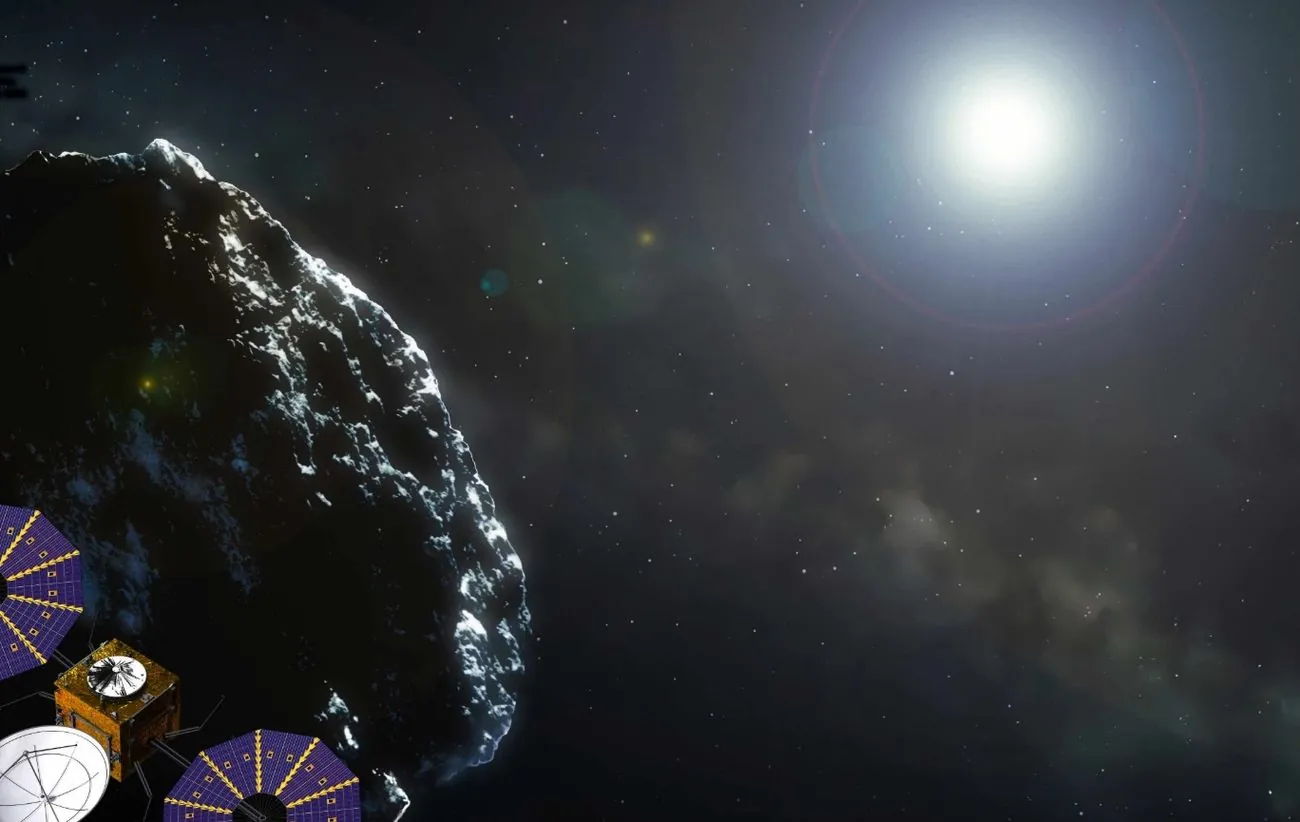
But this will be China's first mission to an asteroid, involving the return of a rock sample. Also, obviously, the trip is the first mission to a unique type of body called quasi-satellites.
Reference
Quasi-satellites, such as Kamoʻoalewa, do not orbit the Earth, but move in a similar orbit around the Sun, elliptically orbiting our planet. In their research, scientists came to the theory that this satellite is a fragment of the Moon. It was ejected millions of years ago as a result of a collision with an asteroid.
Let us remind you
The Curiosity rover discovered the mineral siderite in the Gale crater, indicating an ancient carbon cycle necessary for life.
China launched the first 12 satellites for an orbital supercomputer network.
Two Chinese astronauts spent 9 hours in open space during a mission to the Tiangong station, surpassing the previous US record.