


Blue Origin wants to make its New Glenn Moon rocket cheaper — here's what it came up with
Kyiv • UNN
Blue Origin is testing the Northstar engine and the GS3 third stage for New Glenn. GS3's debut with a government customer is scheduled for 2028.

On November 5, Blue Origin announced two significant upgrades to its New Glenn rocket that will reduce manufacturing costs and expand its capabilities for delivering payloads to geostationary orbit and the Moon. UNN reports this, citing Ars Technica.
Details
With these upgrades, the company ultimately aims to enable New Glenn to launch more than 1,000 times a year.
"Demand for launches has never been higher," Blue Origin CEO Dave Limp said during the UP.Summit conference at the shuttle landing facility in Florida, United States.
Blue Origin has already begun testing a new engine called Northstar, which will eventually replace the BE-4 engine that powers New Glenn's first stage. Separately, the company also announced the development of a hydrogen-oxygen third stage for the rocket, GS3, which will provide it with additional power.
The Northstar engine is a simplified but more powerful version of the BE-4 engine, Limp said. It has half as many parts, 30 percent less mass, and about 65 percent of its parts can be 3D-printed.
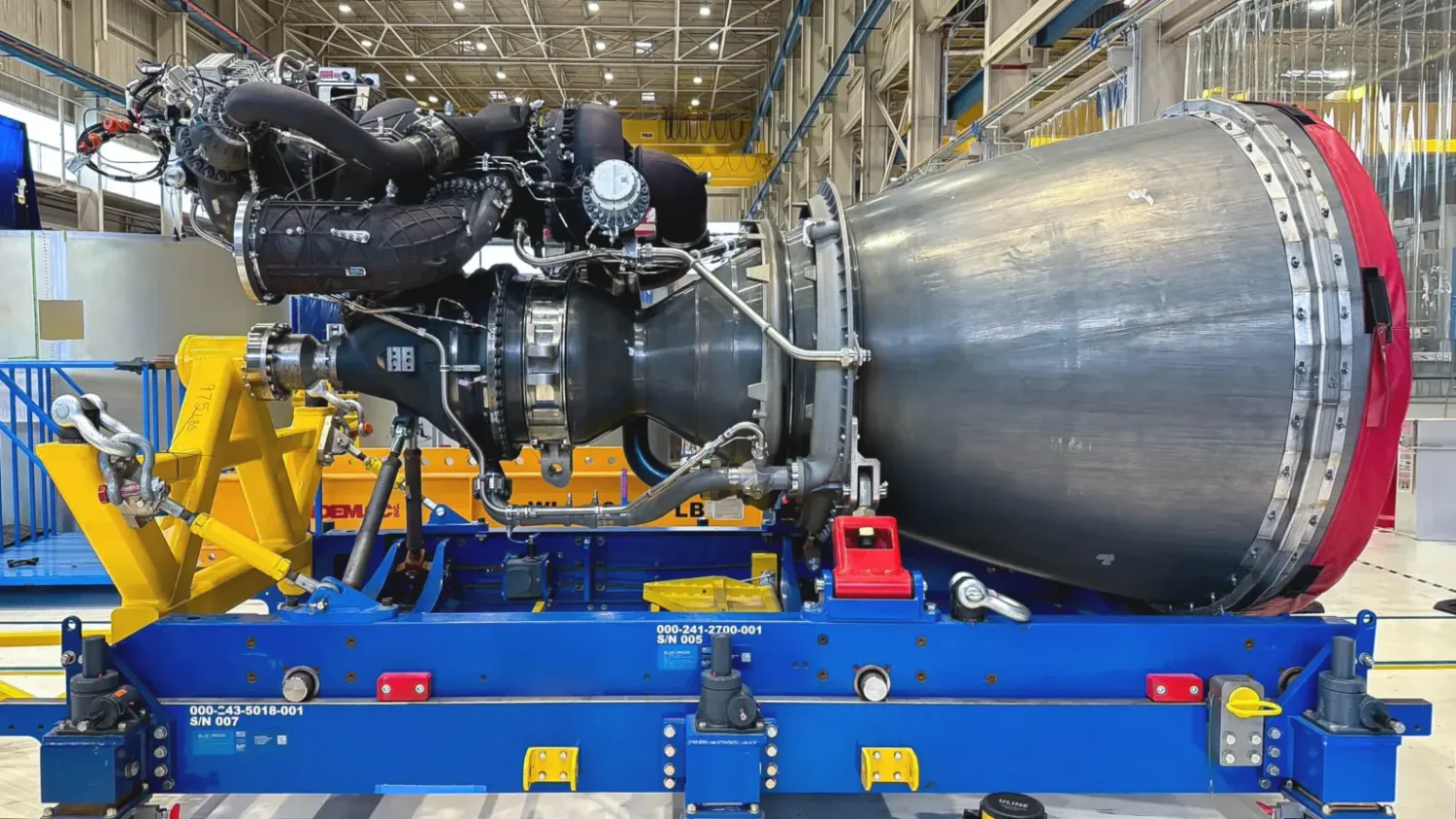
Blue Origin believes it will be able to manufacture the engine at a price equal to 25 percent of the cost of a BE-4 engine and eventually reach the point where each engine can be assembled in less than a day. The company is actively developing and testing Northstar and has already begun a test-launch campaign.
"To gain access to space at lower cost, we have to examine every detail of the vehicle," Limp said. "This will be a game-changer."
The BE-4 engine currently used aboard New Glenn has a thrust of 640,000 pounds (approximately 290.3 metric tons-force or 2.85 MN), while Limp said Northstar will have a liftoff thrust of 715,000 pounds (324.3 tf or 3.18 MN). Like the BE-4, Northstar uses methane and liquid oxygen in an oxygen-rich staged-combustion cycle with a single-shaft turbopump architecture.
Limp said the company will continue producing the existing BE-4 engine for United Launch Alliance, which uses two of these engines for its Vulcan rocket.
Blue Origin is developing a third stage for the New Glenn rocket called GS3 (originally named Glenn Stage 3), which will provide direct insertion into geostationary orbit and trajectories beyond Earth. The third stage is housed inside the interstage fairing, preserving the entire volume of the fairing for the customer's payload.
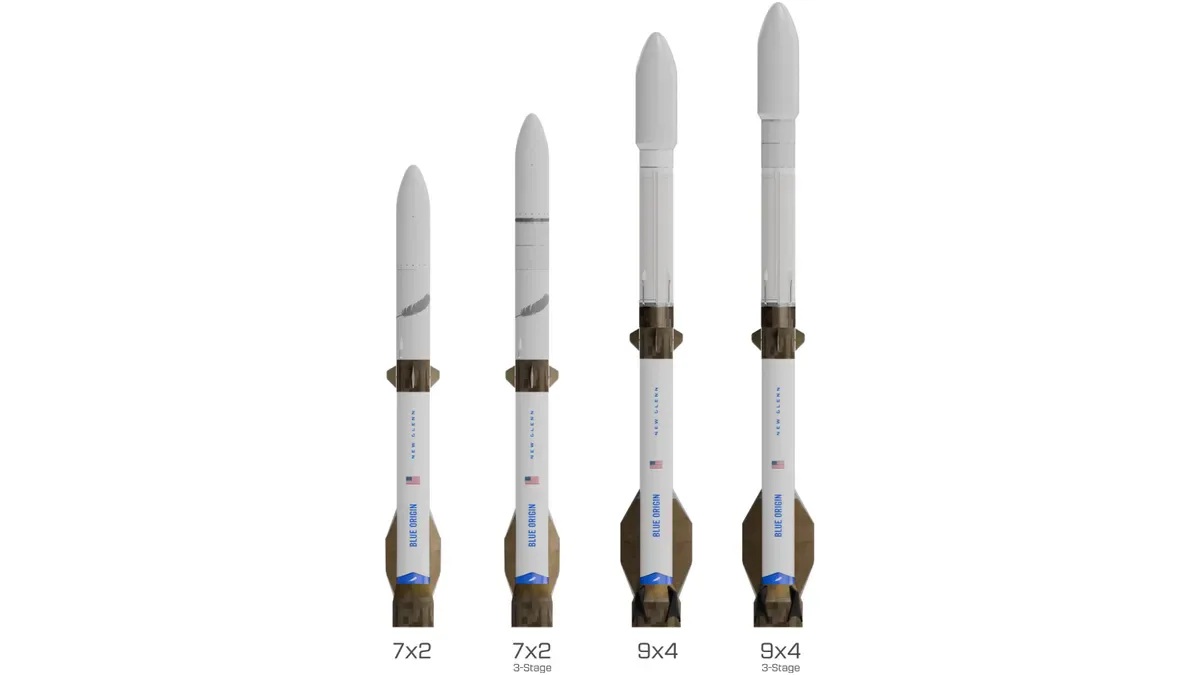
As a rocket's third stage, it must be lightweight, Limp said. For this reason, the third stage is made primarily of composite materials, which have high performance characteristics and low weight. But there is a problem with this.
The stage will be equipped with the company's BE-7 engine, which is already used in lunar landers. This engine is optimized for operation in space and uses liquid hydrogen and oxygen as propellants. But hydrogen is the smallest atom and is therefore prone to leakage. In the case of composite materials, thermal cycles and mechanical stresses can cause cracking, increasing the loss of molecular hydrogen.
Limp said the company was not sure it could build a large composite tank—in this case, 5.5 meters in diameter—that could hold hydrogen under high pressure.
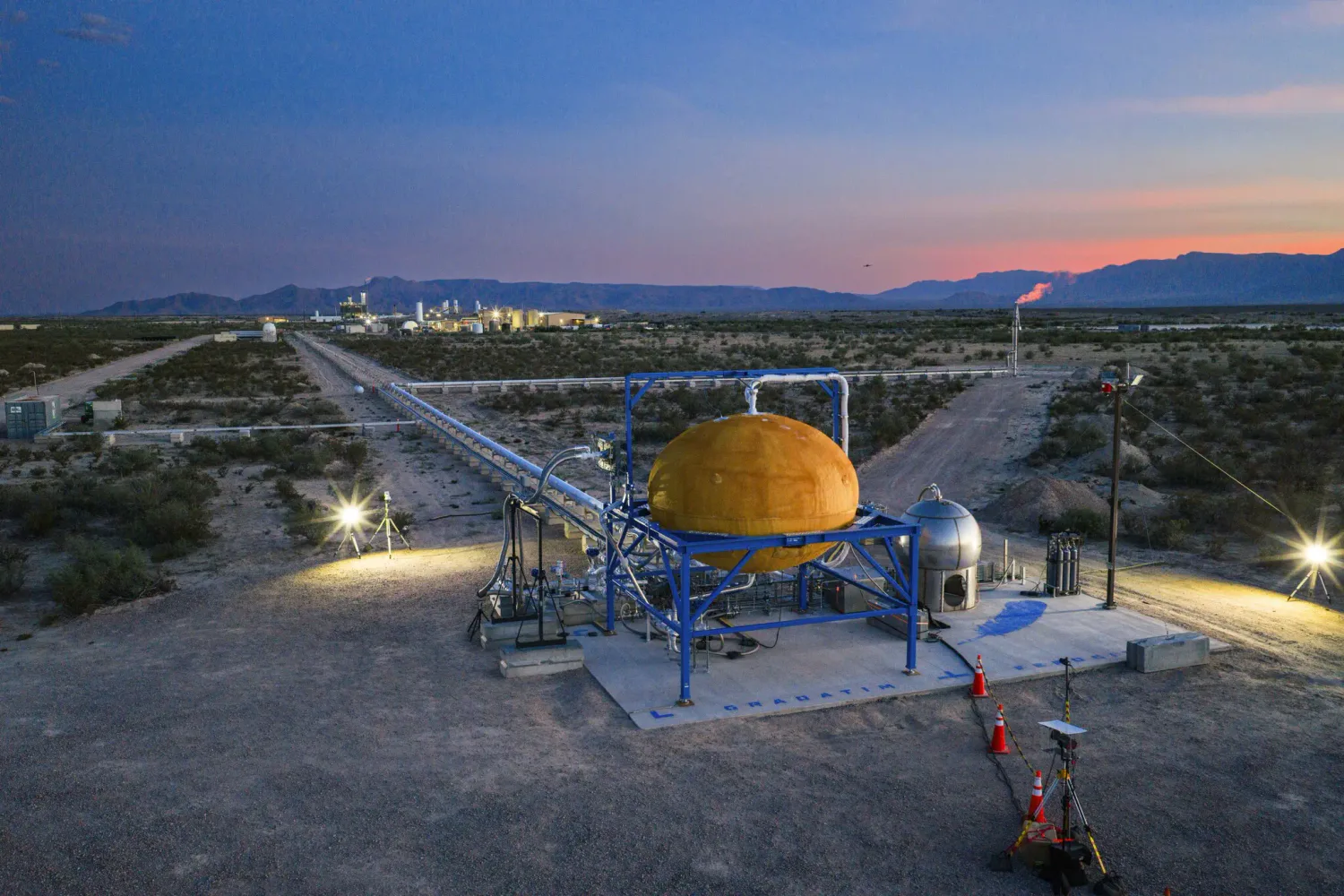
Recently, the company achieved a breakthrough at Launch Site 1 in Texas by completing the first test of a composite liquid-hydrogen tank. During the test, the tank was pressurized to 100 percent of the maximum load expected during operation for 2.5 hours. It was even successfully tested at 150 percent of that maximum pressure for 10 minutes.
This gave the company confidence that the GS3 concept based on composite tanks could be realized, and the company is now planning a 2028 debut for a government customer.
"We already have one customer with whom we are planning flights into cislunar space in 2028," Limp said. "We are open to collaboration."