










Attacks on pharmaceutical logistics: Russia uses drug shortages as a way to pressure Ukrainians
Kyiv • UNN
Russia's missile and drone attacks, which lead to a shortage of medicines and medical supplies, are an element of pressure on Ukrainians. And they fit into the logic of actions that international documents interpret as signs of a policy of national destruction.

Russia is increasingly launching targeted attacks on Ukraine's pharmaceutical infrastructure. In fact, it is turning drug warehouses into one of the targets of its war, writes UNN.
Such strikes cannot be viewed merely as property destruction or economic losses – they are part of Russia's broader strategy aimed at undermining Ukraine from within. After all, destabilizing the healthcare system and creating conditions under which a drug shortage forms in the country brings the country closer to a humanitarian catastrophe and puts pressure on the population.
A series of strikes on pharmaceutical warehouses demonstrates that Russia is using drug shortages as leverage against Ukrainians, trying to weaken the country not only at the front but also in the rear. This was stated in an exclusive comment for UNN by political scientist Stanislav Zhelikhovsky. He believes that this approach by Russia fully fits into the logic of actions aimed at psychological pressure and demoralization of the population.
A shortage of medicines can sow despair, chaos, and may incite disobedience within the country. We know what consequences this can have for the state. I think that international bodies should qualify such events as elements of genocide, as those aimed at destroying the people, their freedom, their lives.
While the expert community discusses the political implications of such strikes, pharmaceutical operators daily face realities where any of their warehouses can become a target of the aggressor country. The loss of tens of thousands of square meters of logistics centers, destroyed drug supplies worth billions, the threat of interruptions in the supply of insulin, antibiotics, or intensive care drugs – this is the reality in which businesses have to operate today.
Russia destroyed the warehouse of the pharmaceutical distributor "BaDM" in Dnipro
On the night of December 6, 2025, Russian troops launched a missile and drone attack on the distribution center of the pharmaceutical distributor "BaDM" in the city of Dnipro, as a result of which the logistics complex with an area of over 43,000 sq. m was completely destroyed, along with all drug and medical device supplies. As the company reports, the total amount of damage from the Russian strike is over UAH 5 billion. There were no casualties among employees.

And this is far from the first case of targeted Russian attacks on Ukraine's pharmaceutical infrastructure.
Russia destroyed the warehouse of the official importer of the German brand Heel "Kaskad Medical Regions" in Kyiv Oblast
Earlier, the aggressor country destroyed the warehouse of the official importer of the German brand Heel, LLC "Kaskad Medical Regions," with a targeted drone strike. Along with all drug supplies, which caused a shortage of the drug "Lymphomyosot" for lymphatic system support in Ukraine.


Within a few months, LLC "Kaskad Medical Regions" launched a new warehouse and logistics system. As reported by the deputy director of the importing company, Oleksandr Lyumakh, in early December, full restoration has been completed, and one of the popular medicines for lymphatic system support, "Lymphomyosot" from the German brand Heel, can be purchased in pharmacies without difficulty.
We have resumed supplies of "Lymphomyosot" and have already sent the first batches to pharmacy chains. Despite difficult circumstances, the war, and constant shelling, we continue to provide the market with high-quality Heel preparations and will make every effort to ensure that such interruptions do not occur again.
Russia destroyed the warehouse and office of the pharmaceutical distributor "Optima-Pharm" in Kyiv
In addition, on the night of October 25, Russia completely destroyed the warehouse and office of one of Ukraine's largest pharmaceutical distributors, "Optima-Pharm," in Kyiv. As a result of the missile attack, a logistics complex with an area of about 29,000 sq. m burned down, along with all medical supplies and equipment. The State Emergency Service involved a helicopter to extinguish the large-scale fire.
According to the company's estimates, losses reached over $100 million. This is because this warehouse stored about 20% of the monthly supply of medicines for Ukrainian patients – from insulin and antibiotics to hospital drugs for intensive care. The destruction of this facility caused temporary delays in drug supplies in the capital and central Ukraine. And the company itself was forced to urgently rebuild logistics routes.
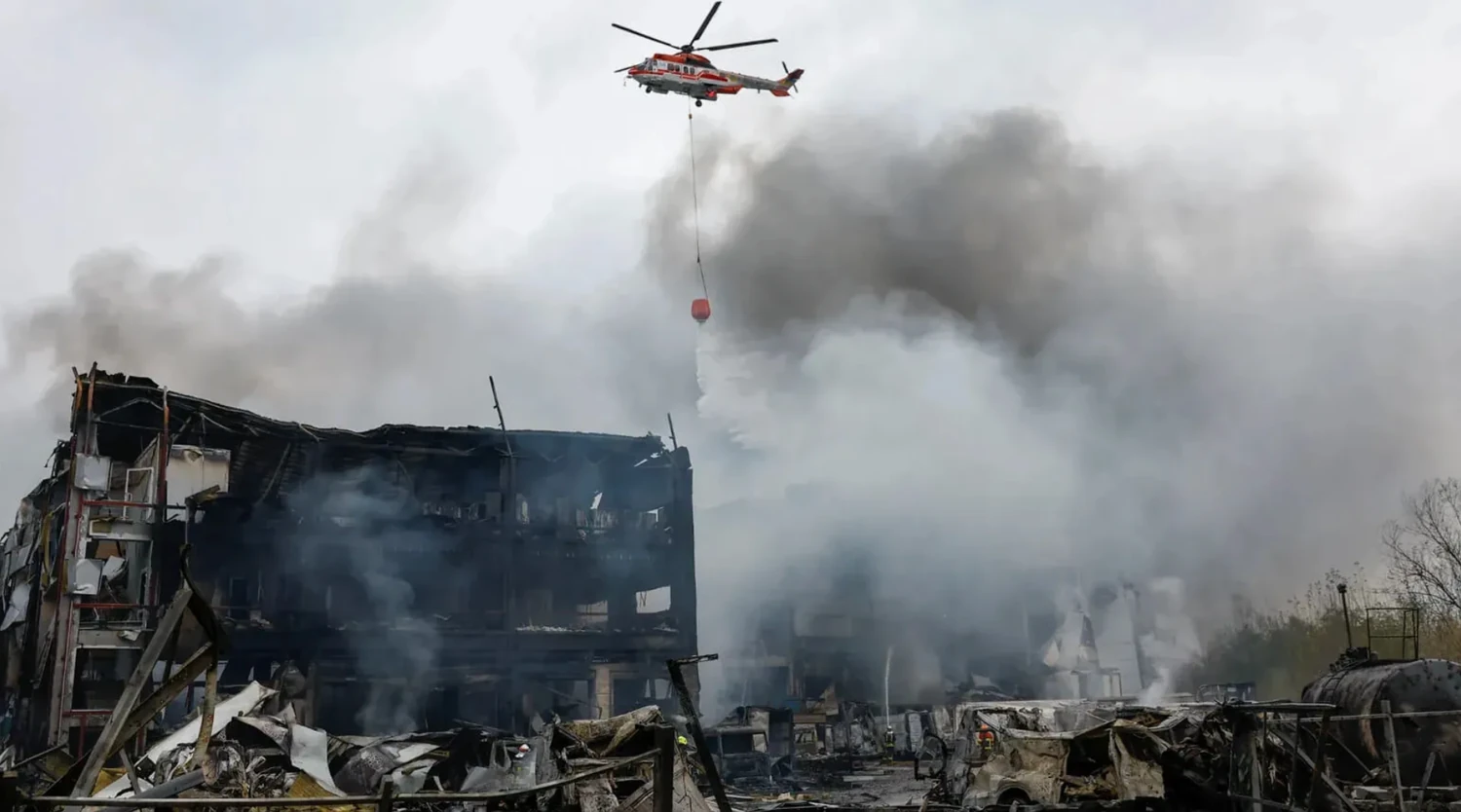

This is the second attack on "Optima-Pharm" – the previous hit occurred in late summer 2025. At that time, a Russian missile also hit one of the company's pharmaceutical warehouses. However, the damage was partially eliminated, and the company's operations were quickly restored.
The systematic nature of Russian attacks indicates that strikes on warehouses are not accidental, but a deliberate strategy aimed at creating shortages, chaos, and undermining trust in the state healthcare system.
That is why the issue of Russia's responsibility for the destruction of facilities that provide medical treatment to the civilian population already requires international legal assessment today. After all, attacks on pharmaceutical warehouses are not only war crimes, but also actions that bear the hallmarks of a policy directed against the very right of Ukrainians to life.