










Another lawsuit against Odrex: the widow of a clinic patient claims document forgery and medical negligence
Kyiv • UNN
Olha Melai, the wife of a deceased patient of the Odrex clinic, is preparing for court, alleging falsification of medical documents, delayed diagnosis, and fatal decisions by medical staff. She is convinced that the clinic concealed her husband's cardiac arrest during surgery and made other errors that led to his death.

Olha Melai, the wife of a patient who died after treatment at the Odesa clinic Odrex, is preparing for the first court hearing in a medical negligence case that, in her opinion, took her husband's life. The woman spoke about the falsification of medical documents at the Odrex clinic, the delay in diagnosing the disease, and the doctors' decisions that could have been fatal. Read the tragic story of Olha's husband's death after treatment at Odrex in the UNN material.
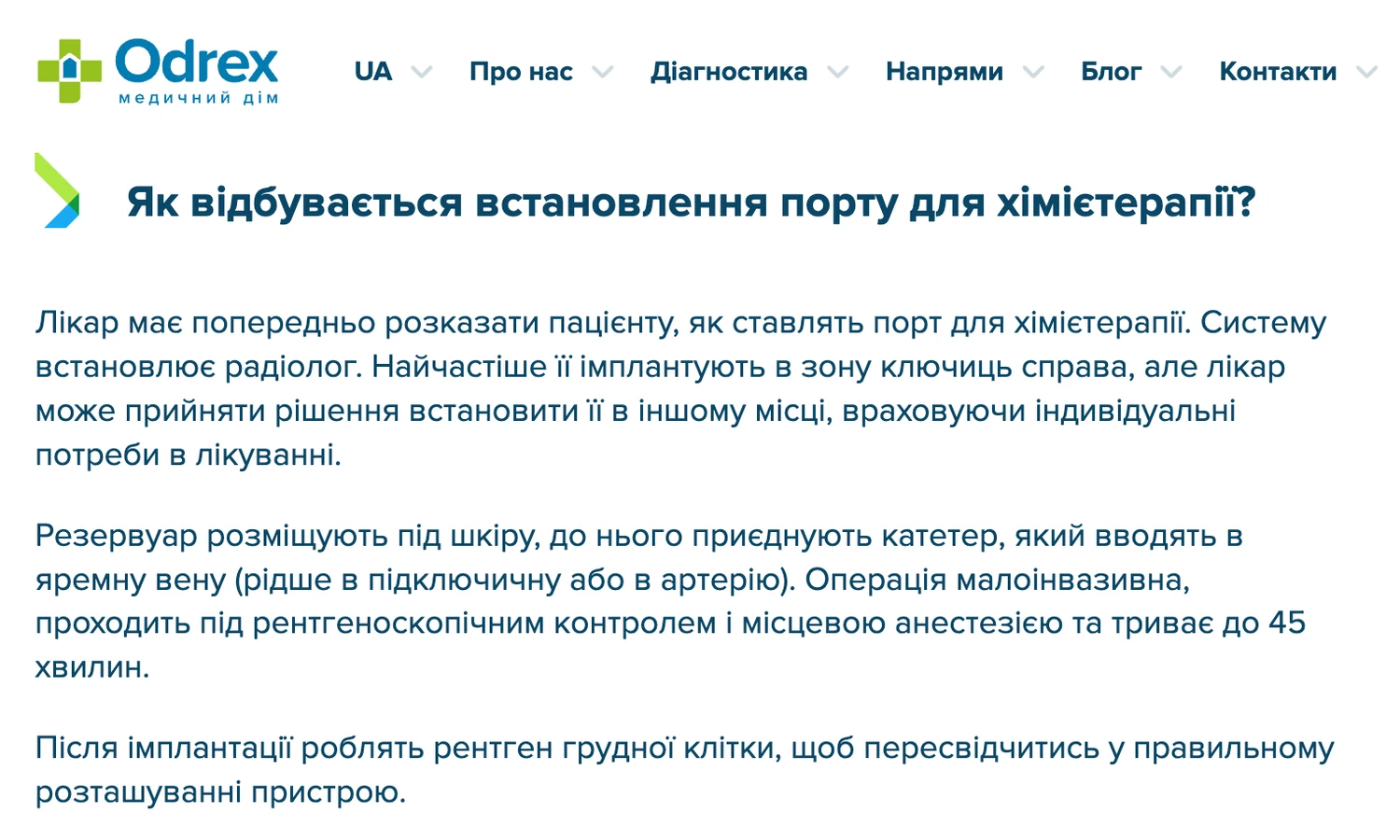
Olha Melai's husband was treated at the Odesa private clinic Odrex with a diagnosis of B-cell lymphoma. He was undergoing chemotherapy when the clinic offered to install a special subcutaneous port for easy drug administration. The procedure was supposed to last half an hour under local anesthesia. As Odrex itself advertises on its official website, it is a minimally invasive, safe, outpatient operation that takes less than 45 minutes.
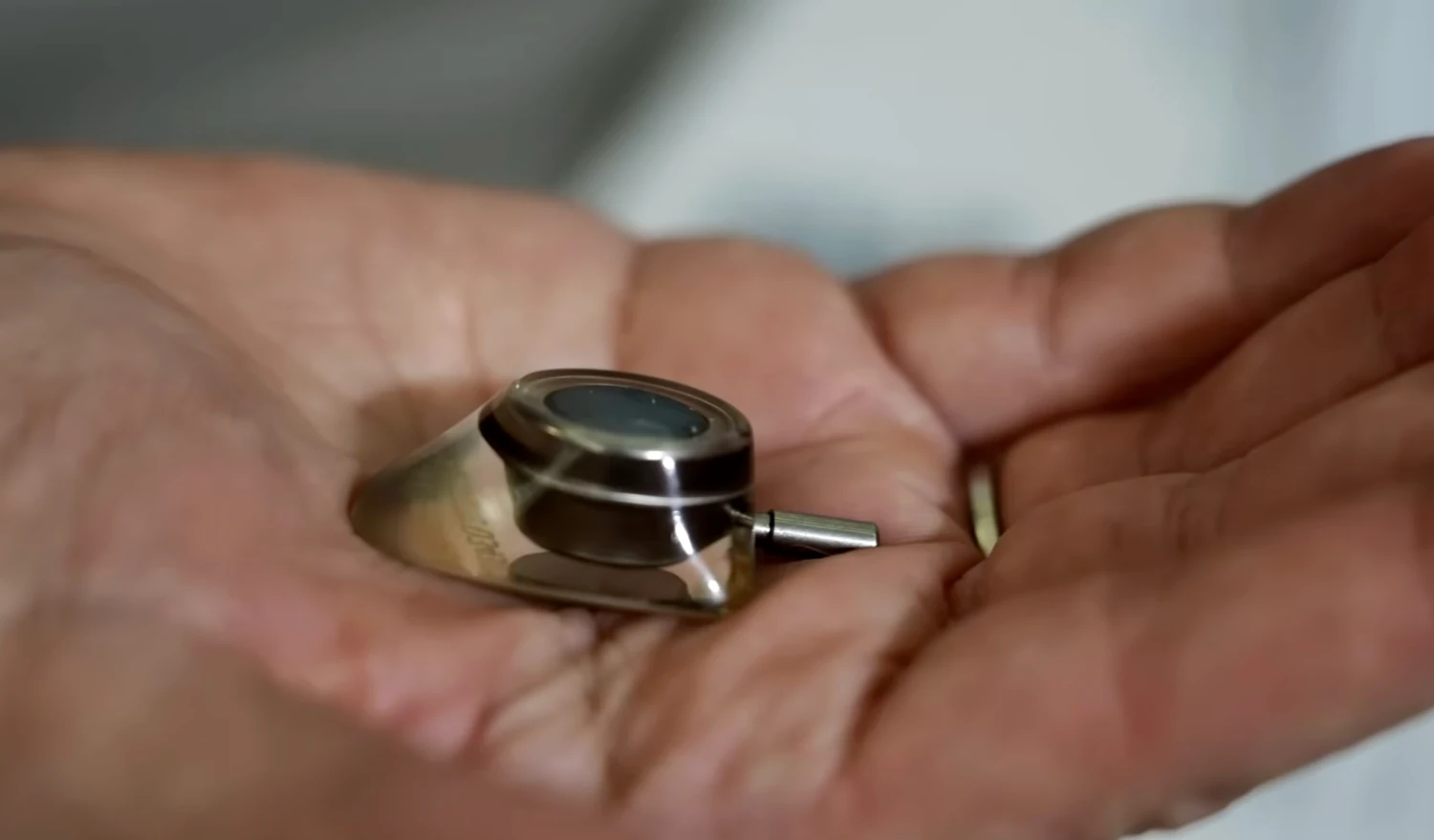
However, everything did not happen as promised by the clinic. The husband was taken to the operating room, but he did not come out of it in half an hour, or even in two. Olha waited outside the door for almost three hours, receiving no explanations from the doctors. When the surgeons came out, they confidently stated: "Everything went successfully, your husband is starting a new life." But instead of a new life, the patient ended up in intensive care - in critical condition.
Olha recalls that when she first saw her husband, he could not breathe on his own, his kidneys failed, and the monitor by the bed was black: no pulse, no saturation, only a recorded body temperature of 33 degrees. The doctors sharply changed their rhetoric and said that he might not live until morning. On the very first day, five liters of fluid were pumped out of the patient's chest.
To Olha's question about why general anesthesia was used instead of the promised local anesthesia, the doctors only argued: "We know better what anesthesia to use for the patient." After three days in intensive care, the husband began to slowly stabilize. And at this very moment, despite the critical condition he had experienced, "Odrex" decided to continue the course of chemotherapy. After another administration of "chemo," the clinic itself refused to continue treatment, because the patient's condition was rapidly deteriorating. The "new life" never began, Olha's husband died.
The woman is convinced that the clinic concealed her husband's cardiac arrest, which could have occurred during the operation. After all, the sharp deterioration of his condition and the significantly increased operating time may indicate that something critical could have happened during its performance. The wife of the deceased patient is convinced that the continuation of chemotherapy was another fatal mistake of the Odrex clinic.
If there was something wrong with his heart, then this course should not have been done. Because they finished off his heart with this chemotherapy. There was a chance for remission. But this small operation, with this small thing, destroyed all the efforts of both oncologists and my own.
The real shock came when Olha received the anamnesis - medical documents about the patient's discharge. There was not a word about the operation in them: neither about the intervention, nor about the anesthesia, nor about the complications, nor about kidney failure, nor about the reasons for resuscitation. Only one line: "Port installed." Without description, without performers, without consequences.
In the discharge summaries, I saw that the doctors wrote that we were admitted for treatment on April 28, for inpatient care. But we stayed with them on April 26, 27, and 28. There is not a word in the discharge summary about the operation, about the consequences, about the recommendations after this operation. The only thing in the discharge summary is one line that says that the patient has a port installed. Where it is installed, by whom it is installed - none of this is in the discharge summary.
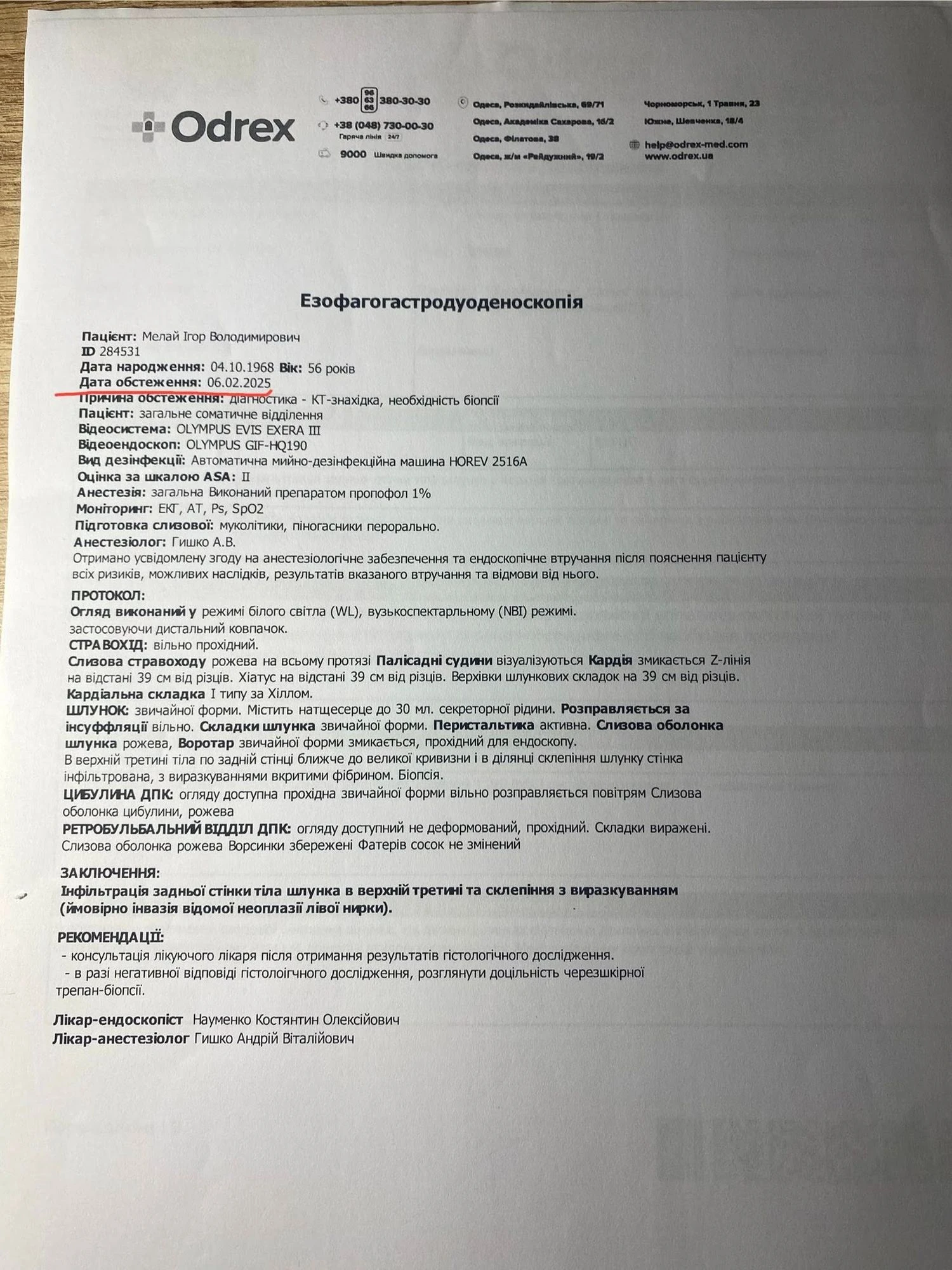
While preparing for court regarding medical negligence that could have led to the patient's death, Olha discovered another proof of how "Odrex" delayed treatment. According to the documents the woman has, her husband waited for the results of the biopsy and immunohistochemistry for 22 days, although the study itself lasted only 15. The rest of the time was transportation, waiting, transfers, bureaucracy. Nine extra days when the disease progressed, and the clinic issued bills: an average of 20 thousand hryvnias per day.
The total duration of the study was 22 days! Of these, the study itself lasted 15 days, and transportation, patient notification, and money transfer took 7 days! 5 days for biopsy and 4 days for material delivery to Kyiv! Is this the 19th century?
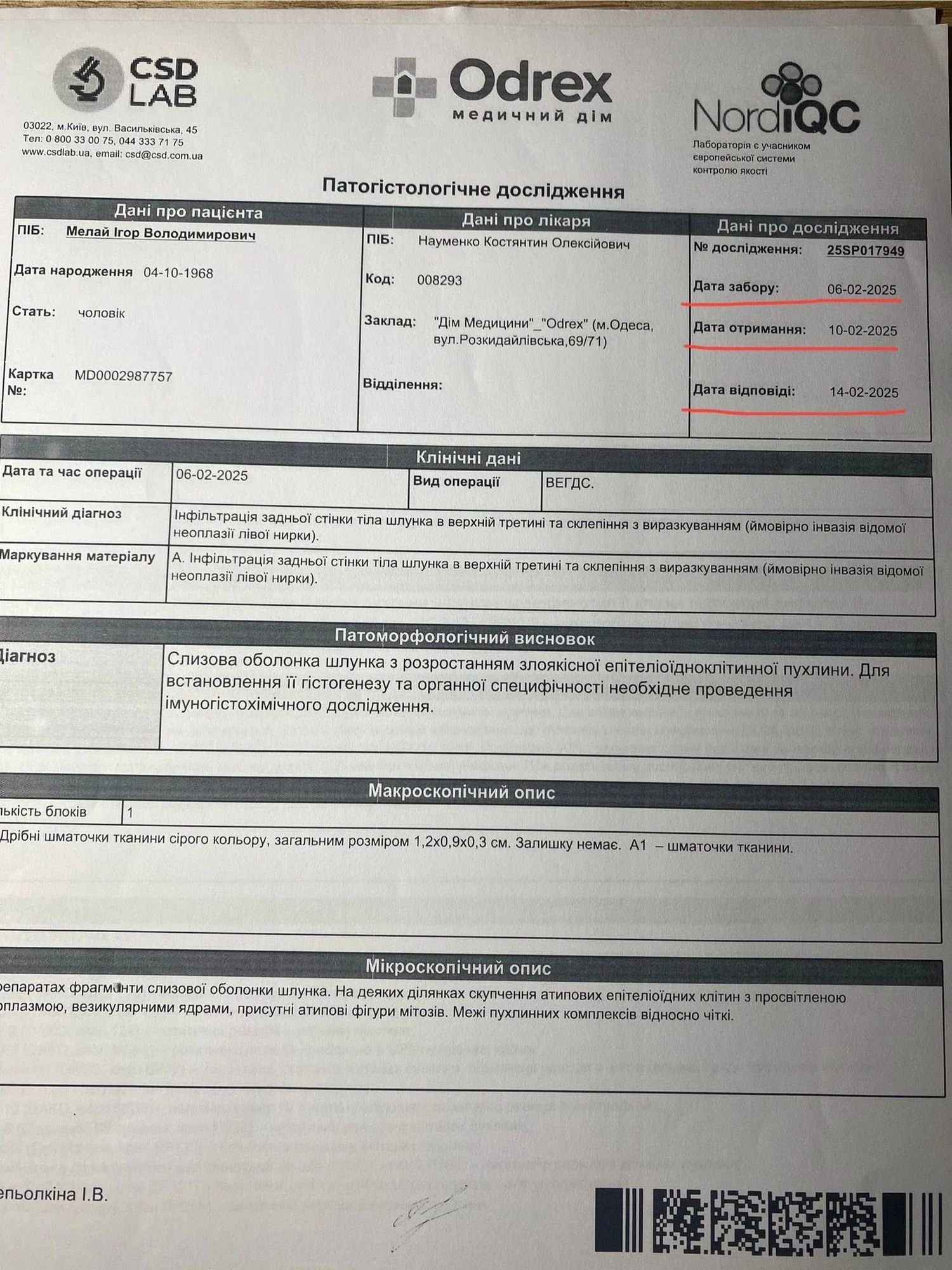
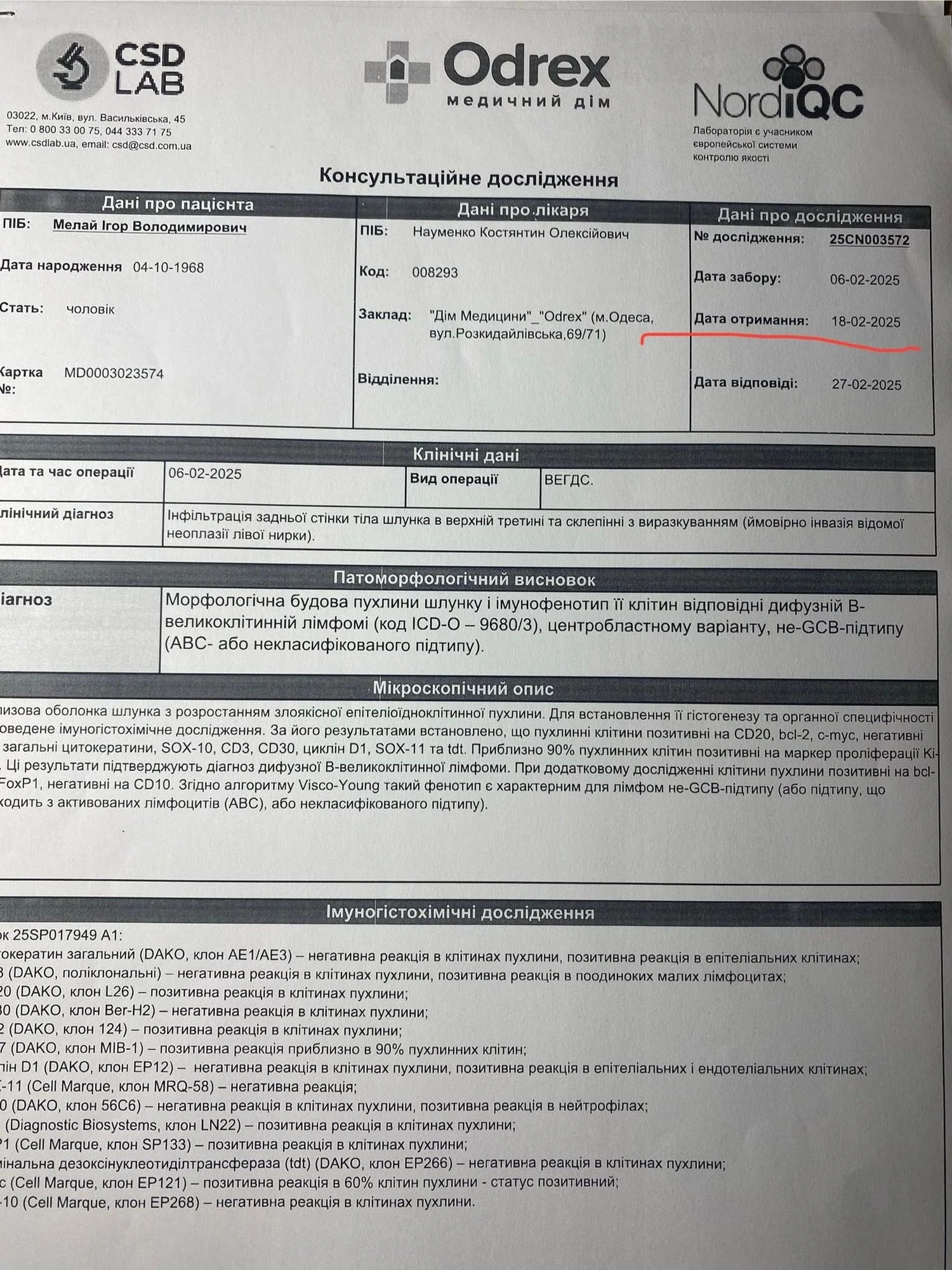
During the entire course of treatment, the family paid the Odrex clinic more than 2.5 million hryvnias. But for Olha, the issue of money is the last thing she worries about. The most important thing is the issue of time, which was stolen from her husband every day: waiting, wrong decisions, concealment of complications, and diagnostic chaos bordering on intentionality. Today, Olha Melai goes to court, armed with documents, facts, and her main motive - to restore justice and punish those responsible who took her husband from her.
Documentary film "Wasp's Nest" Odrex
Unfortunately, the story of the Melai couple is not unique. More and more former patients and relatives of those who closed their eyes within the walls of the Odrex clinic are finding the strength to tell about their own tragedies. The documentary film "Wasp's Nest" collects stories of people who, as they themselves say, suffered due to the actions of the Odrex clinic. Those who were "treated" at "Odrex" talk about delayed diagnosis, falsification of documents, extortion, and threats from the clinic's administration.
Former patients and their relatives appealed to Ukrainian law enforcement officers and society, asking them not to "close their eyes" to the situation around Odrex. They ask for justice and punishment for those responsible for the deaths of patients. They also call for preventing new tragedies within the walls of the private clinic "Odrex."
Revoked medical license of the "Odrex" clinic
The Ministry of Health suspended the medical license of the Odrex clinic. The reason was the clinic's refusal to provide medical documentation to representatives of the commission for compliance with licensing conditions. Therefore, as of January 1, 2026, the Odrex clinic will not be able to provide medical services from the legal entity LLC "Dim Medytsyny," which is involved in criminal proceedings regarding the death of patient Adnan Kivan.
Similar inspections are not new to "Odrex." As is known, the Department of Health of the Odesa Regional Military Administration found violations in the clinic's medical records.
But even the fact that one regulatory body found violations, and another could not even get access to medical documentation and decided to revoke the medical license, will not prevent the Odrex clinic from continuing to provide medical services.
After all, the license was revoked from LLC "Dim Medytsyny." However, as UNN previously wrote, in addition to it, the clinic has at least 2 more medical licenses for other legal entities. One of which the Ministry of Health issued to the clinic in the summer of 2025 - already after the start of the investigation into the death of Adnan Kivan within the walls of Odrex.
Whether the Ministry of Health plans to initiate an unscheduled inspection of compliance with licensing conditions by other LLCs of the Odrex clinic is still unknown. After all, despite criminal cases and dozens of possible victims - the "Odrex" clinic, it seems, has a privileged position and a certain immunity.
It is known that Tigran Harutyunyan, the general director of Odrex, in July 2023 joined the working group of the Ministry of Health, created for the development of private medicine. It was personally headed by Minister Viktor Liashko. It can be assumed that the head of the clinic has some ability to influence processes within the ministry or use personal contacts to maintain the regulator's loyalty. Such circumstances create an obvious conflict of interest and may explain why the ministry did not react to complaints, statements, public stories of victims, and even to the fact of a patient's death within the clinic's walls and active investigative actions on this fact.
The "Odrex case" has become a certain test for the country's medical system and personally for Minister Viktor Liashko - is the Ministry of Health ready to act transparently and impartially to protect the Ukrainian patient? Only time will tell.