










Agrarian science under threat: why the seizure of land from the National Academy of Agrarian Sciences is a strategic mistake at the state level
Kyiv • UNN
The State Property Fund is initiating the transfer of NAAS lands to the state enterprise "Reserve", which threatens scientific research. This may lead to the loss of Ukraine's agricultural independence.

The National Academy of Agrarian Sciences of Ukraine (NAAS) has found itself in a confrontation with the State Property Fund of Ukraine (SPFU), which initiated the transfer of over 135,000 hectares of agricultural land used by scientific institutions and enterprises of the Academy to the state enterprise "Reserve" for further lease. The formal reason given is "inefficient use," but in fact, the unique scientific infrastructure that has been forming the innovative potential of the Ukrainian agricultural sector for decades is under threat. Some studies have a cycle of up to 10–15 years, and their results are critical for maintaining national sovereignty in the field of agricultural production, writes UNN.
Agrarian science under the gun: what is behind the decision to seize land
The SPFU published an official statement in which it appeals to the fact that the land is not being withdrawn from state ownership, but will bring more revenue to the state budget. The Fund directly states that in 2024, 276,000 hectares used by NAAS brought UAH 3.4 billion in revenue, which, according to their logic, is "many times less" than the private sector. In fact, the term "inefficiency" hides a deep misunderstanding of the specifics of scientific agricultural activity.
NAAS explains that the land that is currently under threat of seizure is the basis of the work of 42 scientific institutions and 63 state enterprises of NAAS, including experimental farms, research institutes, and national scientific centers. This includes testing grounds for breeding work and creating new varieties of agricultural crops, territories for growing elite seeds, testing the latest agricultural technologies, and preserving and developing the base of genetic resources of plants and animals.
Grown in Ukraine: not commerce, but strategic infrastructure
For example, the National Academy of Agrarian Sciences of Ukraine is one of the key compilers of the State Register of Plant Varieties Suitable for Distribution in Ukraine. Over the past decades, NAAS scientists have achieved impressive results in breeding:
- over 120 varieties of wheat − adapted to Ukrainian
soil and climatic conditions;
- over 120 corn hybrids − different maturity groups and directions
of use;
- over 100 varieties of potatoes − including high-yielding and disease-resistant
to diseases;
- about 500 varieties and hybrids of vegetable and melon crops;
- about 200 varieties of fruit and berry crops;
- over 150 varieties and hybrids of other major agricultural
crops, including: sugar beets, barley, oats, rice, buckwheat, soybeans, millet, alfalfa and clover.
In fact, the scope of NAAS covers the entire cycle of scientific support for the agro-industrial complex of Ukraine − from fundamental research in breeding and genetics to the introduction of innovative technologies in production. The achievements of the Academy's scientists not only provide farmers with high-quality domestic seed material, but also form the basis of Ukraine's agricultural self-sufficiency, significantly reducing dependence on imported varieties, hybrids and technologies.
Simply put, the functioning of the NAAS system is a real tool thanks to which Ukrainian farmers have their own high-quality seeds and modern technologies that are well suited to our soil and climate. This means that they can grow more while spending less − without having to buy expensive imported seeds or additional chemicals. That is, our agricultural sector is holding its own and competing in the world market.
Among these achievements are the varieties of winter wheat "Ukrainka 0246" and "Myronivska 808". They are already sown on more than 1.5 million hectares across the country. These varieties are resistant to diseases, adapted to real conditions and give a stable yield even when the year is not very good. High-quality grain made in Ukraine is not a dream, it is already our reality.
In addition to working with grain, vegetable and forage crops, NAAS also owns unique national collections of fruit and berry trees and medicinal plants. Academic institutions not only preserve these collections, but also actively propagate high-quality seedlings suitable for industrial cultivation and orchard renovation.
Collections that have no duplicates: a unique heritage under threat
Of particular value are the samples taken out and preserved after the occupation of the Crimean peninsula by Russia. They were rescued from scientific gardens and collections that existed on the territory of the peninsula and integrated into the NAAS breeding and cultivation system in the controlled territory.
One such collection, which includes about 20 varieties of trees, including fruit and medicinal crops, is located on the land plots of the Institute of Horticulture of NAAS. These plots are also included in the list of those that may be seized in favor of the state enterprise "Reserve". The necessary conditions have been created on this territory for the collection for years: special planting schemes, irrigation and watering systems, protection from hail, control of temperature and soil moisture. These factors are critical to maintaining the viability of plants and preserving their genetic properties.
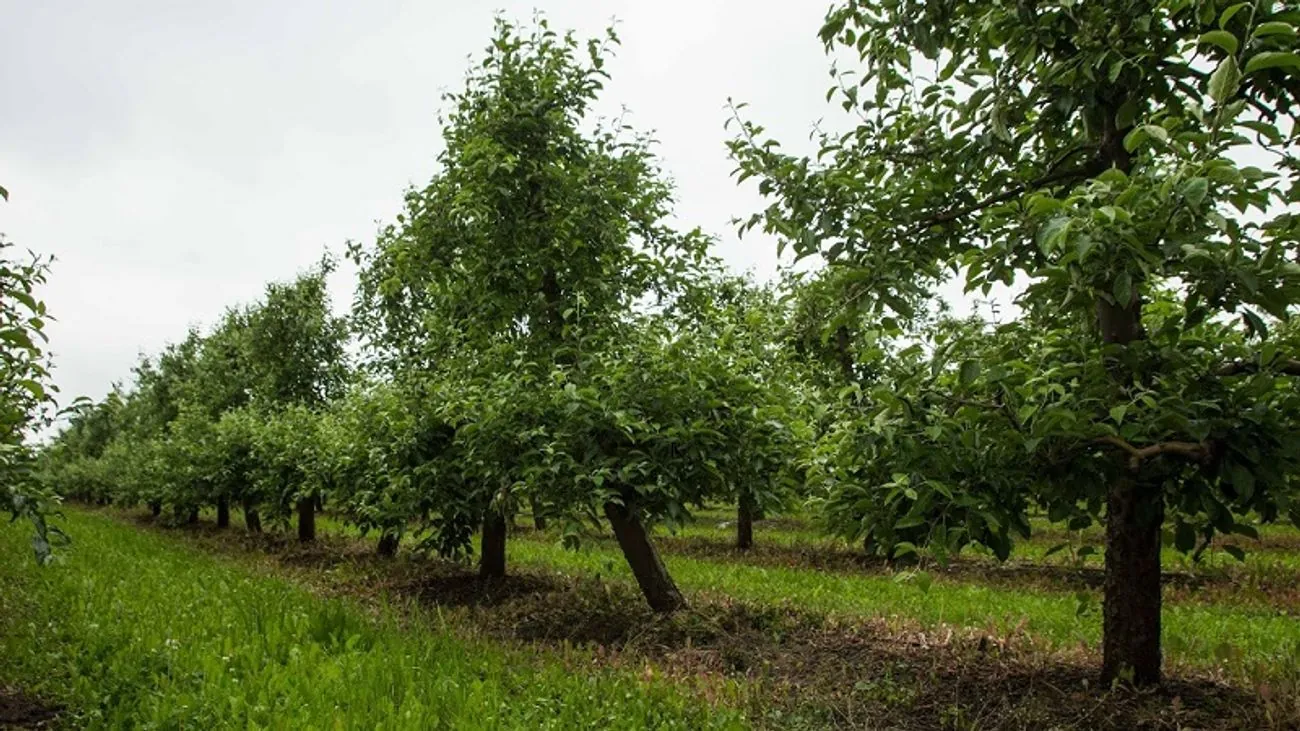
Physical transfer of the collection to another location is almost impossible. Even if such an attempt is made, it is difficult to imagine its cost − both financial and scientific. After all, in this case, it is necessary to preserve not only the plants themselves, but also their root system, soil microflora, growing and vegetation conditions. All of these are delicate, long-term mechanisms that cannot simply be "transported".
The choice is actually simple: either preserve the unique national heritage that can be developed and passed on to future generations, or destroy it for the sake of short-term and not at all guaranteed profits that do not compare to the value of what is preserved.
In addition, NAAS preserves such elements of the Ukrainian agricultural sector as the geographical brand "Melitopol Cherry", which is well known not only in Ukraine but also abroad. The occupiers are already appropriating the brand, so the preservation and development of such varieties is part of Ukraine's cultural and economic heritage, which is no less important than industrial capacity or export potential.
Taking land = destroying the experimental animal husbandry system
Another area of work of NAAS specialists is the development of animal husbandry. Scientists of the academy are working on creating new breeds of cattle, pigs, sheep, rabbits, poultry and fish. Particular attention is paid to studying the needs for closed-cycle farming facilities − when everything from the birth of the animal to the production of meat or milk takes place within the same farm. Such farms can raise tens of thousands of heads and do not depend on imported supplies.
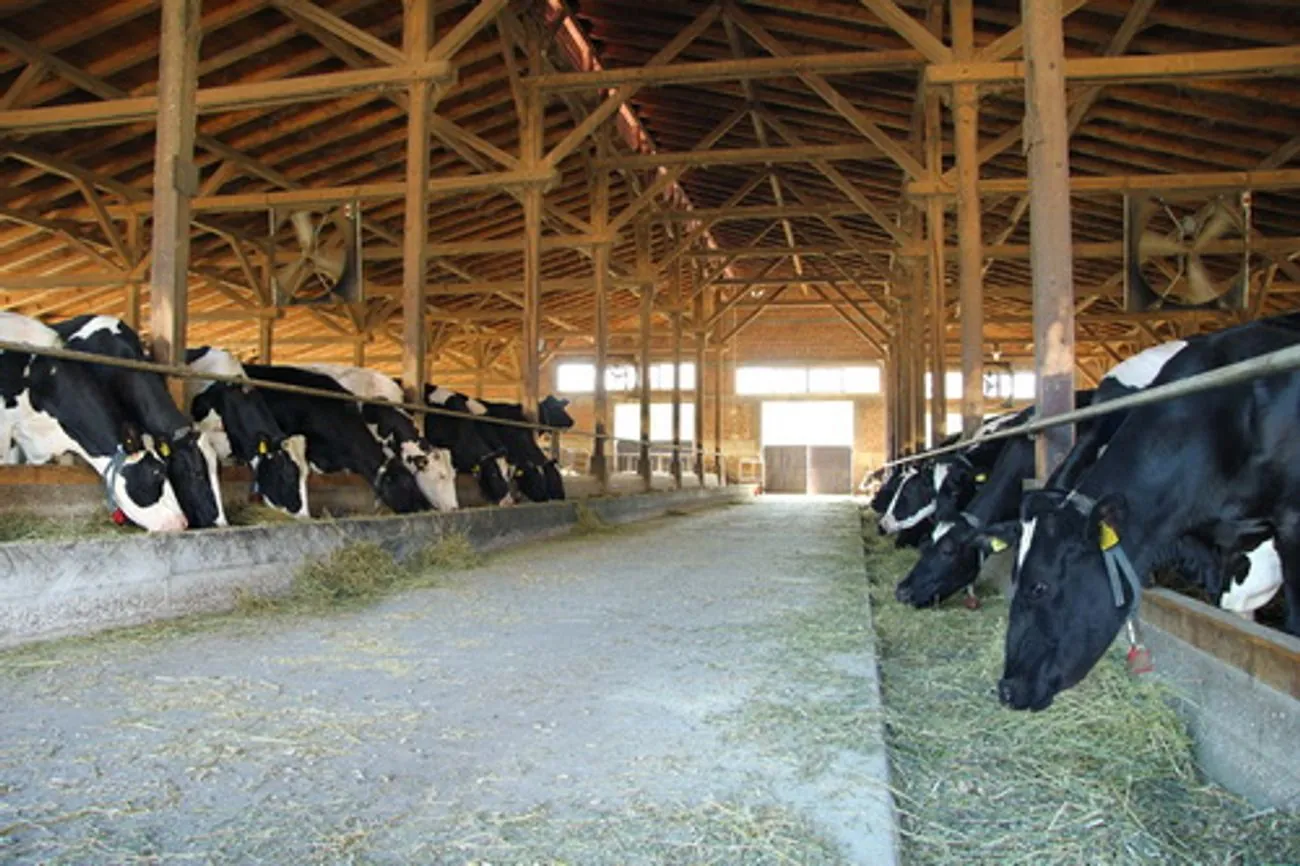
If these enterprises lose their land, all breeding animal husbandry will be under threat. Today, NAAS enterprises keep over 18,000 heads of cattle, almost 10,000 pigs, about 2,000 sheep and over a thousand heads of poultry. All of this requires feed, which is grown in its own fields, and space to ensure proper housing conditions.
This is not commercial farming, but a scientific base that allows Ukraine to develop its own breeding, preserve breeds, be independent in the production of livestock products and maintain food security. If animal husbandry has to be curtailed immediately, it could lead not only to the loss of a resource created over the years, but also to environmental problems.
What about the EU?
While the National Academy of Agrarian Sciences of Ukraine is in a state of uncertainty and virtually terrorized by the threat of mass land seizures, leading European countries, on the contrary, are actively investing in the development of the very activities that NAAS provides in Ukraine. Again, we are talking about agricultural science, breeding, bioeconomy, rural development, animal husbandry support and food security.
For example, the EU's Horizon Europe research and innovation program for 2021–2027 provides for the allocation of EUR 10 billion to projects related to food, agriculture, rural development and the bioeconomy.
At the national level examples − in 2023, the German government spent EUR 658.23 million on research and development in the agricultural sector, which is the highest figure among European countries. Spain and Italy's spending on agricultural research amounted to €335.69 million and €317.29 million respectively, indicating a significant focus on the development of agricultural science.
And while Europe supports and develops agricultural science, Ukraine risks losing it due to decisions that do not take into account either scientific or food logic. The seizure of land from NAAS is not just an administrative step, it is a symbolic rejection of its own agricultural model in favor of external dependence.
Instead of conclusions: land is more than a resource
Against the background of European examples, it is clear: investing in agricultural science is the norm for developed countries. And destroying it is a path to technological backwardness and food vulnerability.
Thus, the seizure of land from the National Academy of Agrarian Sciences of Ukraine has profound and dangerous consequences. For many years, Ukrainians have been accustomed to perceiving their country as an agrarian one – with fertile lands, strong agriculture and its own scientific base in this area, but now there is a risk of losing control over their own food sector, the ability to develop their own varieties, technologies and breeds. The entire chain – from scientific development to production – may be under external influence and dependence on the imported model of agricultural production – this is higher cost, lower quality, job losses, increased external dependence.
Science must work for the country, not fade into the shadows due to lack of access to resources. In a time of war, when every hectare and every development matters, the destruction of agricultural science is not a path to efficiency, but a direct blow to national resilience. NAAS really needs development and renewal, but not deprivation of land. Because land is more than a resource or territory – it is a tool on which food security, independence and the future of the state depend.