









The Cabinet of Ministers removed the site of the Pereiaslav Council of 1654 from the State Register of Immovable Monuments
Kyiv • UNN
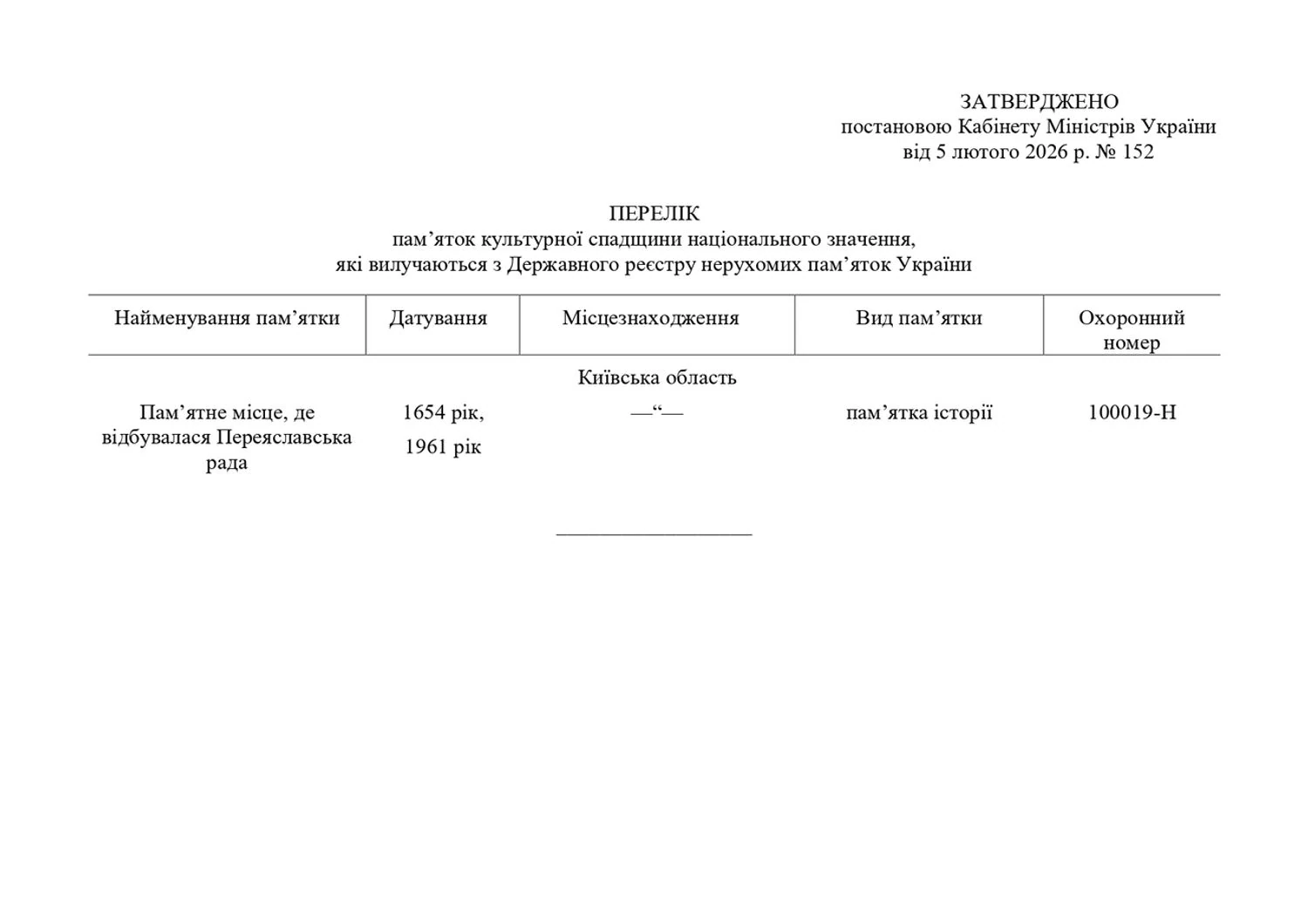
The Cabinet of Ministers of Ukraine has removed from the State Register of Immovable Monuments the site where the Pereiaslav Council of 1654 took place. At that time, the Ukrainian Cossack state came under the protectorate of the Moscow state.

The Cabinet of Ministers of Ukraine has removed from the State Register of Immovable Monuments the place where the Pereiaslav Council of 1654 took place. At that time, the Ukrainian Cossack state, the Zaporizhian Host, led by Hetman Bohdan Khmelnytsky, came under the protectorate of the Moscow state, led by Tsar Alexey Mykhailovych Romanov. This is reported by UNN with reference to government decree No. 152 of February 5, 2026.
Details
The memorial site where the Pereiaslav Council took place is located in the Kyiv region. In 1654, Hetman Bohdan Khmelnytsky concluded a military-political alliance with Muscovy against the Polish-Lithuanian Commonwealth (a state that united the Kingdom of Poland and the Grand Duchy of Lithuania - ed).
At that time, Khmelnytsky was looking for an ally in the war against the Polish-Lithuanian Commonwealth, considering the tsar's protectorate as a situational step to preserve the Hetmanate or the Zaporizhian Host.
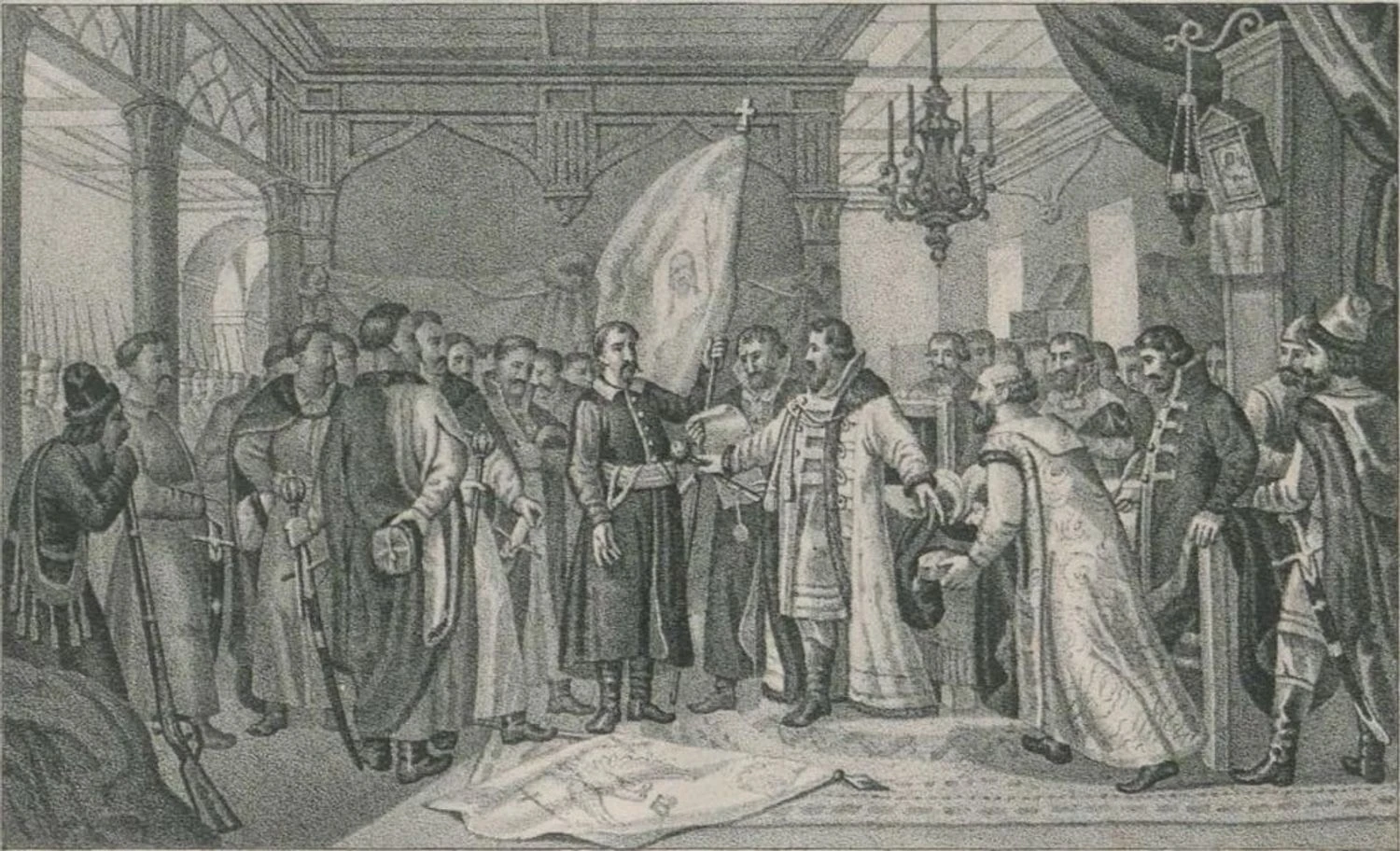
The Cossacks swore allegiance to Tsar Alexey Romanov, but, according to legend, the Moscow envoy Vasyl Buturlin refused to swear on behalf of the tsar. He is credited with the words: "The autocrat does not swear to his subjects, but your liberties will be preserved."
However, this decision was not supported by some influential figures, including Cossack otaman Ivan Bohun and Kyiv Metropolitan Sylvester Kosiv.
In Russian historiography, this event is described as the "voluntary reunification of fraternal peoples" - Ukrainian and Russian. In 1954, the 300th anniversary of these events was celebrated in the USSR.
Recall
The National Museum of the History of Ukraine showed what a noble parade saber from the late 17th to the first half of the 18th centuries looks like. It features an image of Archangel Michael and a bust of the Polish king Stefan Batory.
UNN also reported that a bust of Ukrainian Hetman Ivan Mazepa was unveiled in the Kyiv-Pechersk Lavra.