










Dollar tree in your home: secrets of Zamioculcas care and transplanting rules
Kyiv • UNN
Zamioculcas, known as the dollar tree, is an unpretentious tropical plant that decorates the interior and, according to beliefs, brings financial well-being. UNN has collected recommendations for Zamioculcas care, including watering, fertilizing, transplanting, and propagation, so that it pleases with healthy leaves and flowering.

Zamioculcas - a plant known as the dollar tree, not only decorates the interior with its shiny green leaves, but also, according to beliefs, brings financial well-being. The unpretentious and hardy plant, native to the tropical regions of Africa, adapts perfectly to apartment conditions, tolerates shade and drought. UNN has collected recommendations for caring for zamioculcas so that it will delight with healthy leaves and even flowering for many years.
What is a dollar tree
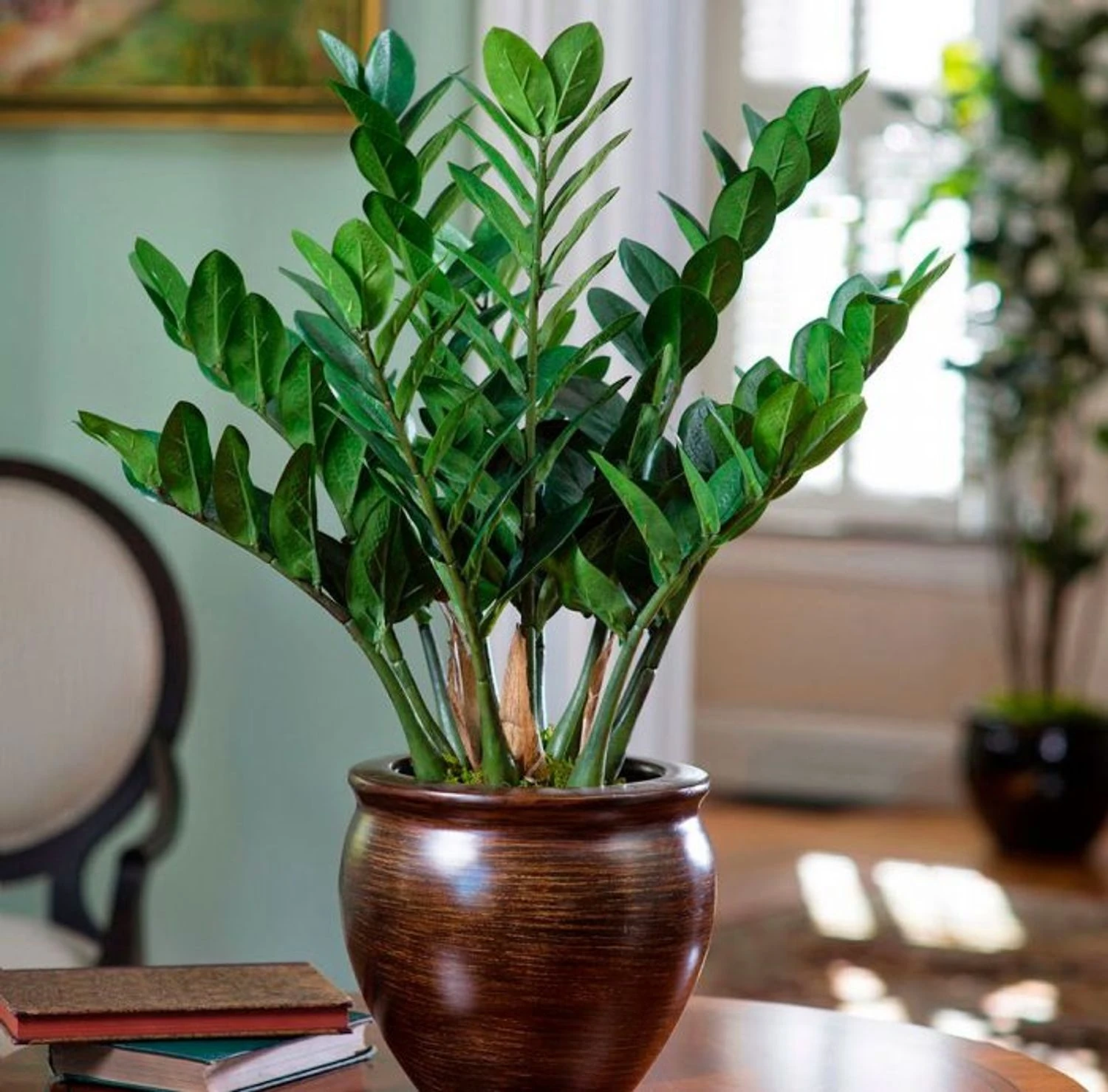
Zamioculcas (Zamioculcas zamiifolia) is a tropical houseplant of the Araceae family. It is known for its resilient decorative leaves and unpretentiousness. Popularly, this plant is also called the dollar tree; according to beliefs, it brings financial well-being and increases income to the home. This is due to its shiny dark green leaves, which are associated with dollars. Zamioculcas is native to the tropical regions of Africa, particularly Tanzania and Kenya, which is why it is highly resistant to shade and drought, making it ideal for apartments and offices.
Conditions for growing zamioculcas
Zamioculcas can live for many years and even bloom indoors, although its flowers are small and inconspicuous. However, it is worth remembering that the plant is toxic to pets if parts of the leaves or rhizome are consumed.
Zamioculcas belongs to heat-loving plants, so it tolerates heat well. The best temperature for it in summer is about +25°C, while in winter experts advise keeping the plant at a temperature not higher than +16°C. If you have an insulated loggia or balcony, the zamioculcas pot can be moved there. However, it is important that the temperature does not drop below +12°C.
Where is the best place to put a zamioculcas pot?
The plant thrives in bright, diffused light, but can also adapt to partial shade. The optimal place for the pot is a windowsill on the east or west side. If the plant is on a south-facing window, it should be shaded during the hottest hours to avoid leaf burns. If you have just purchased or repotted the plant, it is best to place it in partial shade for adaptation during the first few days. Zamioculcas can grow in a darker corner, but this will slow its growth. To keep the leaves straight and the plant in shape, the pot should be periodically rotated to the light source from different sides.
How to properly water a dollar tree
Thanks to its fleshy leaves, zamioculcas tolerates dry air well, and a lack of moisture is not critical for it. It can go without watering for more than a week; the most important thing is to avoid excess moisture, which harms the plant. However, during the heating season, the pot should not be placed close to radiators. Spraying is not necessary for zamioculcas, but a monthly warm shower is useful for cleaning dust from the leaves.
Zamioculcas should be watered only after the soil has completely dried out. In summer, the guideline is a slight drying of the root tuber; in winter, the plant is left in almost dry soil, moistening it only when it is clearly dry.
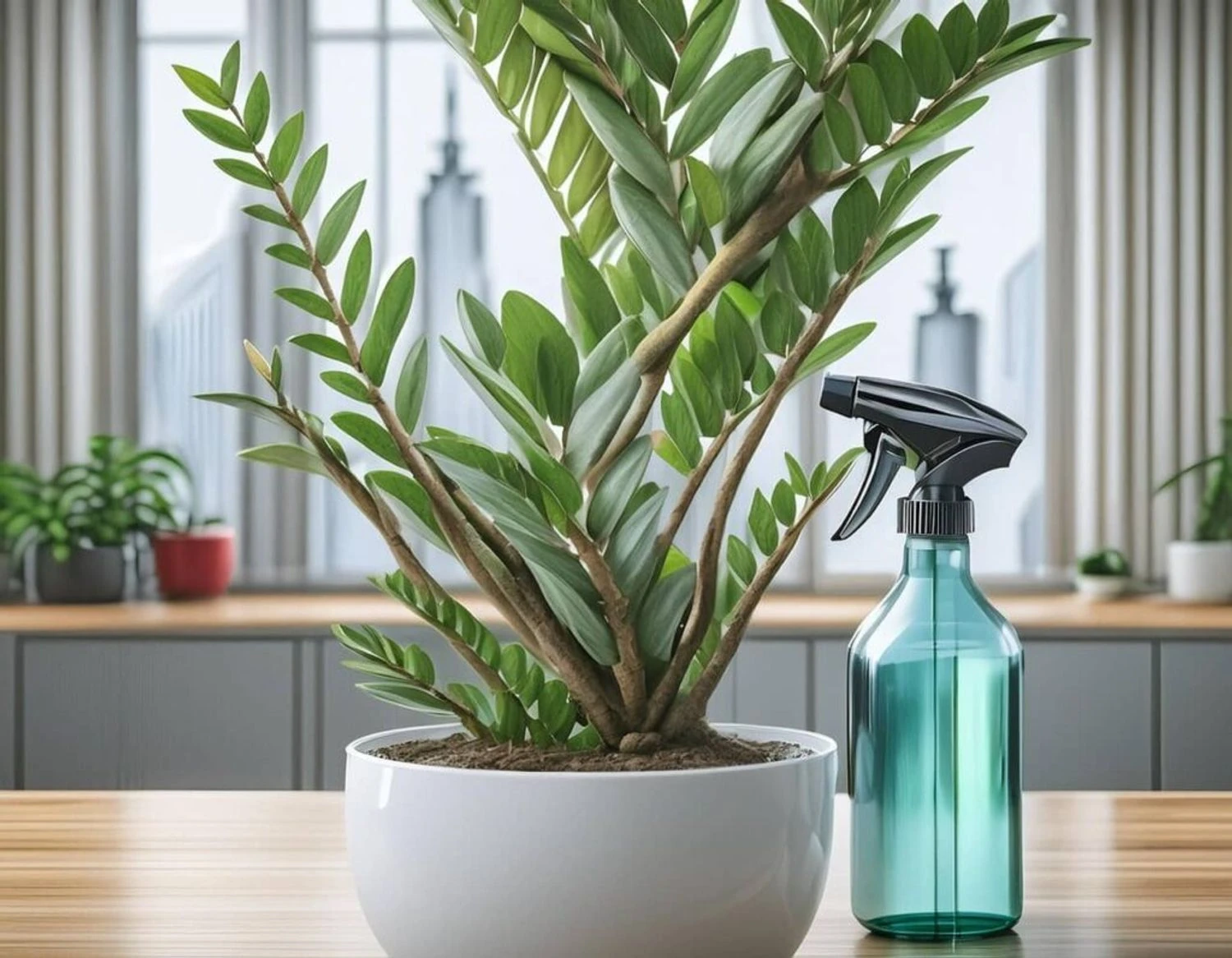
For watering, experts advise using warm, settled water without chlorine and hard salts, as hard water can cause a white coating to form on the soil and leaves. The optimal watering frequency is: once every 7–10 days in summer, and once every 2–3 weeks in winter.
Excessive watering leads to root rot. The first signs of excess water can be yellow spots on the leaves and soft stems. In this case, the plant must be removed from the pot, the roots inspected, affected areas removed, and repotted in fresh substrate.
What and how to fertilize the plant for good growth
Fertilizing zamioculcas is necessary for active growth and to maintain the rich color of the leaves. During the growing season, from spring to autumn, the plant is fed with complex fertilizers for succulents or cacti approximately once every 2–3 weeks. Some florists alternate mineral and organic mixtures, which helps maintain the soil in a balanced state.
In autumn and winter, fertilization is reduced or completely stopped, as zamioculcas slows down its growth during this period and its need for nutrients significantly decreases.
Dollar tree transplant: when and how to do it
Zamioculcas grows quite slowly, so the approaches to its transplant depend on the age of the plant. Young plants are usually transplanted annually, while adult plants need it much less often, approximately once every three to four years, as the pot fills with roots. The most favorable time for transplanting is mid-to-late spring, when the plant is in the active growth phase.
Zamioculcas thrives in loose and permeable soil: you can use ready-made substrate for succulents or prepare the mixture yourself by mixing sod soil, leaf humus, sand, and peat in equal proportions. An obligatory element is a drainage layer of expanded clay or small stones, which prevents water stagnation and root rot.
For the same reason, it is better to choose ceramic or clay pots with drainage holes. It should be slightly larger than the previous one, but not too spacious, because in a large container the plant expends energy to fill the large space with roots, instead of directing energy into leaf growth.
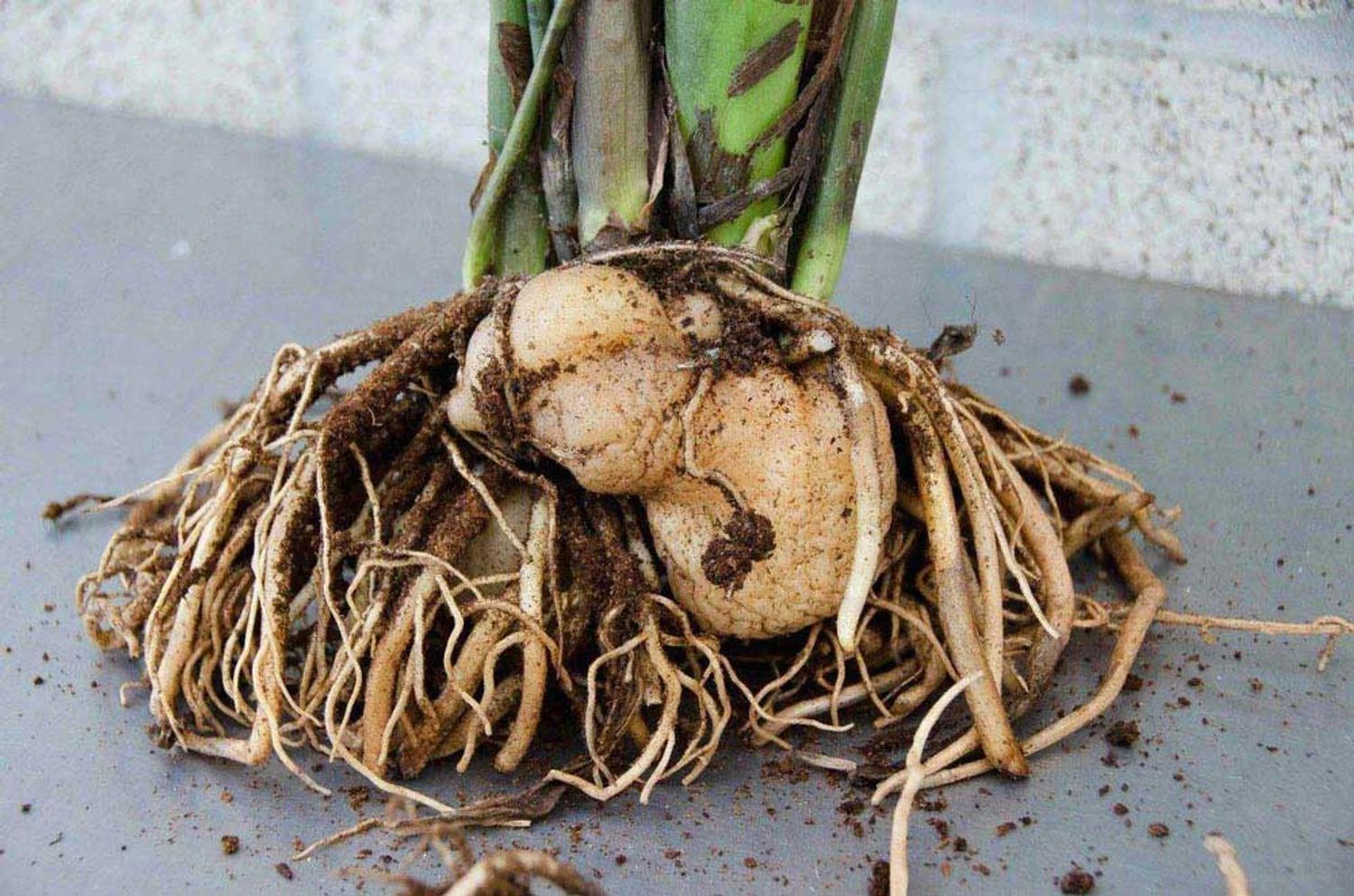
Zamioculcas should be transplanted very carefully, as its root system consists of dense tubers. The plant, along with the soil ball around the tubers, is carefully removed from the old pot and placed in a new one, leaving the upper tubers exposed by about one centimeter. The plant's sap is toxic and can cause burning and itching, so all work should be done with rubber gloves.
After transplanting, the plant should be given time to adapt. It is better not to water or move it for two or three days.
How to propagate zamioculcas at home
Propagating zamioculcas at home can be done in several ways, and each of them has its own characteristics. The most popular method is cuttings. For this, a healthy, strong stem without signs of damage is chosen, cut at a level of about 8-10 cm so that at least one node and several leaves remain on the cutting. Then it is placed in a moist substrate, for example, a mixture of peat and sand, and left in a warm, bright place without direct sunlight. After the roots reach 2-3 cm, the cutting is transplanted into a permanent pot with suitable soil.
Another method is leaf propagation. A healthy, mature leaf is chosen and cut with a sharp knife, leaving a small petiole. The leaf is inserted into a moistened substrate, similar rooting conditions are created, and it is waited until small shoots begin to form at the base of the leaf. When the young plants reach 3-5 cm, they can be transplanted into separate pots. This method takes more time, but allows you to get several new plants from one leaf.
Branch propagation resembles the previous methods, but requires a larger part of the plant. The selected branch, 15-20 cm long, is placed in a nutrient substrate and kept in a warm, bright room. The first shoots appear in 2-4 weeks, and transplanting is possible after roots at least 2 cm long have formed. This method produces strong young plants, but requires a large mature plant for material preparation.
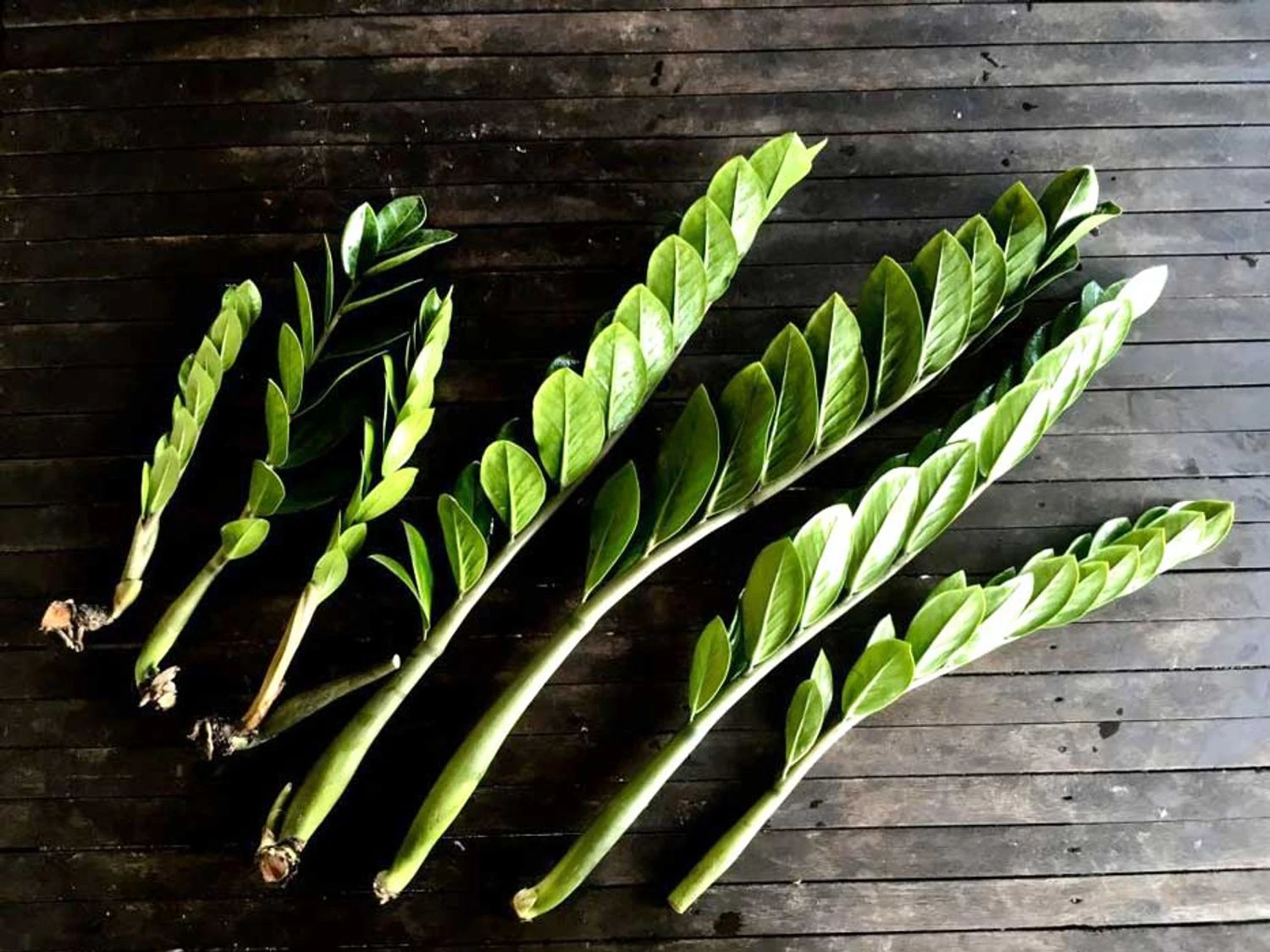
Zamioculcas can also be propagated by stem in water. The principle is similar to rooting in soil, only water is used instead of substrate. A transparent container allows you to control root development and timely notice problems. After rooting, the plant is transplanted into the soil, which may slightly slow down its growth, but the method is simple and reduces the risk of pest infestation.
Each method has its advantages and disadvantages. The choice of method depends on the available plant, conditions, and your patience.