










The threat of a repeat ammonia leak in Kyiv was neutralized after a Russian strike - SEI
Kyiv • UNN
As a result of the overnight shelling of Kyiv’s Holosiivskyi district, an ammonia container was damaged, and a leak of approximately 100 liters was contained. The NH₃ concentration was 91 ppm; there is no threat of a repeat leak.

In the Holosiivskyi district of Kyiv, the ammonia leak following an enemy attack has been contained, and there is no threat of a further leak, the State Environmental Inspectorate of the Capital District reported on Wednesday, UNN writes.
Details
"On the night of August 5, 2026, as a result of an enemy attack, an ammonia container at one of the enterprises in Kyiv’s Holosiivskyi district was damaged, resulting in a partial leak," the State Environmental Inspectorate reported.
"After the leak detection system was triggered, the enterprise’s employees contained the ammonia leak. According to preliminary data, the approximate volume of the leak was about 100 liters," the agency said.
During an inspection of the scene, an ammonia (NH₃) concentration of 91 ppm (91 parts of ammonia per one million parts of air) was reportedly recorded. Carbon monoxide (CO), nitrogen dioxide (NO₂), and hydrogen cyanide (HCN) were not detected.
"According to оператив services, there is no threat of a further ammonia leak. Specialists from the State Environmental Inspectorate of the Capital District are monitoring the condition of the ambient air and assessing the possible impact of the incident on the environment. The situation is under control," the State Environmental Inspectorate said.
The State Environmental Inspectorate of the Capital District meanwhile recommended, where possible, limiting prolonged stays outdoors, closing windows, and maintaining hydration.
The Ministry of Health also said that, as a result of the Russian Federation’s massive attack, the threat of air pollution in Kyiv and the Kyiv region remains.
The Ministry of Health recommended the following while the consequences of the fires are being eliminated:
- Stay indoors: close all windows and doors; turn off ventilation systems that draw air from outside; turn on air-conditioning systems if they have an air-filtration function, or use air purifiers; postpone jogging, walks, or any other outdoor activities.
- Protect your airways: wear a mask or respirator; if you do not have a mask, use a damp cloth to cover your nose and mouth.
- Monitor your health: if you have respiratory diseases, consult a doctor in advance about possible measures and medications; watch for symptoms such as coughing, difficulty breathing, and eye irritation.
- Follow official information: listen to local news to receive updated information about air quality and further recommendations; find out where temporary shelters or centers for people experiencing breathing difficulties are located; if the smoke is prolonged and heavy, consider temporarily relocating to regions with better air quality; follow the instructions of local authorities regarding evacuation and safety.
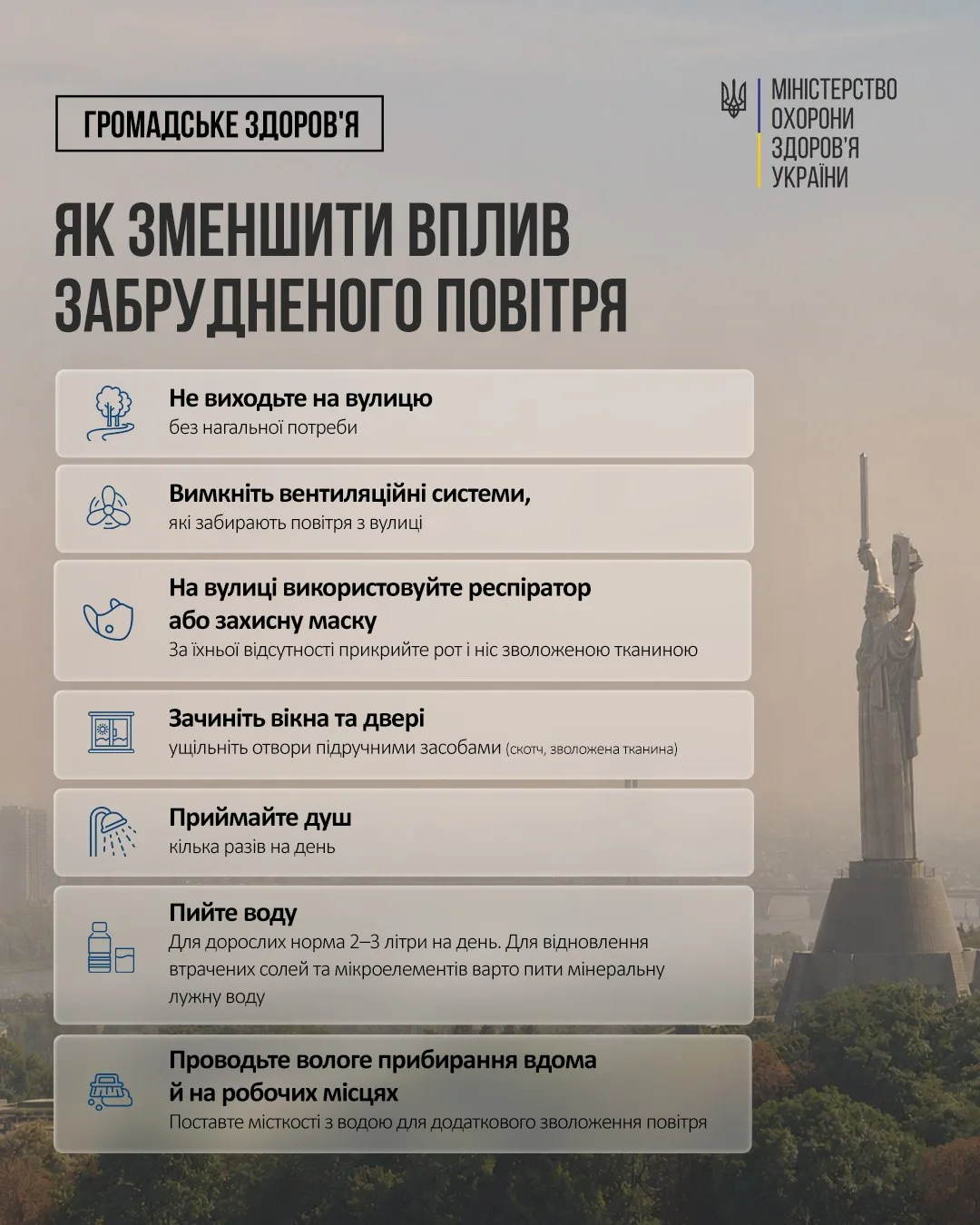
"Following these recommendations will help reduce health risks during heavy smoke. Specialists from the Centers for Disease Control and Prevention constantly monitor the condition of the ambient air," the Ministry of Health said.