









Memes, advertising, and medical confidentiality: how an Odrex doctor accused of medical negligence uses social media to apply pressure
Kyiv • UNN
Doctor Vitalii Rusakov, accused in a case involving a patient's death, publishes memes about the court proceedings and discloses medical secrets. He has launched a large-scale campaign on his social media pages not merely to defend himself, but also to apply pressure

European and Ukrainian judicial practices recognize the defendant’s right not only to speak within the courtroom but also about the proceedings themselves as a form of defense. The defendant has the right to publicly criticize and express disagreement, as well as deny guilt outside the courtroom. However, this right is not identical to manipulating or attacking the prosecution and the judge, writes UNN.
The trial in the high-profile case concerning the death of businessman Adnan Kivan during treatment at the private Odrex clinic in Odesa has been ongoing for more than a month. During this time, one of the doctors accused of medical negligence, Vitaliy Rusakov, has made full use of his right to defend himself outside the courtroom. The doctor has turned virtually all of his social media into a platform for such a defense. For example, on Facebook, beginning in October 2025, only approximately one-third of his posts have been directly unrelated to the case, while the remainder—eight dozen messages—have been connected to it. The defendant can be understood, since he has the right to this form of defense. But a closer analysis of his social media posts raises the question: where is the line between freedom to express one’s position and manipulation and attacks directed at the court and the prosecution?
The road to memes about the judge and the disclosure of medical confidentiality
Over nearly a year of actively covering the case, Rusakov has gone from simply informing people about upcoming court hearings and criticizing the system in impersonal terms to creating memes using photographs of the judge and prosecutors. He has gone from calls for support and expressions of gratitude for it to attempts to portray an individual prosecution as tantamount to the collapse of the entire medical system.
"This is not simply a trial of a surgeon. It is an attempt to set a precedent after which doctors in Ukraine will be afraid to take on difficult cases so as not to become victims of a reprisal prepared in advance," Rusakov wrote.
For a certain period, the doctor maintained that he did not understand the substance of the charges brought against him, but later began stating that he was being persecuted for a "minor offense." Rusakov even drew comparisons with the American system, where, allegedly, similar cases are covered by special insurance and are often resolved before reaching court. But it appears that he went somewhat too far here. Calling for the decriminalization of medical errors (is this no longer about failing to understand the substance of the charges?), Rusakov cited the example of Christopher Duntsch—a neurosurgeon from the United States who intentionally maimed patients and received a life sentence. As Rusakov himself pointed out, the well-known series "Dr. Death" was based on this story.
"But in the United States, a surgeon actually received a criminal sentence—he must be a monster. Neurosurgeon Christopher Duntsch maimed 33 people and killed two of them on the operating table in two years. He did this deliberately. He was under the influence of drugs and ignored basic anatomy. Even in his case, colleagues were unable for years to move the matter into the criminal sphere because the system is set up to protect doctors," Rusakov said in his vlog.
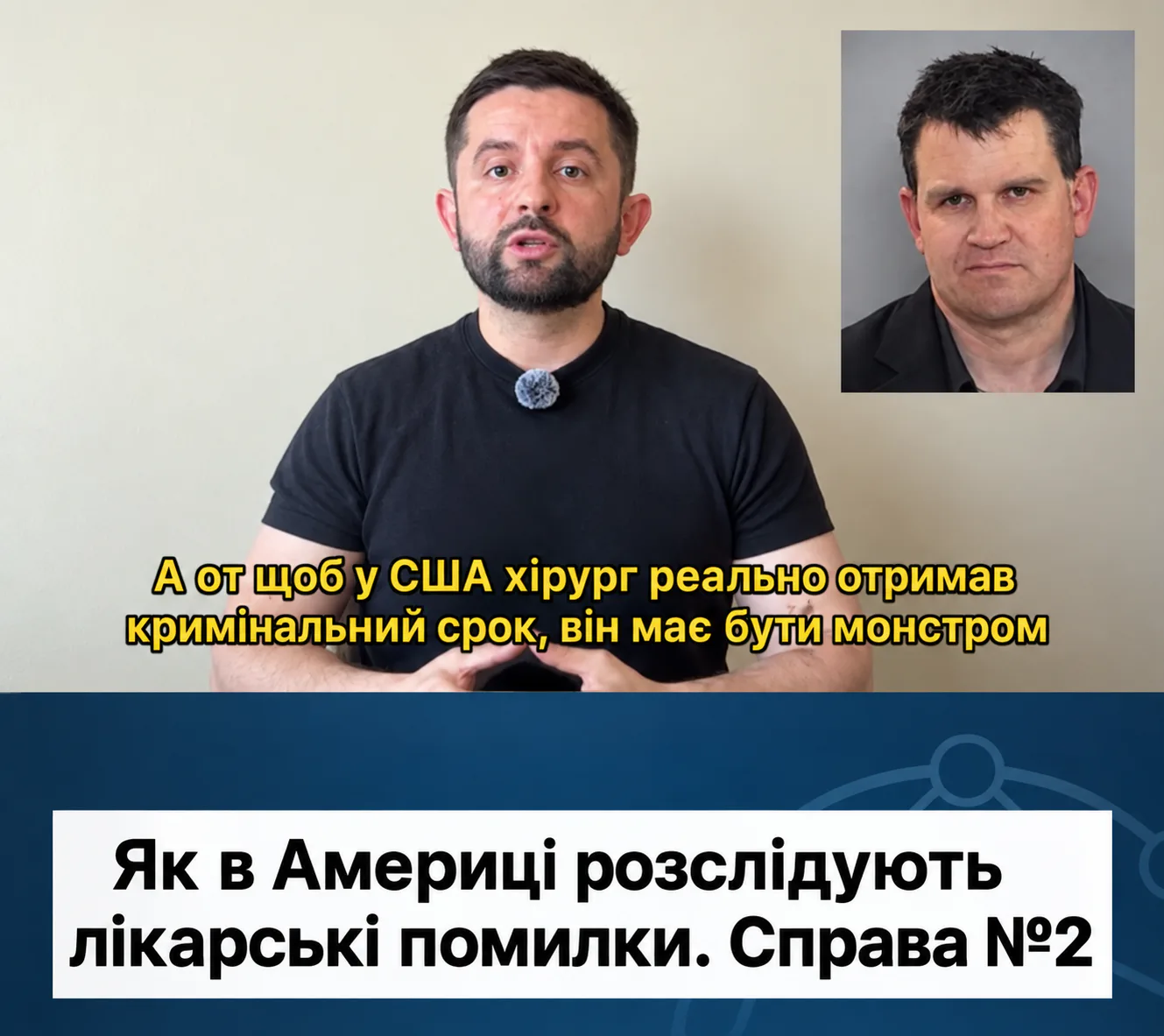
So, is Rusakov calling for a similar approach to be adopted, one in which patients cannot be protected from a monster for years? And a logical question arises: how does this extrapolate to Rusakov’s own case?
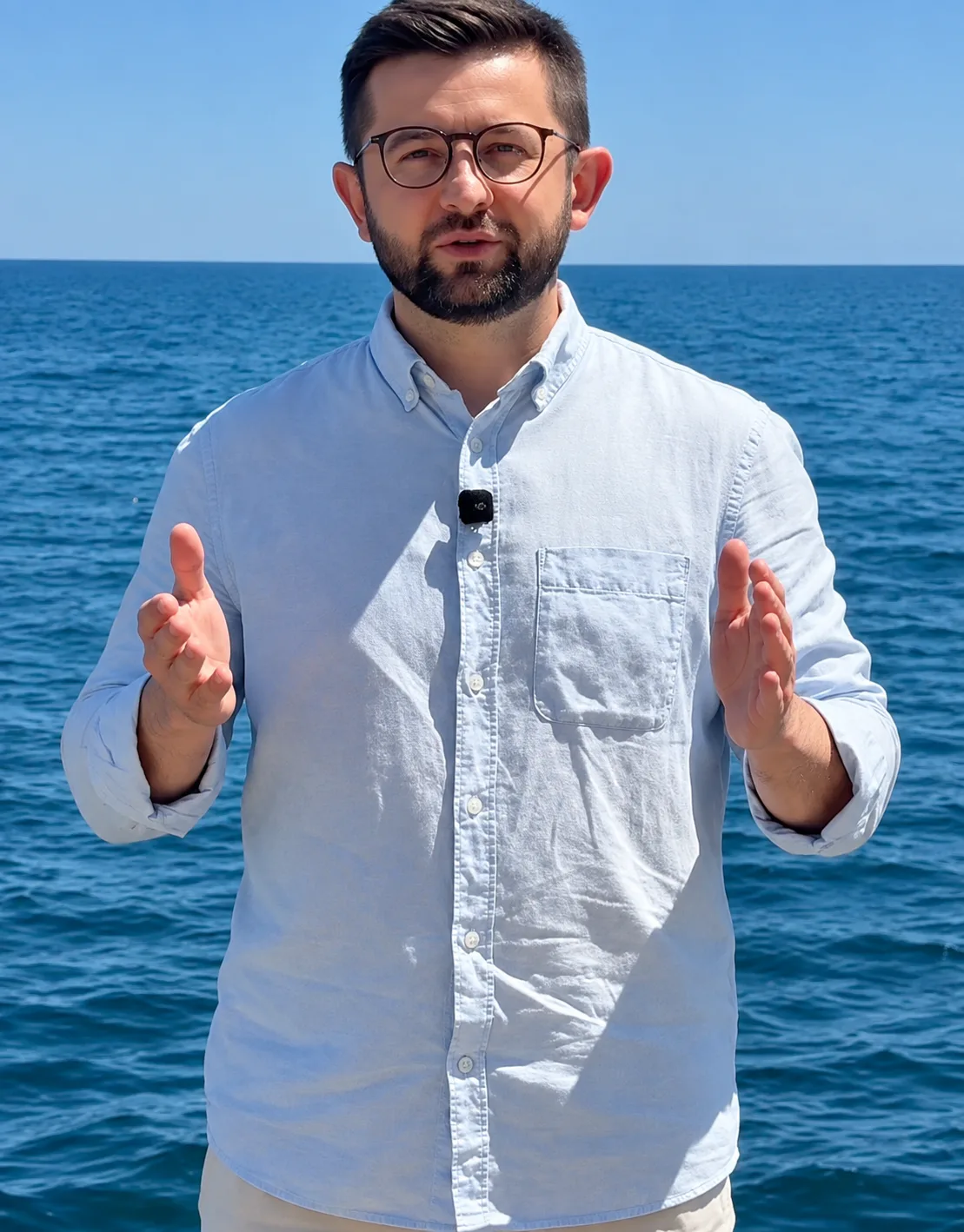
For months, Rusakov had been increasing his public activity on social media. But his activity on YouTube, which he began actively using at the height of the trial, appears particularly cynical. Rusakov not only regularly publishes videos there but also monetizes his blog. At least, that is the impression created by a staged video in which Rusakov, with the Black Sea in the background, delivers typical advertising points about OncoHub, a local platform for training doctors. It can be assumed that it became one of the surgeon’s first advertisers. And this comes after several dozen videos in which he, among other things, actively comments on the death of his patient and publicly revealed details about the course of his illness, which are protected by medical confidentiality.
The active phase of the trial
The court is currently at one of the key stages of the proceedings—the examination of evidence. It is during this stage that the court must assess the medical records, conclusions of forensic medical examinations, clinical protocols, and other materials on which the charges are based. We should recall that, in addition to Rusakov, oncologist Marina Bielotserkovska is also in the dock.
Rusakov and Bielotserkovska are charged under Part 1 of Article 140 of the Criminal Code of Ukraine—improper performance of professional duties by medical personnel. According to the investigation, after the operation, the medical professionals may have failed to prescribe the necessary antibacterial therapy to Adnan Kivan and may have responded improperly to postoperative complications. According to the findings of the forensic medical examination, this may have led to the development of sepsis and the patient's death.
The trial has become more active, and so has Rusakov's activity on social media. Attempts to pressure the court have also intensified. Rusakov turned to personal attacks against the court and began publishing memes and posts about presiding judge Viktor Chaplytskyi, the prosecutors, and the course of the proceedings itself.
Retired judge Oleksandr Sytnykov explained to UNN that public campaigns against judges, unsubstantiated accusations of their bias, and attempts to shape public attitudes toward a decision before it is delivered may bear signs of informational pressure.
Rusakov went even further after the court extended his suspension from his position at the Odrex clinic. The relevant decision was made to prevent the accused from communicating with witnesses in the case. The doctor then appealed to his patients, urging them to file complaints with the High Council of Justice because they were unable to see him for appointments.
Mass, identical complaints can create psychological pressure on a judge, even if they subsequently prove unfounded. In such a case, the judge is forced to spend time explaining and responding to each appeal.
Rusakov's lawyers also joined the public defense campaign; at least one of them recorded a video for his YouTube channel. In court, however, the defense resorted to delaying the proceedings for a long time—the direct transition to examining the evidence was preceded by months of procedural disputes and postponements. The defense systematically disrupted hearings because lawyers failed to appear, and the court was therefore forced to adjourn them. This was despite the fact that Rusakov repeatedly emphasized on social media that only a trial could restore justice. However, it should be noted here that the time factor is of enormous importance in the case involving the Odrex doctors. Since Adnan Kivan died at the end of October 2024, and the charge was brought under Part 1 of Article 140 of the Criminal Code of Ukraine, the three-year statute of limitations expires in autumn 2027. By that time, the judgment must not only have been delivered by the court of first instance but must also have entered into legal force.
At the same time, if consideration of the case continues to be delayed, Rusakov will have time to build a career as a successful blogger.