


Luxurious baths, statues of gods, and precious objects – archaeologists have found the likely residence of a Roman military commander
Kyiv • UNN
At the Novae fortress, archaeologists discovered a building covering more than 418 m² with private baths, statues, and precious artifacts. Scientists assume that the legion’s commander lived there.

Polish archaeologists have discovered the remains of a luxurious building in northern Bulgaria that may have been the residence of a Roman legion commander. The finds include private baths, ancient sculptures, bronze furniture and valuable ceramics. Science in Poland reports this, citing researchers from the University of Warsaw, according to UNN.
Details
The monumental structure was found on the territory of the ancient Roman fortress of Novae. Its area exceeded 418 square metres, while the interior decoration indicates the high status of its former residents.
Archaeologists discovered the remains of a colourful floor, painted plaster, sculptures and two altars with inscriptions. However, the researchers were most intrigued by the private baths, which were extremely rare in Roman military fortifications.
Why archaeologists believe that a legion commander lived here
The head of the study, Piotr Dyczek of the University of Warsaw, explained that ordinary legionaries used communal baths, while only high-ranking military commanders could afford their own large bathhouses.
"Few people in Roman forts had private baths. There were communal baths for the entire legion. In fact, only a legate could have his own large bathhouse,"
Other finds include bronze furniture fittings, statuettes, a marble head of the god Mithras, a fragment of an imperial portrait and a decorative architectural element in the shape of a pine cone.
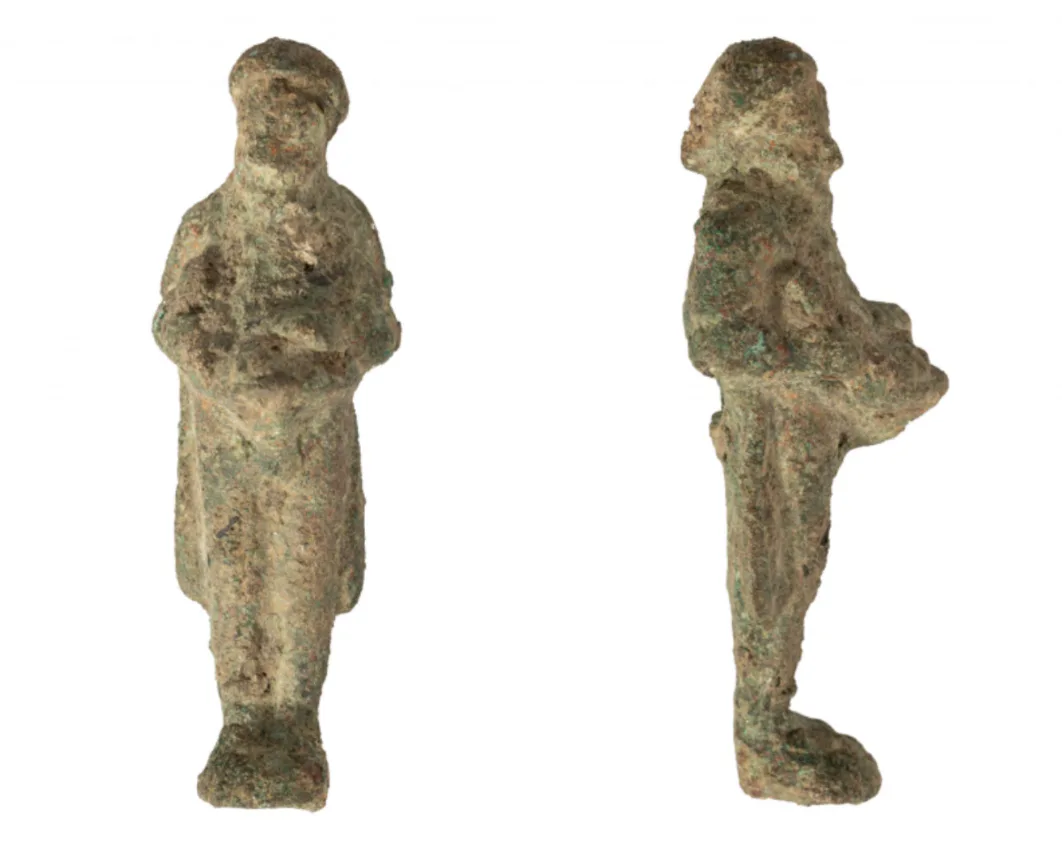
Of particular interest is a statuette that researchers associate with ancient religious cults. According to archaeologists, such objects may indicate contacts between the fortress's inhabitants and other regions of the Roman Empire, particularly the Middle East.
Scientists are continuing their research to definitively establish the building's purpose and confirm whether it was indeed the residence of a legion commander.