










Iran's Underground Nuclear Facilities: What Bomb Can Destroy Them
Kyiv • UNN
Iran's Fordow nuclear facility is located deep in the mountains for protection against attacks. The US is considering a plan to use the 14-ton GBU-57 "bunker buster," capable of penetrating thick layers of protection, but a wave of attacks would be needed to completely destroy the facility.

Iran built its most important uranium enrichment facility, Fordo, deep inside a mountain to protect it from attacks. But the United States has a bomb that experts say could likely reach the underground facility. President Donald Trump is considering a plan to use it, UNN reports, citing the New York Times.
Details
Only the American military has the 14-ton GBU-57 missile, or Massive Ordnance Penetrator, which may be capable of destroying Fordo. The US Air Force began developing the GBU-57/B, also called the bunker buster, in 2004 specifically to attack nuclear facilities deep under mountains.
Other American bunker busters, such as the BLU-109 and GBU-28, are not capable of penetrating the thick layers of soil, rock, and concrete that protect Fordo.
According to some reports, the GBU-57/B can penetrate about 7.6 meters of high-strength concrete, but it can go much further through less resistant materials.
Iran has been developing new concrete technologies in its research centers and universities for years. It is unclear what combinations of concrete surround the facility.
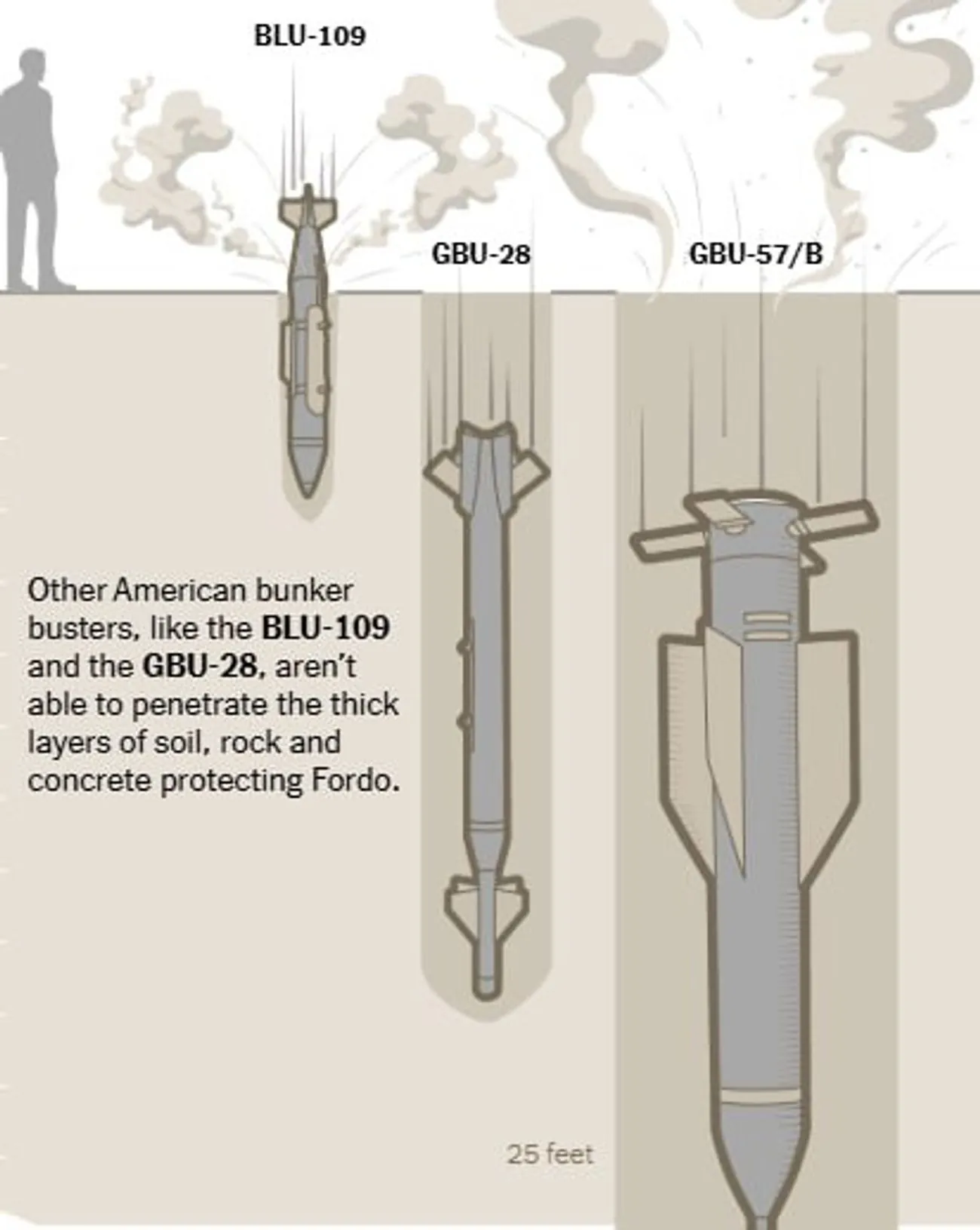


The maximum penetration depth of any bunker buster depends on the type of underground material the bomb encounters.
The GBU-57/B can carry 2273 kg of explosives, which are detonated by a specialized fuzing system that can be programmed to detonate at various depths. This bomb can penetrate about 60 meters through the type of concrete often used for foundation construction.
One bomb will not be enough to reach the enrichment facility. Only several waves of attacks can reach such a depth. According to some estimates, the facility is 9 meters or more deeper.
The American military concluded that a single bomb would not destroy the Fordo facility on its own. To destroy it, an attack would have to occur in waves, with bombers dropping bombs into the same hole one after another. Military and geological experts say this may be feasible, but the mission is full of risks.
There may be additional tunnels or facilities buried even deeper in the mountain
Adding to the uncertainty, IAEA Director General Rafael Grossi, who visited the site, said last week that it is 800 meters underground. But he may have been speaking broadly, and most estimates show it to be 400 to 500 meters below the mountain's surface.
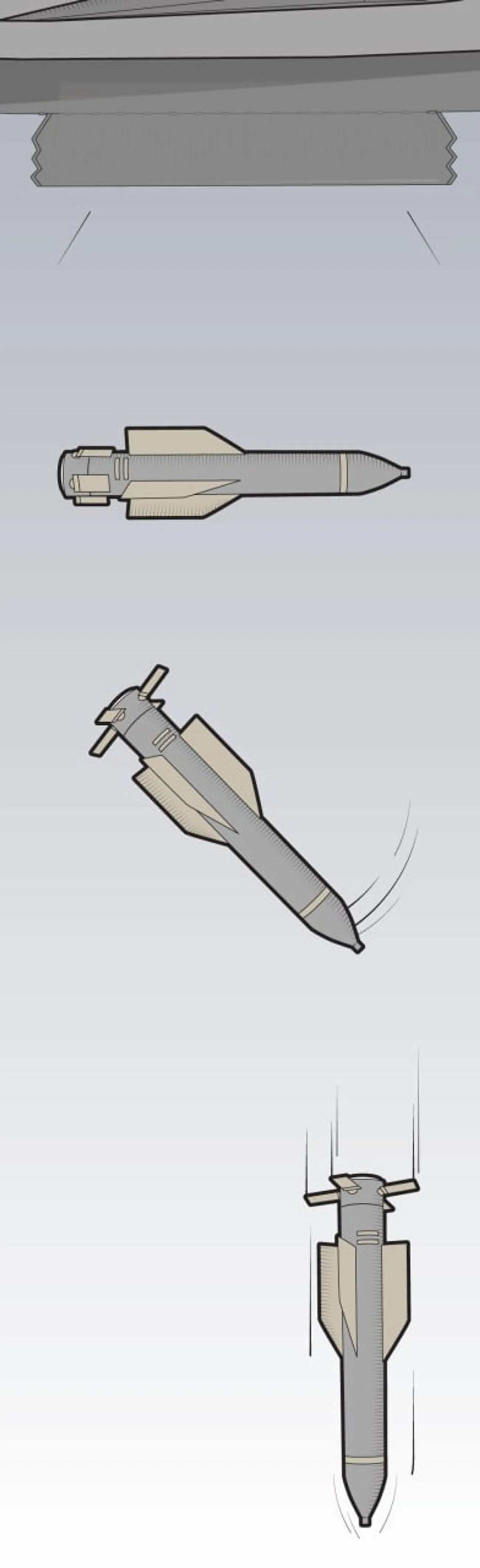
The size and weight of the GBU-57 mean that only the American B-2 Spirit stealth bomber can carry it on a mission. While Israel has fighters, it has not developed heavy bombers capable of carrying the explosive.
As the GBU-57 approaches its target, maintaining a speed of approximately 800 km per hour, the bomb bay doors of the bomber open to release the bomb.
The GBU-57/B weighs as much as a school bus. The bomb has only been tested once before and has never been used in combat.
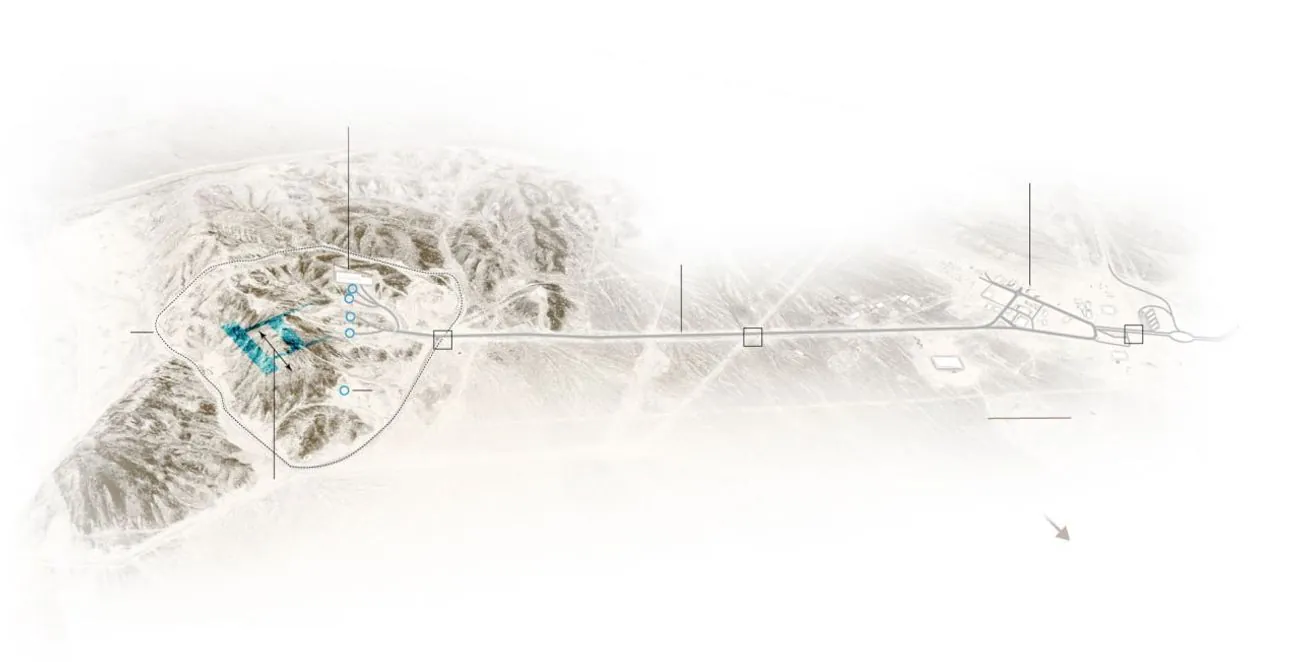
After deployment, the bomb uses GPS to reach its target. This allows it to aim with high precision so that multiple weapons can hit the same spot.
The bomb falls to the ground at near-supersonic speed. Upon impact, its rounded nose distributes the initial crushing force across the steel casing, allowing it to reach the target intact.
Addition
The International Atomic Energy Agency reported damage to key buildings at the nuclear facility in Khondab, Iran, as a result of Israeli strikes. It was noted that the distillation plant was also affected, while the IAEA continues to monitor the situation.