










Google DeepMind unveiled a new generation of robots capable of sorting laundry and adapting to complex tasks
Kyiv • UNN
Google DeepMind unveiled new Gemini Robotics 1.5 and Gemini Robotics-ER 1.5 models, enabling robots to perform multi-step tasks. The robots can sort laundry and recycle waste, as well as adapt to new conditions.

Google DeepMind has taken another step in the development of artificial intelligence for robotics, introducing new models Gemini Robotics 1.5 and Gemini Robotics-ER 1.5. The developments allow robots to better "think" before performing actions and for the first time enable them to perform multi-step tasks, including household processes such as sorting laundry or recycling garbage. This is reported by the Financial Times, writes UNN.
Details
Carolina Parada, Senior Director and Head of Robotics at Google DeepMind, emphasized that the company is moving to a qualitatively new stage.
The models used until now have been excellent at executing one instruction at a time. Now we are moving from executing one instruction to truly understanding and solving problems of physical tasks.
In demonstration scenarios, the robot was able not only to pack things into a bag at the request of the researcher, but also independently added an umbrella, having learned through an online search that rain is expected in London these days. In another case, the machine first found out online the rules for sorting garbage in San Francisco, and then sorted the waste into appropriate containers.
Google launches AI gaming assistant for Android gamers23.09.25, 18:20 • 3554 views
Professor of Applied Artificial Intelligence at Oxford University, Ingmar Posner, noted that large-scale internet learning opens up new horizons. At the same time, Professor Angelo Cangelosi from the Manchester AI Centre warned: "This is just the discovery of patterns between pixels, between images, between words, tokens, etc. – that is, not yet real thinking."
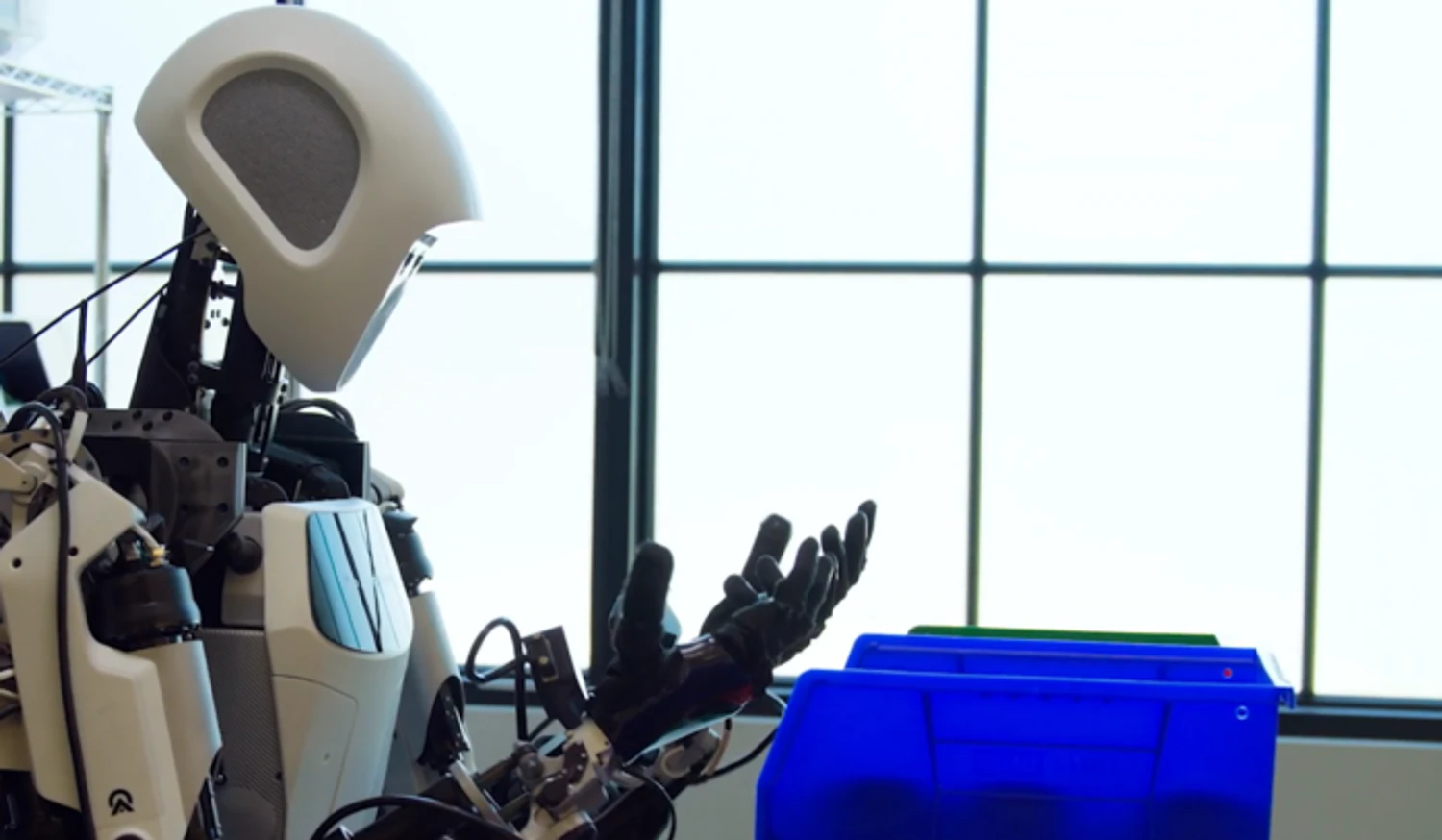
A separate breakthrough was the "motion transfer" technology, which allows transferring learned skills from some types of robots (for example, robotic arms) to others – humanoids. This solves the key problem of the lack of quality data for training.
Unlike large language models, which can be trained on the entire vast internet of data, robotics has been limited by the painstaking process of collecting real-world data.
Despite the achievements, the company acknowledges that challenges remain: robots need to become more agile, safer, and more reliable before they can be fully integrated into human interaction environments.