









What is a guided aerial bomb: range, speed, and countermeasures
Kyiv • UNN
Winged guided aerial bombs can travel up to 150 km and strike beyond the reach of air defense systems. Ukraine counters them with air defense, electronic warfare, and its own developments.

The trajectory of guided aerial bombs stretched from isolated German experiments during World War II to highly precise weapons used on a massive scale. Thanks to deployable wings and satellite navigation, these bombs enable aircraft to deliver devastating strikes from dozens of kilometers away without entering the air-defense engagement zone. UNN explains how guided aerial bombs work, how they have changed the tactics of warfare, and how Ukraine is countering this threat.
What is a guided aerial bomb
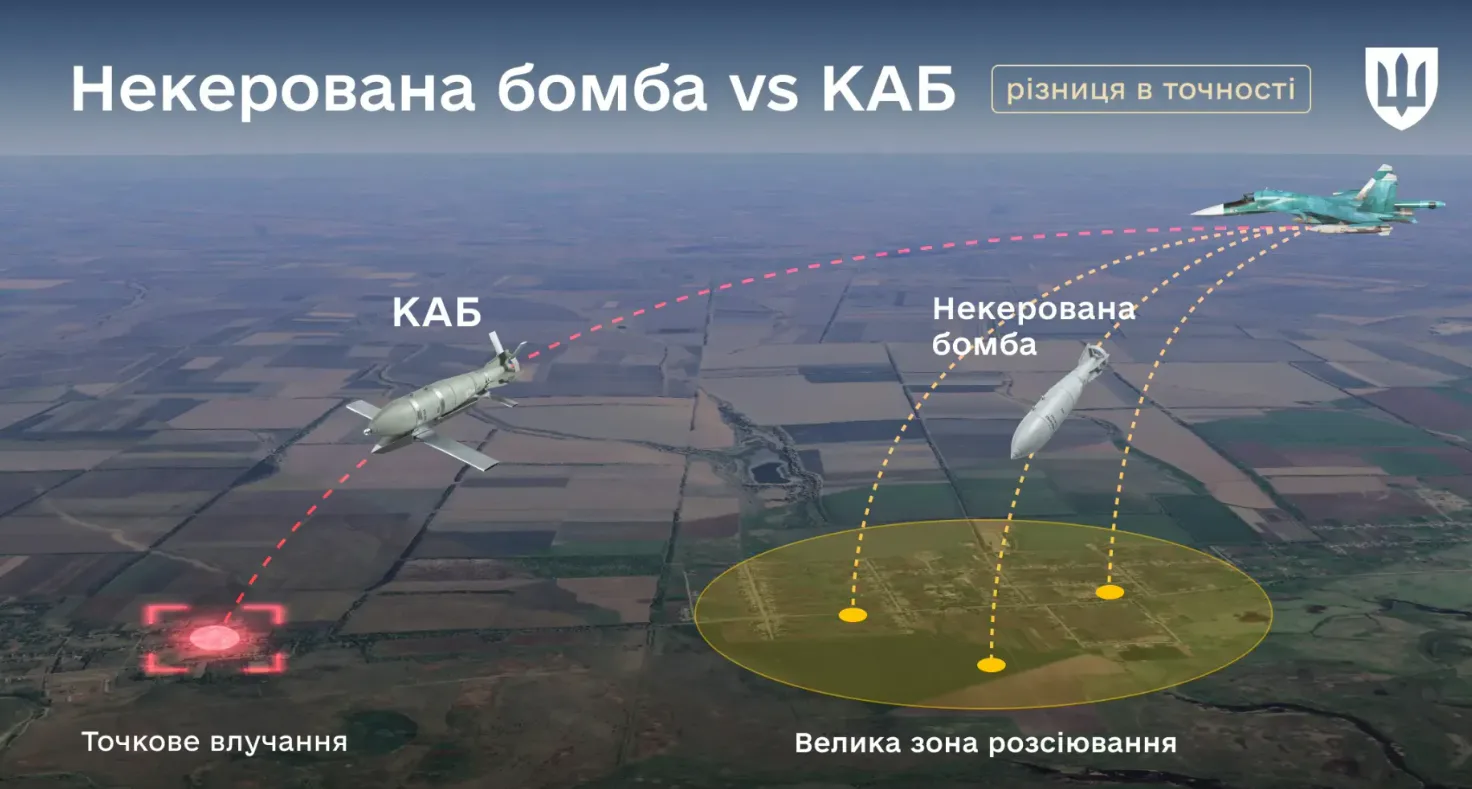
A guided aerial bomb is an aerial munition equipped with a guidance system that significantly increases the accuracy of hitting a target compared with conventional free-fall (unguided) bombs.
The fundamental difference between a guided aerial bomb and an unguided bomb is the presence of guidance and aerodynamic control systems: tail control surfaces or deployable wings that correct the trajectory after release. As a result, a guided aerial bomb can hit a target with an accuracy of up to several meters, instead of the deviations of tens or hundreds of meters typical of free-fall munitions.
The origins of guided aerial bombs
The first effective examples appeared during World War II: the German Fritz X radio-guided bomb was used against warships, while the American Azon was used against bridges and railway junctions.
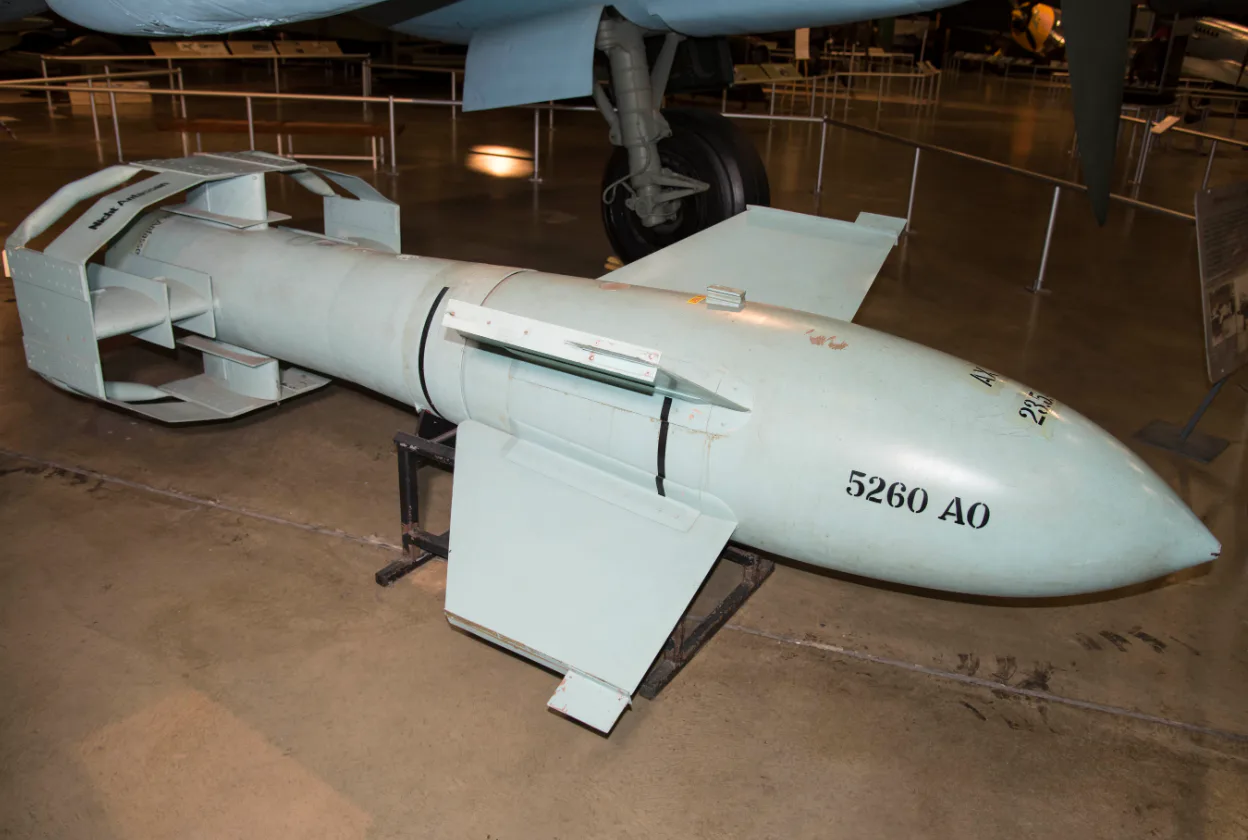
Fritz X radio-guided bomb
A major leap in the use of guided aerial bombs occurred during the Vietnam War, when the United States deployed the Paveway series of laser-guided bombs. They enabled the precision destruction of protected targets that had previously required dozens of sorties using unguided munitions.
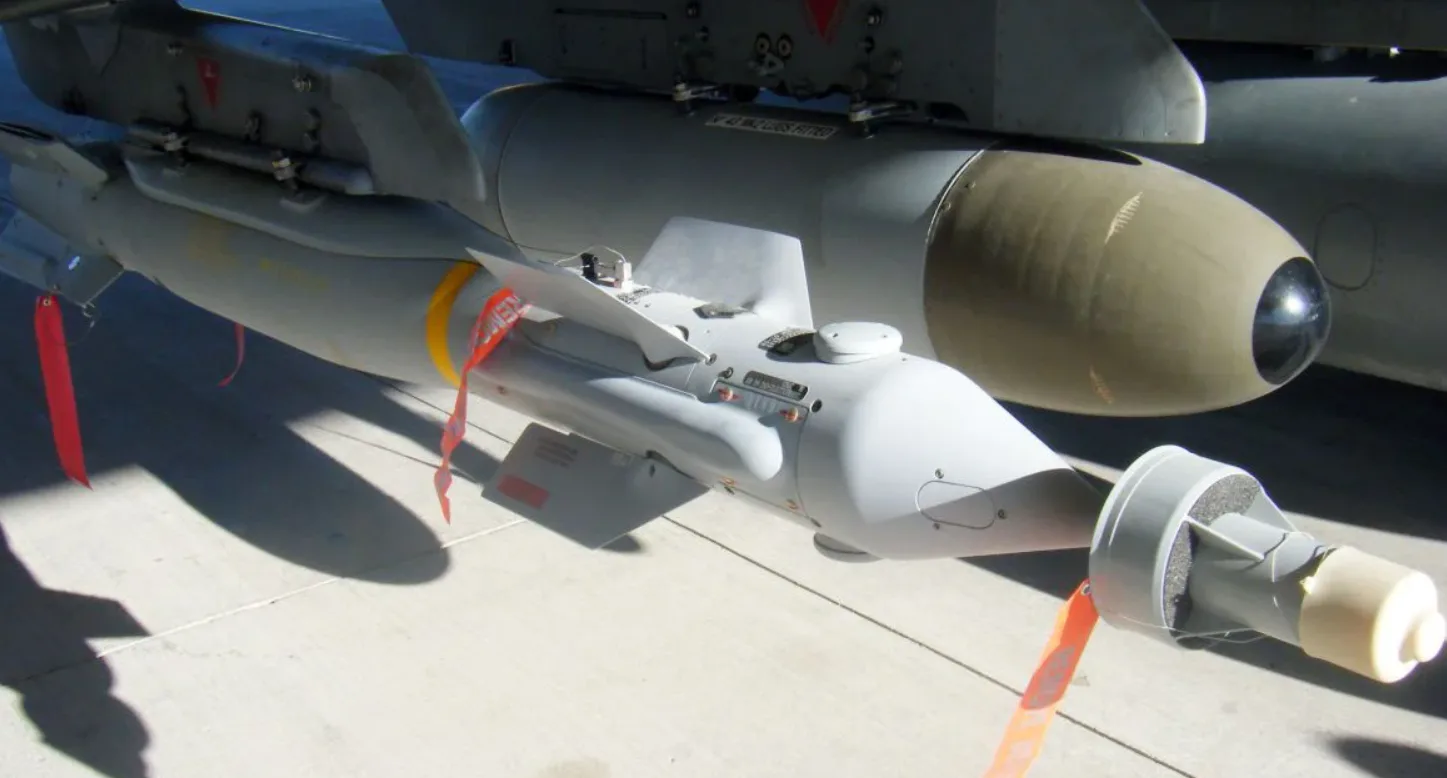
The next turning point came with the Gulf War (1991). It was then that the American JDAM (Joint Direct Attack Munition) technology emerged—add-on kits that transform conventional bombs into precision weapons using an inertial navigation system and GPS. The coordinates are entered before release; the bomb then flies autonomously in any weather. JDAM was first used on a mass scale in 1999 during the NATO operation in Yugoslavia.
What types of guided aerial bombs exist
Modern guided aerial bombs are classified according to two main parameters: the method of guidance to the target and the design of their aerodynamic surfaces. It is their combination that determines the accuracy, range, and conditions of combat use of a particular munition.
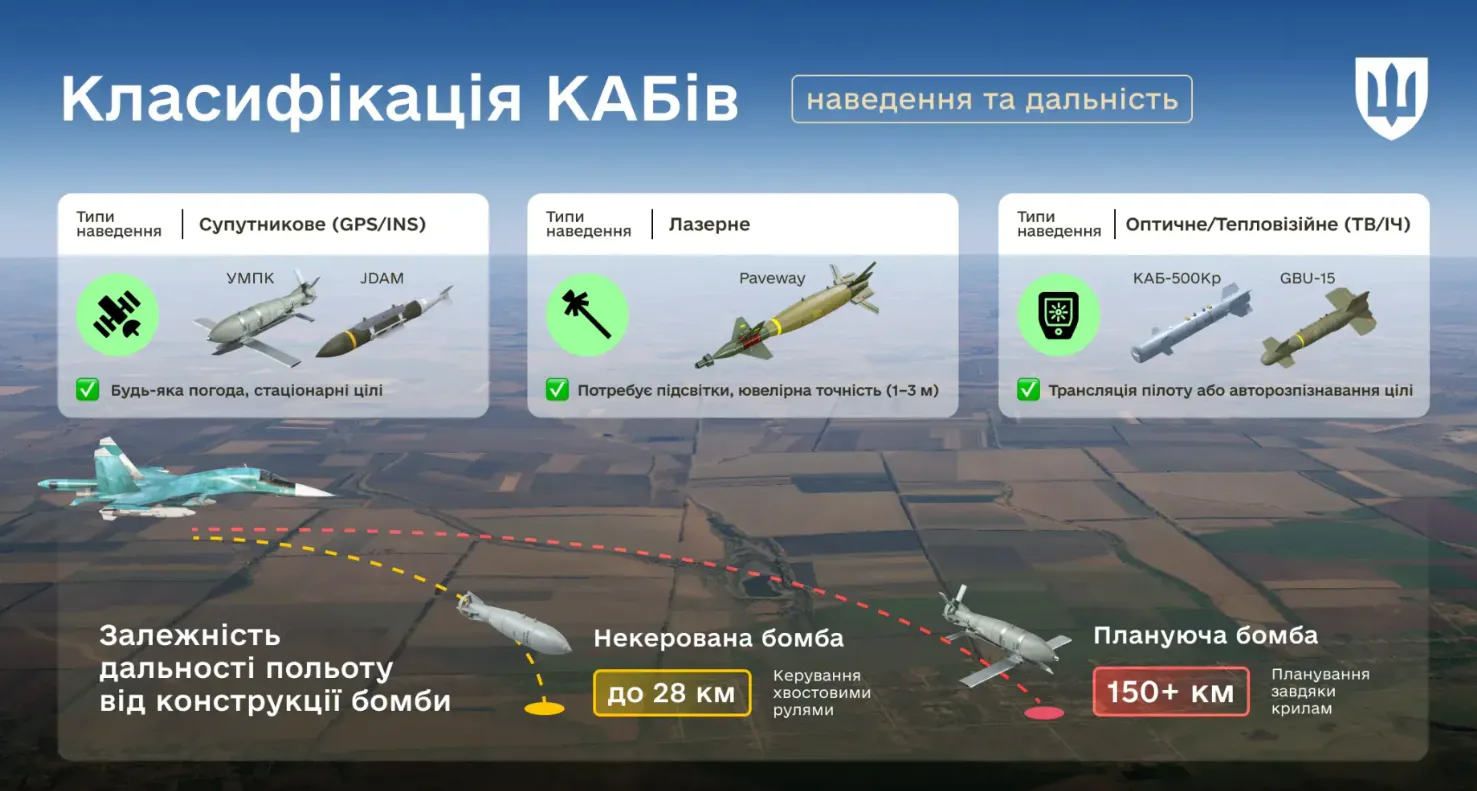
Satellite and inertial (GPS/INS, GLONASS)—the most common type. It does not depend on weather conditions; the target coordinates are entered before release. Disadvantage: it is unsuitable for engaging moving targets. Examples: the American JDAM and Russian bombs with the UMPK module.
Semi-active laser guidance—the target is illuminated by a laser designator from an aircraft, drone, or ground operator. It provides an accuracy of 1–3 meters. Examples: the Paveway II/III series.
Electro-optical, television, or thermal-imaging (TV/IR)—the image is transmitted to the pilot's cockpit or processed by real-time recognition algorithms. Examples: the American GBU-15 and the Russian KAB-500Kr.
By aerodynamic design
The aerodynamic design of a munition directly determines its tactical and technical characteristics (TTC)—primarily its release range and, consequently, the radius within which targets can be engaged without the carrier entering the air-defense zone:
- without wings—control only by tail control surfaces. The classic JDAM;
- glide bombs—deployable wings allow them to glide long distances after release.
Examples: the American JDAM-ER, the French AASM Hammer, and the Russian UMPK.
Flight range
Guided aerial bombs differ significantly in size and capabilities depending on their purpose:
caliber (warhead weight):
- from approximately 130 kg (the American small GBU-39 SDB bomb) to 1,500–3,000 kg (the Russian FAB-1500 and FAB-3000).
Release range:
- guided bombs without wings—10–28 km;
- glide bombs—50–95 km, depending on the carrier's altitude and speed;
- specialized small-diameter bombs (GBU-39)—up to 110 km;
- glide bombs with a rocket booster—up to 150 km and more;
Air defense systems can intercept Russian jet-powered KABs - Ihnat25.10.25, 17:43 • 5506 views
Guided aerial bombs in Russia's war against Ukraine
Since 2023–2024, guided glide bombs have become one of the key tactical factors in the current phase of hostilities.
Russia has employed a massive and relatively inexpensive solution: installing Universal Planning and Correction Modules (UMPK) on old Soviet free-fall FAB-series bombs (250, 500, 1,500, and 3,000 kg). The enemy’s tactical aircraft—primarily Su-34s and Su-35s—drop these bombs while remaining beyond the reach of Ukrainian air-defense systems.
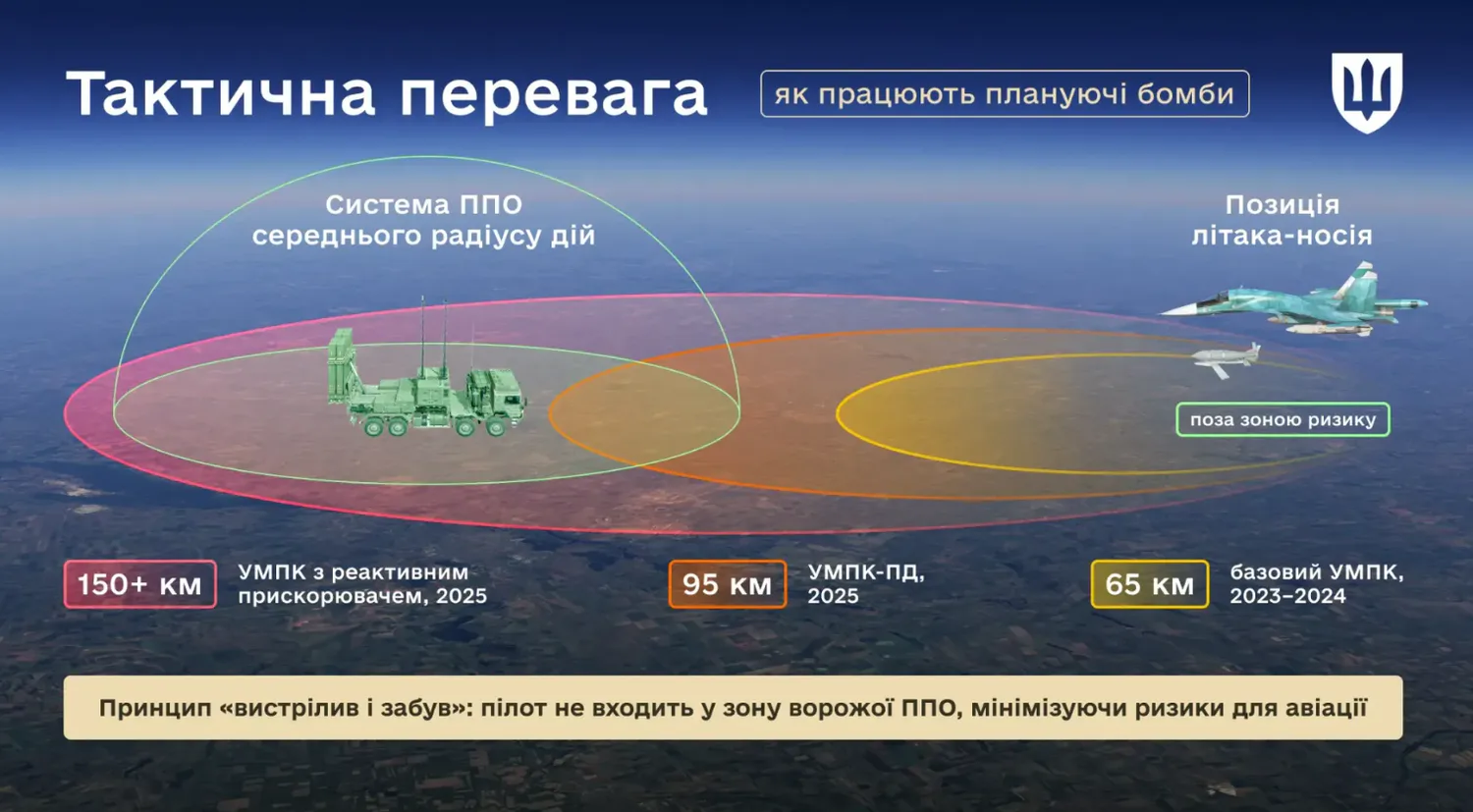
At the same time, the system itself is constantly being improved. The basic UMPK provided a verified range of 60–65 km (with a maximum range of up to 80 km). Since the beginning of 2025, a new modification—the UMPK-PD—has been recorded. Thanks to a larger wing area and a reinforced mounting system, the range of such a munition may already reach up to 95 km.
In parallel, Russia is integrating rocket boosters into the standard UMPK body, making it possible to reach a range of up to 150 km, provided that the bomb is released from an appropriate altitude.
To counter electronic warfare (EW) systems, new versions of the UMPK are equipped with eight or more satellite antennas, making them more difficult to jam.
The accuracy of the UMPK is inferior to that of systems used by Ukraine’s allied countries. The circular error is 10–15 meters under normal conditions and may increase under active electronic warfare. However, the destructive power of heavy high-explosive warheads allows the enemy to destroy fortifications and frontline settlements even with such a deviation. The FAB-1500 leaves a crater up to 6 meters deep and 20–25 meters in diameter; the concussion-effect zone extends 300–350 meters from the point of impact.
To restore the balance, Ukraine has integrated several allied systems into its Air Force:
JDAM-ER (United States)—GPS-guided glide bombs adapted for Soviet-designed MiG-29 and Su-27 aircraft.
AASM Hammer (France, manufactured by Safran)—a hybrid bomb-and-missile weapon with a solid-fuel rocket booster. It allows release from low altitudes in a toss-bombing mode while maintaining accuracy and the survivability of the carrier aircraft.
GBU-39 SDB (United States)—a small bomb with resistance to the enemy’s electronic warfare (EW) systems.
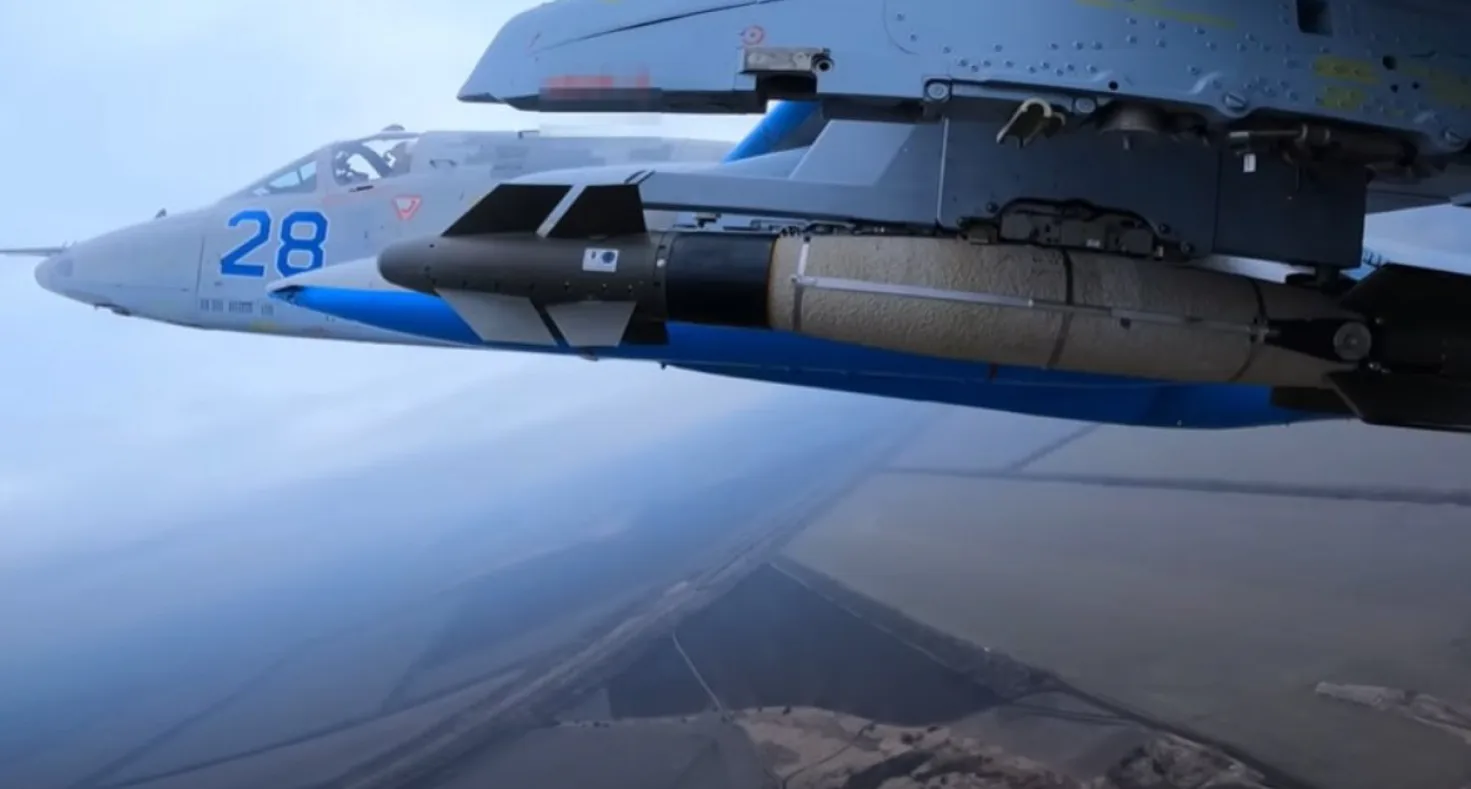
Guided aerial bombs remain one of the key challenges for Ukraine’s Defense Forces. In response, Ukraine is systematically working in several areas at once: developing air-defense systems capable of intercepting these munitions, suppressing their carrier aircraft with electronic warfare and strike systems, and developing its own precision-guided aerial munitions. The asymmetric response to this threat is being shaped not only through the receipt of weapons from allies, but also through the development of the domestic defense-industrial complex.
The first Ukrainian KAB is ready - Fedorov shares video18.05.26, 11:12 • 21819 views