










In the first half of 2025, surgeons at the Shalimov Center performed 51 vital organ transplants
Kyiv • UNN
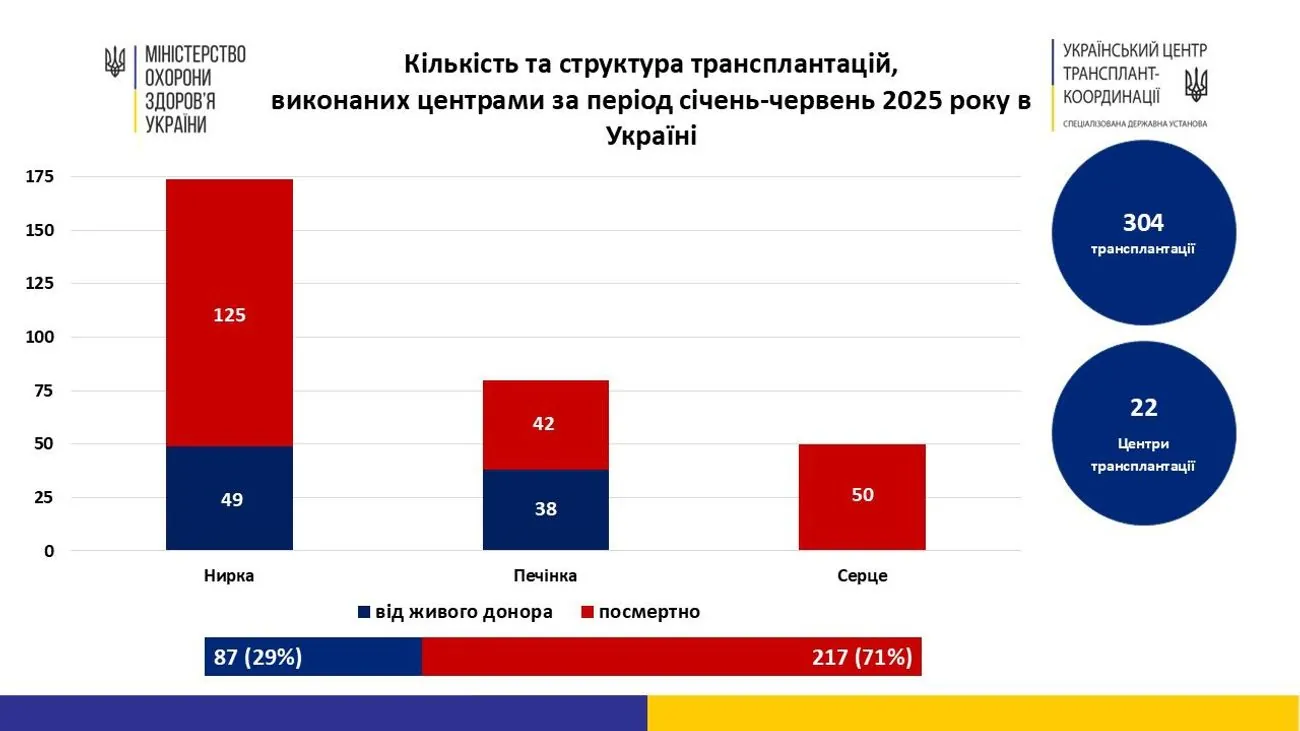
In the first half of 2025, surgeons at the Shalimov Center performed 51 liver, kidney, and heart transplants. In total, 304 transplants were performed in Ukraine during this period, of which 87 were from living donors and 217 post-mortem.

In the first half of 2025, transplant surgeons at the Shalimov National Scientific Center of Surgery and Transplantology performed 51 operations involving liver, kidney, and heart transplants.
This is reported by UNN with reference to the Shalimov National Scientific Center of Surgery and Transplantology's Facebook page.
Details
In total, according to the Ministry of Health of Ukraine, 304 transplants were performed in the first half of the year, of which 87 were from living donors and 217 were post-mortem. Specifically, there were 174 kidney transplants, 80 liver transplants, and 50 heart transplants.
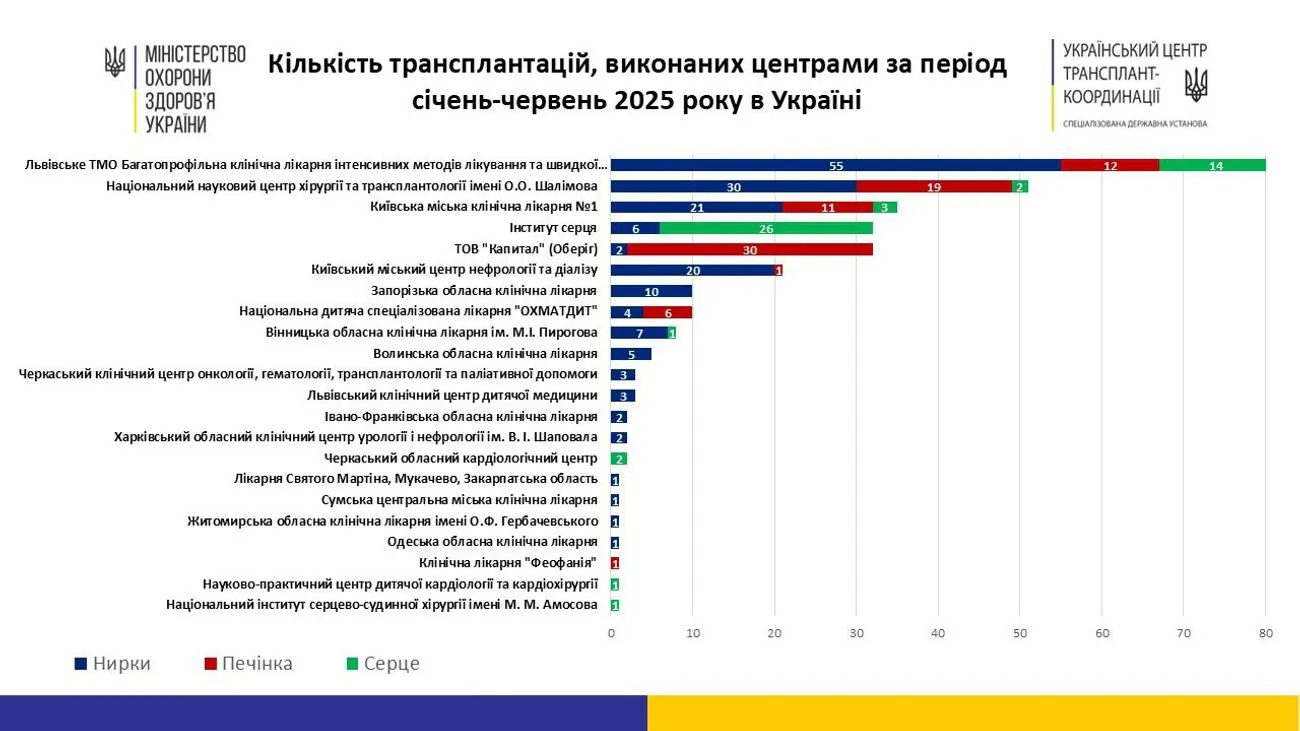
The Shalimov National Scientific Center of Surgery and Transplantology performed 51 transplants (30 kidneys, 19 livers, 2 hearts).
Only the "Lviv Territorial Medical Association "Multiprofile Clinical Hospital of Intensive Treatment Methods and Emergency Medical Care" performed more such operations (55 kidney transplants, 12 liver transplants, 14 heart transplants).
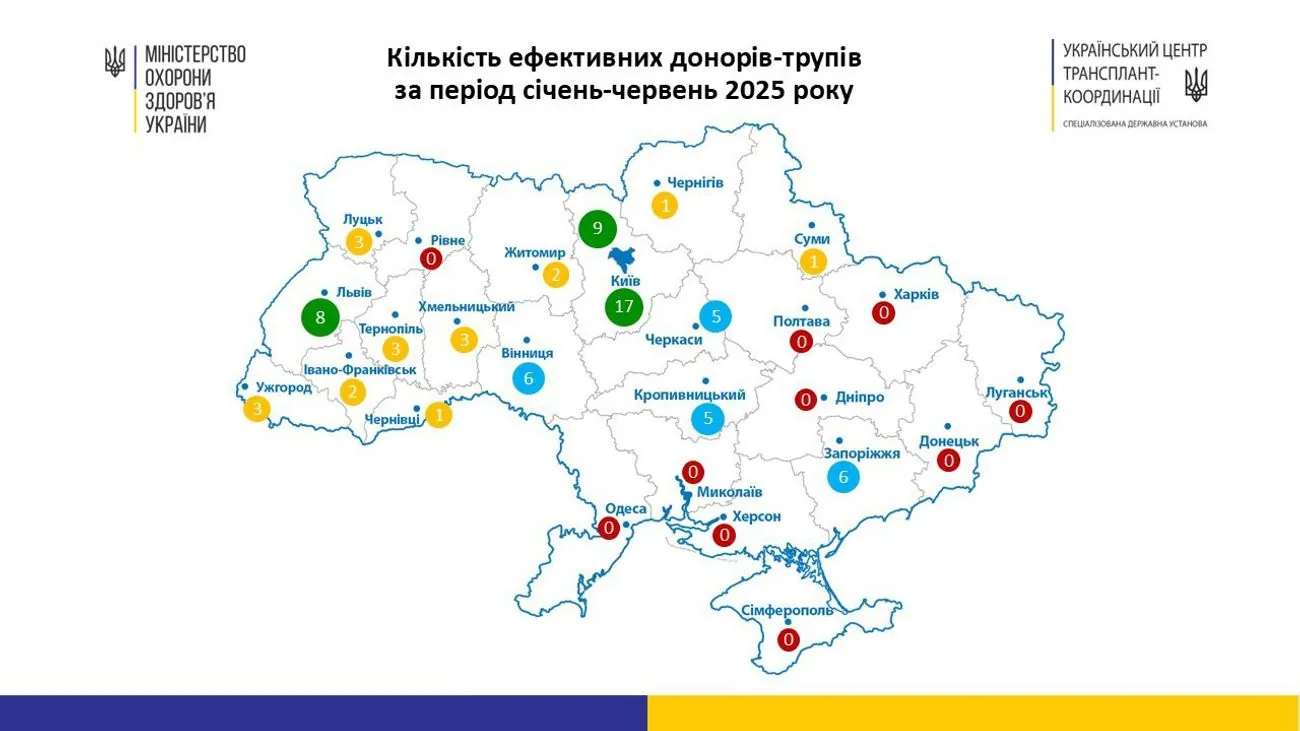
Kyiv and the region (26) and Lviv region (8) lead in the number of post-mortem donors.
5-6 post-mortem donors were provided in Vinnytsia, Cherkasy, Kropyvnytskyi, and Zaporizhzhia regions.
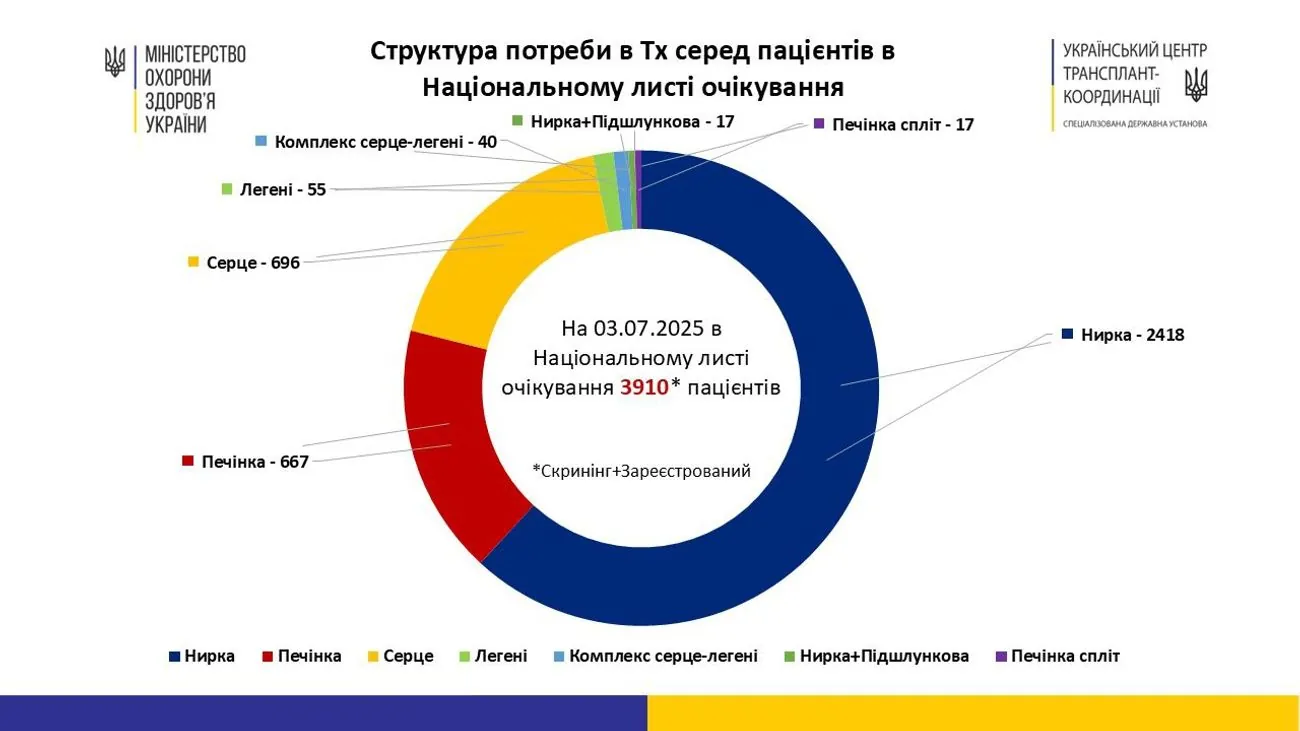
According to the Ministry of Health, a total of • 2418 patients are awaiting kidney transplants; • 696 – heart; • 667 liver; • 55 – lung; • 40 – heart-lung complex; • 17 – kidney-pancreas complex; • 17 – liver-split.
Addition
The Shalimov Center reported that in cases where a patient has a malignant liver tumor, performing a radical operation is dangerous due to the risk of liver failure.
In such a case, preoperative portal vein embolization comes to the rescue. This minimally invasive procedure stimulates the growth of a healthy part of the liver, which reduces the risk of complications and makes surgical treatment safer. Such a procedure gives a chance even to patients who were previously considered hopeless