










FREYJA as a new security dimension for Ukraine and Europe: what the Anti-Ballistic Coalition will change
Kyiv • UNN
Ukraine has something to offer European partners, and the FREYJA project is not only about protecting Ukrainian skies but also a response to the threat from Russia to all of Europe.

Ukraine and 9 other European countries signed a historic declaration on the establishment of the Anti-Ballistic Coalition in Paris on July 13. What exactly is at stake, Ukraine's place and role, as well as what significance this has for our state – read in the article by UNN.
"Russia is making a final bet on ballistic missile strikes on cities and villages to break our people and deprive Ukraine of the ability to defend itself. The Iranian regime fights the same way. Cooperation between Russia and North Korea has led to the improvement of North Korean missiles.
Our calculation is that there will be more ballistic missiles in the world. And there must be at least enough anti-ballistic defense. That is exactly what we are doing. Europe can become a global leader in the production of high-quality anti-ballistic systems, without political dependence," said President Volodymyr Zelenskyy during a meeting with European leaders in Paris.
Zelenskyy is convinced that strikes deep into Russia and the launch of the FREYJA anti-ballistic defense system (around which the members of the Anti-Ballistic Coalition have united) are exactly what will force the Russian dictator Vladimir Putin to sit down at the negotiating table faster.
FREYJA – protection of Ukraine and a complement to the European air defense system
The issue of strengthening protection against ballistic threats has become urgent not only in Ukraine, which is under direct attack from Russia. The gradual escalation in various parts of the world, the US intention to reduce defense support for Europe, and the overall change in approaches to warfare (when, for example, relatively inexpensive Iranian drones were shot down by expensive PAC-3 Patriot missiles) – have led to an understanding of the need to rethink one's own defense. It must be inexpensive, mass-produced, and easily scalable. Ukrainians were the first to understand this out of necessity. The realization of the need to change approaches to their own security has also emerged in other European countries.
"Everyone sees that there are not enough anti-ballistic capabilities in the world. The United States is working to expand Patriot production, and Europe is working to expand production of SAMP/T, IRIS-T, and NASAMS. These are strong systems. But the need for protection exceeds the available capabilities," the President added.
That is why the idea of the FREYJA project emerged, which is intended to strengthen and scale up air defense capabilities.
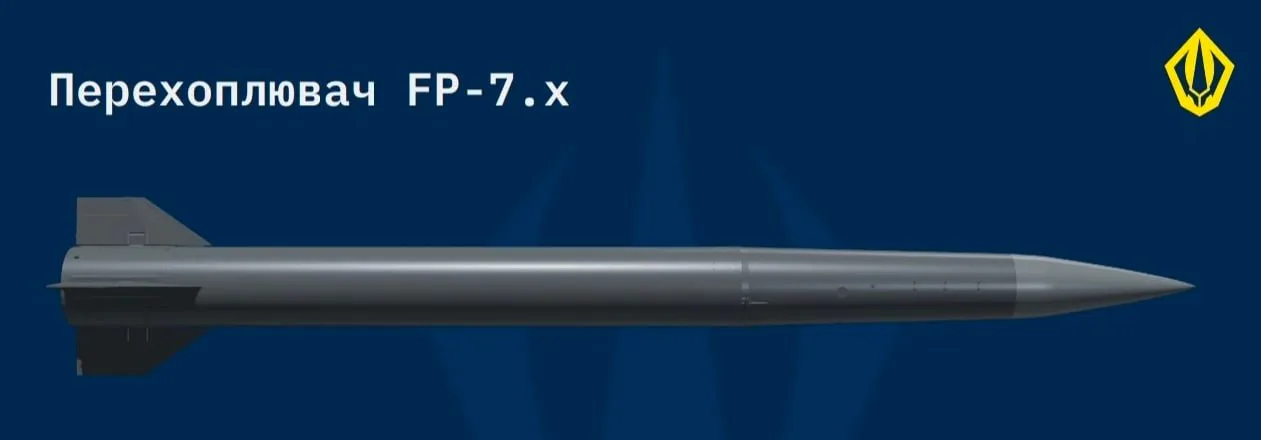
The FREYJA anti-ballistic shield will be built on the basis of the FP-7.x interceptor missile, developed by the Ukrainian defense company Fire Point. It is already known that the system will use radars manufactured by HENSOLDT. It is also likely that such powerful European defense giants as Thales, Diehl Defence, Saab, Kongsberg Defence & Aerospace, Weibel, Leonardo, MBDA, Eurosam, Safran, and Destinus will join the development.
From open sources, it is known that the system will likely include Weibel GFTR-2100/48 or Leonardo KRONOS Land illumination and guidance radars. The command post is expected to be based on the Norwegian Kongsberg Fire Distribution Center complex. One of the key features of the system will be an open architecture and the use of Network Access Nodes modules, which will allow the integration of additional solutions and components.
The FREYJA anti-ballistic system has one, but very important, difference – independence from external control. According to the co-founder and chief designer of Fire Point, Denys Shtilerman, modern Western air defense systems often operate in a closed architecture format, where the supplier country or manufacturer effectively retains control over the critical elements of the system. The project's architecture is expected to be implemented in such a way that new partner countries can easily join it.
When FREYJA will start intercepting ballistic missiles
I hope that within the next 12 months we will see FREYJA in operation
Earlier, the CEO and CTO of the Ukrainian company Fire Point, Iryna Terekh, told the media that the first interception of a ballistic missile by the FP-7.x rocket is planned to be carried out by the end of 2027. At the same time, she added that this is an extremely ambitious goal.
Half a year or a year, but analysts agree that it will take Ukraine much longer to start producing the same missiles for the Patriot. Even if Ukraine makes every effort and overcomes all bureaucratic obstacles, and manufacturers use all their ingenuity, it could take 2, or even 4 years, before production begins. And in the case of our country, time is not just money, but first and foremost, human lives.
International expert Dmytro Levus is convinced that the signing of the declaration on the Anti-Ballistic Coalition was preceded by thorough work.
"The signing of the declaration is actually a manifestation of the work that had been carried out for a long time before. That is, we now have a situation not when the declaration comes before the real work, but when it in a certain way becomes a marker of what has already been done," Levus believes.
The start of building a new security architecture for Europe
European leaders, in particular EU Commissioner for Defense Andrius Kubilius, have repeatedly stated the need to create a defense union that should also include Ukraine. A similar initiative has already been discussed at the level of European Union leaders.
Expert Dmytro Levus suggests that it is the joint work on the FREYJA project that could give rise to the emergence of such a union.
"This is one of the contours of a possible European defense union and the growth, in fact, of European defense autonomy - something that Trump has been pushing for for so long," the expert believes.
Ukraine has changed its role from a petitioner to an initiator of change. This became possible thanks to the active development of the defense sector and successful decisions that correspond to the logic of modern warfare: relatively cheap and effective means of destruction, such as drones, began to cover significant distances and hit targets deep inside the territory of the Russian Federation. And in economic terms, these targets cost significantly more than the cost of a single UAV.
"Ukraine has demonstrated over the past year the growth of its capabilities and specific strikes on a systematic basis, which demonstrate Russia's fragility and its inability to defeat Ukraine. They are convinced that Ukraine is beneficial for security investments, as it is able to maintain security on the European continent. It is Ukraine's capabilities that made these transformations possible, both in Trump's attitude and in the European segment, including in the specific FREYJA project," Levus summarizes.
FREYJA for Europe is not a replacement for existing systems, but a complement to them. As we have already mentioned, the system will have an open architecture, which will give Europe greater autonomy and sovereignty in matters of defense.