










Christmas Lent 2025: start date, dietary rules and prohibitions
Kyiv • UNN
Orthodox Christians are preparing for Christmas Lent, which will begin on November 15 and last until December 24. This period, known as the Little Lent, involves spiritual and physical purification, abstaining from certain foods, and observing special rules.

At the end of autumn, Orthodox Christians prepare for one of the longest and most important periods of their spiritual life - the Nativity Fast. It concludes the calendar year and precedes the great feast of the Nativity of Christ. The main traditions of the Nativity Fast and its main prohibitions are described in the UNN material.
When does the Nativity Fast begin and how long does it last?
According to the new calendar, the Nativity Fast will begin for Orthodox Christians on November 15 and last until December 24, as December 25 is Christmas according to the new style. Thus, it lasts forty days, which is why this period is also called the Minor Lent, in contrast to the Great Lent before Easter.
The Nativity Fast can also have another name - Philip's Fast (Pylypivka). It is associated with the fact that the last day before the fast is the Day of the Holy Apostle Philip. This day is the last day of the year when there are no restrictions on food and drink. From then until Christmas, one should pay attention to spiritual and bodily purification: pray a lot, reflect, and read spiritual literature. One should also refrain from consuming forbidden food.
Establishment of the Nativity Fast
The first mentions of the Nativity Fast date back to the 4th century. Initially, it lasted only seven days, and only later was it extended to forty days. There was a significant reason for such a decision: since the feast of Christmas is no less important than Easter, the preparation for it should be appropriate. Simply put, the fast itself emphasizes the importance of the event, and the forty-day period of its observance means special preparation for an important holiday.
Why does the preparation for Christmas and Easter last exactly forty days? It's simple - that's how many days Jesus Christ fasted in the desert when he was tempted by Satan.
1563 painting found in German supermarket03.11.25, 03:59 • 5729 views
What can and cannot be done during the Nativity Fast
The Nativity Fast is not the strictest of all church fasts, but restrictions are imposed on products of animal origin. Meat, eggs, milk and their derivatives (butter, sour cream, sausages and smoked meats, etc.) are prohibited.
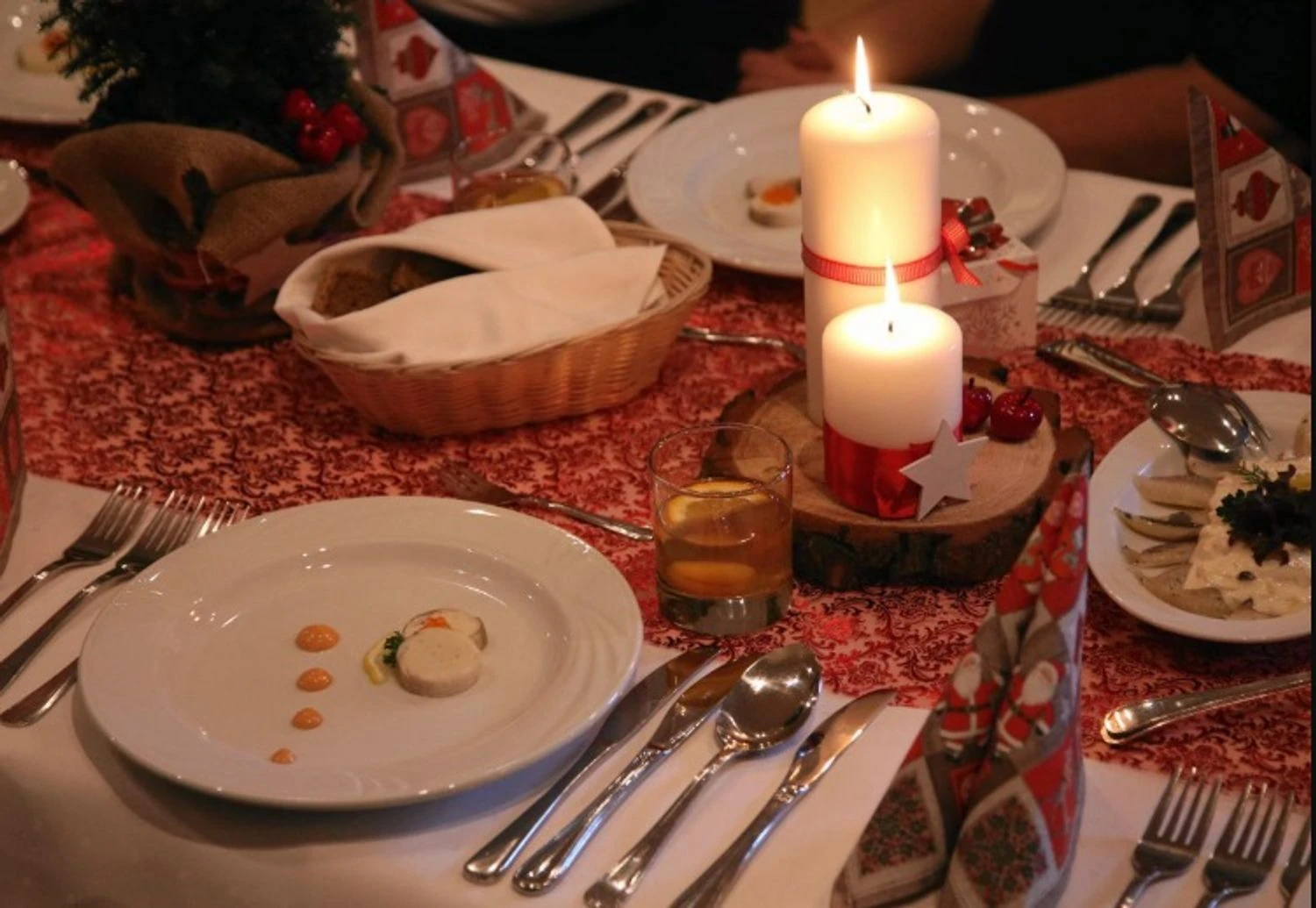
Food should be simple and of plant origin. To compensate for the lack of animal protein, it is worth including mushrooms, legumes, and nuts in the diet.
Here are some basic rules for eating during the Nativity Fast:
- On Mondays, Wednesdays, and Fridays, it is necessary to refrain from alcohol, dishes with vegetable oil, and products of animal origin;
- on other days, thermally processed dishes, as well as food prepared with vegetable oil, can be consumed;p
- on Tuesdays, Thursdays, Saturdays, and Sundays, as well as on some days (for example, December 4 for the feast of the Presentation and December 19 for the feast of St. Nicholas), the fast is somewhat relaxed - a little fish and red wine can be consumed;
- starting from December 20, the fast becomes stricter, so on Tuesdays and Thursdays, fish should be avoided;
- in the last, most strict week of the fast, on Mondays, Wednesdays, and Fridays, even sugar, salt, and hot drinks are prohibited. Fish is allowed on Saturday;
- on the last day before Christmas, one cannot eat until the first star appears in the sky. Only water is allowed.
In general, the basis of the diet during the Nativity Fast should be porridges, vegetable dishes, nuts, dried fruits, and mushrooms.
Who should not fast
There are categories of people who should not observe the fast, as it can negatively affect their health. This applies to those who are ill or have recently recovered from an illness, children under seven, pregnant and breastfeeding women.

It is also worth noting that those who have had coronavirus disease should not fast. For several months after it, increased fatigue, breathing problems, weakness, heart problems, etc., may be observed, so fasting at this time is not recommended.
Signs for the Nativity Fast
Many interesting signs and beliefs are associated with the Nativity Fast:
- cleaning the house was only allowed in the morning, otherwise evil spirits could be attracted to the house. If it happened that the house needed to be tidied up in the evening, then a candle or fire in the stove or chimney had to burn in the house until the end of the fast;
- under no circumstances should one quarrel during the fast - this will bring misfortune in the coming year;
- one should not go fishing and hunting during the fast - troubles may occur;
- losing something during the Nativity Fast is a bad omen, but finding something is for good luck.
The traditions and prohibitions of the Nativity Fast are designed to temper and strengthen people's souls. This will help to meet the feast of the Nativity of Christ in the right mood and with inspiration for further achievements in life.
But it is worth remembering - the most important thing that a person should have before meeting the Divine Child is a good heart and a sincere soul. And then the truly festive Christmas star will shine brightly for you.
4,400-year-old pink door found in Egypt that cannot be opened: details20.10.25, 04:54 • 34957 views