










What is the "Uragan" MLRS: Key Characteristics and Dangers of the System
Kyiv • UNN
The 220 mm Uragan MLRS is capable of covering large areas at a range of up to 35 km. The system's cluster munitions create a long-term mine threat to civilians.

The "Uragan" multiple launch rocket system is one of the heavy Soviet artillery systems that Russia uses in the war against Ukraine. Its main danger lies in its ability to cover a large area with rockets in a short period of time.
For the civilian population, not only the strikes themselves are particularly dangerous, but also unexploded ordnance and cluster submunitions, which can remain a threat even after the shelling.
What is the "Uragan" MLRS and how the system works
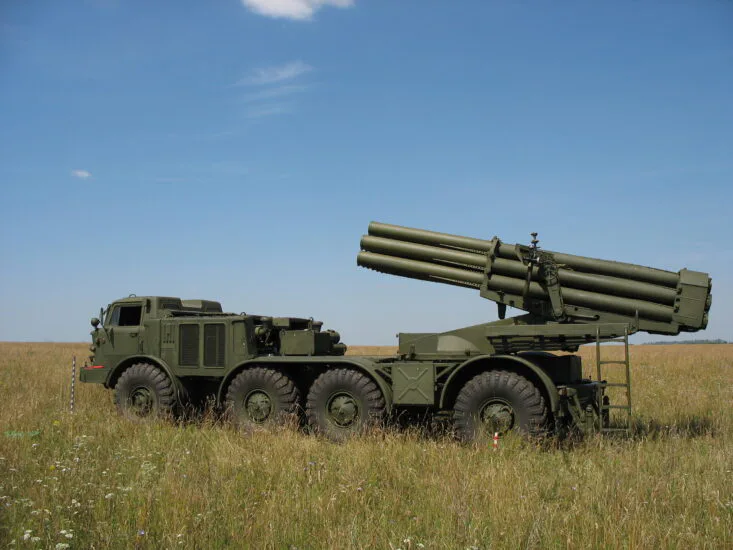
The "Uragan" MLRS, or BM-27, is a 220 mm caliber multiple launch rocket system. It was created in the 1970s and belongs to the heavy rocket artillery systems. Unlike tube artillery, such a launcher fires unguided rockets from a pack of guide rails. A single salvo can cover a significant area, which is why the system poses an increased danger to populated areas if used against cities or near civilian infrastructure.
The principle of the MLRS operation is to launch several rockets in a short period of time. The system is not intended for precision strikes on a single target; its task is massive fire damage to an area. This is exactly what makes the "Uragan" especially dangerous for civilians: even a single strike can hit residential quarters, roads, industrial facilities, schools, or hospitals.
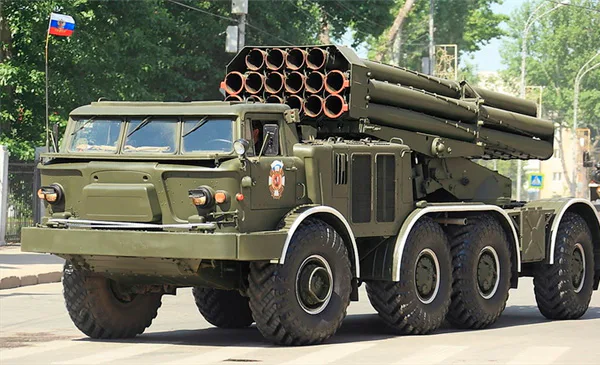
The "Uragan" multiple launch rocket system: key features
The BM-27 "Uragan" has 16 guide rails for launching 220 mm caliber rockets. According to open data, the firing range of basic munitions is approximately 10 to 35 km. The mass of one rocket is usually estimated at 270–280 kg, and the mass of the warhead is about 90 kg. The launcher is mounted on a ZIL-135LM 8×8 wheeled chassis, which provides it with mobility.
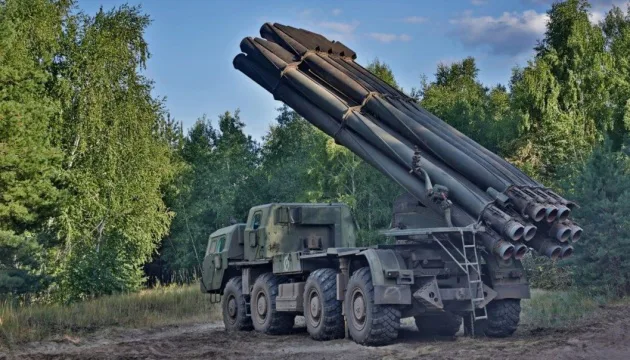
BM-27 "Uragan": what is known about the launcher
The BM-27 combat vehicle is the main launcher of the "Uragan" complex. It carries a pack of 16 guide rails and launches various types of rockets. Open sources state that the system can use high-explosive fragmentation, cluster, and mine-laying munitions. It is the cluster and mine-laying variants that pose an additional threat after the shelling ends, as some elements may not explode immediately.
In a report on the use of cluster munitions in Ukraine, the international non-governmental organization Human Rights Watch noted that such munitions scatter dozens or hundreds of small elements over a large area, and some of them do not explode upon impact, effectively turning into a mine threat for civilians for years. That is why, after shelling, it is strictly forbidden for people to touch debris, suspicious metal objects, or unexploded shells.
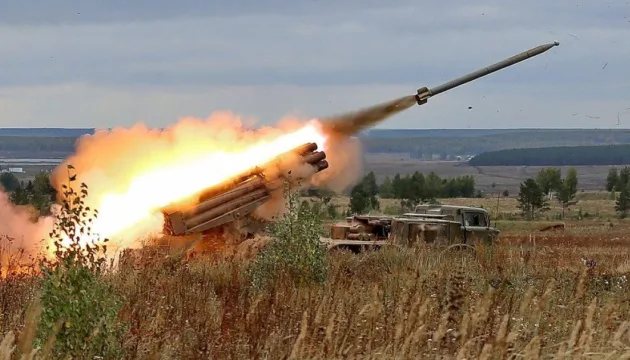
The "Uragan" system: characteristics and capabilities
The main characteristics of the "Uragan" are as follows:
- caliber — 220 mm;
- number of guide rails — 16;
- firing range of basic munitions — up to 35 km;
- mass of the combat vehicle — about 20 tons.
The launcher does not have full armor protection, so its "survivability" is primarily ensured by mobility and the ability to maneuver.
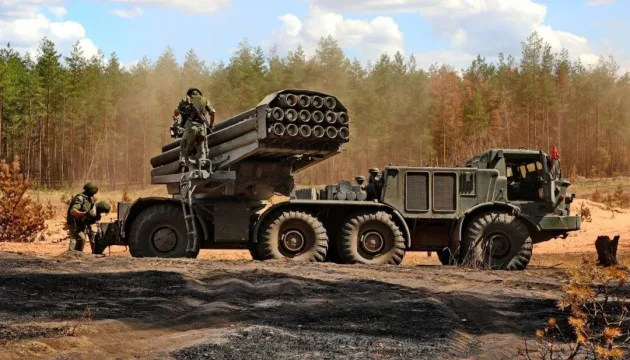
"Uragan": what munitions are used for it
220 mm caliber rockets are used for the "Uragan". Known types include high-explosive fragmentation munitions, cluster shells with submunitions, as well as munitions for remote mining. Publicly available descriptions of the system mention rockets that can carry different warheads depending on the purpose.
Cluster munitions pose the greatest danger to civilians. Amnesty International reported that on February 25, 2022, in the city of Okhtyrka, Sumy region, a strike by a 220 mm "Uragan" rocket with cluster munitions on the "Sonechko" kindergarten, where people were hiding, resulted in the deaths of three civilians, including a child. At the time, the organization stated that such a strike could be qualified as a war crime.
After shelling, not only whole rockets can be dangerous, but also fragments, cluster elements, parts of casings, and objects resembling metal cylinders or small munitions. The State Emergency Service reminds: if a suspicious object is found, do not approach, touch, move, or disassemble it. The find must be reported to rescuers at 101 or the police at 102.
"Uragan" and "Smerch" MLRS: what is the difference between them
The "Uragan" is often compared to the "Smerch," as both systems belong to Soviet rocket artillery. The main difference between them lies in the caliber, range, and power of the munitions.
The "Uragan" uses 220 mm rockets and has 16 guide rails. The "Smerch" is a heavier 300 mm caliber system and has 12 guide rails. According to open data, the range of the "Smerch" is significantly greater and can reach over 100 km depending on the type of rocket.
Therefore, the "Uragan" occupies an intermediate position between lighter systems like the "Grad" and heavier long-range systems like the "Smerch".
The "Uragan" complex: why it remains a threat to Ukrainians
Despite its "venerable age," the "Uragan" complex still poses a serious threat. It is used by the Russian military to attack Ukrainian-controlled cities in the Donbas, Dnipropetrovsk, Kherson, Mykolaiv, Kharkiv, and Sumy regions from occupied territories.
Its large-caliber rockets can cause significant destruction, and cluster and mine-laying munitions create a long-term danger for civilians even after the shelling has ended.
A separate issue is the scarcity of 220 mm munitions. Defense Express noted that 220 mm rockets for the BM-27 are rare, and their availability and uninterrupted supply remain extremely problematic for the Russian army. Despite this, the very presence of "Uragans" in the Russian Armed Forces means they can continue to be used for strikes on Ukrainian territories.