









The Rada explained why they want to tax Ukrainians' parcels and when it will happen
Kyiv • UNN
Draft Law No. 15112-d introduces automatic VAT payment by marketplaces for goods up to 150 euros. The new rules will take effect no earlier than January 1, 2027.

The Verkhovna Rada is preparing a revised draft law No. 15112-d for consideration, which changes the procedure for paying VAT on goods that Ukrainians buy on foreign marketplaces. In other words, if the document is supported by the people's deputies and signed by the President, people will have to pay taxes on goods they order from abroad.
What the authors of the draft law changed in this document, why it is so important for Ukraine, and whether official Kyiv will lose the help of international donors if parliamentarians "fail" the vote, UNN learned from People's Deputy, member of the Verkhovna Rada Committee on Finance, Tax and Customs Policy Olha Vasylevska-Smagliuk.
According to her, the vote on the new rules for taxing international parcels could take place in the near future.
What is proposed by bill No. 15112-d
The draft law on amendments to the Tax Code of Ukraine regarding the taxation of electronic commerce operations with value-added tax concerns changing the rules for distance selling of goods worth up to 150 euros imported into Ukraine in international mail and express shipments. The main idea of the document is to transfer VAT administration to the marketplaces through which Ukrainians buy goods abroad.
According to Vasylevska-Smagliuk, the initial government project did not contain a full-fledged mechanism for collecting VAT from parcels. The revised version partially took into account the provisions of the main and alternative draft laws, and also introduced a number of simplifications.
In fact, the draft law proposes to create an analogue of the European IOSS model in Ukraine, where VAT administration is carried out by the marketplace itself automatically during the sale of goods. Meanwhile, for the buyer, the process of receiving a parcel does not change and will remain the same as it is now
Draft law No. 15112-d is linked to project No. 12360, which provides for changes to the Customs Code. Together, they are intended to form the legal framework for the new rules of distance selling of goods.
Why and how parliamentarians changed the draft law on parcel taxation
In the revised version of the draft law, the people's deputies propose to define the specifics of taxing distance selling operations for goods up to 150 euros.
For example, they want to recognize the marketplace as the person responsible for paying VAT.
The MPs also propose to include the determination of exchange rates, the tax base, tax payment deadlines, and the possibility of paying it in foreign currency in the taxation formula.
Separately, the relevant committee abandoned some of the restrictions that were in the government version of the draft law. In particular, they completely canceled the restrictions on the maximum weight of coffee, tea, and the volume of perfumes within the tax-free limit of 45 euros for non-commercial parcels. This refers to shipments for personal, family, and other needs not related to entrepreneurial activity.
The document also maintains the current VAT exemption for goods with a total invoice value of up to 150 euros imported into Ukraine in unaccompanied baggage.
In addition, the draft law expands benefits for defense goods. In particular, this refers to unmanned aerial vehicles and certain categories of goods for the needs of the Defense Forces. For goods that already have an exemption upon import into Ukraine, the Cabinet of Ministers must determine the procedure for its application.
"We also (we – ed.) settled the issue of VAT exemption for distance selling of goods that already have an exemption upon import into Ukraine, in particular energy equipment and goods for the needs of the Defense Forces of Ukraine. For such goods, the Cabinet of Ministers must determine the procedure for applying this exemption; in particular, the possibility of returning VAT to buyers who paid the tax when purchasing such goods is being considered," Vasylevska-Smagliuk noted.
Taxation of parcels from AliExpress and Temu - when the new rules might start working
Even if parliament passes the draft law in the near future, the new rules will not work immediately: the document provides for a so-called transition period.
According to MP Olha Vasylevska-Smagliuk, the new rules may come into force no earlier than January 1, 2027. For this, the government must adopt a separate decision on the readiness of the IT component of the customs authorities and marketplaces, as well as prepare the relevant bylaws.
Thus, the taxation of parcels from foreign platforms will take place in several stages. First, parliament must define the legal rules, and only then will the state, customs, and platforms prepare the technical part.
Rada failed the bill on the "OLX tax"10.03.26, 13:52 • 5576 views
Why draft law No. 15112-d is important for business
The key argument of the draft law's authors in its favor is the leveling of competition conditions between Ukrainian businesses and foreign sellers. Ukrainian manufacturers and official importers pay VAT at the standard rate, while non-resident sellers can sell goods to Ukrainian buyers without paying such tax.
"First and foremost, the importance of this law lies in leveling competition and protecting the national producer. Ukrainian manufacturers and official importers of goods to Ukraine must pay VAT at the standard rate, while non-resident sellers can sell their goods to Ukrainian buyers without paying VAT," said Vasylevska-Smagliuk.
She emphasized that Ukraine is no exception in reviewing the rules for international parcels. EU countries changed their approach to taxing low-value goods and strengthened the administration of such operations back in 2021. Similar approaches were also applied by the USA and Turkey.
Taxes on foreign parcels - how much money the budget can receive
According to calculations by the Ministry of Finance, the adoption of the draft law could provide the state budget with about 10 billion UAH in additional tax revenue per year.
These funds are considered an additional financial resource for the state in wartime conditions. The Rada emphasizes that the draft law is important both for filling the budget and for supporting the Defense Forces and aligning Ukrainian legislation with European models.
How the parcel tax is linked to the IMF and Ukraine's European integration
According to Vasylevska-Smagliuk, the adoption of the law on taxing parcels is one of the important prerequisites that will help Ukraine successfully pass the review of the IMF program, which will take place in June 2026.
Undoubtedly, the adoption of this law is one of the key prerequisites for the successful completion of the June review of the IMF program. At the same time, the need for its adoption is driven not only by this factor
She added that the draft law is also significant for Ukraine's European integration. In fact, it implements the European Union's approaches to taxing cross-border electronic commerce. The introduction of a similar VAT administration mechanism should contribute to the harmonization of Ukrainian tax legislation with EU law.
"The subject of regulation of the draft law concerns the field of taxation, which is covered by the Association Agreement between Ukraine and the EU. Ukraine has committed to gradually bringing its legislation closer to European rules, in particular to Council Directive 2006/112/EC on the common system of VAT," the parliamentarian emphasized.
Tax on parcels and new rules for online shopping: who will pay more11.05.26, 19:27 • 73043 views
Parcel taxation and the risky financial monitoring clause - where and how to find a balance
It is worth noting that a clause appeared in the revised draft law that does not concern the taxation of parcels. It refers to temporary relaxations to the specialized law on financial monitoring.
According to Vasylevska-Smagliuk, this clause prohibits the application of sanctions and measures of influence against banks and financial institutions for ignoring checks on politically exposed persons, their family members, and related entities until Ukraine joins the EU.
"The Main Scientific and Expert Department of the Apparatus of the Verkhovna Rada of Ukraine officially stated that such a relaxation completely deprives the state of tools to influence banks and directly contradicts international FATF standards and the European EU Council Directive 2015/849," the deputy said.
This could create risks for international support for Ukraine. Passing the draft law in a version with provisions on financial monitoring risks complicating negotiations on EU accession and jeopardizing funding under the IMF's EFF program and other EU-funded programs.
What awaits Ukraine if the law is not passed
Olha Vasylevska-Smagliuk noted that risks exist in two scenarios. The first is if the draft law is passed in a version with the financial monitoring clause. The second is if this clause is removed, but the tax block itself is not passed at all.
In such a case, Ukraine may fail to fulfill part of its international legal obligations in the field of European integration. Failure to adopt rules for distance sales through electronic interfaces could mean missing the deadlines for aligning Ukrainian legislation with EU VAT norms.
"If this point (is removed – ed.), but the draft law in the revised version without the financial monitoring provisions is not passed at all, this will lead to the non-fulfillment of Ukraine's international legal obligations in the field of European integration," the deputy concluded.
Parcel tax for Ukrainians - context
Taxes on parcels from foreign marketplaces popular among Ukrainians were first discussed back in 2017. But on January 3, 2018, it became known that the introduction of restrictions on tax-free shipping of goods from abroad was postponed.
The topic was revisited at the end of 2018. At that time, it was said that from July 1, 2019, parcels worth more than 100 euros would be subject to VAT and customs duties. In January 2021, people's deputies took another step toward reviewing the rules, and on January 25, 2022, the Verkhovna Rada passed a law that increased the duty-free delivery limit from abroad from 100 to 150 euros.
After the start of the full-scale invasion, the rules had to be adjusted again. Parliament introduced amendments concerning the abolition of taxes on the import of generators and Starlinks — goods that became critically important due to Russian strikes on energy infrastructure and communication needs.
At the end of January 2024, Danylo Hetmantsev stated that the parcel limit for which no tax needs to be paid was planned to be increased to 1,000 euros. At that time, it was 150 euros. However, already in the summer of that year, the government approved changes to the state budget that provided for the taxation of international parcels worth more than 45 euros. According to the Cabinet's calculations, this could have brought an additional 3.3 billion UAH to the budget.
Then-Finance Minister Serhiy Marchenko advocated for reducing the tax-free limit for imported goods. He argued that a significant part of online trade and e-commerce in Ukraine is in the "shadows," and tax "loopholes" need to be closed. At the same time, by September, they decided to abandon this idea, as the administration of such a tax could have cost the budget more than the expected revenue.
At the end of 2024, media began reporting that in 2025, taxes on all international parcels could be introduced for Ukrainians. This happened against the backdrop of preparing a draft law to abolish the current 150-euro limit. In the second half of January 2025, Danylo Hetmantsev indeed submitted the relevant document to the Rada. He explained that goods up to 45 euros could be received without VAT only if they were sent by individuals for non-commercial purposes. However, the draft law did not receive proper support in parliament.
At the end of October 2025, the National Bank returned to the issue. The regulator advocated for taxing international parcels worth up to 150 euros, explaining this as a necessity to reduce the import of non-critical goods and decrease pressure on the balance of payments in wartime conditions. In early December 2025, the topic was raised again by the relevant committee against the backdrop of IMF conditions.
In February 2026, Prime Minister Yuliia Svyrydenko stated that there would be no duty on parcels, as the IMF had softened its requirements for Ukraine. The reason cited was significant changes in the situation following Russian shelling of energy infrastructure.
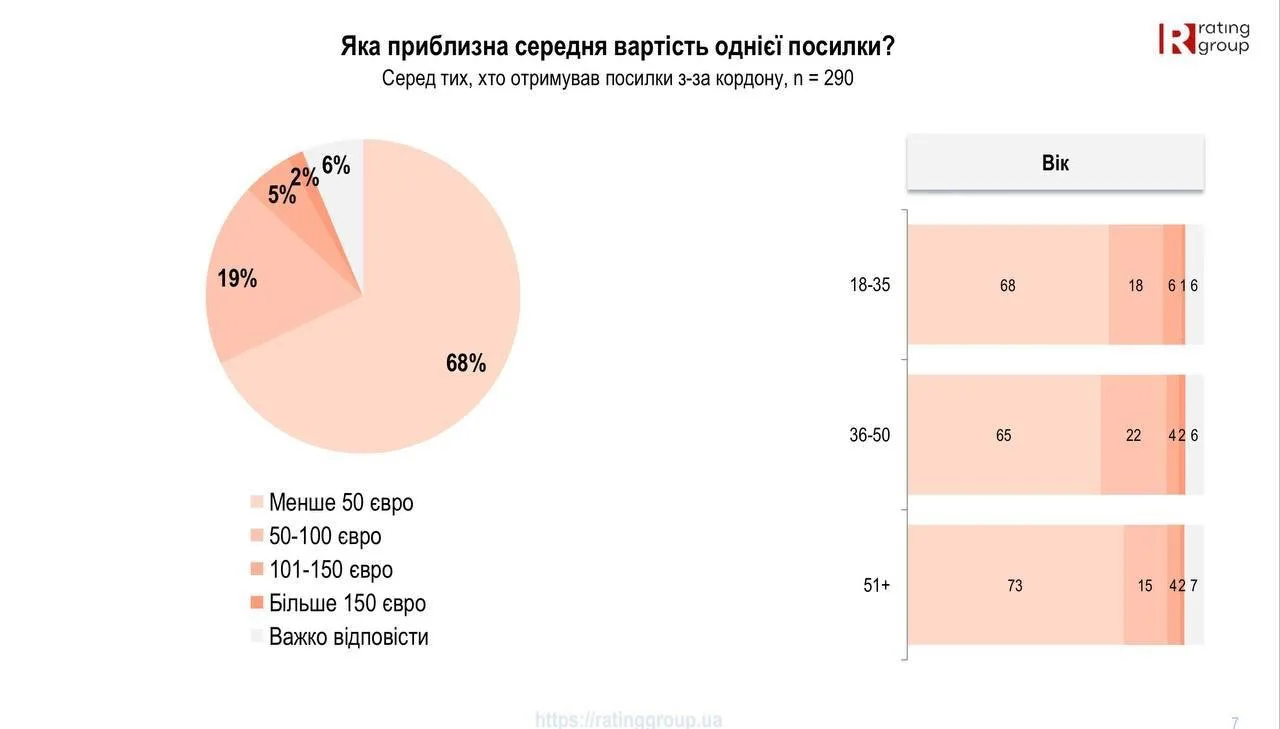
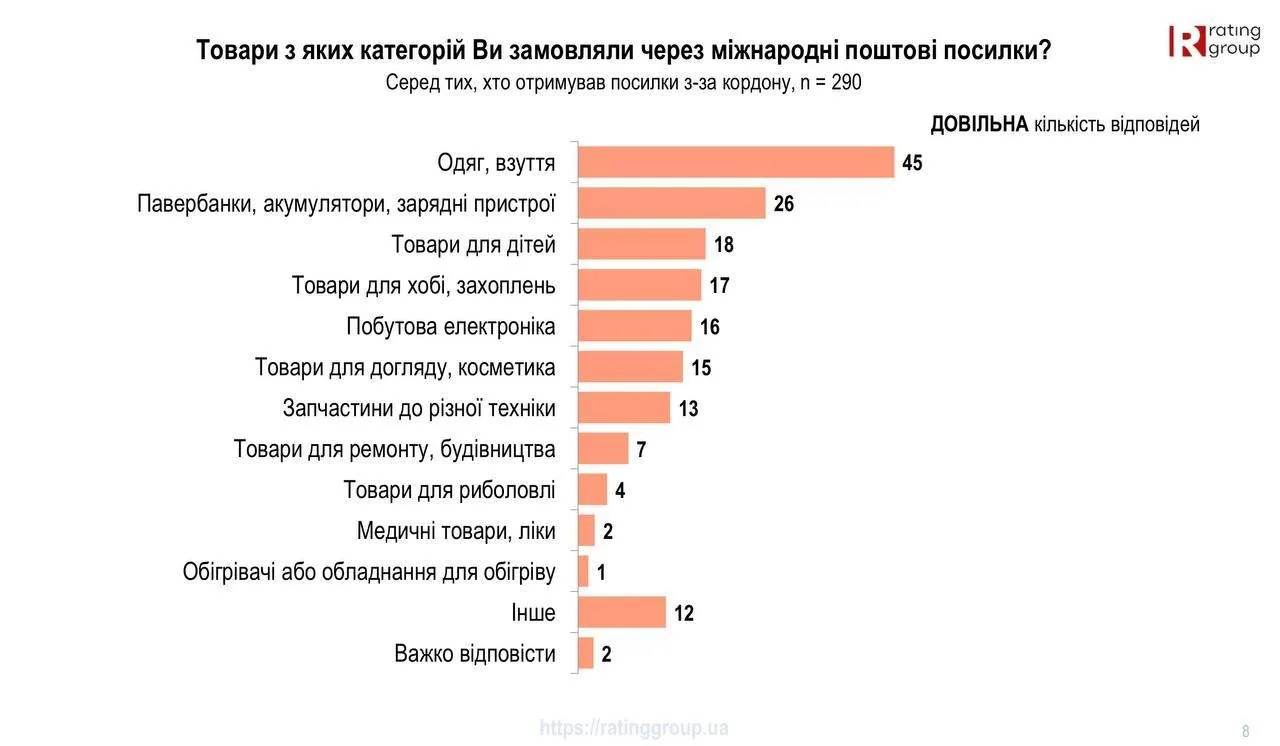
Ukrainians also did not support the idea of new taxation. According to a Rating Group survey, over 80% of respondents were against it. Almost a third of those surveyed had received international parcels within the last year, and about 90% of such shipments were worth up to 100 euros.
At the end of February 2026, it became known that the old rules might return for Ukraine. The Cabinet began preparing a large tax draft law for March, which contained a clause on abolishing benefits for international parcels. However, on March 10, the Verkhovna Rada failed it in the first reading: only 168 deputies voted "for" out of the minimum required 226.