










The European Space Agency has recorded the awakening of a large black hole
Kyiv • UNN
ESA has recorded the awakening of a black hole in the galaxy SDSS1335+0728 at a distance of 300 million light-years. It suddenly began to emit powerful X-rays.

The European Space Agency (ESA) is exploring the longest and most powerful bursts of X-ray radiation coming from a newly awakened black hole. Observing this strange behavior in real time provides a unique opportunity to learn more about these powerful fluctuations and the behavior of massive black holes, UNN writes, citing the ESA website.
Details
Although supermassive black holes (millions of times the mass of our Sun) are known to lurk at the center of most galaxies, their very nature makes them difficult to detect and study. Contrary to the popular idea that black holes are constantly "absorbing" matter, these gravitational monsters can remain in a dormant, inactive phase for long periods of time.
This is what happened with the black hole at the heart of SDSS1335+0728, a distant and unremarkable galaxy 300 million light-years from Earth in the constellation Virgo. After decades of inactivity, it suddenly lit up and recently began producing unprecedented bursts of X-ray light.
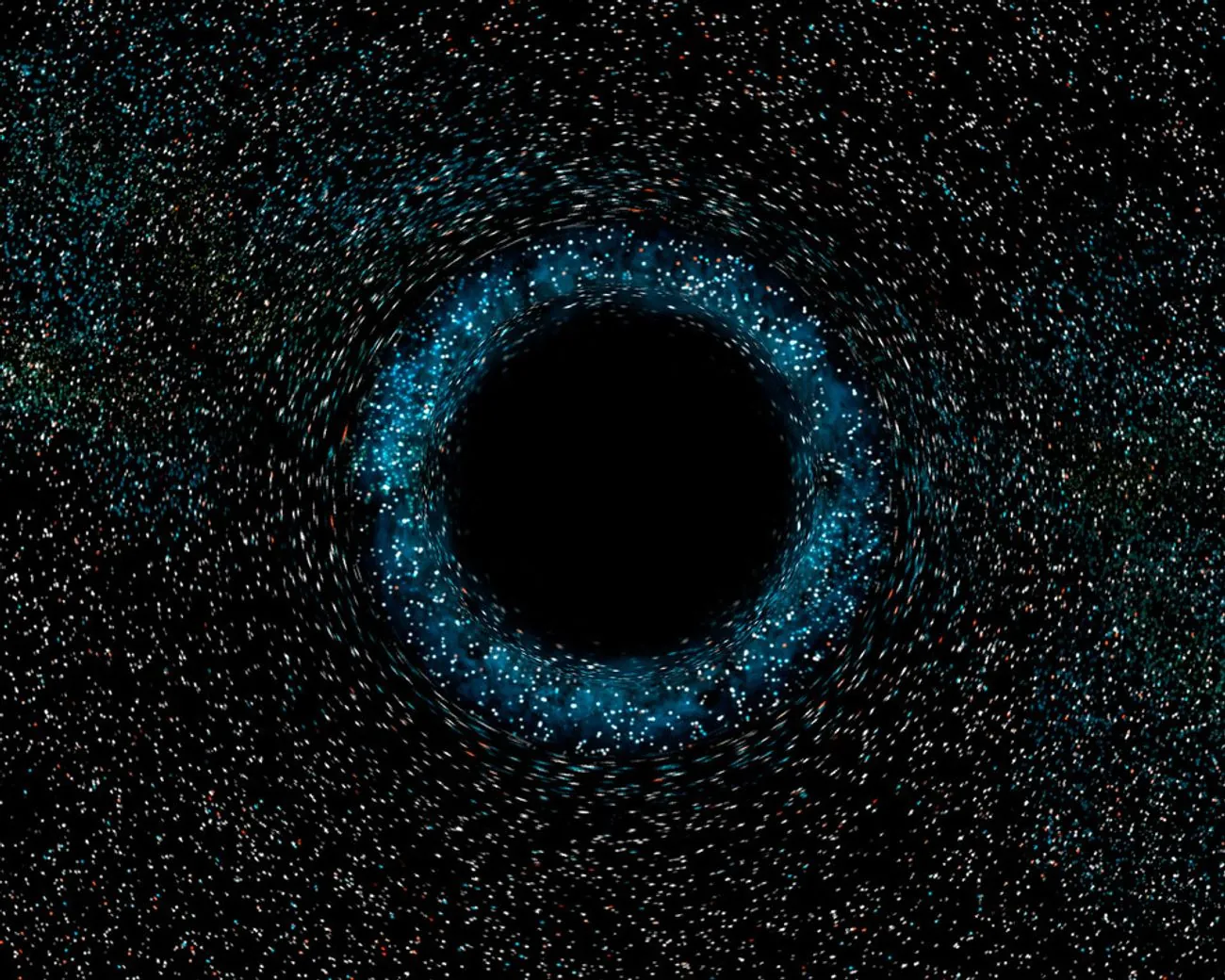
The first signs of activity appeared in late 2019, when the galaxy unexpectedly began to shine brightly, attracting the attention of astronomers. Studying it for several years, they concluded that the unusual changes they saw were likely the result of a sudden "switching on" of the black hole - a transition to an active phase. The bright, compact, central region of the galaxy is now classified as an active galactic nucleus called Ansky.
When we first saw Ansky's light in optical images, we launched follow-up observations with NASA's Swift X-ray Space Telescope and checked archival data from the eROSITA X-ray Telescope, but at the time we didn't see any evidence of X-ray emission,
Addition
Astronomers discovered 128 new satellites orbiting Saturn. This has cemented its lead in the list of Solar System planets with the most moons.
ESA signed a contract with Thales Alenia Space in Italy, according to which it will lead European aerospace companies in the creation of the Argonaut Lunar Descent Element, the first ESA lunar module.