










Preparing a first-grader for school: what rules really work
Kyiv • UNN
The parent's guide to preparing a child for first grade covers psychological readiness, academic preparation, and establishing a daily routine. UNN provides advice on choosing a school and setting up a workspace, which contributes to successful adaptation.

The first bell, the first grade – this is an exciting moment not only for the child but also for the parents. The first year at school is an important stage in a child's life that can influence their further development and attitude towards learning. However, not all parents know how to properly prepare their little ones for a new stage in life. UNN tells how to prepare a child for school, what parents need to know, and how to choose school supplies.
Child's psychological readiness
Many new and interesting things await a first-grader at school, so how you prepare your child determines with what emotions they will anticipate studying and whether they will feel happy about these thoughts.
It is necessary to talk to the child about school in a positive light, under no circumstances scaring them. Explain that a schoolchild is no longer a baby and that an important stage of growing up and a new status lie ahead.
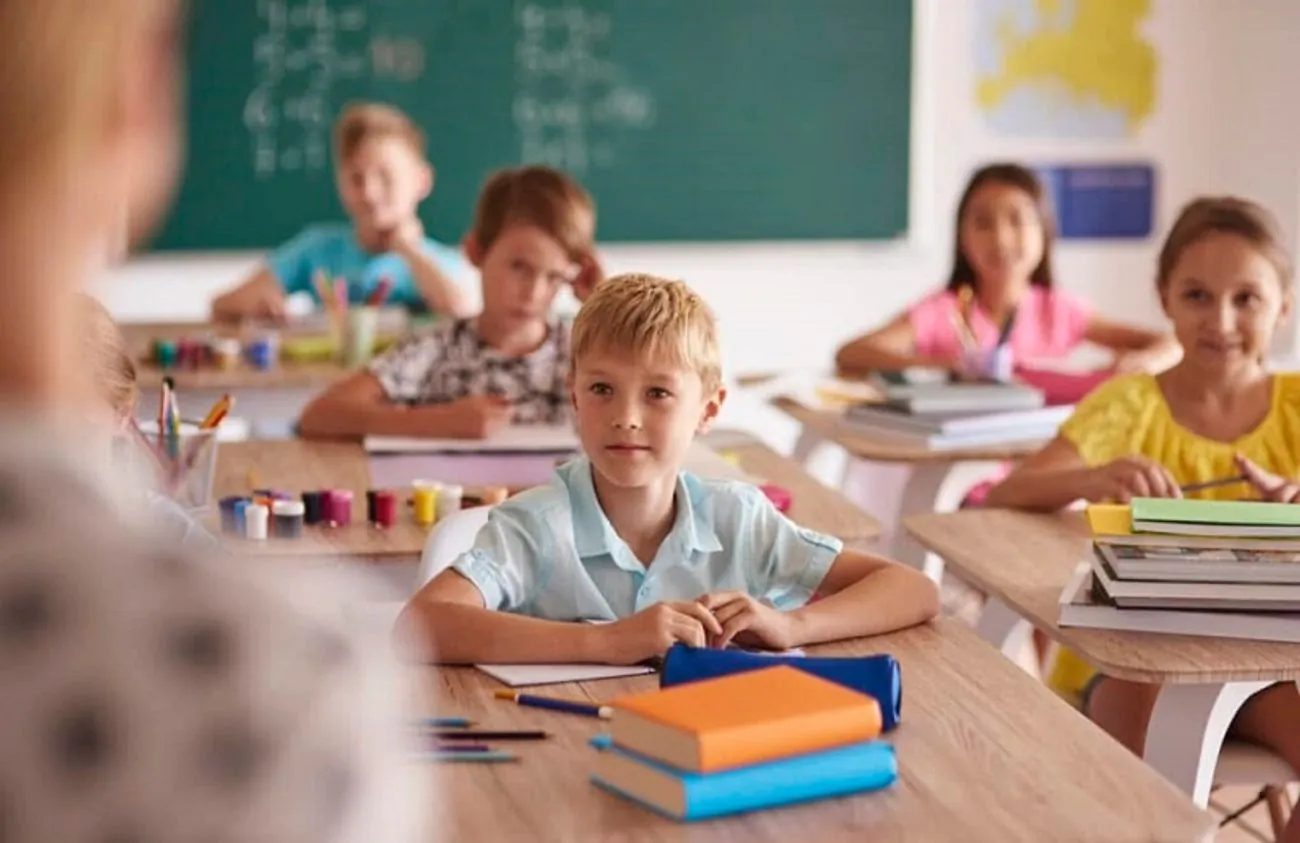
It is also necessary to explain to the child that knowledge provides many opportunities in life, the more knowledge they have, the greater the choice of professions and ways to fulfill their most cherished dreams.
Start from the child's interests; if the child is interested in, for example, experiments, explain what knowledge they will be able to gain in natural science, physics, and chemistry lessons in the future.
Also, school is a great opportunity to make new friends.
Academic preparation
Before preparing for school, you can subtly incorporate educational moments into a child's life, for example, while walking in the park, looking at flowers, searching for a squirrel, let the child describe what they see.
You can also read together with the child daily — short fairy tales, poems, captions in books, and ask them to retell them. Training concentration and perseverance will also be important — use short tasks (5-10 minutes), gradually increasing the time, as well as attention games: "find the differences", "what has changed on the table", etc.
Senior school reform: what awaits rural schools from 2026 onwards21.06.25, 10:00 • 381398 views
Establishing a daily routine and self-care skills
A daily routine for a first-grader is fundamental. Adhering to it allows for the distribution of time and energy throughout the day, alternating between learning and active rest. This contributes to the future first-grader's adaptation to the new role of a student, enabling them to accomplish everything, maintain good well-being, and a positive mood.
To make it easier for the child to adapt with the beginning of schooling to the new rhythm of life, gradually prepare them for the daily routine. A few months before, start following an adaptive routine – the child should get used to falling asleep and waking up at the same time, alternating mental and physical loads.
First-graders are extremely emotional; adhering to a routine helps prevent overloads that cause fatigue, reduced concentration, absent-mindedness, and, as a result, emotional instability. Thanks to adhering to a daily schedule, the child becomes more stress-resistant, remembers new material better, learns with interest, and explores the world around them with curiosity.
Advice for parents
First and foremost, before entering the 1st grade, parents face the question of which school to choose for their child. In reality, the choice is quite large and not easy. One can choose among numerous public or private schools, and furthermore, home schooling and attending online schools are becoming more popular in Ukraine every year.
In elementary grades, the school should be nearby; the closer it is, the less time and, accordingly, energy is spent on the commute. This is extremely important for primary school-aged children.

Also important is the first teacher, who plays an incredibly significant role in a schoolchild's life.
The institution itself is not as important as the teacher, who spends most of their time with the children and lays the foundations of school knowledge. So, when choosing a school, choose a teacher whom you can trust with your child. Not only the teacher's professionalism but also their love for children is important.
In addition, inquire about the school's ranking among other institutions in your region, what extracurricular activities are held, what rules exist for students, and so on.
Preparing school supplies
There is a direct relationship between a child's learning effectiveness and the convenience of their workspace. Comfortable furniture and good lighting help preserve the health of a schoolchild's eyes and spine. The workspace should be isolated from the play area, well-lit, and located near a window. Teach your child to take a break every 20-30 minutes and look out the window. This allows for a shift in attention and gives the eyes a rest.
Provide the workplace with an additional light source with adjustable lighting angle.
To ensure proper posture while sitting, the child's body should simultaneously touch the floor (footrest), the seat, and the backrest of the chair, forming three 90° angles – between the knees and the floor, between the back and the thighs, and at the elbows.
The height of the desk should be a few centimeters lower than the child's chest level. When sitting, the student should comfortably rest their elbows without stooping and reach the floor with their feet. Thus, if the child's height is less than 120 cm, the desk height should not exceed 52 cm; for heights between 120-150 cm, it should be 52-61 cm. A standard desk with a height of 75 cm can be used upon reaching a height of at least 150 cm.