










How to stop buying unnecessary medicines: simple rules that will save both your budget and your health
Kyiv • UNN
How to reduce medicine costs without harming your health? UNN has compiled simple rules that will help Ukrainians to form a more rational home first-aid kit and avoid unnecessary expenses.

94% of Ukrainian families have unused medicines in their home first-aid kits, and a quarter of them (25.4%) are expired. This is evidenced by a study published in the international journal Journal of Advanced Pharmacy Education & Research. Moreover, on average, each home first-aid kit contains five packages of medicines that will never be needed. UNN investigated how to reduce first-aid kit costs and stop buying unnecessary drugs.
How to save on medicines without harming your health
To avoid "throwing money away," you should change just a few habits.
Buy exactly as much as you need for the course of treatment. If the doctor prescribed five days of therapy, there is no point in buying a twenty-day package. Everything that remains "for later" almost always turns into garbage.
Don't overpay for the brand. Ukrainians sometimes choose well-known names, although pharmacies have high-quality analogues from other manufacturers. Such generics have the same active substance, good quality, work no worse than drugs under a well-known brand – but cost significantly less. You can consult a doctor to choose an analogue. But often it is enough to simply compare prices for similar medicines from different manufacturers.
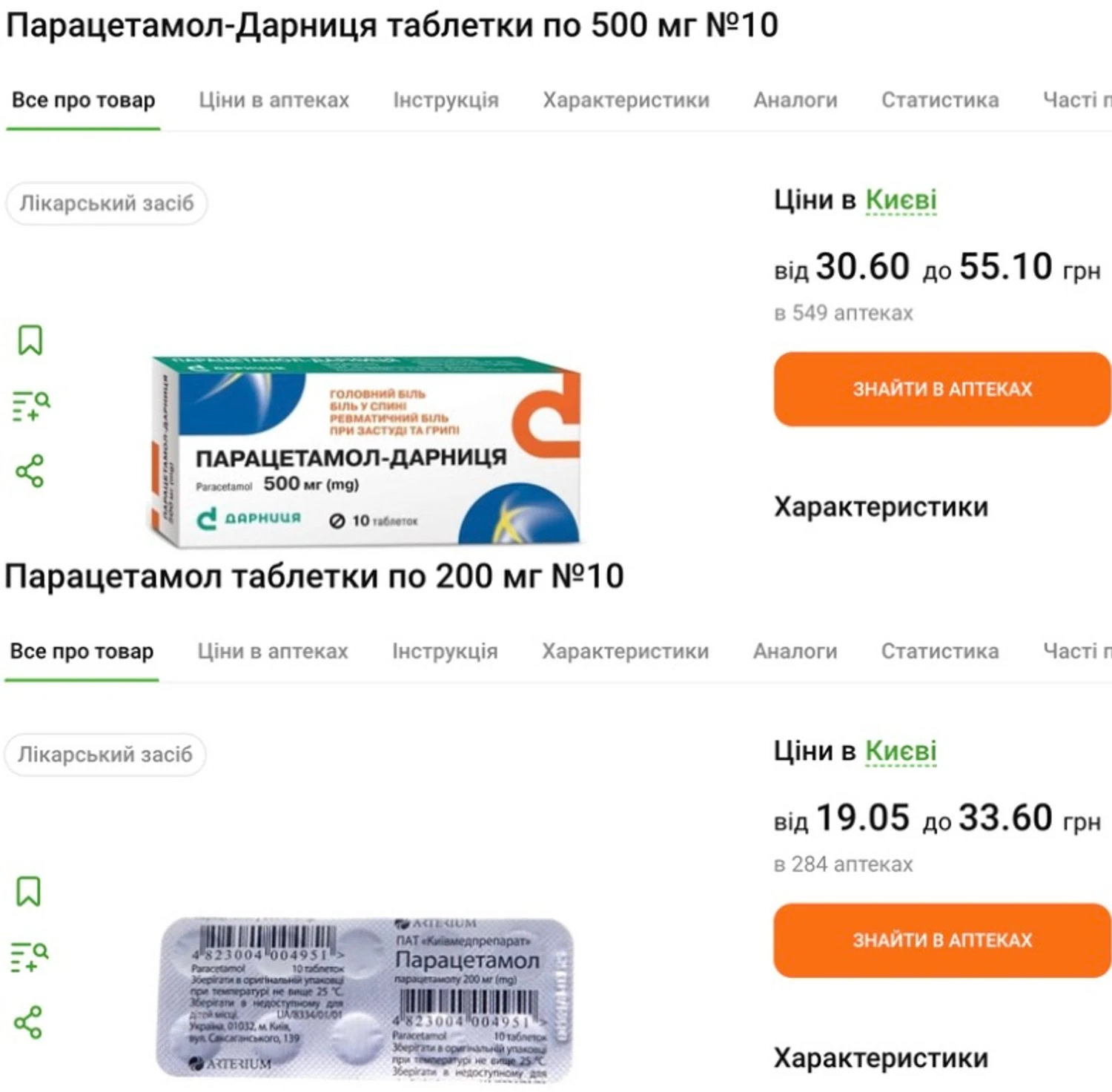
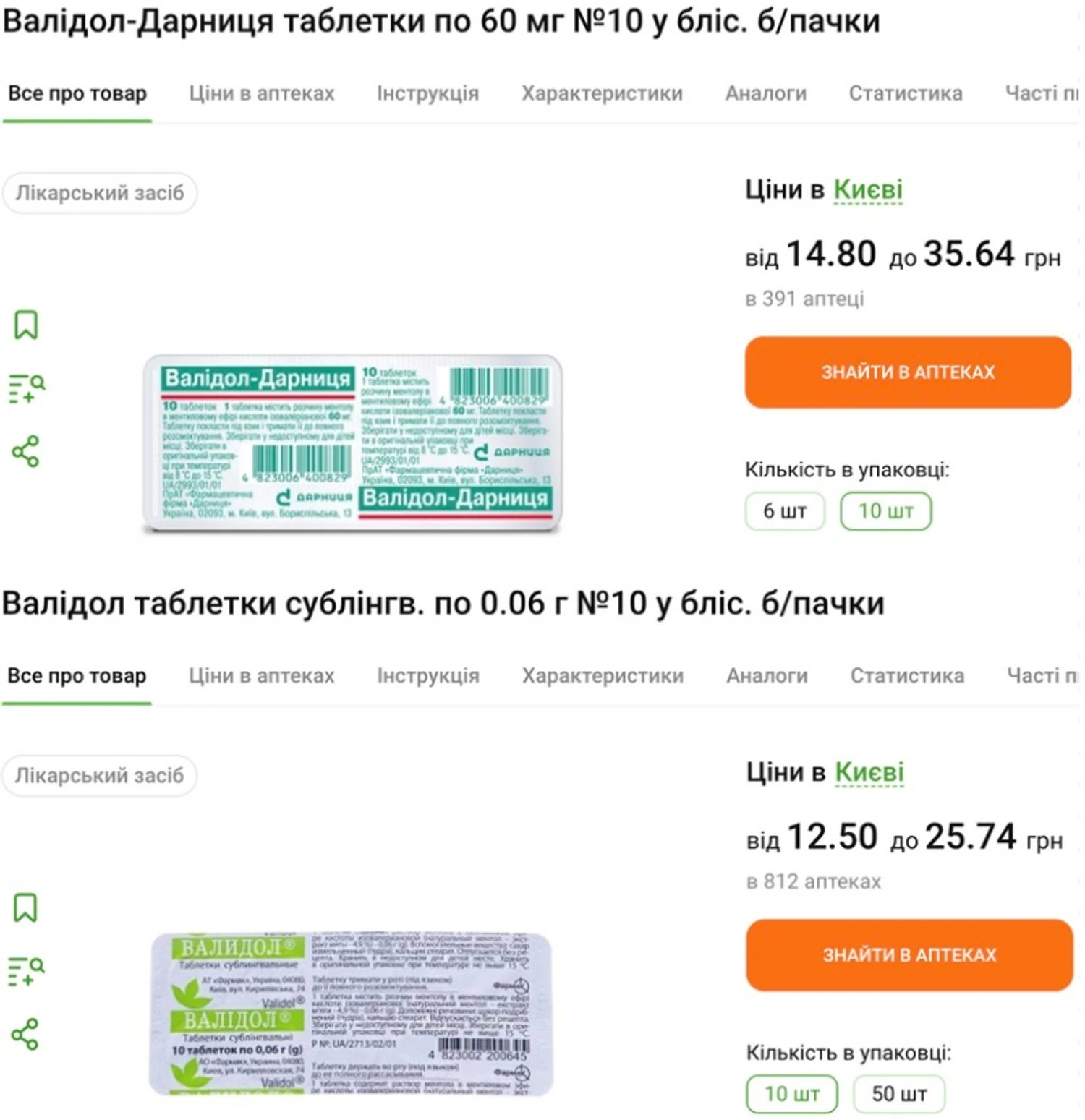
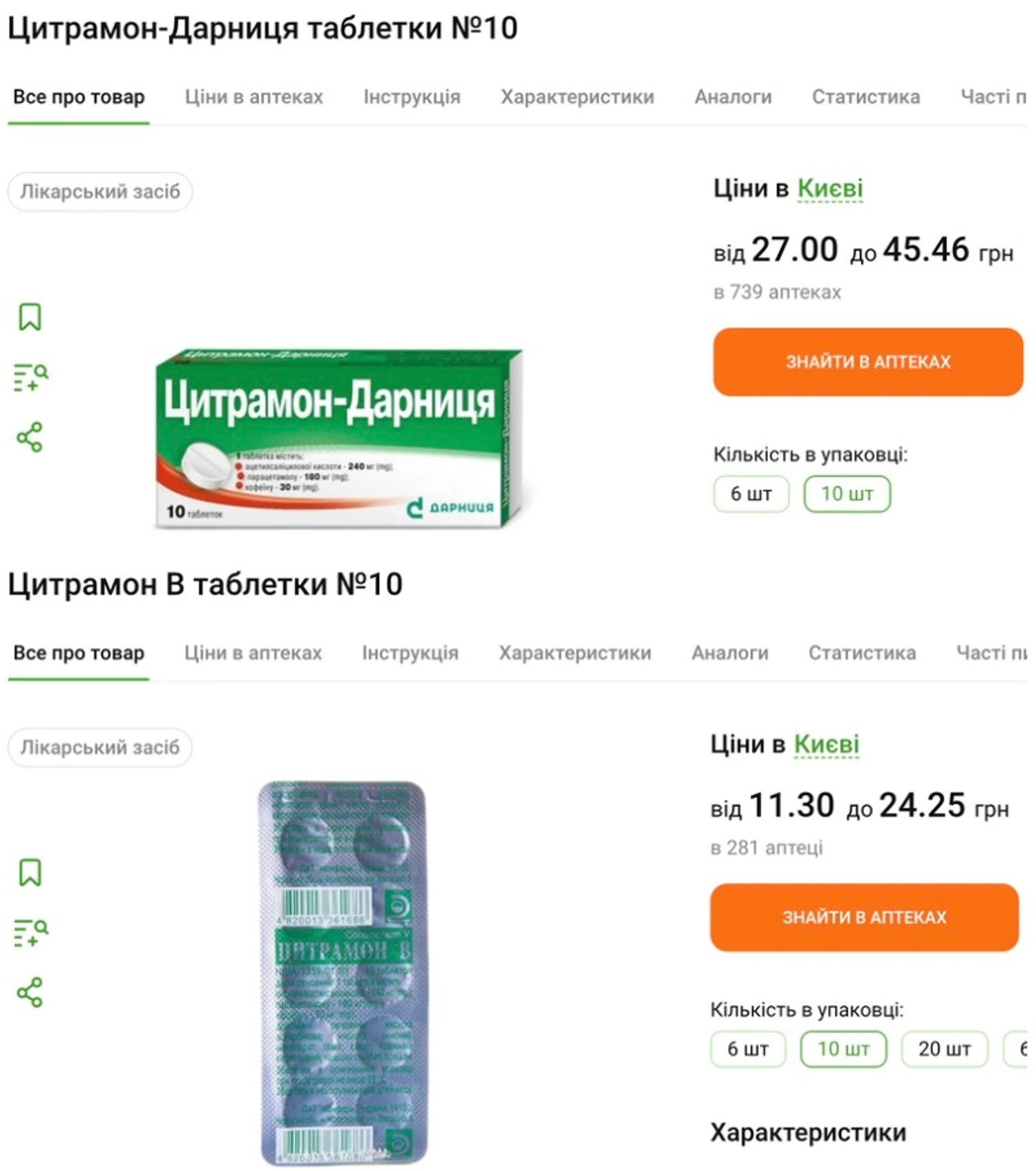
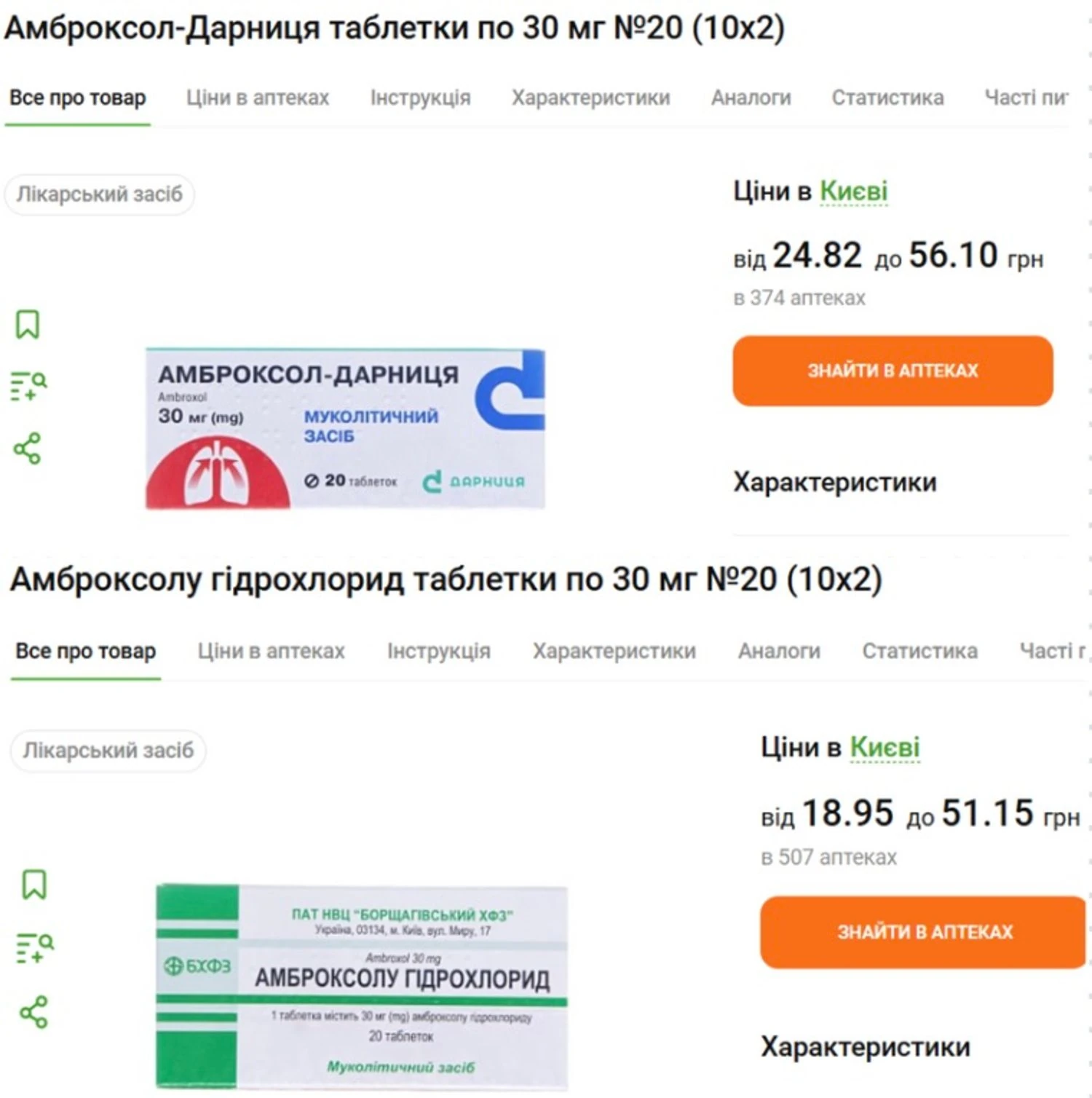
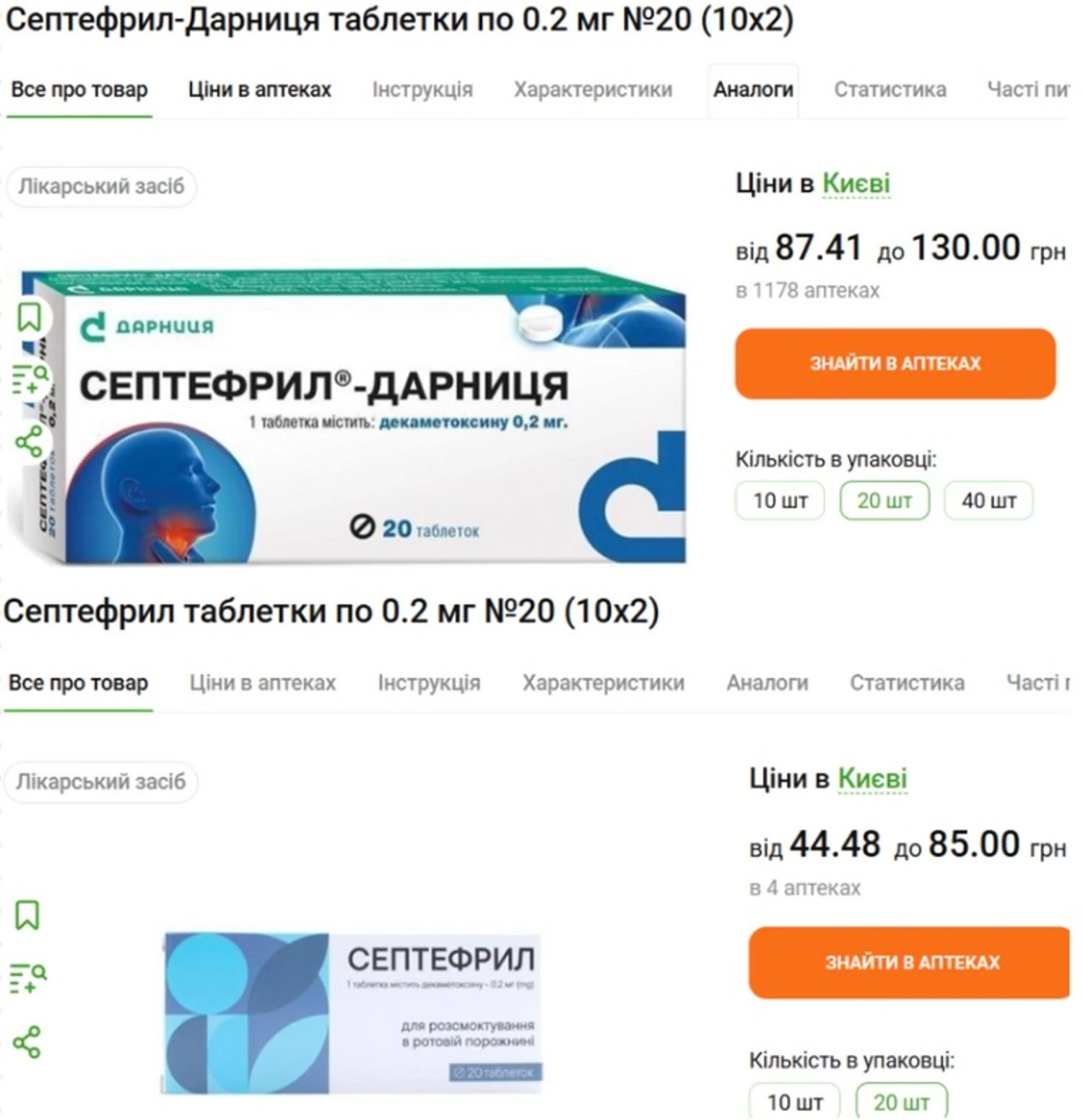
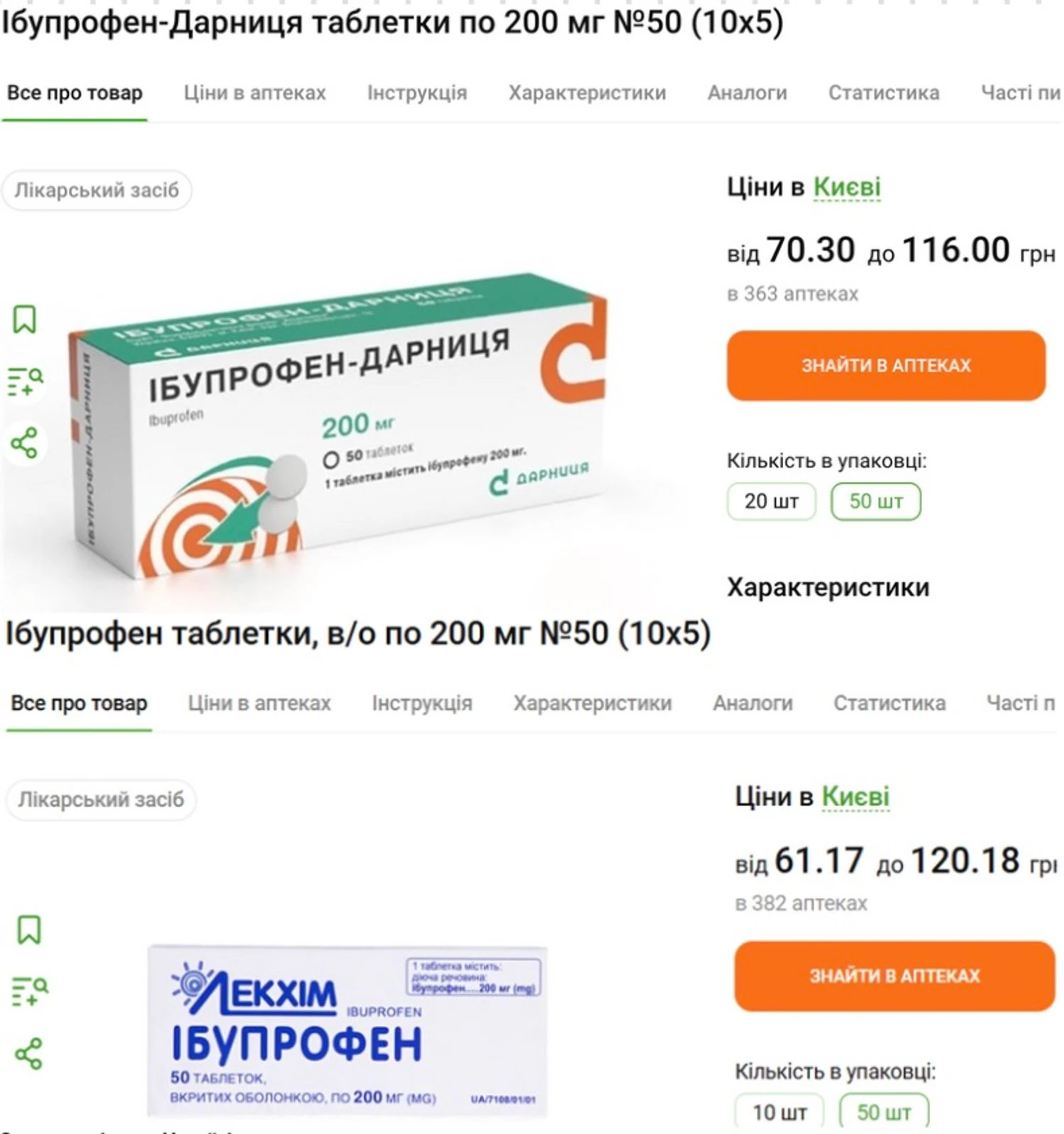
For example, according to the website Tabletki.ua, the popular "Paracetamol" from "Darnytsia" costs UAH 30.60, while an analogue from "Arterium" can be found for UAH 19.05. "Ibuprofen" produced by "Darnytsia" is sold for UAH 70.30, and at "Lekhim" the same drug will cost UAH 61.17. In the market of headache remedies, the most famous "Citramon-Darnytsia" costs UAH 27, while its most affordable analogue can be purchased for UAH 11.30, which gives a direct saving of UAH 15. Among sedatives, "Validol" from "Farmak" is offered for UAH 12.50, and produced by "Darnytsia" – for UAH 14.80. You can also choose a cheaper analogue of the cough medicine "Ambroxol", which is relevant for the autumn-winter period: produced by "Darnytsia" costs UAH 24.82, while the Borschahivka analogue is cheaper – UAH 18.95. The difference is especially noticeable in the popular sore throat medicine – "Septefril" from Borschahivka plant is sold for UAH 44.48, while its analogue from "Darnytsia" – UAH 87.41, almost twice as expensive.
Always complete the prescribed course. An unfinished antibiotic is not only wasted money, but also a health risk. After all, interrupting the course of treatment develops bacterial resistance to the active substances of the drugs. So, discipline in taking medications is also a way to save money.
Don't turn your first-aid kit into a warehouse. Medicines should be bought when they are needed, and not "just in case" – the exception may be a basic set for a home first-aid kit, which you can form guided by the recommendations of the Ministry of Health, choosing inexpensive analogues from domestic manufacturers to save money. Regular revision of the first-aid kit will help keep it under control – review the drugs at least once every few months. This will help avoid double expenses when you buy something that is already at home.
And it is very important – do not self-medicate – consult a doctor who will prescribe what is really necessary, this will save you from unnecessary expenses, because incorrectly selected medicines are not only double expenses, but also potential harm to health.
Conclusion
All these simple rules help to save money without harming your health, turning the first-aid kit into a useful tool, and not an expensive collection of expensive boxes with expired medicines.
After all, the experience of Ukrainian families shows: a quarter of all drugs in home first-aid kits are eventually thrown away. And this means that potential savings are already in our cabinets, it is enough to review the home first-aid kit and change the approach to its formation.