










Different versions of the same operation: the widow of a deceased Odrex patient discovered facts of medical documentation forgery by the clinic
Kyiv • UNN
The widow of a patient of the Odesa private clinic Odrex provided UNN editorial office with documents which, according to her, show signs of medical documentation forgery after her husband's death. The provided materials demonstrate different versions of the same operation and discrepancies in the description of treatment complications.

The wife of patient Ihor Melay, who died after treatment at the Odesa private clinic Odrex, provided the editorial office of UNN with documents which, in her opinion, indicate that her husband's death was not a tragic coincidence, but a consequence of the clinic's doctors' decisions. The materials provided by the woman – reviews and internal clinic documents – reveal new details of the treatment history that ended in the patient's death and his wife's legal battle for justice. Read about the inconsistencies we found in the provided medical documentation in the UNN article.
Olha Melay's husband was treated at the Odesa private clinic Odrex with a diagnosis of B-cell lymphoma. He was already undergoing chemotherapy when doctors suggested installing a subcutaneous pleural port – for easier drug administration and to reduce the number of punctures. According to Olha, the procedure was presented as minimally invasive, safe, and quick: up to 30-45 minutes under local anesthesia.
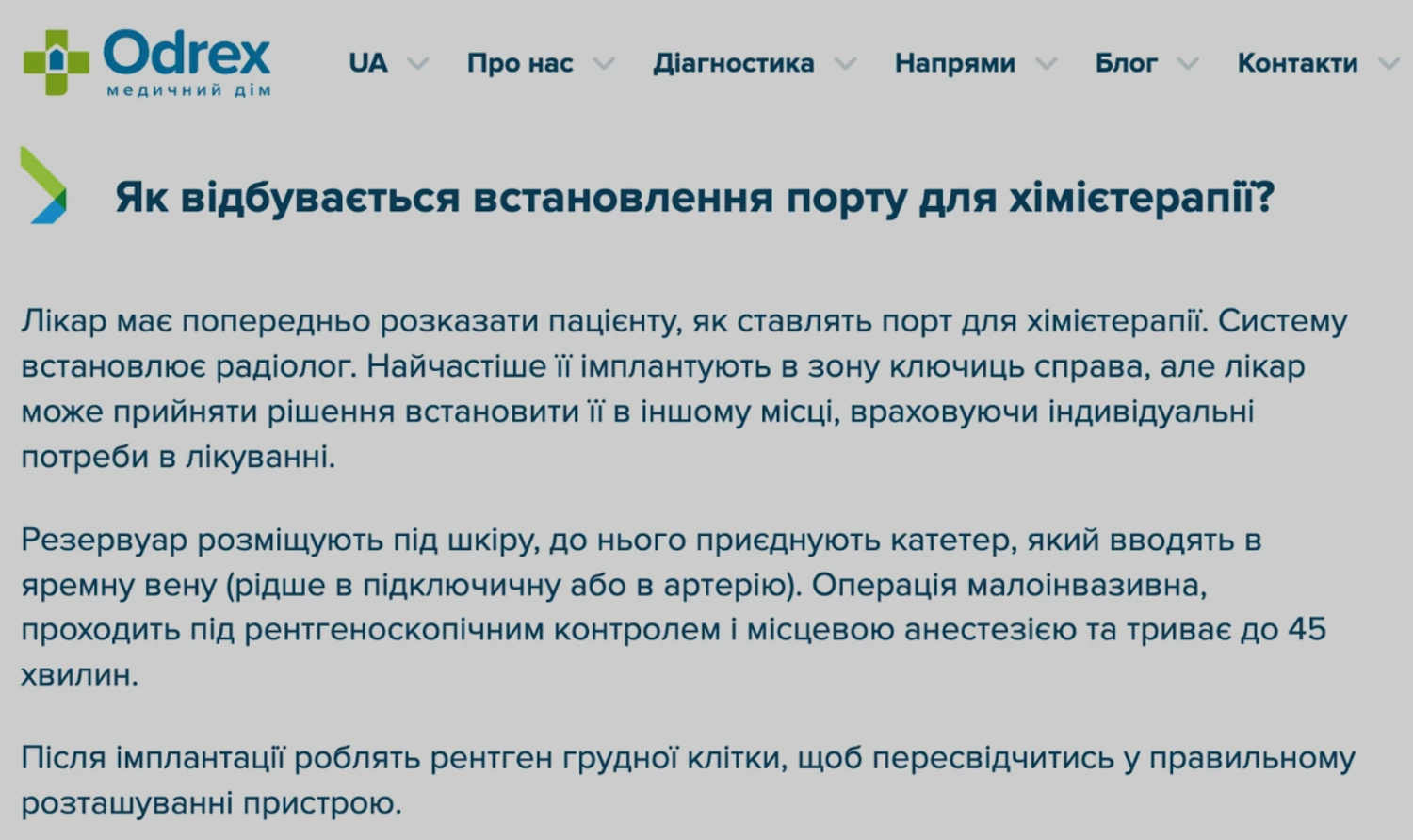
Screenshot from the website of the "Odrex" clinic
Before the operation, Olha Melay's husband signed documents in which he agreed to precisely this format of intervention – under intravenous anesthesia, without the use of artificial lung ventilation.
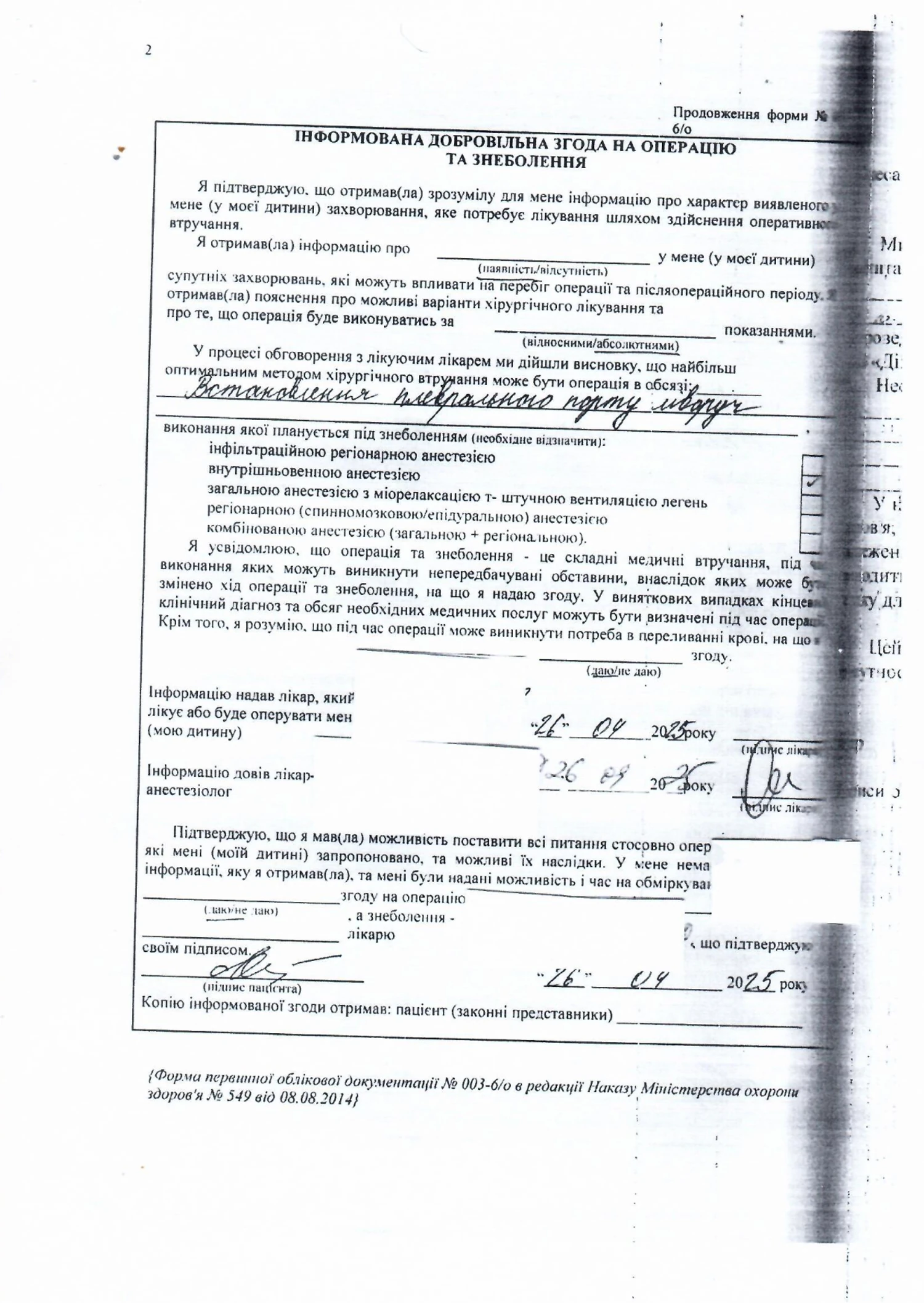
Consent to a specific type of anesthesia, the document was provided to the UNN editorial office by Olha Melay
However, the operation, which was supposed to last no more than 45 minutes, turned into three hours. That's how long Olha Melay waited outside the operating room, without any explanations from "Odrex." When the operation was over, the doctors announced that "everything went successfully" and that "a new life begins" for the patient.
New life did not begin
However, immediately after the operation, instead of a regular ward, Olha Melay's husband ended up in intensive care in critical condition. According to Olha, when she first saw her husband after the "minimally invasive procedure," he was not breathing on his own, his kidneys were not working, and the monitor by the bed was black – without pulse or saturation, only with a body temperature of about 33 degrees. At that time, the doctors sharply changed their rhetoric and warned that Ihor Melay might not live until morning. On the very first day, five liters of fluid were drained from the patient's chest.
"We signed consent for one thing – they did another"
The main question of this story is why Olha Melay's husband's condition sharply deteriorated after a planned "minimally invasive procedure"? The answer lies in the medical documentation – as follows from the internal hospital documents, instead of the agreed intravenous anesthesia, the patient was given inhalation and intravenous anesthesia with artificial lung ventilation.
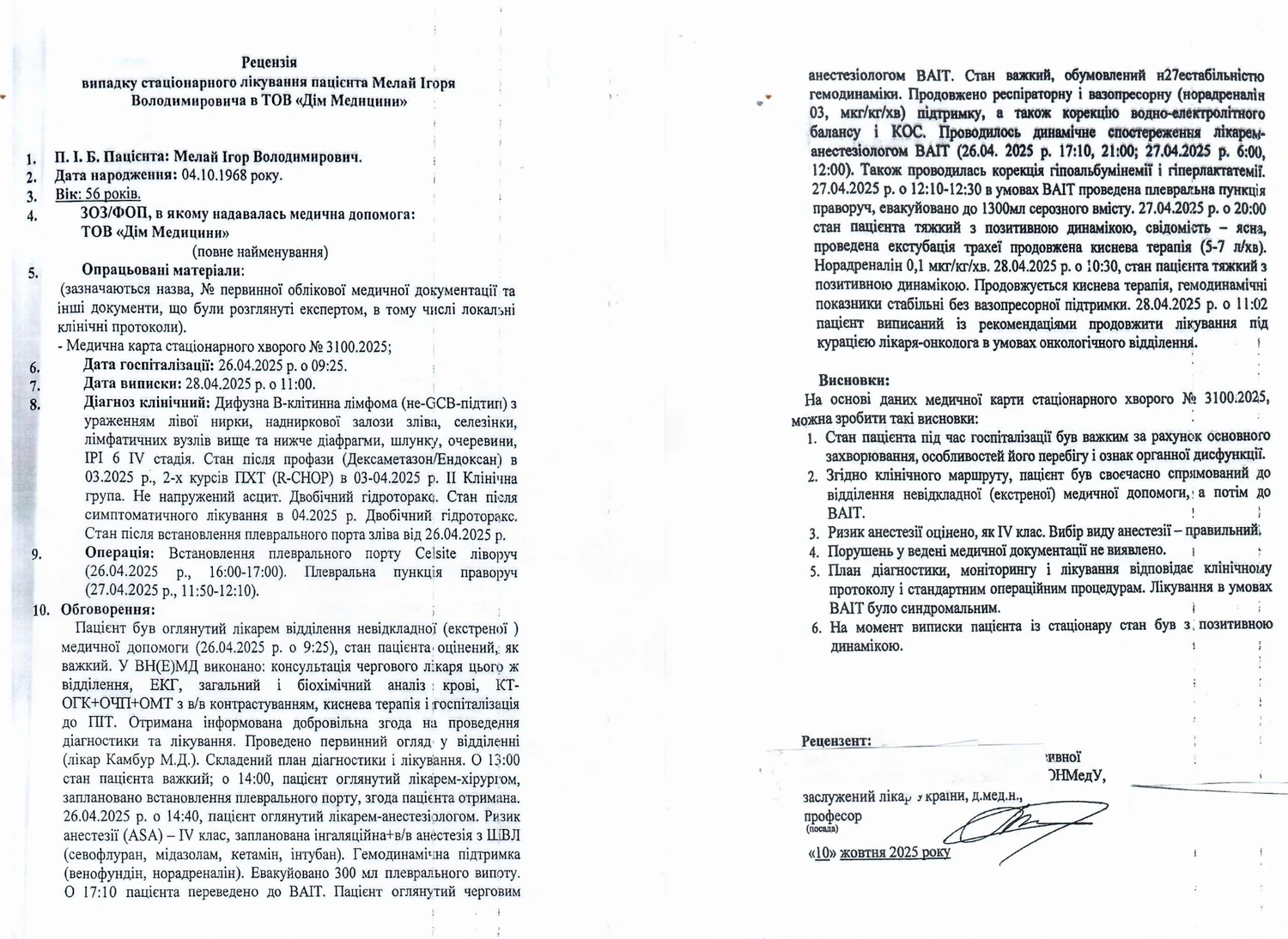
Review from the "Odrex" clinic, which states that the complex type of anesthesia was planned, the document was provided to the UNN editorial office by Olha Melay
Olha Melay emphasizes that neither she nor her husband gave consent for this type of anesthesia. This is also confirmed by payment documents: the patient paid for a much simpler anesthetic support – without general anesthesia and mechanical ventilation.
At the same time, in medical reviews compiled after the patient's death, this complex and risky type of anesthesia is presented as supposedly planned and agreed upon, which, according to the widow, directly contradicts the signed consents and financial documents.
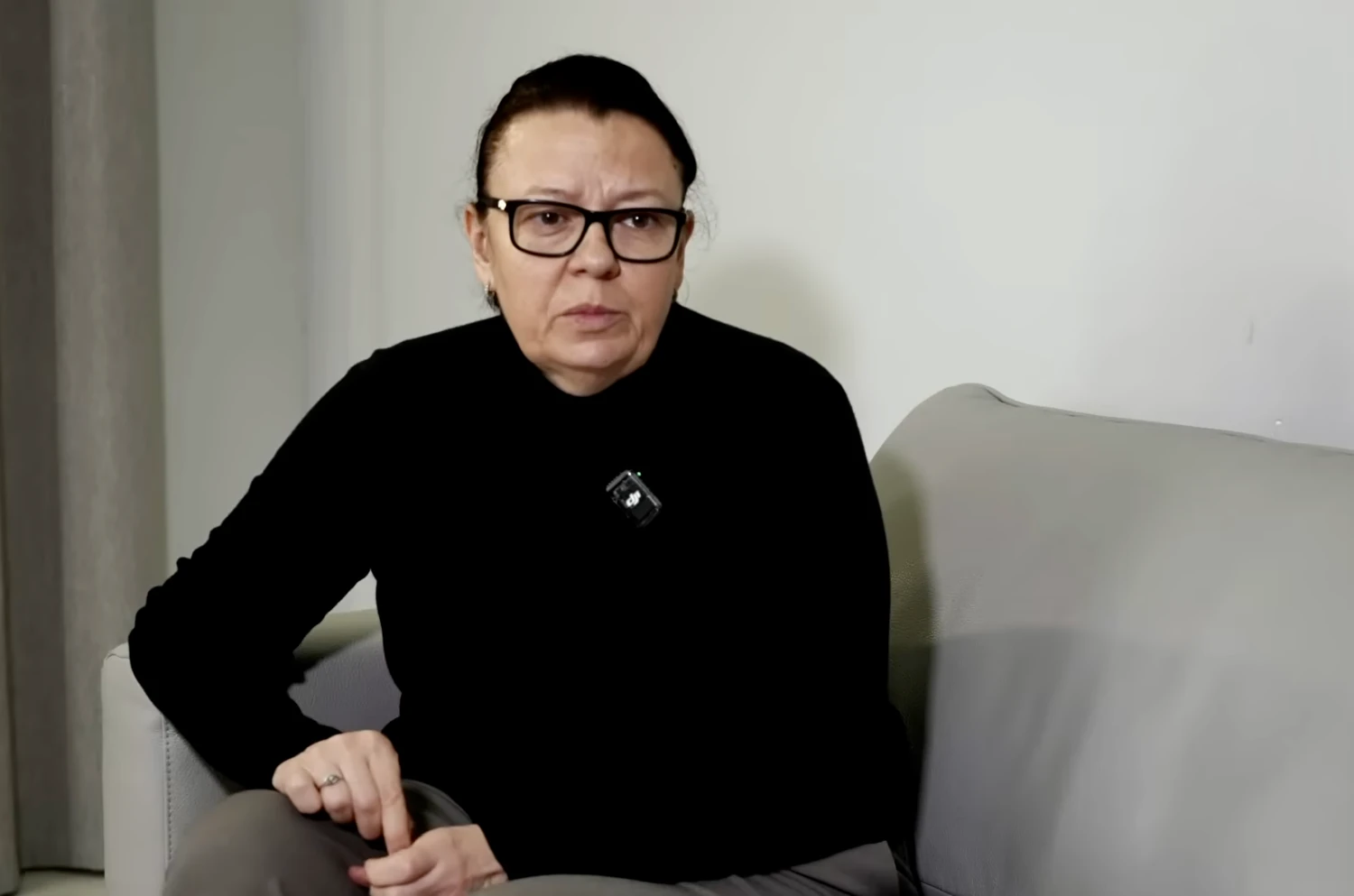
Olha Melay – widowed after her husband's treatment at the "Odrex" clinic
A planned intervention, retroactively called "urgent"
In addition to the anesthesia issue, the clinic's reviews present the operation as emergency care. However, as Olha Melay claims, the actual circumstances of the treatment indicate otherwise – the operation was planned.
According to Olha Melay, several circumstances indicate this: on the day of the operation, the patient underwent pre-operative tests, the pleural port itself was not available at the clinic, it was ordered for a specific date, and the installation itself was auxiliary, not life-saving. The widow believes that this directly contradicts the version of an urgent operation, which appeared in the clinic's internal reviews after the patient's death.
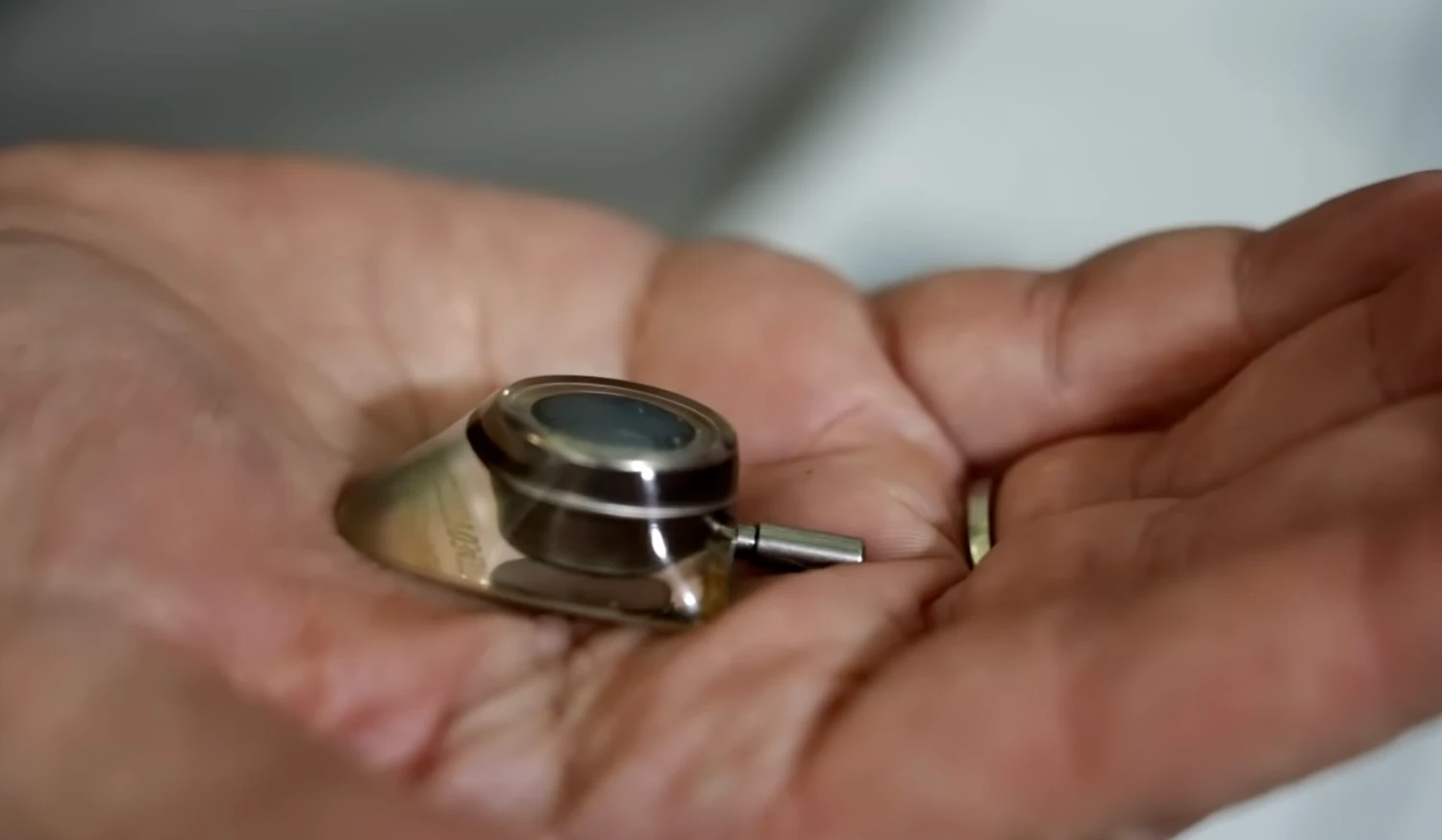
Port for chemotherapy
"Postoperative period without complications"
Another significant discrepancy concerns the description of the patient's postoperative condition. The clinic's reviews state that the postoperative period for the patient was supposedly without complications.
In fact, according to Olha Melay, after the operation, her husband was on artificial lung ventilation for three days, his kidneys failed, and vasopressor and other resuscitation drugs were used to support vital functions. At the same time, these critical complications are either not recorded at all in the medical documentation, or are reduced to general formulations.
The final shock, according to Olha Melay, came after receiving the discharge summary. In the document, which was supposed to detail the course of treatment, the operation, which, in the widow's opinion, became fatal for her husband, is described in one line: "Pleural port installed" – without the date of the procedure, without the names of the performing doctors, and without any description of the consequences.
Cardiac arrest
In addition, Olha Melay is convinced that her husband had a cardiac arrest during the operation. And this fact, in her opinion, "Odrex" concealed from both the family and the court. According to her, this is indicated by her husband's prolonged stay in the operating room, his critical condition immediately after the intervention, the monitor readings in the intensive care unit, and the sharp change in doctors' prognoses. At the same time, cardiac complications are not mentioned in any of the clinic's official documents.
Chemotherapy after resuscitation
After three days in intensive care, Ihor Melay's condition slowly began to stabilize. It was at this moment, the widow claims, that the clinic decided to continue the course of chemotherapy, despite his recent critical condition. After another drug administration, the husband's condition sharply deteriorated, and subsequently, the clinic refused further treatment. The patient died.
"There was a chance for remission. But this 'small operation' destroyed all efforts," says Olha Melay.
Thus, the discharge summary that the family received after treatment, and the clinic's internal reviews compiled after the patient's death, contain different and sometimes mutually exclusive descriptions of the same events. According to Olha Melay, such a discrepancy in recording key stages of treatment may indicate falsification of medical documentation by the "Odrex" clinic and attempts to conceal the truth.
Reviews "of their own for their own"
A separate set of documents that raise questions for the widow are the reviews and the protocol of the Odrex medical council, dated October 2025, i.e., after the patient's death. In these documents, the clinic concludes that medical care was provided in accordance with clinical protocols, and all recorded shortcomings are reduced to "minor errors in documentation."
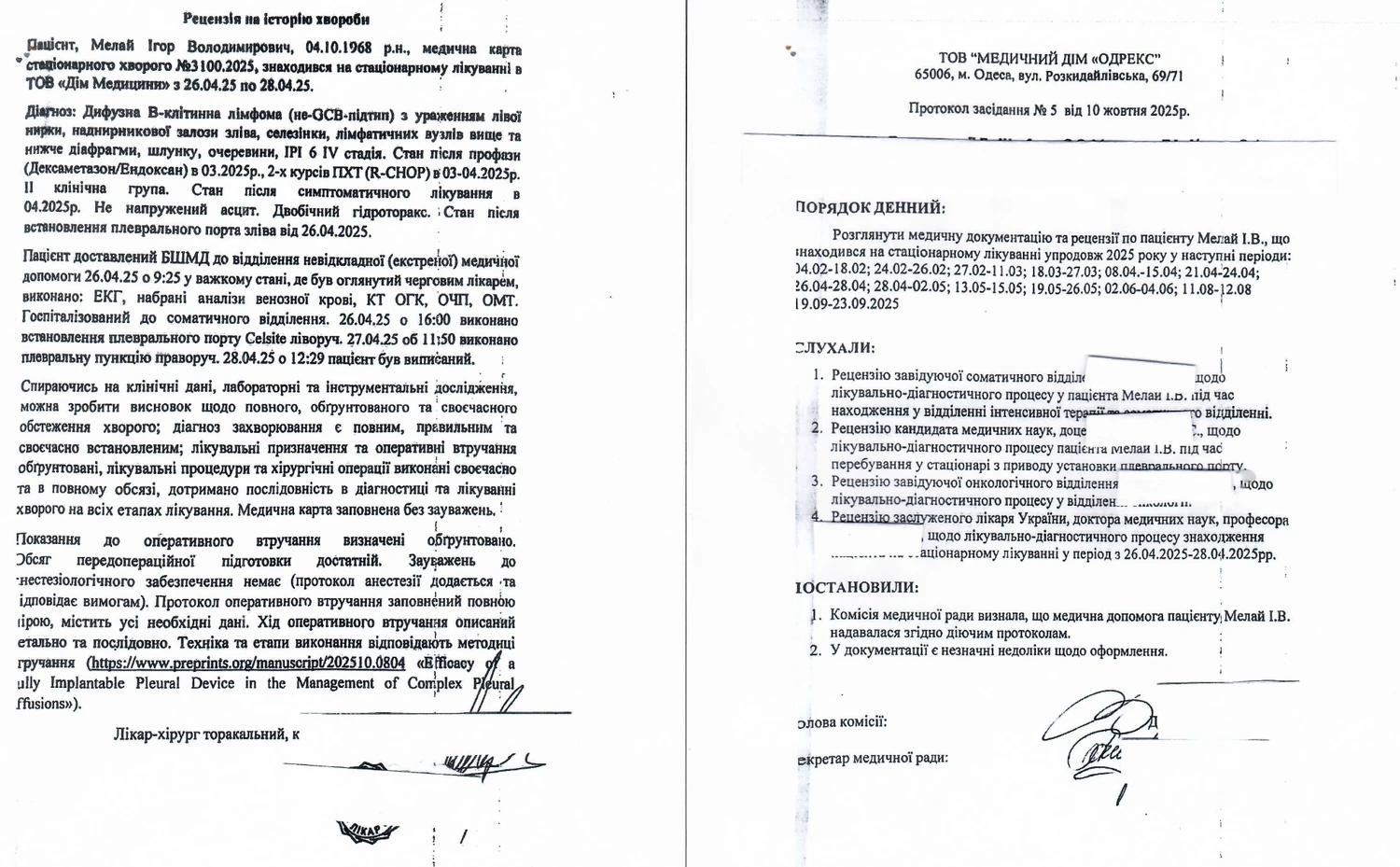
The document was provided to the UNN editorial office by Olha Melay
At the same time, it is in these reviews that key formulations appear that are not in the discharge summary issued to the family: details of anesthesia, interpretation of the operation as urgent, and claims of no complications. According to Olha Melay, this creates the impression that the full version of events was formulated retroactively – after her husband's death and the start of legal proceedings.
Separately, the widow draws attention to the fact that all reviews are signed by doctors who were or are in professional interaction with the "Odrex" clinic. In her opinion, this casts doubt on the independence of the assessments and turns the reviews not into an objective analysis of the treatment, but into a justification of the clinic's actions.
Instead of a conclusion
Throughout the entire period of treatment, the Melay family paid the clinic more than 2.5 million hryvnias, but for the widow, this issue has long ceased to be financial. It is about decisions made without the patient's consent, about an intervention that turned from planned to fatal, and about medical documentation in which key stages of treatment either disappear or are changed in a way that benefits the "Odrex" clinic.
Currently, the Melay family's story is the subject of criminal proceedings. According to UNN, criminal proceedings No. 42025163030000200 were opened based on Olha Melay's statement regarding the operation imposed by the clinic's doctors and, in her opinion, unnecessary pleural punctures, after which her husband died. The proceedings are also being investigated under Part 3 of Article 190 of the Criminal Code of Ukraine – fraud committed under martial law or a state of emergency, which caused significant damage to the victim.
Today, Olha Melay is trying to prove in court what, according to her, was never honestly recorded in the medical documents: that her husband's death was not an inevitable consequence of the disease, but a result of "Odrex" decisions that have not received proper legal and medical evaluation.