


"A large soap bubble is flying" — Ukrainian polar researchers captured a remarkable phenomenon
Kyiv • UNN
Ukrainian polar researchers photographed the iridescence of cirrus clouds near Vernadsky. The colorful hues arise from the diffraction and interference of light.

Ukrainian polar researchers near "Vernadsky" captured a remarkable phenomenon — iridescence in cirrus clouds. It appears as an uneven patch of color in the sky, as if a giant soap bubble were floating there, reports UNN, citing the National Antarctic Scientific Center.
According to the scientific center, this optical effect occurs when sunlight bends around tiny obstacles and enters the space behind them (diffraction), after which light waves overlap, creating shimmering colors (interference).
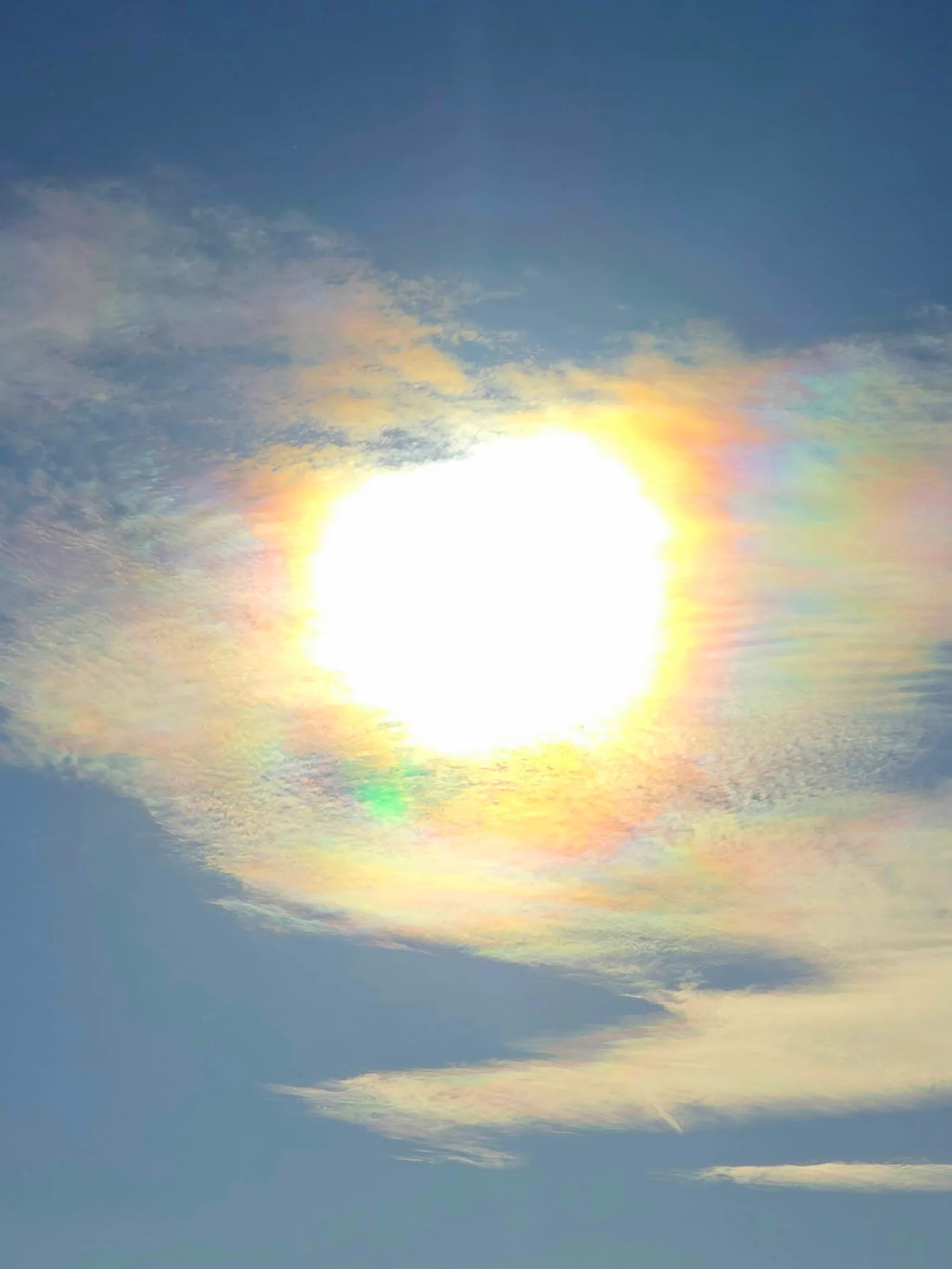
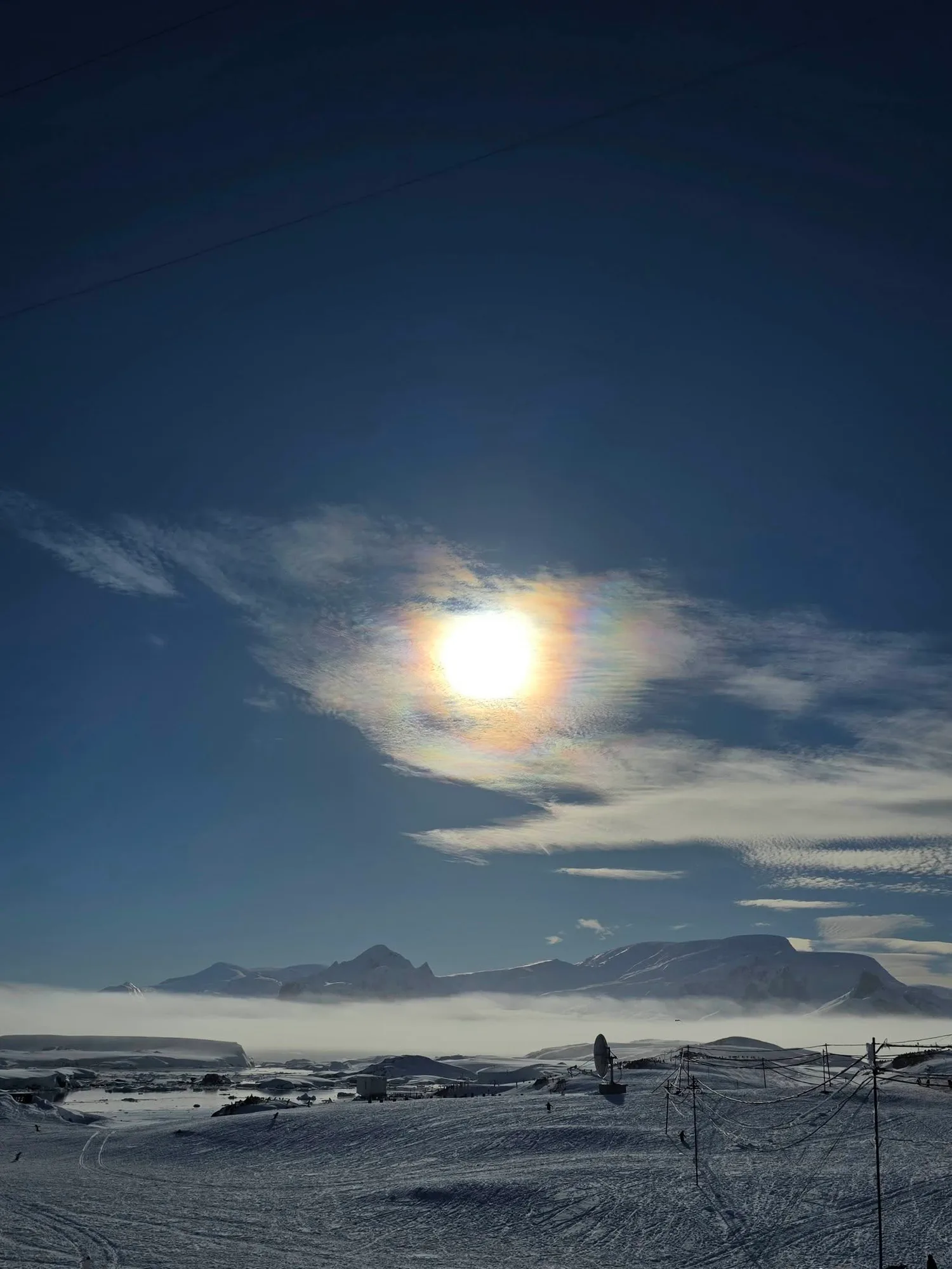
In cirrus clouds, these obstacles are tiny ice crystals, which the clouds are primarily made of. These are high-level clouds that, in polar regions, "live" at altitudes of 4–6 km, where the temperature is −20°C or lower. They are light and transparent, so the colorful "play" of light is clearly visible in them. The nature of iridescence depends on the size, shape, and distribution of the crystals. But what is interesting is that the colors are always arranged unevenly, following the structure of the cloud. This is what mainly distinguishes iridescence from other similar phenomena — coronas or halos. The latter have a distinct circular shape and are arranged symmetrically relative to the light source (although with different radii). The shape of iridescence, however, depends on the cloud’s contours. Incidentally, this phenomenon can more often be observed in lower- and middle-level clouds, but only at their edges. This is because such clouds are opaque, while at the same time having transparent edges.
Ukrainian polar researchers showed how penguins "fly"13.09.26, 02:57 • 57208 views