


Norway is building the world’s longest subsea road tunnel
Kyiv • UNN
The 27-kilometre Rogfast will be constructed at a depth of up to 392 metres. It is scheduled for completion in 2033, with construction costs estimated at approximately $2.4 billion.

Norway is building the world's longest and deepest subsea road tunnel, aimed at reducing travel time between major cities and forming part of a ferry-free highway along the west coast. CNN Travel writes about this, according to UNN.
Details
The 27-kilometer tunnel is called Rogfast — an abbreviation of "Rogaland fastforbindelse," derived from the name of the region where it is located and the Norwegian words meaning "fixed connection." At its deepest point, it will lie 392 meters below sea level.
Construction began in January 2018 but was halted at the end of 2019 because of projected cost overruns, resulting in the cancellation of existing contracts and the restructuring of the project. Work resumed at the end of 2021, and the tunnel is now scheduled for completion in 2033. Construction is expected to cost approximately 25 billion Norwegian kroner (about $2.4 billion).
The tunnel will significantly improve connections along Norway's west coast, creating a faster and more reliable link between the Stavanger and Haugesund regions
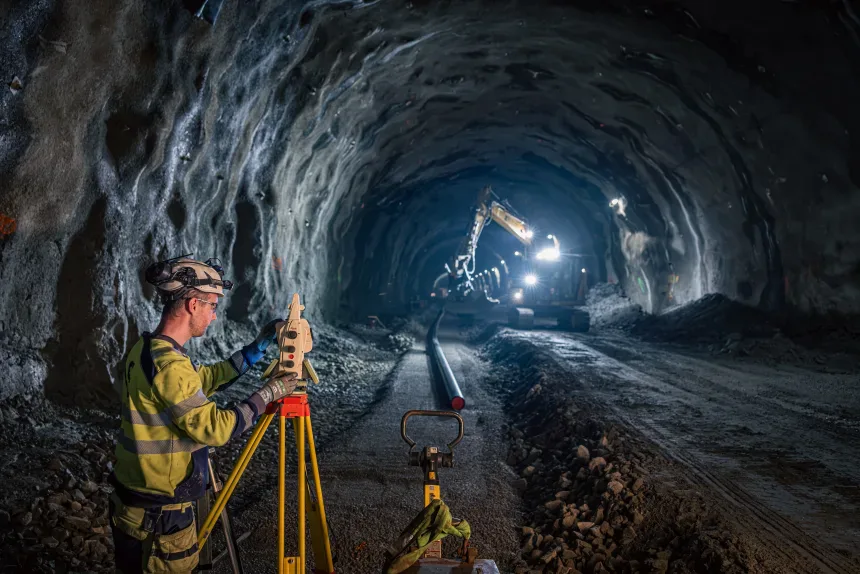
It is noted that, by replacing the current ferry connections, Rogfast will reduce travel time between Bergen and Stavanger — respectively, Norway's second- and fourth-largest cities by population — by approximately 40 minutes and significantly ease daily commuting.
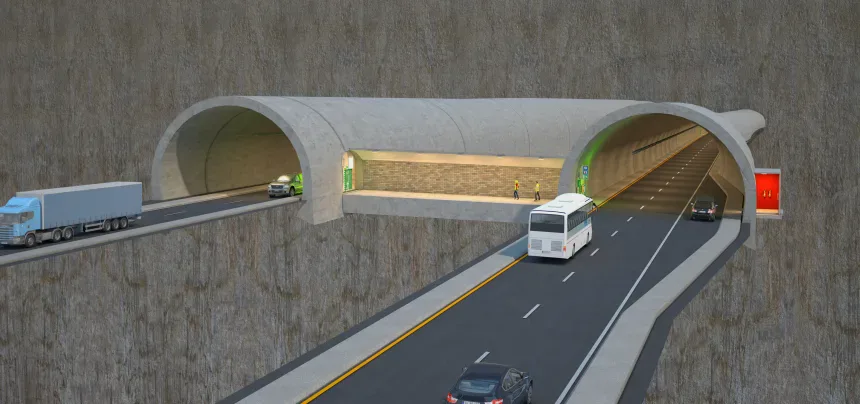
One of the project's most interesting features will be a transport interchange inside the tunnel.
The tunnel project is innovative not only because of its length, but also because it includes the construction of an interchange midway through the tunnel to provide access to Kvitsøy. It will feature a roundabout and be located at a depth of 250 meters
It will be recalled
In Kyiv, preparations are beginning for a project to build a tunnel under the Dnipro River, which is intended to become an alternative transport route in the event that the capital's bridges are damaged.