International Croissant Day: a pastry with a 300-year history and the top 5 best recipes
Kyiv • UNN
On January 30, the world celebrates Croissant Day, a pastry with a 300-year history, which, despite popular belief, originated not in France, but in Austria. UNN offers to get acquainted with interesting facts about croissants and the 5 best recipes.

On January 30, the world celebrates Croissant Day, a pastry long considered the epitome of French breakfast. However, the 300-year history of this fragrant crescent is much more complex and interesting than it seems at first glance. UNN offers to get acquainted with interesting facts about croissants, which may change your perception of this pastry.
Origin and name
The word "croissant" comes from French and translates as "crescent". This shape has become the hallmark of the pastry and subsequently one of the most recognizable culinary symbols of Europe. At the same time, the crescent shape appeared long before the croissant became French.
Despite popular belief, the croissant's homeland is not France, but Austria. Historians associate the appearance of this pastry with Vienna in the 17th century. According to one legend, croissants began to be baked after Austria's victory over the Ottoman Empire. The crescent shape symbolized the sign on the Ottoman flag, as this was how Viennese bakers ridiculed the symbol of the defeated enemy.
There is a version that as early as 1683, a resident of Vienna, Peter Wendler, baked similar products. Be that as it may, it was in Vienna that the basis of the recipe was laid, which later conquered Europe.
How the croissant came to France
The French history of the croissant begins at the end of the 18th century. It is believed that its appearance at the royal court was facilitated by Marie Antoinette - an Austrian by origin. This pastry was her favorite, as it reminded her of home, so bakers regularly served croissants to her table.
By the way, some historians claim that the croissant was named by 10-year-old Louis XVII - the son of King Louis XVI of France and Marie Antoinette.
Officially, croissants appeared in France in 1777. And a real breakthrough occurred in the 19th century, when the Austrian officer August Zang opened a Viennese bakery in Paris. It was after this that the croissant became popular, and the French gradually improved the recipe that is still used today.
French recipe transformation
Over time, French bakers transformed the denser Viennese bread into the light, flaky pastry known worldwide today. In the 1920s, the croissant officially established itself as a national symbol of French baking, and in 2012, croissants in France were granted the status of a product with geographical origin, which is even protected by law.
This means that pastries made outside the country are not considered "real" croissants. According to the French Ministry of Agriculture, an authentic taste is only possible with the use of ingredients that are only available in France and give a special and unique taste.
Modern croissants
Previously, croissants were usually eaten without any filling, as they were considered classic. However, today the croissant has long gone beyond the classic recipe. It is prepared with ham and cheese, avocado and salmon, as well as with chocolate, jam, condensed milk, raisins, nut creams or preserves.
It goes well with both coffee and tea, and in many countries has become a universal breakfast.
It is even rumored that sweet croissants contribute to the production of dopamine and endorphins - pleasure hormones that lift the mood.
Modern croissants are more than just a pastry. It is the history of Europe, a symbol of morning rituals and a small joy that is easy to give yourself.
So Croissant Day is a great occasion to taste a warm, fragrant crescent. And you can even do it at home using the recipes that UNN has collected for you.
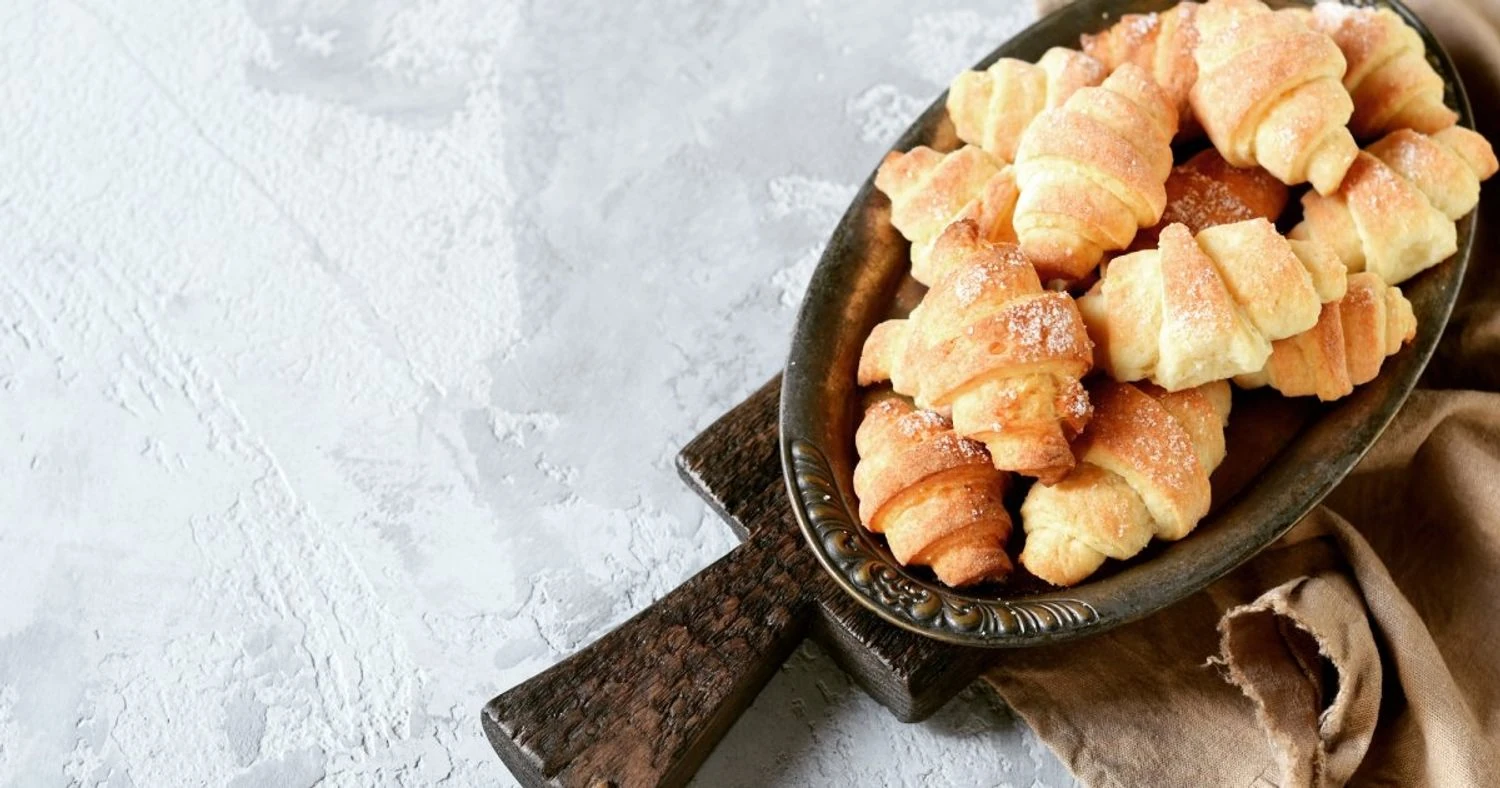
Cottage cheese croissants
Ingredients:
- 200 g flour,
- 200 g cottage cheese,
- 120 g butter (soft),
- 80 g sugar,
- 1 tsp vanilla sugar,
- 1 tsp baking powder, a pinch of salt, powdered sugar for sprinkling.
Method of preparation:
- Put the cottage cheese in a deep bowl. Add sugar, vanilla sugar, a pinch of salt and soft butter. Mash thoroughly with a fork or mix until smooth.
- Add flour, baking powder and knead a soft, non-sticky dough.
- If desired, wrap the dough in cling film and put it in the refrigerator for 20 minutes - it will be easier to work with. You can also cook it immediately.
- Place the dough on a floured table, roll it into a circle and cut it into triangles.
- Roll each triangle into a roll, forming a croissant, and place on a baking sheet lined with parchment paper.
- Bake in a preheated oven at 180 °C for 25–30 minutes until lightly golden brown.
- Cool the finished croissants, sprinkle with powdered sugar and serve.
Savory lazy croissants
Ingredients:
- 250 g puff pastry,
- 2 tbsp ketchup,
- 4 slices of toast cheese,
- 12 pieces of sausage.
Preparation:
- Take the dough out of the refrigerator and let it thaw slightly. Gently press with your fingers, without rolling.
- Spread ketchup over the entire surface of the dough.
- Place the cheese slices, and then the sausage on top.
- Cut the dough into triangles.
- Roll each triangle into a croissant.
- Preheat the oven to 200 °C. Place the croissants on a baking sheet with parchment paper. Bake for about 20 minutes until golden brown.
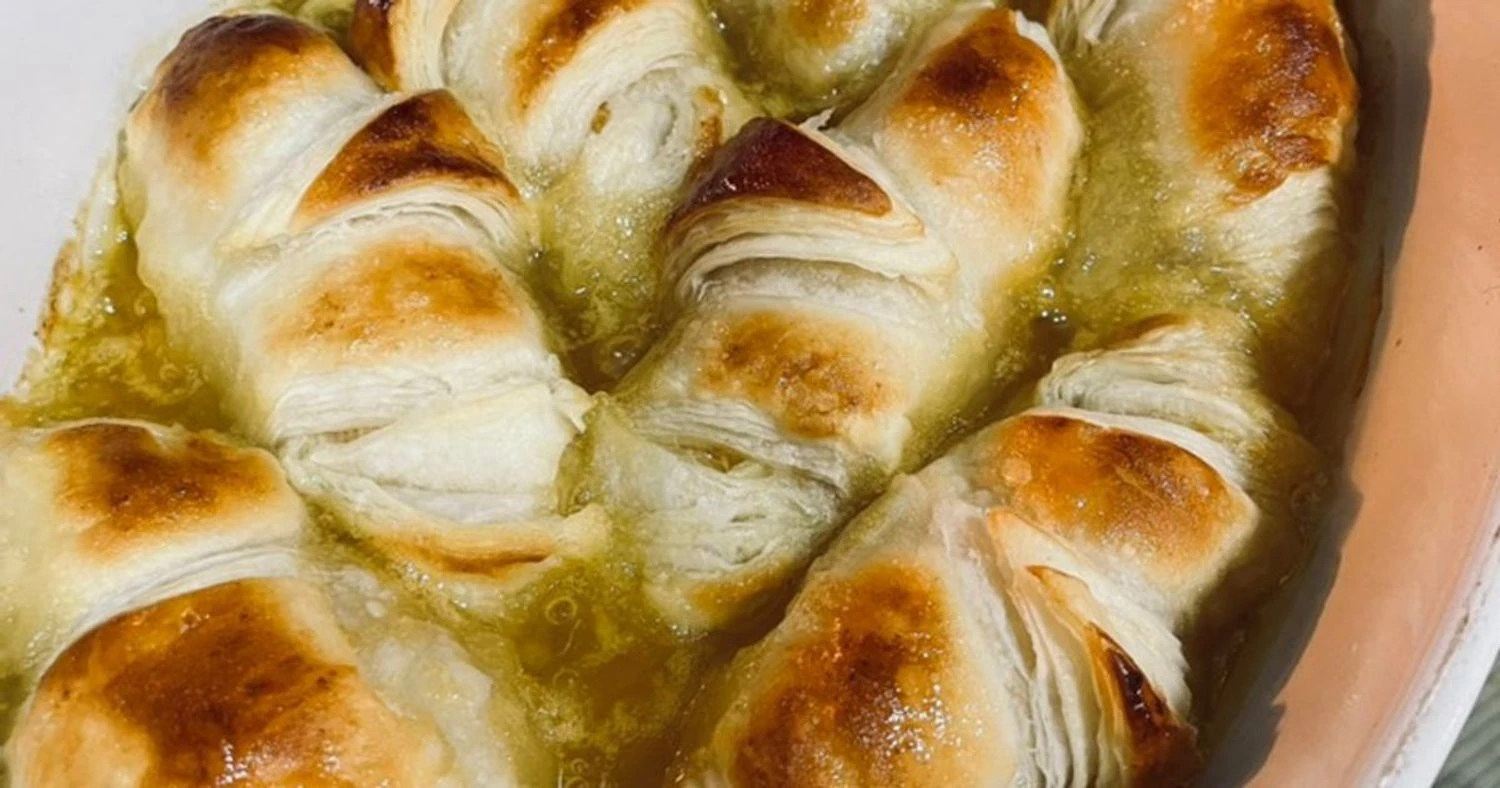
Croissants in orange syrup
Ingredients:
- 1 package puff pastry,
- 3-4 mandarins,
- 1 tbsp powdered sugar.
For the syrup:
- 200 ml orange juice,
- 80 g sugar,
- 100 g butter,
- 1 tsp starch.
Preparation:
- Peel the mandarins, divide into segments, remove the membranes if desired.
- Cut the puff pastry into elongated triangles.
- Place a few mandarin segments on the wide part of each triangle.
- Roll the dough into a croissant shape, pinch the edges well.
- Dissolve starch in orange juice, add sugar and butter.
- Cook the syrup over low heat for about 10 minutes until slightly thickened.
- Pour a little syrup into a heat-resistant dish, place the croissants tip down.
- Pour the remaining syrup over the croissants, brush with egg yolk if desired and sprinkle with powdered sugar.
- Bake in a preheated oven at 180 °C for approximately 20 minutes until golden brown.
- Let cool slightly and serve, preferably warm.
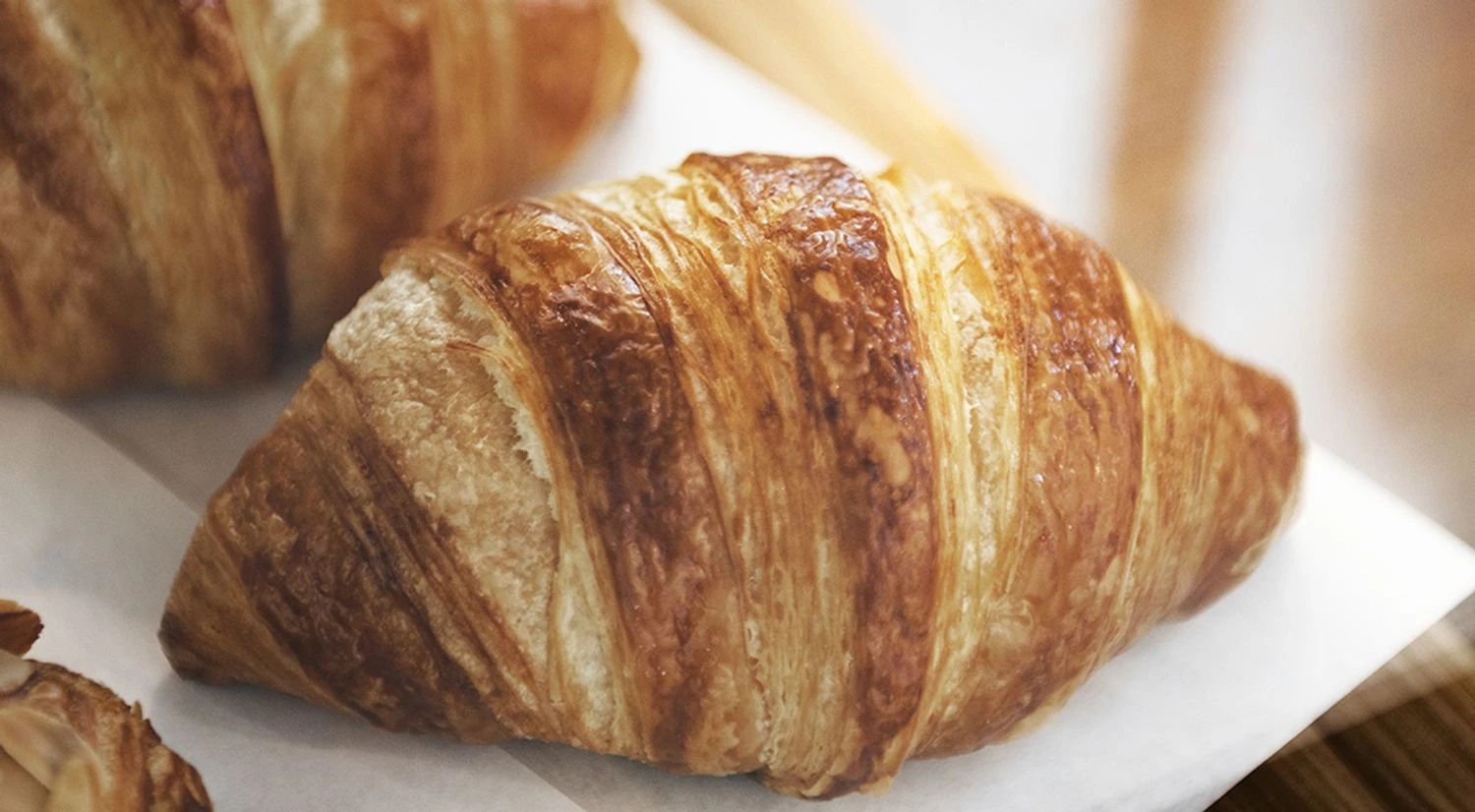
Croissants with sugar and cinnamon
For the dough:
- 300 ml milk + 1 tbsp for greasing,
- 8 g dry yeast,
- 170 g sugar (60 g - in the starter, 60 g - in the dough, 50 g - in the filling),
- 2 eggs (1 yolk - for greasing),
- 0.5 tsp salt,
- 750 g flour (50 g - in the starter, 700 g - in the dough),
- 100 ml oil,
- 70 g butter,
- 1 tsp baking powder, 5 g vanilla.
For filling and decoration:
- 1 tsp cinnamon,
- powdered sugar for sprinkling.
Preparation:
- Heat milk to 40 °C. Add yeast, 2 tbsp sugar and 3 tbsp flour, mix and leave for 15 minutes.
- Beat 1 egg and 1 egg white with salt and the remaining sugar for the dough.
- Add oil and egg mixture to the starter, mix.
- Gradually add flour with baking powder and knead the dough.
- Knead the dough for 5 minutes, form a ball, transfer to an oiled bowl and leave in a warm place for 50 minutes.
- Melt the butter.
- Roll out the dough into a thin layer, grease with butter and fold into an "envelope", greasing each layer. Leave for 15 minutes.
- Roll out the dough again, grease with butter, sprinkle with sugar and cinnamon.
- Cut the dough into triangles and roll into croissants and place on a baking sheet with parchment paper, leave for 10 minutes to proof.
- Mix the yolk with 1 tbsp milk, grease the croissants and bake at 180 °C for 18–20 minutes until golden brown.
- Cool the finished croissants and sprinkle with powdered sugar.
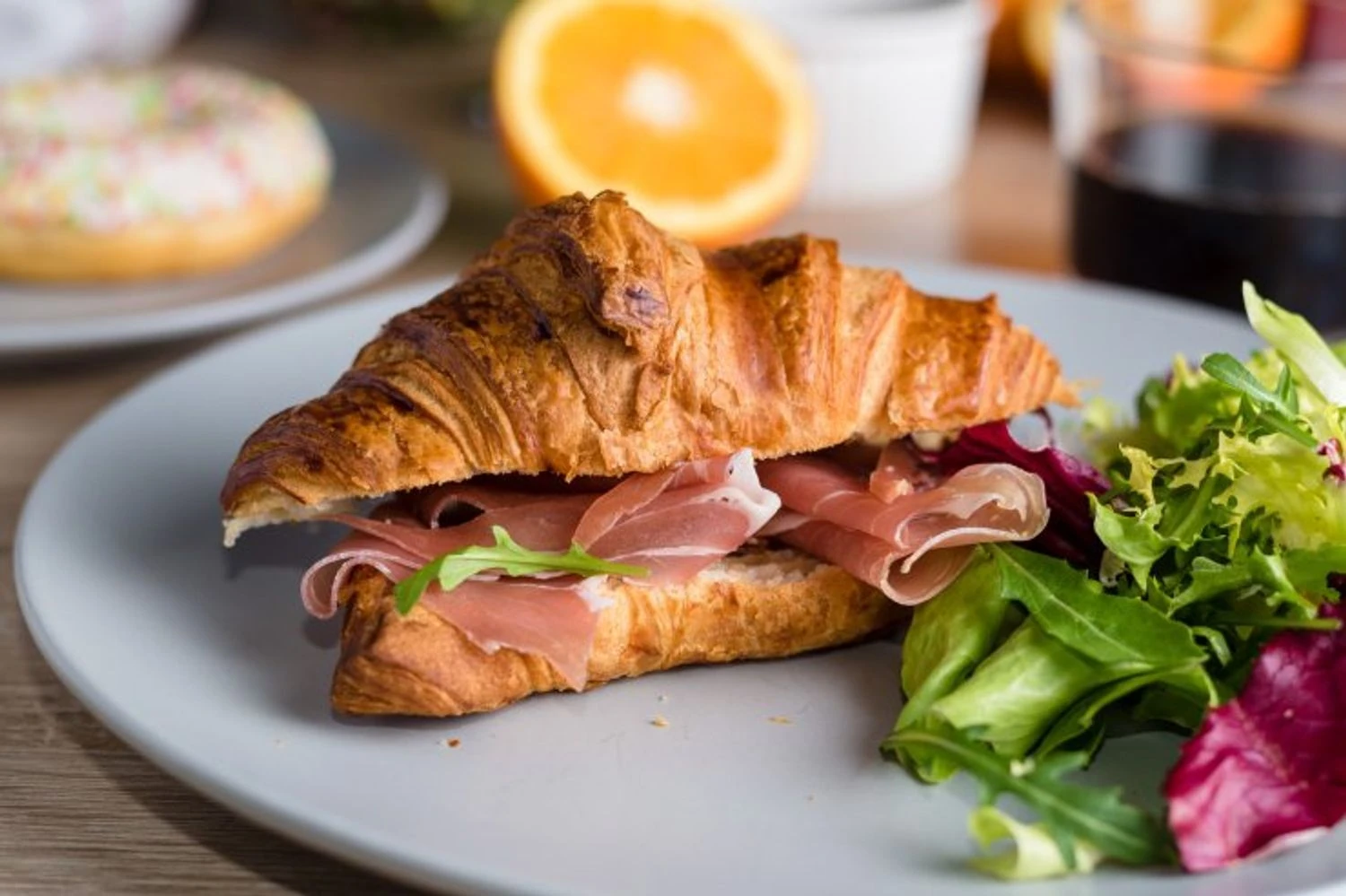
Croissants with ham and cheese
Ingredients:
- 2 sheets of puff pastry,
- 100 g ham (slices),
- 100 g cheese (slices),
- 1 egg, flour for dusting,
- sesame seeds if desired.
Preparation:
- Lightly dust the puff pastry with flour and roll out.
- Place ham slices on one sheet of dough, then cheese on top.
- Cover with the second sheet of dough and carefully roll again with a rolling pin.
- Cut the dough into triangles.
- Roll each triangle into a croissant shape.
- Place the croissants on a baking sheet lined with parchment paper.
- Beat the egg, brush the croissants on top, sprinkle with sesame seeds if desired.
- Bake in a preheated oven at 180 °C until golden brown.