









Even corruption crimes are not always subject to NABU investigation and not always subject to HACC jurisdiction, or how grounds for overturning a court decision arise
Kyiv • UNN
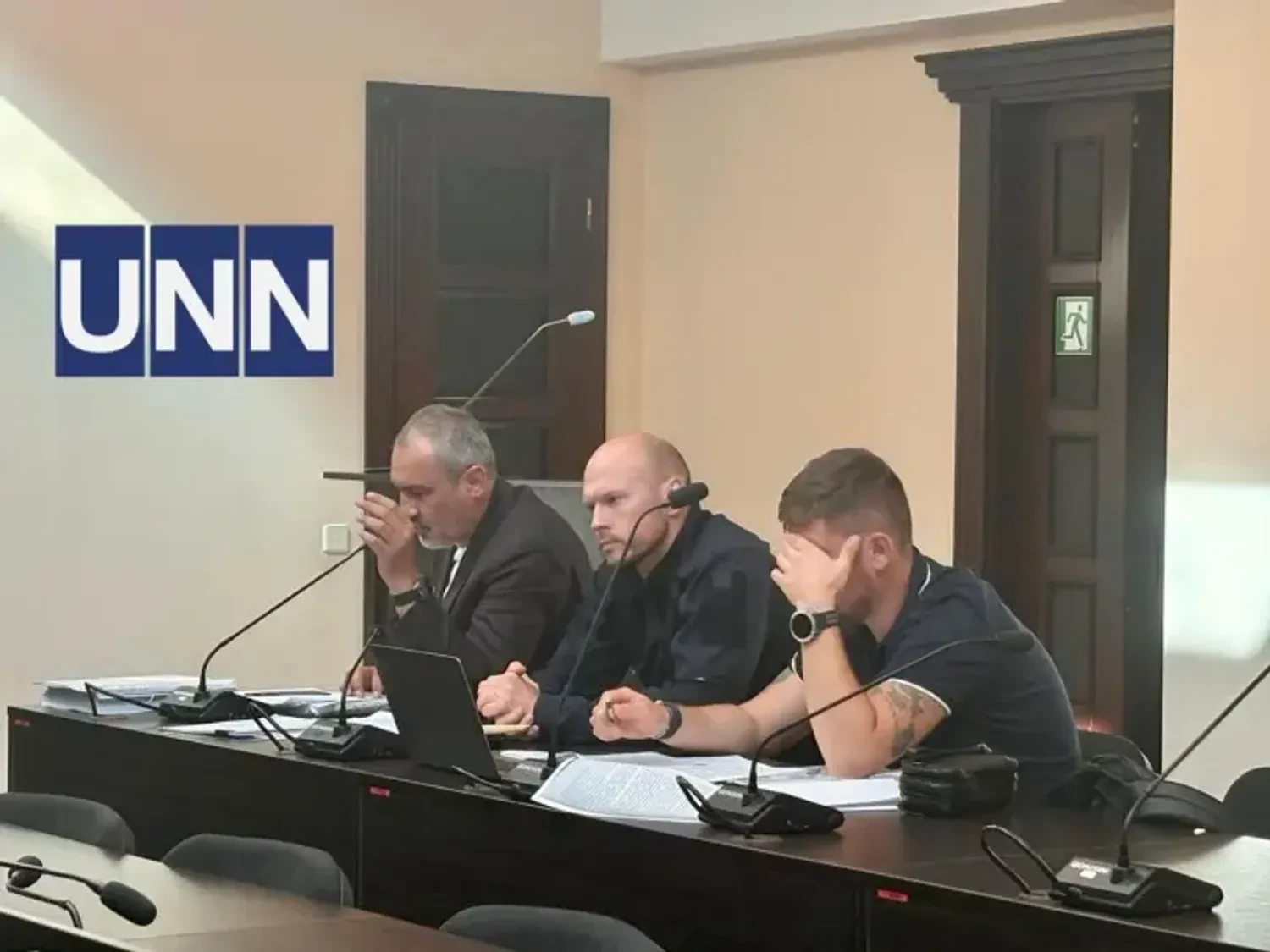
The High Anti-Corruption Court considered the case of SBU Brigadier General Illia Vitiuk, who is accused of illicit enrichment. The defense insisted on the absence of grounds for the HACC to hear the case, as the events occurred before Vitiuk was awarded a higher officer rank.

A recent event has received widespread attention – the High Anti-Corruption Court's consideration and application of bail regarding SBU Brigadier General Illia Vitiuk, who is accused of illicit enrichment and inaccurate declaration. At the very beginning of the court session, the defense filed a motion requesting to postpone the trial – in their opinion, the HACC has no grounds to consider this case. The court rejected this motion. And it, at first glance, may not seem so significant, but in reality – it suggests a very formalized approach of the court to yesterday's consideration. UNN investigated why this is so.
The current Criminal Procedure Code of Ukraine provides not only a number of conditions under which corruption crimes may be investigated by NABU, but also conditions under which a case may be subject to the jurisdiction of the High Anti-Corruption Court. That is, in simple terms – the fact that a case is corrupt is not an automatic ground for its consideration or the consideration of a motion in it by the HACC.
The court has a clear list of criminally punishable offenses – or, more simply, articles of the Criminal Code – that it must consider. And what is noteworthy, the articles under which Vitiuk is accused – Art. 368-5 and Part 2 of Art. 366-2 of the Criminal Code of Ukraine – may be subject to the jurisdiction of the HACC if at least one of the conditions provided for in paragraphs 1-3 of Part Five of Article 216 of the Criminal Procedure Code of Ukraine is present. That is, the legislator provided for a number of other criteria that a corruption crime must meet in order to be subject to the jurisdiction of the HACC.
In this particular case, the prosecutor and detective applied the condition defined in paragraph 1 of part five of article 216 of the CPC, namely "a criminal offense committed by a senior officer of the Security Service of Ukraine", i.e., a brigadier general and above. However, it turned out that the actions and events that the prosecution calls criminal occurred before Vitiuk was awarded a higher officer rank, and therefore the case is not subject to NABU investigation and not subject to HACC jurisdiction, accordingly, the motives for its being in the proceedings of these institutions are probably other than the requirement of the Law.
In addition, the legislator, foreseeing possible disputes regarding jurisdiction in such categories of cases, clearly and unequivocally defined the procedure for resolving such disputes – exclusively by a panel of judges of the HACC appellate chamber (of 5 judges!). That is, only the specified judicial instance has such powers, and not the court of first instance, i.e., the HACC.
It was precisely on these grounds, i.e., the absence, in the opinion of the defense, of signs not only of investigative jurisdiction, but also of the HACC's jurisdiction over the court case regarding the consideration of the possibility of applying a preventive measure to a specific person, that the corresponding motion was filed with the HACC appellate chamber. That is, the defense clearly adhered to the only procedure provided for by the requirements of the Criminal Procedure Code of Ukraine for resolving the dispute, which was stated to the HACC judge.
The important and main point is that the motion to postpone the court session was filed precisely on the grounds of the authorized judicial instance considering the dispute over jurisdiction in this case, which, in the opinion of the defense, arose and required mandatory resolution.
A rhetorical question arises: How should the investigating judge have procedurally reacted upon receiving such a motion?
The answer seems to be one: If we take into account the requirements of the Criminal Procedure Code of Ukraine and the arguments of the defense, then in case of confirmation of the fact of resolving the dispute about jurisdiction – the court must pause and wait for the decision of the authorized judicial instance, since otherwise there will be a fact of exceeding the powers – independent resolution of the judicial dispute by the judge of the first instance alone, which is actually a ground for canceling the adopted decision.
However, the judge for some reason chose to resolve the issue of the dispute regarding jurisdiction on the spot, i.e., in violation of the requirements of the Criminal Procedure Code of Ukraine without extreme procedural necessity.
Separately, a rhetorical question arises, the answer to which, unfortunately, society has not been able to hear for a long time: How much more time will pass until anti-corruption law enforcement agencies and courts finally begin to deal exclusively with cases within their investigative and, accordingly, judicial jurisdiction, without violating the requirements of criminal procedural legislation? After all, there is a well-known life law and rule - if you do not deal with "other people's" affairs, then there will be more time not only for your own affairs, but also for their high-quality execution, which society has been waiting for so long... and accordingly minimizes the need for both expanding staff and unnecessary use of state funds.