










A controversial project to create artificial human DNA "from scratch" has been launched
Kyiv • UNN
In Cambridge, a project has been launched to create artificial human DNA with the aim of synthesizing a human chromosome. Critics fear that the research opens the way for unscrupulous abuse.

The initial goal is to synthesize a human chromosome over the next 5-10 years. At the same time, critics fear that the research opens the way for unscrupulous researchers whose aspirations are unscientific. This was reported by UNN with reference to the BBC.
Details
In Cambridge, UK, work is beginning on the creation of artificial human DNA from scratch. At the MRC Laboratory of Molecular Biology, they already emphasize that research is the next giant leap in biology.
Dr. Julian Sale, a Cambridge representative, explains:
The sky is the limit. We are looking for treatments that will improve people's lives as they age, lead to healthier aging with fewer diseases as they age. We want to use this approach to create disease-resistant cells that we can use to repair damaged organs, such as the liver and heart, and even the immune system.
Reference
Every cell in our body, with the exception of red blood cells, contains a DNA molecule that carries the genetic information it needs.
DNA is built from only four much smaller blocks, called A, G, C, and T, which repeat over and over again in different combinations. It contains all the genetic information that physically makes us who we are, writes the BBC.
However, there is a debate around the project
It should be noted that similar research has previously faced a ban. Both then and now, some critics fear that the implementation of such a project opens the way for unscrupulous researchers to create, so to speak, "improved" or modified people.
Dr. Pat Thomas, director of the "No GMO" campaign, said:
We think all scientists work for good, but science can be used for harm and for war
Details on the artificial DNA creation project
The first goal of scientists is to develop ways to create increasingly larger blocks of human DNA.
The point should be reached when "they synthetically construct a human chromosome." These blocks can then be studied and experimented with to learn more about how genes and DNA regulate our body.
Professor Matthew Hurlz, director of the Wellcome Sanger Institute (which sequenced the largest part of the human genome), explains:
Many diseases occur when these genes malfunction, so research can lead to better treatments
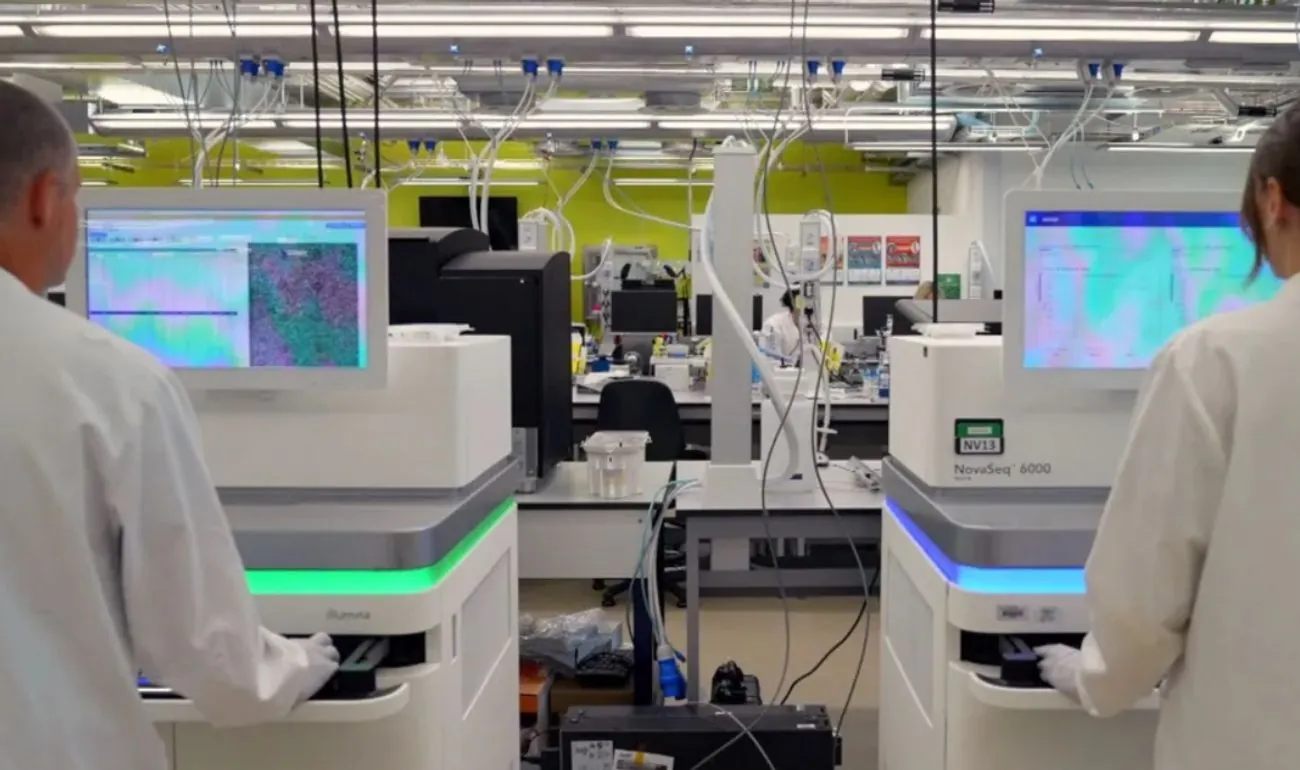
Creating DNA from scratch allows you to test how DNA actually works and test new theories
The scientist added that currently, these checks can only be done by making changes to DNA that already exists in living systems.
It is indicated that the project's work will be limited to test tubes and dishes, and there will be no attempts to create synthetic life. But scientists hope that the technology will open up unprecedented control over human living systems.
The genie is out of the bottle
Although it is immediately noted that the project is hunting for medical benefits.
But, of course, nothing will prevent unscrupulous scientists from abusing this technology.
They can, for example, try to create biological weapons, improved humans, or even creatures with human DNA
Now we could have a number of limitations, but if an organization with access to the appropriate equipment decides to start synthesizing something, I don't think we can stop it
Recall
Scientists, with the help of DNA analysis, found out that Christopher Columbus was a Jew from the western Mediterranean.
The International Commission on Missing Persons extended the collection of DNA samples from Ukrainians who are in the Baltic and Northern European countries until July 18, 2025.