










2026 Nobel Prize in Physiology or Medicine awarded for discoveries in optogenetics
Kyiv • UNN
Karl Deisseroth, Peter Hegemann and Georg Nagel received the prize for the discovery of light-gated ion channels and optogenetics.

The 2026 Nobel Prize in Physiology or Medicine has been awarded to Karl Deisseroth, Peter Hegemann and Georg Nagel "for their discoveries concerning light-gated ion channels and optogenetics." The Nobel Committee announced this on October 5, UNN reports.
Karl Deisseroth, Peter Hegemann and Georg Nagel received the 2026 Nobel Prize in Physiology or Medicine for discoveries that led to the development of optogenetics, which makes it possible to switch the activity of individual nerve cells on or off in the living brain. This method is now used in laboratories around the world to uncover the secrets of the brain
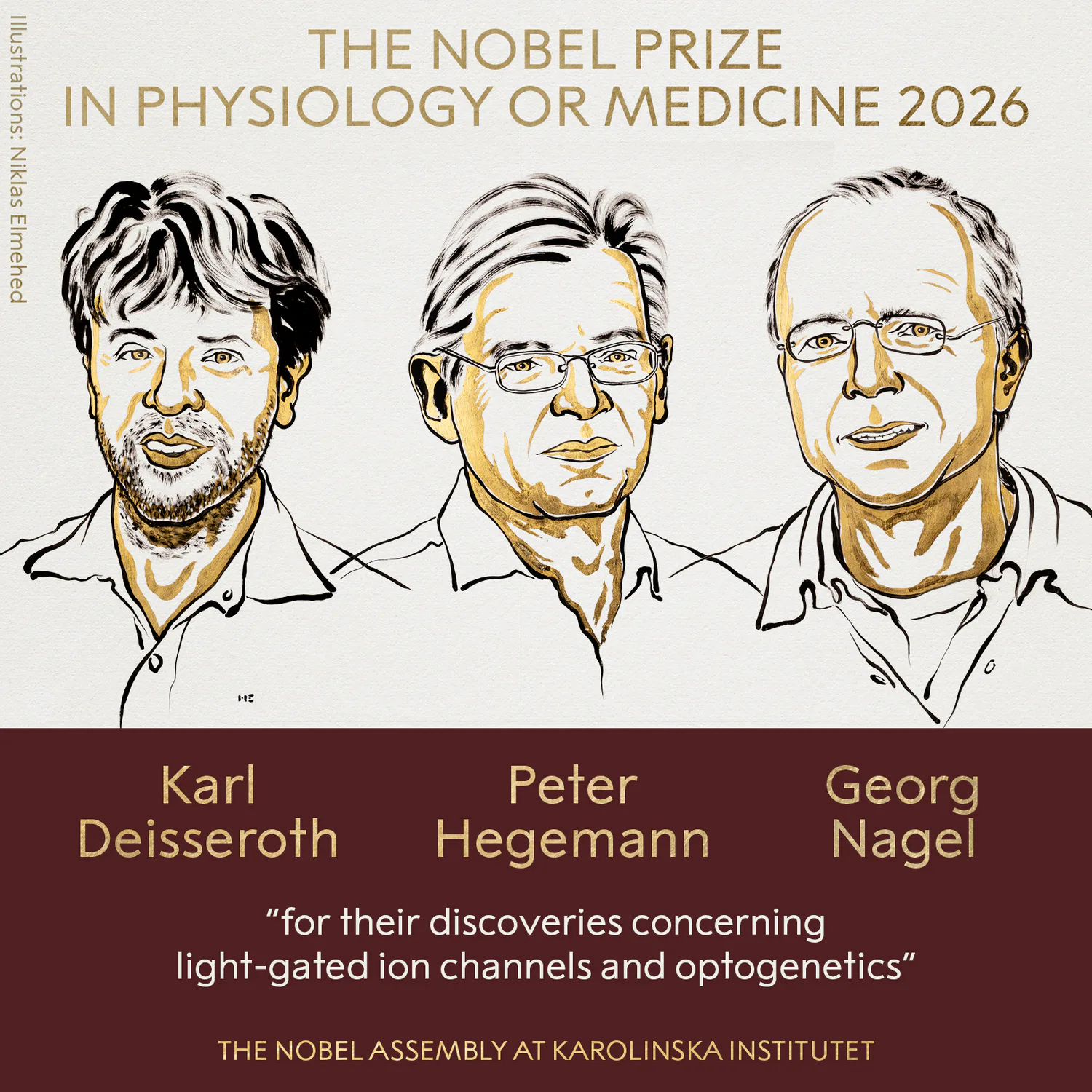
Peter Hegemann and Georg Nagel — the 2026 medicine laureates — reportedly discovered the remarkable protein channelrhodopsin in single-celled algae.
"Hegemann wondered how Chlamydomonas, a single-celled alga, is able to swim toward a source of light. In the early 2000s, he and Georg Nagel discovered channelrhodopsin, an algal protein with unique properties located on the cell surface. When illuminated with blue light, a channel opens in the protein. Charged ions then enter the cell, creating an electrical impulse. They found that regardless of which cell they inserted the protein into, those cells became light-sensitive," the statement said.
This year's Nobel Prize in Medicine laureate Karl Deisseroth, as noted, transformed the channelrhodopsin protein into a light-controlled switch for nerve cells.
Deisseroth introduced the channelrhodopsin gene into the nerve cells of rats. By illuminating the cells with blue light, he was able to trigger a nerve signal. He published this discovery in 2005. Two years later, he made this light-controlled switch for nerve cells work in the brains of living mice.
The 2026 Nobel laureates in Physiology or Medicine have laid the foundation for a new era in neuroscience, the Nobel Committee emphasized.
"Using optogenetics, researchers have been able to identify neural circuits that control certain memories, feelings and behaviors associated with neurological and psychiatric disorders. In clinical medicine, researchers are using this method in attempts to restore sight in people with visual impairments," the statement said.
"Optogenetics has fundamentally changed our understanding of how the brain works. Every day brings new discoveries that help unravel one of humanity's greatest mysteries: how our incredible brain works," the statement noted.
For reference
Nobel Week 2026 began on October 5 and will run until October 12. During it, laureates in six categories are announced.