










Panic or real cost - the fuel situation in Ukraine
Kyiv • UNN
Following the escalation of the security situation around Iran, forecasts of possible fuel shortages and sharp price increases spread in Ukrainian media and social networks. At the same time, frequent changes in prices at gas stations and an increase in demand are being recorded.

The escalation in the Middle East has once again heightened nervousness in the global oil market, and with it, fueled expectations of rising fuel prices in importing countries. In Ukraine, this quickly reflected in the retail segment: at some gas stations, prices are adjusted more and more often, and demand is growing in some places due to fears of possible disruptions. At the same time, market participants emphasize that there is currently no physical shortage, and the main short-term risk is associated with panic and reaction to the news background.
UNN investigated the situation on the domestic fuel market together with expert, director of Consulting Group A-95 Serhiy Kuyun.
Stopping an oil refinery in Saudi Arabia, US military operation, and Iranian threats: how geopolitics determines trends in the fuel market
In March 2026, the situation on the global oil and fuel market significantly worsened due to the escalation around Iran and the Persian Gulf. The market reacted with rising prices and an increase in so-called risk premiums in maritime logistics, which affected both oil quotes and the cost of oil products.
The key factor was the tension around the Strait of Hormuz. A significant share of global maritime oil supplies passes through this route, so statements by Iranian officials about closing the strait and threats to shell ships were perceived as a risk of possible supply disruptions.
In response, the US stated that the Navy could begin escorting tankers passing through the Strait of Hormuz. Mechanisms for supporting shipping, particularly in terms of insurance, were also discussed. Such signals could partially reduce panic expectations, but did not eliminate the basic risks to route security.
An additional factor was the information about the shutdown of an oil refinery in Saudi Arabia. Such incidents increase market nervousness, as they create risks of a temporary reduction in the supply of oil products and create additional pressure on prices.
In the Ukrainian market, the consequences manifested quickly. The media began to write about a significant increase in wholesale fuel prices. According to available estimates, wholesale diesel fuel prices increased by 23% in a short period. This affected market participants' expectations of further retail price increases.
What is happening with gasoline prices at Ukrainian gas stations now
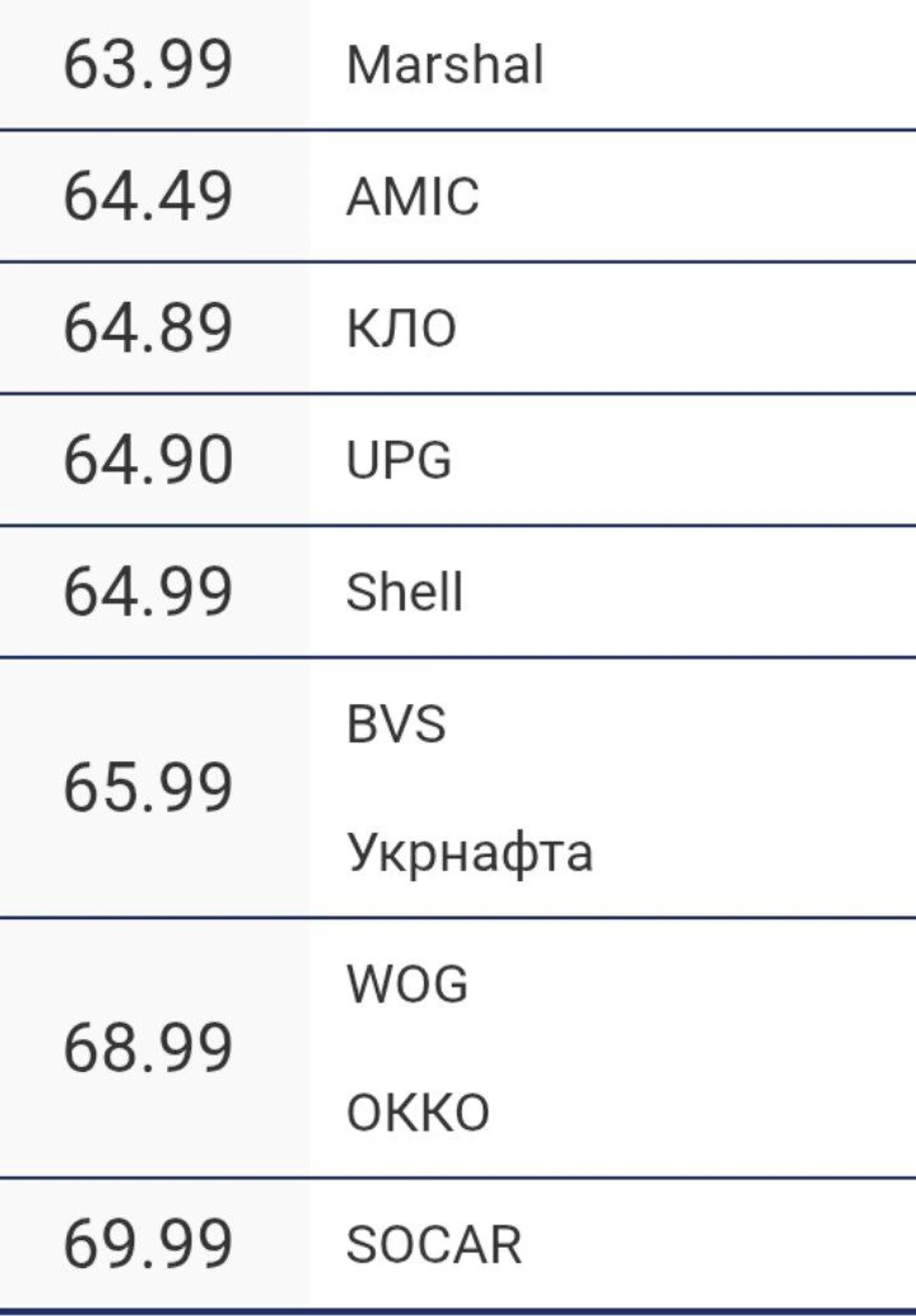
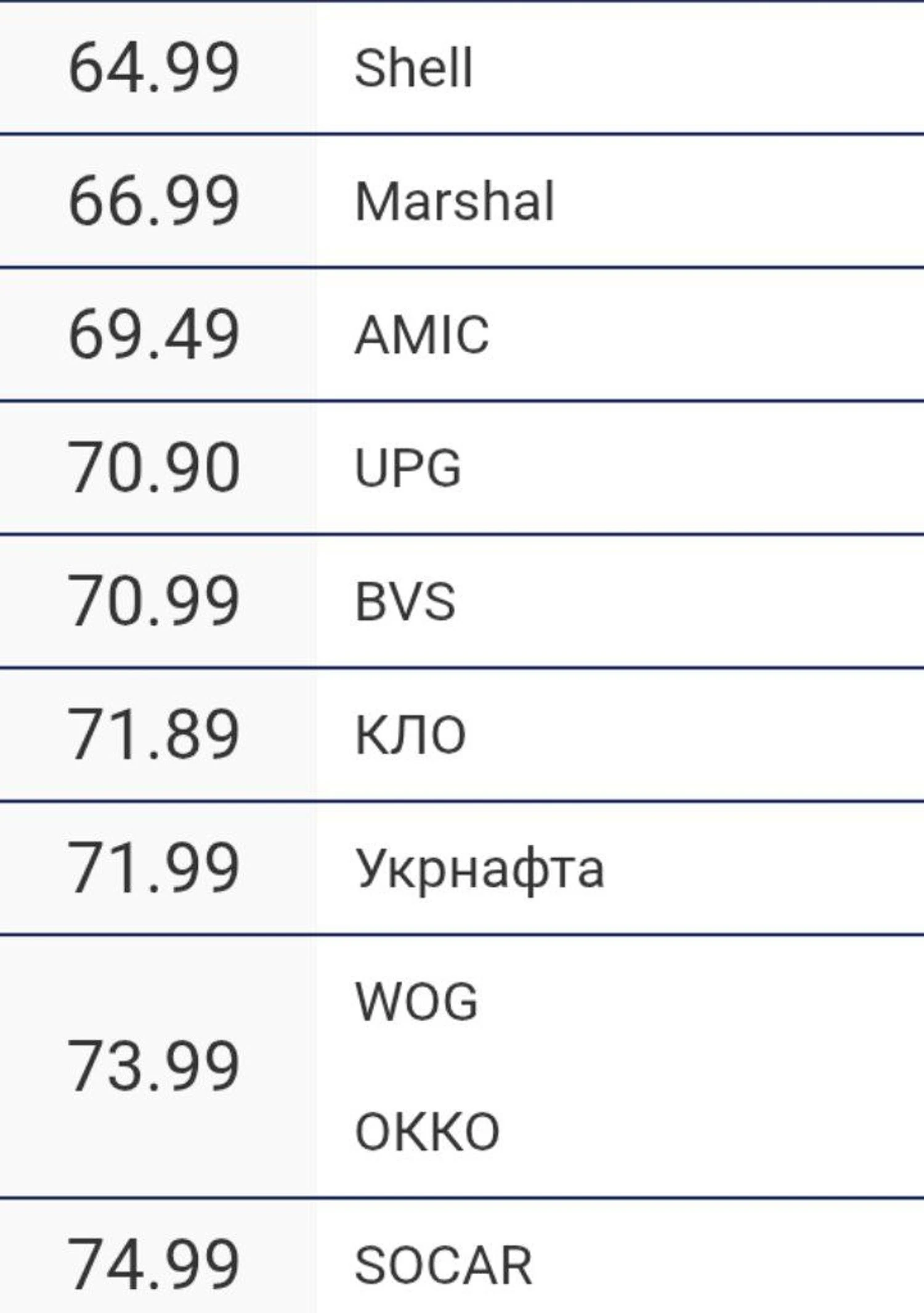
As of Wednesday, March 4, a liter of A-95+ gasoline cost the most at gas stations in Kyiv region. On average, it costs from UAH 64.99 (Shell and Marshal gas stations) to UAH 72.99 per liter (SOCAR).
It will be slightly cheaper for motorists to fill up their cars with A-95 fuel. This will cost from UAH 60.95/liter at Avantage 7 gas stations to UAH 66.99/liter if you fill up at Ukrnafta gas stations. The most expensive will be to buy a liter of 95th at SOCAR, OKKO and WOG gas stations - they ask for UAH 68.99.
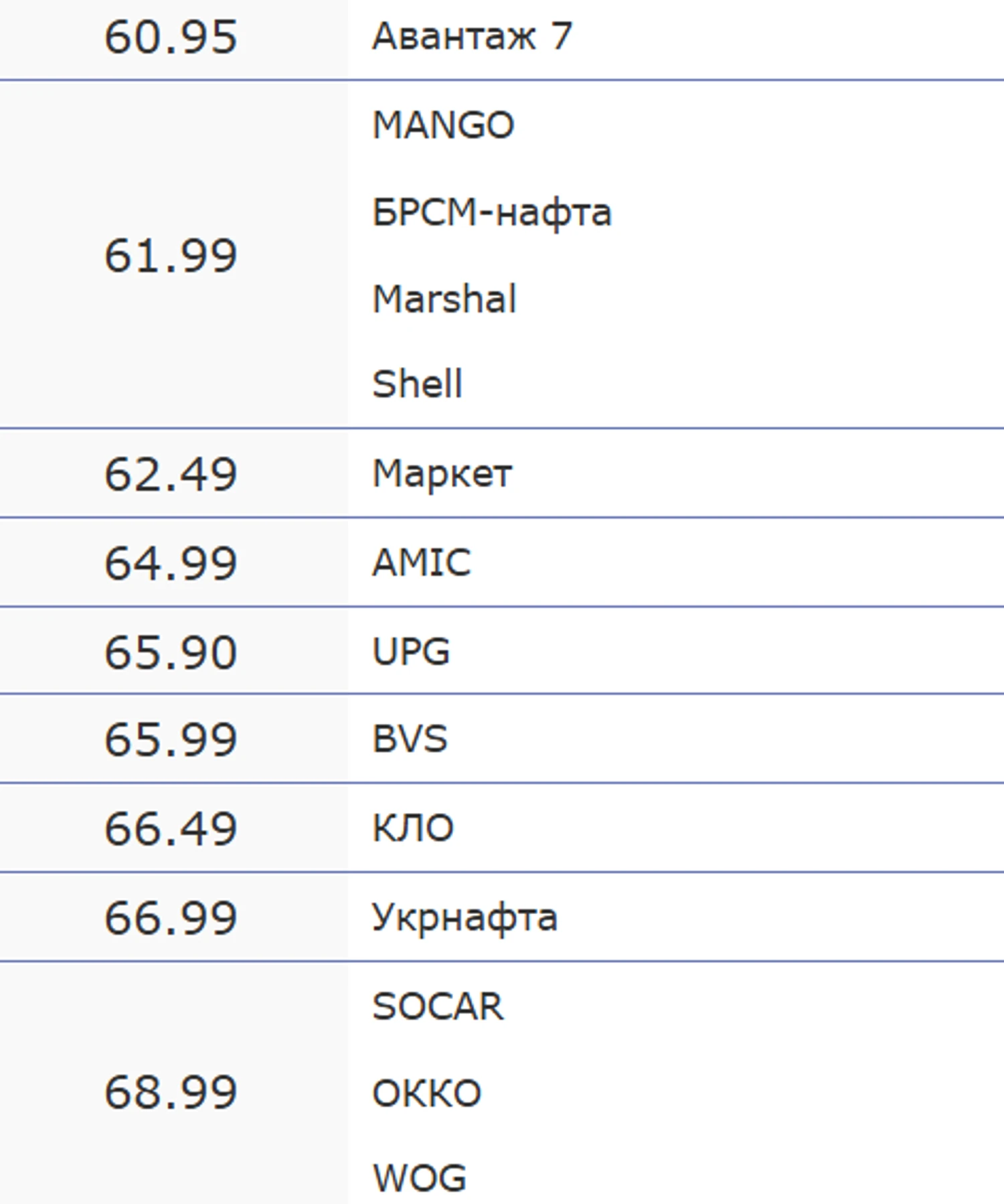
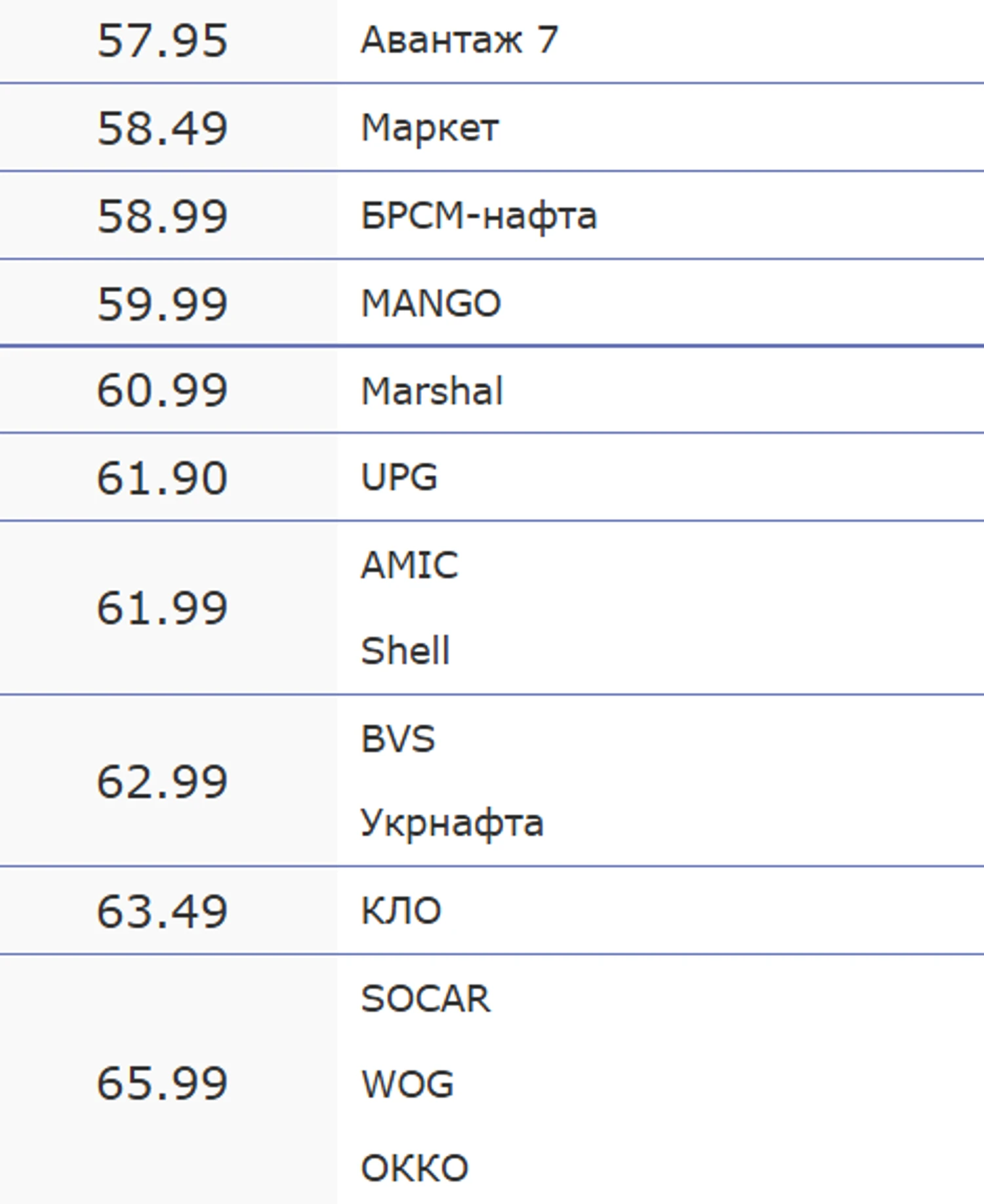
On average, over 4 days, the cost of this type of fuel increased by 4.48% per liter (by UAH 2.79) at most gas station networks:
- Avantage 7: 57.95 → 60.95 (+3.00 UAH, +5.18%);
- Market: 58.49 → 62.49 (+4.00 UAH, +6.83%);
- BRSM-Nafta: 58.99 → 61.99 (+3.00 UAH, +5.09%);
- MANGO: 59.99 → 61.99 (+2 UAH, +3.3%);
- Marshal: 60.99 → 61.99 (+1.00 UAH, +1.64%);
- UPG: 61.90 → 65.90 (+4.00 UAH, +6.46%);
- AMIC: 61.99 → 64.99 (+3.00 UAH, +4.84%);
- BVS: 62.99 → 65.99 (+3.00 UAH, +4.76%);
- Ukrnafta: 62.99 → 66.99 (+4.00 UAH, +6.35%);
- KLO: 63.49 → 66.49 (+3.00 UAH, +4.73%);
- OKKO: 65.99 → 68.99 (+3.00 UAH, +4.55%);
- WOG: 65.99 → 68.99 (+3.00 UAH, +4.55%).
Serhiy Kuyun, director of Consulting Group A-95, in an interview with UNN, commenting on the price situation, admitted that there are grounds for price increases, but it should not be so fast.
"There are grounds for an increase, but not at such a pace," Kuyun said.
The expert explained that he expects all market participants to change their behavior, which should promptly reflect on the prices that drivers see on gas station displays.
"I think that everyone will understand this this week, and we will return to some boundaries that are more, let's say, suitable for the current situation in the world and in foreign markets," Kuyun expressed his vision of the situation.
The UNN interlocutor also explained the economic logic and mechanics behind the price increase at gas stations. According to Serhiy Kuyun, the risk of gasoline price increases remains in the near future. In his opinion, for Ukraine, the key period is related to the moment of purchasing new batches.
That is why the price at gas stations is increased, taking into account future costs for fuel purchases, a new batch of which will most likely be sold at higher prices, given the conflict in the Middle East. Therefore, gas station network owners are forced to include risk coverage in the current price for drivers. Moreover, they follow the most pessimistic scenario.
"That is, they are laying down today, conditionally speaking, the worst-case scenario: I am selling at 50 today, and the day after tomorrow, in a week, I will have to buy fuel at 60. Where do I get the money for this?" the expert gave an example.
At the same time, Oleg Pendzin, a member of the Economic Discussion Club, holds a different view of trends in the domestic fuel market. The economist, in particular, stated that the Antimonopoly Committee should pay attention to the jump in gasoline and diesel fuel prices, since, in his estimation, the full transmission of rising world oil prices into the cost of oil products usually has a time lag, and does not happen the next day.
"Between the rise in oil prices and the rise in prices for oil products produced from this oil, at least 20 days pass. That is, I would understand if, for example, we had an increase in oil prices on the world market, and somewhere around, conditionally, in the third decade of March, we would see an increase in fuel prices at gas stations. And, moreover, diverse, because everyone buys, based on their capabilities, depending on the wholesale party, prices are not the same. Well, honestly, I think the Antimonopoly Committee should definitely be interested," Pendzin said in a comment to Espreso.TV.
Retail behavior and demand: what amplifies price fluctuations
Serhiy Kuyun, in an exclusive comment to UNN, noted that as of March 4, 2026, retail demand for fuel in Ukraine has already increased. And the key catalyst was the decision of gas station networks to change the price per liter of fuel.
"This excitement was created by the gas station networks themselves. In such a situation, price increases become an additional incentive for consumers to buy more than usual," he said.
At the same time, the expert emphasized that there are currently no grounds for panicking about a future shortage of gasoline at gas stations.
"Fuel is available - of all brands, in large volumes. Especially a lot of gasoline. (In addition, - ed.) everything is still going under old contracts, at old prices. This creates a safety margin for the transition period," he explained.
The director of Consulting Group A-95 also explained that the international situation has not yet reached the degree of tension that could lead to a global gasoline shortage in Ukraine.
"Gas station networks began to raise prices on news that everything would get stuck in the Strait of Hormuz, there would be no fuel, we need to prepare... But yesterday (March 3, - ed.) Trump already stated that they are even ready to escort tankers with warships. I am convinced that next week we will see a decrease in quotes, and maybe even earlier." - said Serhiy Kuyun.
Wholesale quotes and time lag: why diesel became more expensive when physical fuel batches did not enter the market
Serhiy Kuyun, in an interview with UNN, confirmed that the external price factor has already manifested itself in diesel quotes.
"This is a fact. Diesel fuel has increased by almost 25% in three days. This is really a lot," he said.
In this case, the expert emphasizes the so-called "time lag."
"It (diesel fuel - ed.) only increased yesterday. That is, this fuel is not yet available (on the Ukrainian market - ed.)."
According to him, in this way, businesses are preparing to purchase more expensive batches.
"I understand that we need to prepare, we need to collect money for those new batches that we will buy. But you can't collect everything for new batches that are 25% more expensive in one day. Everyone has the right to free pricing, but here we need to pull ourselves together a little," Serhiy Kuyun is convinced.
Oil, logistics, inflation: how events in the Persian Gulf can change prices in the near future
Serhiy Kuyun, during a conversation with UNN journalists, emphasized: for the near future, he sees the main task for the fuel market in Ukraine as reducing the level of panic. According to him, even with reasons for price correction, the current speed of their change is overstated.
"Therefore, I believe that the current rates of growth are unjustified, that they are based on some kind of speculative sentiment. I am sure that the price will soon fall," the expert said.
Separately, the director of Consulting Group A-95 emphasized that short-term fluctuations in fuel prices during active hostilities are typical for the market.
"No war goes without some surges (in price, - ed.). After the tension around transportation decreases... prices will fall," the expert predicted.
Meanwhile, international and Ukrainian analysts in the fuel market and economists note that globally, the development of events in the Persian Gulf forms several scenarios.
In the event of de-escalation, the risk premium in prices may decrease, which will open up space for stabilization or correction of quotes.
In the event of prolonged restrictions on shipping or attacks on infrastructure, a continued increase in oil and oil product prices is possible, as well as increased inflationary pressure due to rising energy prices and logistics.
A separate consequence of rising world energy prices could be a potential increase in the revenues of exporting countries, including Russia, which could improve its financial capabilities in wartime. And this could become a new additional challenge for Ukraine, beyond the purely economic plane.
Currently, according to the UNN interlocutor, there is no fuel shortage in Ukraine, and the main short-term risk is associated with excitement and the retail sector's reaction to the news. Over the next 2-3 weeks, the impact of new purchases may become more noticeable if high quotes in the external market persist.