










NASA's Chandra X-ray Observatory Discovers "Fracture" in Giant Filament of the Milky Way
Kyiv • UNN
The Chandra Observatory recorded a fracture in a bone-like cosmic structure. The reason was the impact of a pulsar moving at a speed of up to 3.2 million km/h.

An image with a bone-like structure was obtained using the large MeerKAT array in South Africa and New Mexico.
Reports UNN with reference to Space.
Details
NASA's flagship-class space telescope Chandra X-ray Observatory regularly photographs our galaxy. Chandra X-ray is sensitive to X-ray sources 100 times fainter than any previous X-ray telescope. This allows for amazing discoveries. A recent scan revealed something that may be familiar from some people's experience: a broken "bone".
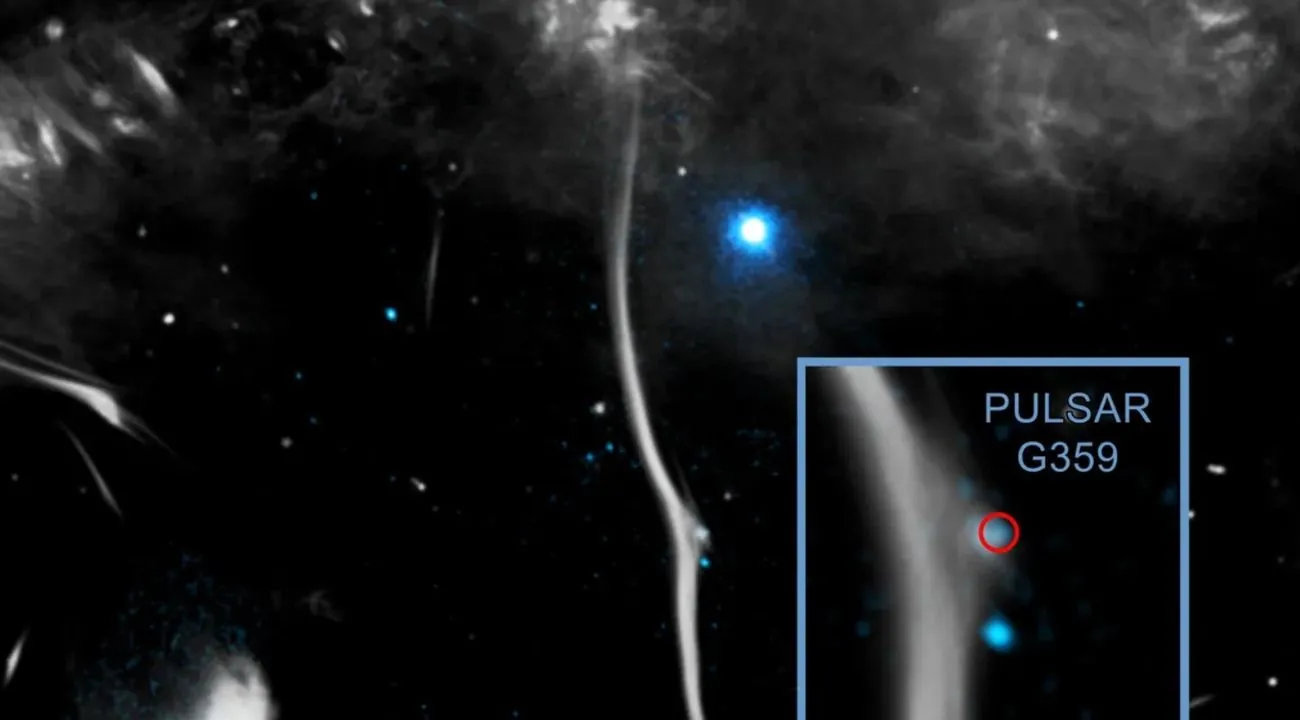
NASA diagnosed a fracture in a "huge cosmic bone" using an X-ray observatory
Explanation
The bone-like structure in the image above was obtained using radio data from the MeerKAT radio array in South Africa and the Very Large Array of the National Science Foundation in New Mexico - you may notice a small fracture in the structure a little over a third of the way down.
Overlaying Chandra X-ray data on radio data revealed the likely causes of the fracture - it is related to the impact of a pulsar, i.e. a neutron star. The pulsar rotates rapidly and sends out pulses of radiation at regular intervals.
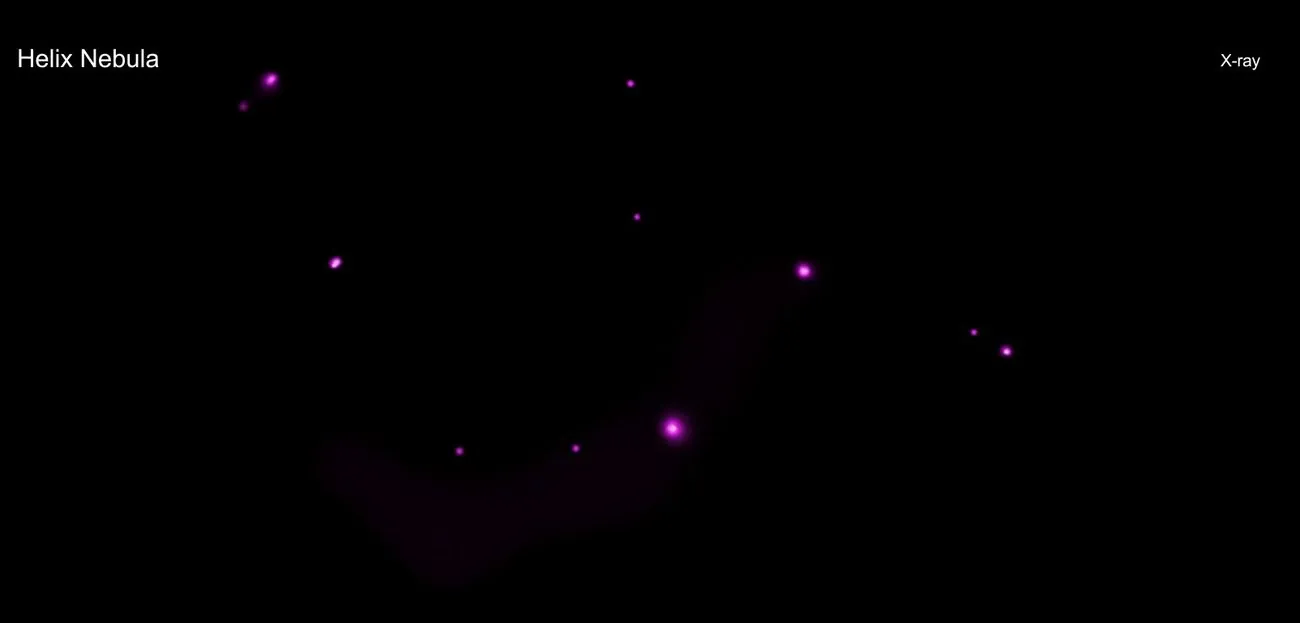

It should be noted that the ghostly structure is not a real bone. It would probably be better to outline its image as "threads" of the galactic center. It is one of many massive structures created by radio waves strung along magnetic fields in the center of the Milky Way galaxy
Scientists suspect that the pulsar collided with G359.13 at an astonishing speed - one to two million miles per hour (1.6 to 3.2 million km per hour).
Given that neutron stars are extremely dense - in fact, they are the densest known stars in the Universe - it is not surprising that a high-speed collision easily distorted the magnetic field of the filament, creating a fracture.
Since it is unlikely that the Milky Way will be able to cast the 230 light-year-long thread of the galactic center in plaster, we can only hope that this crack will heal on its own over millennia, writes Space.
Let us remind you
Scientists have obtained an enlarged image of Jupiter's poles with auroras, which are 100 times brighter than Earth's.
A new study has shown that the Earth is more sensitive to solar flares.