










Autumn tree pruning: when to do it and which branches to remove
Kyiv • UNN
In autumn, trees are pruned after the leaves have fallen, mainly for sanitary purposes and moderately. Crown shaping and heavy rejuvenation are best postponed until the end of winter.

Autumn pruning is one of the most important stages of garden care, which directly affects the future harvest and plants’ resilience to winter frosts. Proper pruning helps rid trees of diseased branches, prevent the spread of pests, and form a proper crown. However, careless removal of branches at the wrong time can weaken a tree or even lead to its death.
UNN found out exactly when to carry out autumn pruning, at what temperature it is safe, and how the care of different trees in the garden differs.
When to prune trees in autumn
After the growing season ends, the tree enters dormancy, but fresh cuts remain vulnerable to sudden cold snaps. Therefore, in autumn it is more advisable to carry out sanitary and moderate thinning pruning, while extensive rejuvenation or crown shaping of apple trees, pear trees, and many other crops is best left until late winter or early spring.
Professional gardeners also warn that early winter pruning before periods of severe frost may increase the risk of cold damage to the tree. They explain that the optimal time for sanitary autumn pruning comes after active shoot growth and leaf fall have ended, when the tree enters dormancy. Depending on the region of Ukraine and the weather in a particular year, this may be the second half of October, November, or even the beginning of December in the south.
However, the mere fact that the leaves have fallen does not yet mean that the tree necessarily needs to be pruned. If forecasters predict a sharp cold snap, severe frosts, or a prolonged period of wet weather, it is better to postpone branch-pruning work in the garden.
First of all, the following should be removed in autumn:
- dry and dead branches;
- broken or cracked shoots;
- branches with obvious signs of disease;
- shoots that rub against each other;
- branches growing inward into the crown;
- some of the vertical water shoots — so-called suckers;
- root suckers;
- dangerous branches that may break under snow or wind.
At the same time, a healthy tree should not be “cleaned out” as thoroughly as possible: excessive pruning stimulates the appearance of a large number of new shoots in the following season and creates an additional burden on the plant. An old or long-neglected tree is better rejuvenated gradually over several years. For apple trees, for example, experts recommend not removing too large a part of the crown in a single season.
At what temperature can trees be pruned
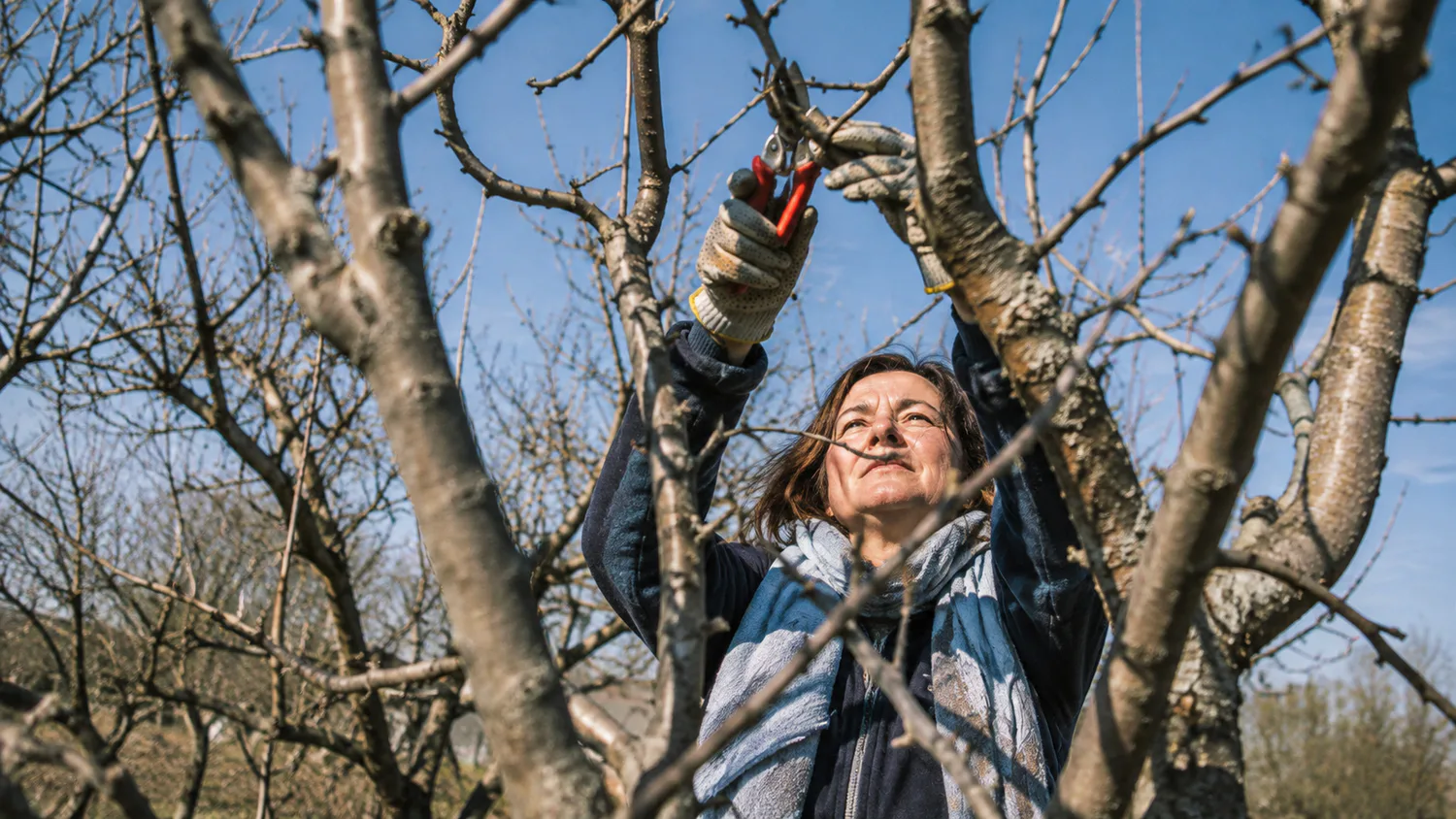
There is no universal temperature limit for all tree species and varieties. For autumn work, it is best to choose a dry day with above-freezing temperatures or without severe frost. A slight, short-term nighttime frost in itself does not mean that pruning is impossible. A much greater risk is posed by prolonged severe cold immediately after large fresh cuts have appeared on the tree.
In severe frost, wood also becomes more brittle. As a result, it is easier to make an uneven cut, split a branch, or damage the bark while working with a saw or pruning shears.
Therefore, before pruning, it is worth checking the forecast for at least the next few days. If a significant cold snap is expected, it is more advisable to postpone the work. Particular caution is needed with young trees and heat-loving crops.
Humidity is also important. It is undesirable to prune a tree in the rain or immediately after prolonged precipitation. Dry weather reduces the risks associated with the spread of a number of fungal and bacterial diseases.
How to prune trees correctly in autumn
Before starting work, it is necessary to determine what type of pruning will be carried out: sanitary, thinning, formative, or rejuvenating.
Sanitary pruning consists of removing dead, diseased, and damaged branches. It is the most justified type of pruning in autumn. Thinning is needed if the crown has become too dense. In this case, some of the branches that cross, rub against each other, grow inward, or shade one another are removed.
Formative pruning creates the proper framework of a young tree, while rejuvenating pruning involves significant removal of old wood. Such work should be planned particularly carefully and, as a rule, postponed until a more favorable period.
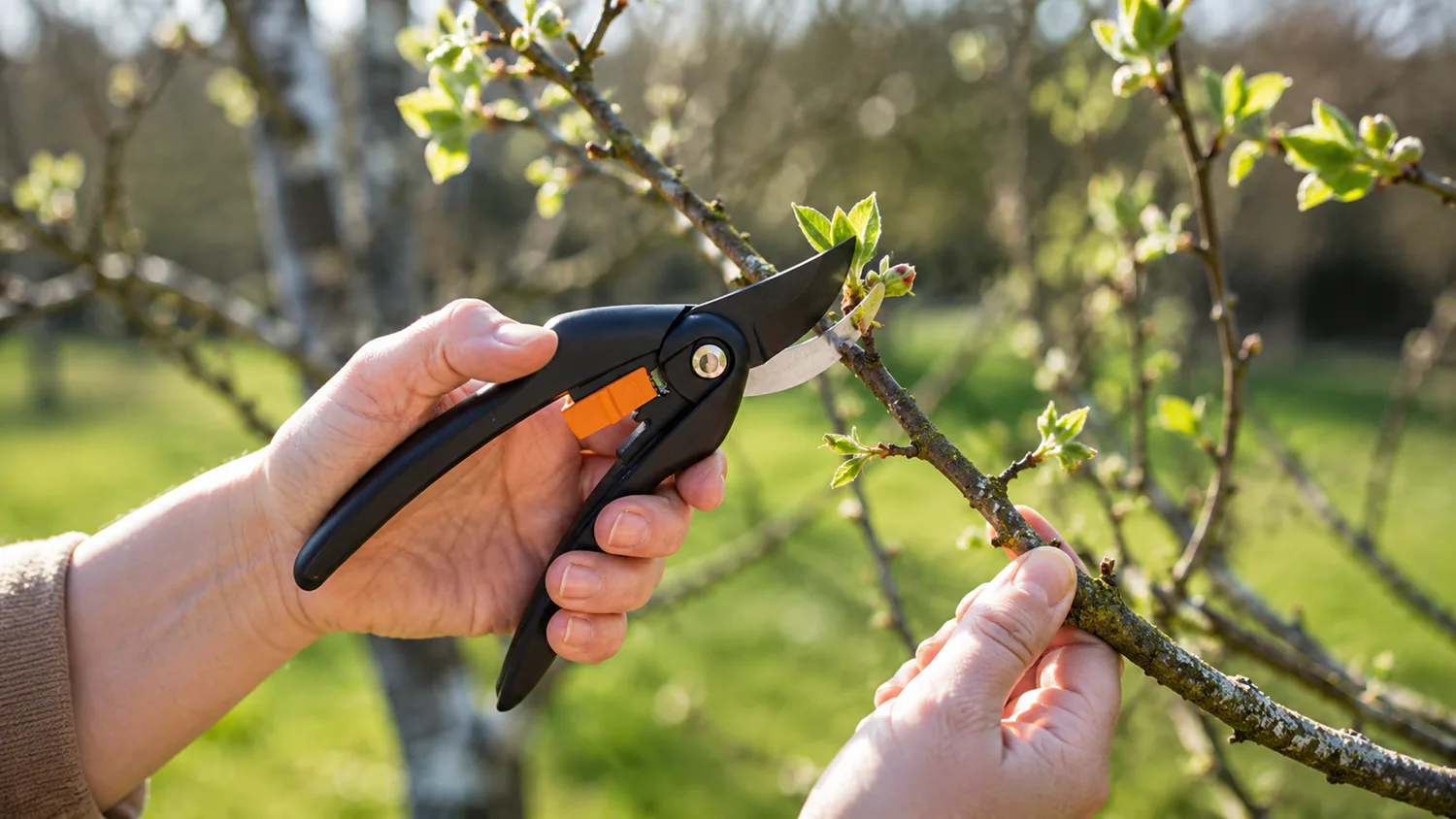
Pruning will require sharp pruning shears, loppers, and a garden saw. The tool must be well sharpened: a dull blade does not cut but compresses and splits the branch tissue.If pruning a diseased tree, the tool should be cleaned and disinfected to avoid transferring pathogens to healthy plants.
There are several basic rules for removing diseased and old branches from trees.
A thin shoot should be cut with pruning shears in one clean motion. If a branch is being removed completely, the cut should be made neither flush with the trunk nor leaving a long stub. The guide is the branch collar (a characteristic swelling of tissue near the point where it joins the trunk or a larger branch, – Ed.). These tissues help the tree naturally isolate the damaged area. A flush cut with the trunk creates a larger wound, while a remaining stub gradually dies. Therefore, a cut made immediately beyond the outer edge of the collar is considered safe for the tree.
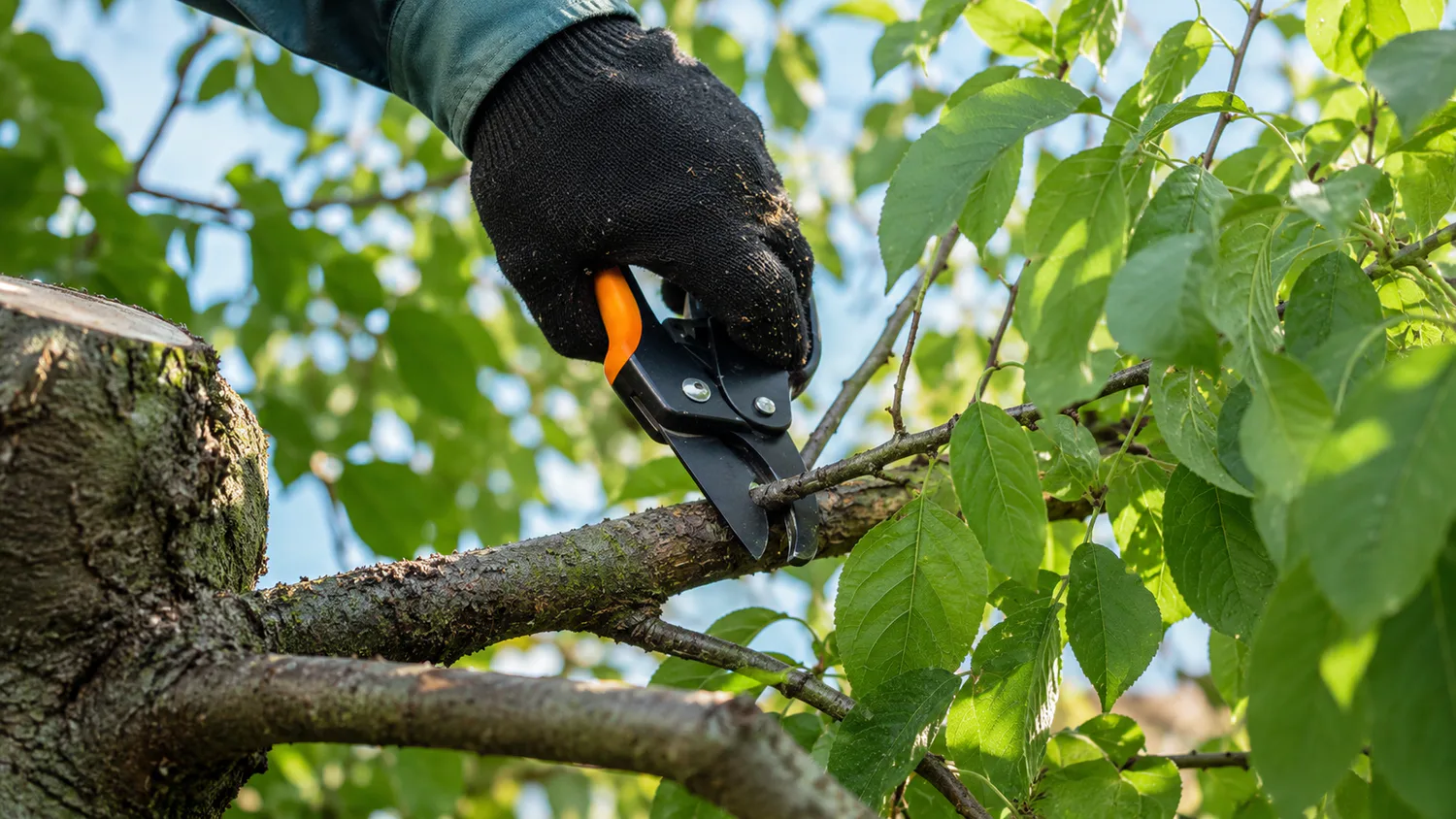
Large branches require particular caution. They must not simply be sawn from above near the trunk: under its own weight, the branch may break off before the cut is complete and strip away a long strip of bark. Therefore, such branches are removed in several stages. First, make a shallow undercut at some distance from the trunk, then, a little farther out, saw through the main part of the branch from above. Once its weight is no longer pressing on the attachment point, carefully remove the remaining section near the collar. This method helps prevent the bark from tearing.
Should cuts be covered after pruning?
Garden tree wound dressing was considered practically mandatory for decades. However, modern recommendations for tree care do not advise automatically covering every cut. There is no compelling evidence that traditional sealants speed up the natural closure of a wound or protect it from rot. In some cases, a coating may instead trap moisture.
Therefore, the key aspects of tree care at present remain making the cut in the right place, using a sharp tool, and preserving the branch collar.
At the same time, special products may be used for certain crops, diseases, or specific conditions.
Pruning fruit trees in autumn: apple trees and other crops
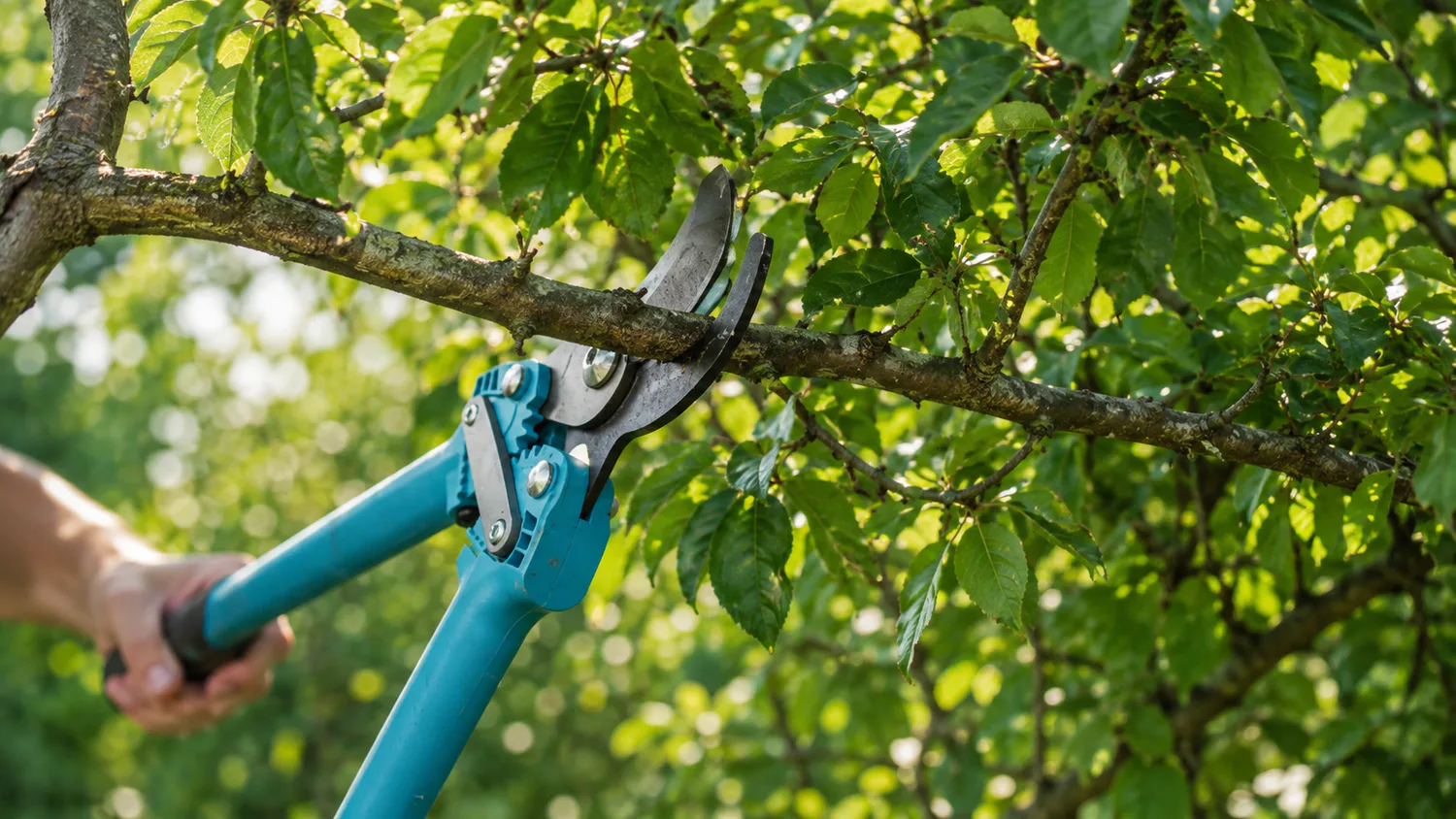
Different fruit trees respond to pruning differently. That is why using the same approach throughout the garden is not the best practice.
How to care for apple trees
Apple trees tolerate pruning well during dormancy, but crown formation is best left until late winter. After leaf fall in autumn, dry, damaged, and diseased branches, some shoots growing inward into the crown, and branches that cross or rub against one another can be removed.
It is also important to remember the fruiting wood. Apples do not form equally on all shoots, and the fruiting pattern also depends on the variety. If all young branches are heavily shortened indiscriminately, part of the future harvest may be lost along with the excess wood.
The optimal period for the main thinning and training of an apple tree is considered to be late winter, when the most severe frosts have passed but the tree has not yet begun active growth.
Pruning pear trees in autumn
The same rules apply to pear trees. In autumn, sanitary pruning can be carried out, damaged branches, vertical shoots, and some branches that excessively thicken the crown can be removed. It is better not to carry out the complete rejuvenation of an old pear tree in a single season. If the tree has not been pruned for a long time, crown restoration should be spread over several years.
Cherries and sweet cherries: how to safely remove old branches
Cherry and sweet cherry trees require considerably greater caution. Stone-fruit crops are sensitive to a number of infections that can penetrate through damage to the wood, so heavy autumn pruning is undesirable for them.
Depending on the climate and the specific crop, experienced gardeners often recommend moving cherry and sweet cherry pruning to a drier and warmer period. Therefore, in autumn, unless there is an obvious need, it is better to limit pruning to the removal of dry, broken, and clearly diseased branches.
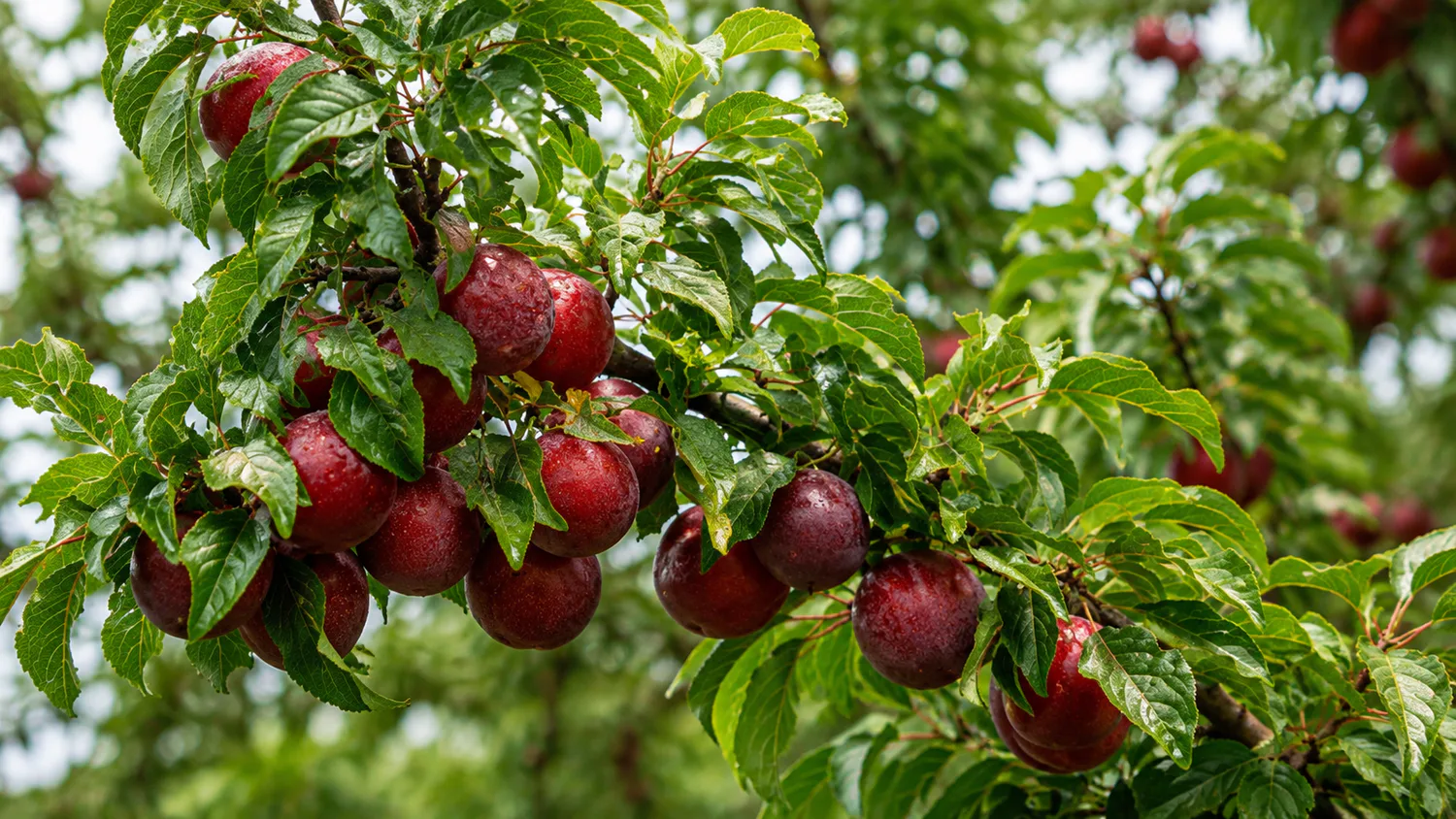
How to properly prune plums, apricots, and peaches
Apricot, peach, and plum also belong to the stone-fruit group and require caution. This is especially true of peach trees and young trees, for which pruning before severe cold weather can increase the risk of winter damage.
For peach trees, pruning is also directly connected with their fruiting characteristics: a significant portion of the crop forms on one-year-old wood, so thoughtless removal of young shoots can affect the yield of the following season.
Can young trees be pruned in autumn
The rule is even stricter for young saplings: the younger the tree, the more cautious autumn pruning should be. In the first years after planting, the main task is to develop a healthy root system and the primary scaffold branches. Removing many shoots before winter is not necessary for this.
In autumn, it is sufficient to remove a broken, damaged, or obviously problematic branch from a young tree. Full crown formation is best carried out at the times recommended for the specific crop.
What to do with branches after pruning
Healthy branches can be broken or chopped into small pieces and used for composting or other household purposes.
Wood showing obvious signs of fungal or bacterial infection should be handled differently. Such branches should not be left under the tree or piled up near the garden. Disease-causing agents may survive along with them. This plant material must be removed from the garden and safely disposed of.
After leaf fall, it is also worth removing mummified fruit remaining on the branches, as well as rotten fruit under the trees—they may be one of the sources of infection for the next season.
When is it better to prune trees: in autumn or spring
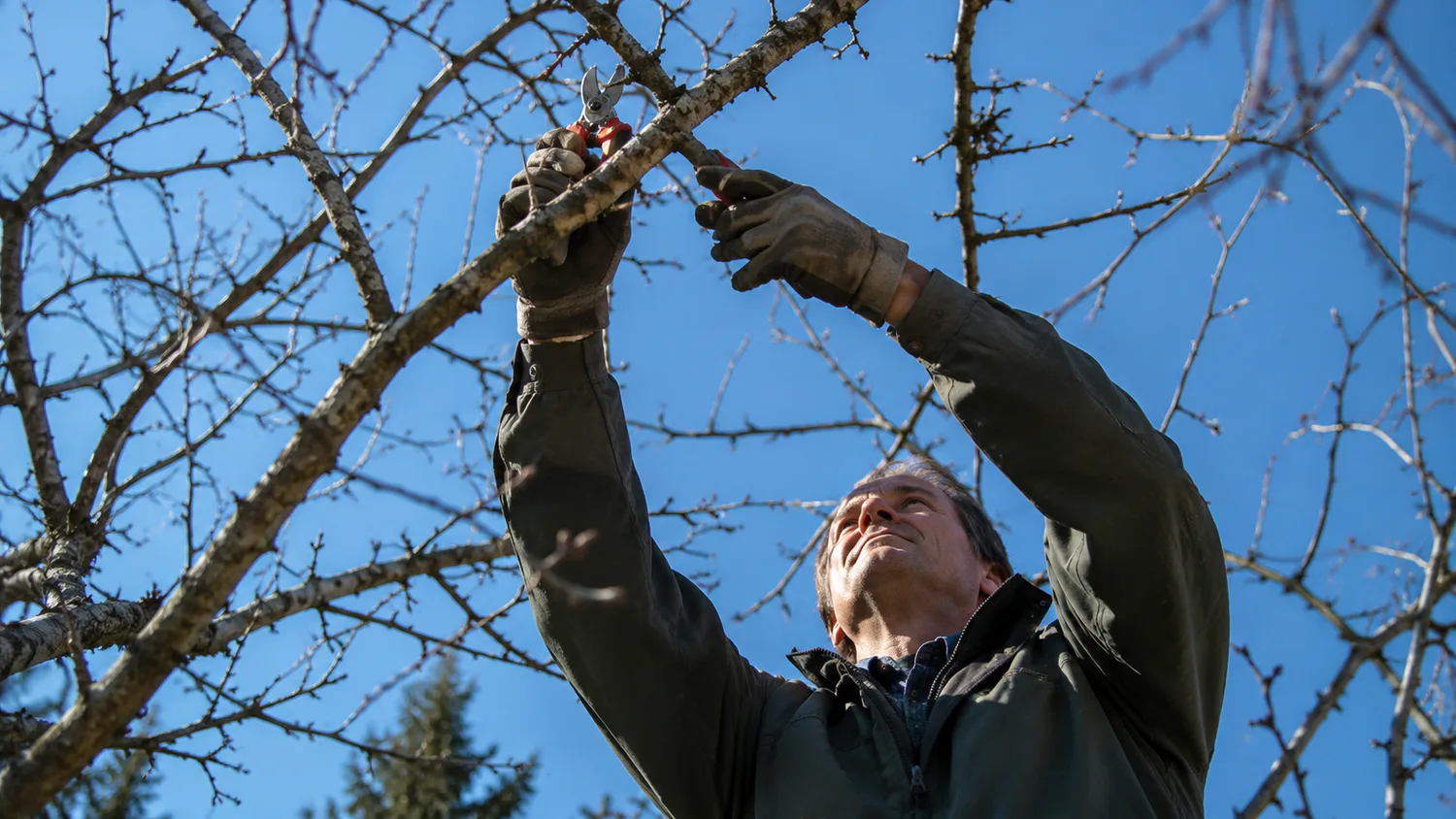
The choice of season depends on the type of tree and the purpose of pruning. However, for most fruit trees, the simplest approach is as follows: sanitary pruning in autumn, and the main shaping and thinning at the end of winter or in early spring.
Spring pruning has several advantages. By then, it is possible to assess which branches were damaged during the winter, the risk of extreme frost has decreased, and active growth begins soon after the work is carried out. In autumn, the tree’s structure is clearly visible after leaf fall, and damaged or dangerous branches can be removed in advance.
It is undesirable to rush into pruning and thinning if the tree is young, weakened, recently transplanted, or belongs to a heat-loving stone-fruit crop.
Reminder
Earlier, we wrote about what to pay attention to when pruning trees in the garden in order to increase the yield.