Today Ukraine celebrates Unity Day
Kyiv • UNN
January 22 marks the Day of Unity of Ukraine, in honor of the Act of Unification of the Ukrainian People's Republic and the West Ukrainian People's Republic in 1919. This event became a symbol of the unification of Ukrainian lands and the aspiration for independence.

Today, January 22, Ukraine celebrates Unity Day. The event was established in 1999 in honor of the proclamation in 1919 of the Act of Unification of the Ukrainian People's Republic and the Western Ukrainian People's Republic, writes UNN.
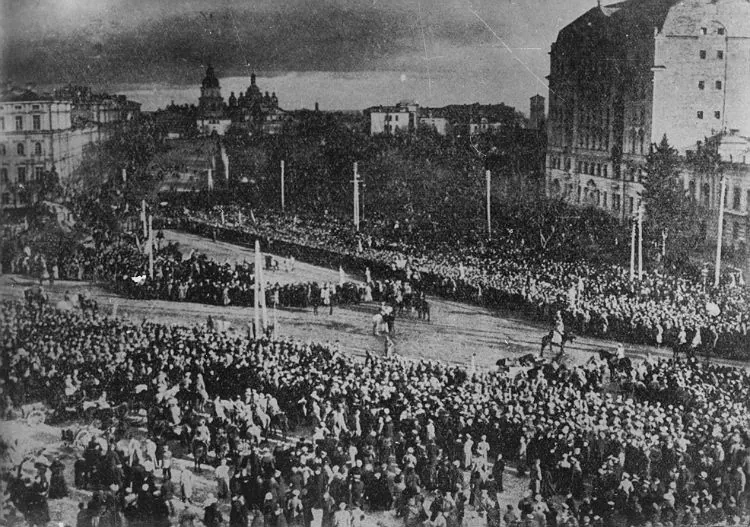
According to the Institute of National Memory, on January 22, 1919, on Sophia Square in Kyiv, in a solemn atmosphere, the Act of Unification (merger) of the Ukrainian People's Republic and the Western Ukrainian People's Republic into a single independent state was proclaimed.
The "Universal of Unity" read at the meeting, in particular, stated: "From now on, the parts of a single Ukraine that have been separated for centuries – the Western Ukrainian People's Republic (Galicia, Bukovina, Hungarian Rus') and the Great Dnieper Ukraine – merge into one. The age-old dreams, for which the best sons of Ukraine lived and died, have come true. From now on, there is a single independent Ukrainian People's Republic." This day became a symbol of Ukrainian state-building, embodying the unifying aspirations of Ukrainians for consolidation in one state.
Unity is…
…unity, indivisibility of all territories of Ukraine, spiritual unity of Ukrainians living on the territory of Ukraine, as well as unity of all citizens of Ukraine regardless of nationality and religion, aimed at affirming the true sovereignty and independence of Ukraine, building a prosperous democratic national state (Article 6 of the Law of Ukraine "On the Basic Principles of State Policy in the Sphere of Affirming Ukrainian National and Civic Identity").
The term "unity" has several meanings. First of all, it is the unification into a single state entity of all lands inhabited by a specific nation on a continuous territory; the spiritual consolidation of all residents of the state, and the cohesion of citizens, regardless of their nationality. The term "unity" includes unity and cohesion.
For Ukraine, unity is unity in diversity, unification around Ukrainian statehood and identity. The idea of the country's territorial integrity is combined with the ideas of spiritual cohesion. Therefore, unity is inseparable from statehood, sovereignty, and the independence of the nation – the foundation for building a democratic state.
In the conditions of the modern Russian-Ukrainian war, unity acquires greater symbolism and urgency, because now, more than ever, Ukrainians need to unite for the sake of the future. Therefore, the slogan of this year's information campaign is "Strength in Unity."
Key messages
On January 22, we commemorate two equally significant events in Ukrainian history: the proclamation of the independence of the Ukrainian People's Republic and the Act of Unification of Ukrainian lands. After all, on January 22, 1918, for the first time in the 20th century, Ukrainian independence was proclaimed by the IV Universal of the Ukrainian Central Rada, and a year later (January 22, 1919), an equally significant event took place on Sophia Square in Kyiv – the unification of the UPR and WUPR into one state.
The proclamation of the Unity of the UPR and WUPR on January 22, 1919, is a historical act of uniting Ukrainian lands in one state. The event is fundamental for Ukrainian state-building. It completely refutes the claims of Russian propaganda that Stalin allegedly united Ukrainian lands for the first time in 1939. The idea of Ukraine's unity was key for the next generation of participants in the Ukrainian liberation movement in the 20th century.
The Act of Unification on January 22, 1919, crowned the unifying aspirations of Ukrainians from both parts of Ukraine – Dnieper Ukraine and Dniester Ukraine – at least since the mid-19th century.
Unity implies not only memory of the past, but also requires cohesive joint work and interaction in modern Ukraine, when we, from different regions, communicate, work together, and create something significant and important.
Unity is inseparable from the sovereignty and real independence of the people; it is the foundation for building a democratic state, a guarantee of the nation's survival and existence.
National unity is not only a basic value for the country's citizens, but also a necessary prerequisite for successful resistance to external aggression.
Today, Ukraine continues its struggle for independence and unity. Therefore, unity remains on the agenda of national tasks.
Historical reference
On January 22, 1919, on Sophia Square in Kyiv, on the first anniversary of the UPR's independence, in a festive atmosphere, the "Universal of the Directory of the Ukrainian People's Republic" (which we symbolically call the Act of Unification) was proclaimed. Buildings in the central part of the city were decorated with national flags, and the entrance to Sophia Square was adorned with a triumphal arch with the coats of arms of the UPR and WUPR. To the music, tens of thousands of residents of the capital and numerous guests flocked to the central streets. The choir led by Kyrylo Stetsenko, accompanied by an orchestra, sang "Ukraine Has Not Yet Perished."
The next day, January 23, 1919, in the building of the Kyiv Opera House (modern National Opera of Ukraine), the Labor Congress of Ukraine discussed and approved the aforementioned documents. By thus ratifying the Universal of the UPR Directory, the Congress gave it legal force. President of the UNRada Yevhen Petrushevych was soon elected to the Directory. After unification with the UPR, the WUPR changed its name to the Western Region of the Ukrainian People's Republic (WR UPR). Active cooperation began between the two state entities in economic, military, and cultural spheres.
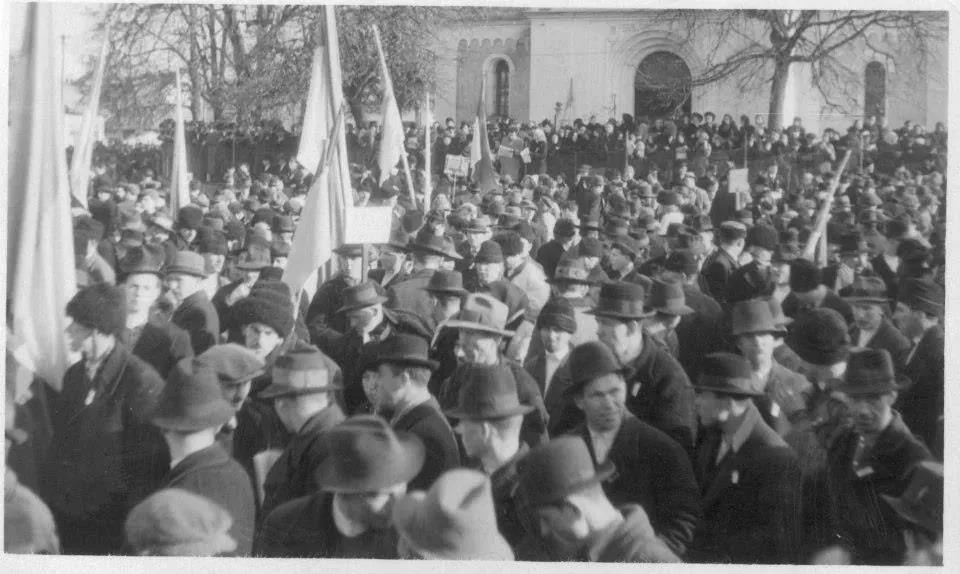
The idea of unity embraced Ukrainians. In Transcarpathia, the All-People's Assembly in Khust on January 21, 1919, became an echo of the historical movement towards unification. It decided to unite Carpathian Ukraine with the Ukrainian People's Republic with its capital in Kyiv. This was not just a manifestation, but the largest demonstration of Ukrainians in 20 years of the region's stay within Czechoslovakia. More than 30,000 people gathered in the capital of Carpathian Ukraine.
Due to a number of reasons, the unification of the UPR and WUPR into one state was not completed. Two separate governments and two armies continued to exist. The republics were effectively in confederal relations. Different geopolitical interests and goals ultimately led to the collapse of the unified front of the Ukrainian Revolution in late autumn 1919. However, the Act of Unification became a symbol and a legend for subsequent generations of fighters for Ukraine.
After the proclamation of the unification of the UPR and WUPR on January 22, 1919, the idea of the integrity of the Ukrainian nation in Ukrainian political thought was never again questioned. For many decades, the Act remained a symbol of faith, an ideological imperative of the struggle for an independent, unified state.
During the Soviet totalitarian regime, the proclamation of the UPR's independence and Unity Day were not celebrated. With the establishment of Soviet power, all Ukrainian holidays were pushed out of public discourse. The memory of the unification of the UPR and WUPR was preserved by residents of western Ukraine and Ukrainian political emigration in Western Europe and America. On January 22, they solemnly celebrated the holiday of independence and unity of the Ukrainian state.
The first truly large-scale celebration of Unity Day in Ukraine took place on January 22, 1939, in Khust. In this way, Transcarpathians recalled the will of Ukrainians, expressed at the congress of the All-People's Assembly in Khust on January 21, 1919, regarding the annexation of Transcarpathia to the Ukrainian People's Republic with its capital in Kyiv. This was not just a manifestation, but the largest demonstration of Ukrainians in 20 years of the region's stay within Czechoslovakia. More than 30,000 people gathered in the capital of Carpathian Ukraine.