










Stopping “Rassvet”: how the strike on the Progress plant affects Russia’s space program
Kyiv • UNN
Ukrainian forces struck the Progress Rocket and Space Center, which produces Soyuz-2.1b rockets. This could slow the deployment of Russia’s “Rassvet” satellite program.

In the early hours of August 15, the Defense Forces struck the Progress Rocket and Space Center (RCC) in Samara with FP-5 Flamingo missiles. Read UNN's article to learn about the significance of this enterprise for the enemy's space industry and why this could slow the development of the Rassvet satellite program.
The Progress Rocket and Space Center is one of the key enterprises in Russia's rocket and space industry. The center develops and manufactures medium-class launch vehicles, including the Soyuz-2 family, as well as spacecraft for remote sensing of the Earth and scientific programs.
Two launches of Flamingo cruise missiles were probably carried out.
Video of the FP-5 launch from the page of Fire Point Chief Designer Denys Shtilerman on X
What is the Rassvet program?
The Rassvet program envisages Russia's deployment of its own satellite constellation for high-speed data transmission with global coverage. In fact, it is an analogue of the American Starlink. The operator and developer is Bureau 1440, a company that is part of Russia's ICS Holding.
Serhii Beskrestnov ("Flash"), a freelance adviser to the president, believes that the main threat if the Russians create their own Starlink analogue is the possibility of attacking Ukrainian territory with UAVs controlled online via satellites.
The exact number of satellites the Russians plan to place into orbit is unknown. However, as military expert Oleksandr Kovalenko explained in a comment to UNN, in order for the Russian military grouping stationed in Ukraine to have continuous space-based communications around the clock, approximately 250 satellites would need to be placed into orbit. The Russians have already launched 32 satellites, which, according to the expert, provides about an hour of communications. To do this, the Russians launched the Soyuz-2.1b launch vehicle twice; it is capable of placing 16 satellites into orbit at a time.
"They need to carry out approximately 16 more launches," Kovalenko explains.
The expert noted that he had no information indicating that the Russians had found a way to accelerate the deployment of satellites into orbit. At the same time, the strike on the Progress Rocket and Space Center was a preemptive strike, since the Soyuz-2.1b launch vehicle is manufactured there.
The significance of the strike on the Progress plant
Oleksandr Kovalenko believes that the main objective of today's strike was to suspend the deployment of the Rassvet project, but at the same time, the strike affects "Russia's entire space program, since rockets of the Soyuz-2.1A and 2.1B modifications are currently Russia's main launch vehicles for any kind of space launch."
"Russia has already lost its leadership in terms of launching carrier rockets into space, but if this enterprise (Progress — ed.) is [lost], then it can generally be said that Russia is no longer a spacefaring nation," the expert believes.
The expert expects Ukraine to strike this enterprise more than once again.
This time, it became known, two buildings where onboard electrical equipment, instruments, and printed circuit boards are assembled were hit—in fact, the carrier's "nervous system": the control system, cable network, and instrument compartment.
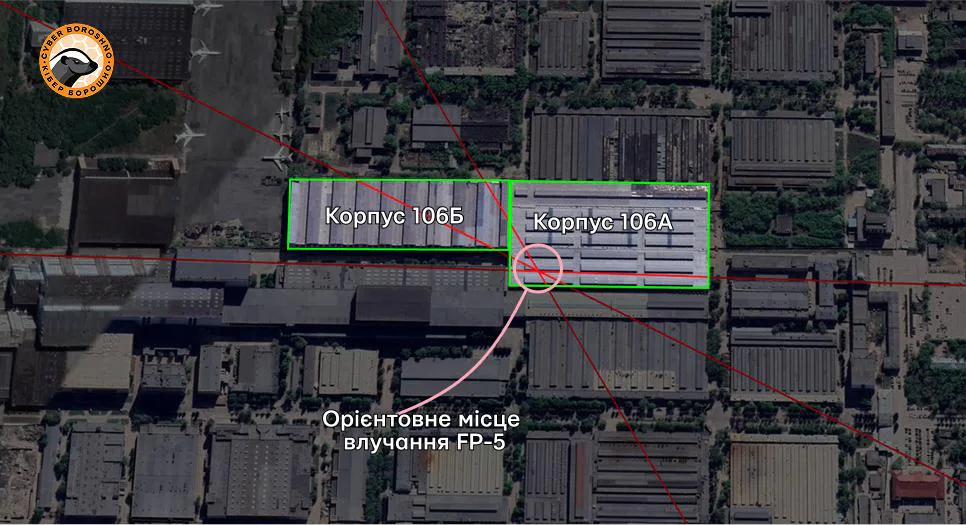
"Of course, one strike will not achieve any kind of maximum result. The strike we saw hit buildings 106A and 106B. Everything in these workshops takes place under maximum sterile conditions so that nothing foreign or unnecessary interferes with the launch of the carrier rocket. The introduction of anything extraneous could cause a catastrophe. Therefore, damage to these workshops will seriously slow down the entire production process," Kovalenko explained.
The expert believes that this facility will come under further attack by the Defense Forces, especially since the Russians are immediately attempting to begin repairing the damaged enterprises.