










Night arrest instead of round-the-clock: the appellate court softened the pre-trial detention measure for the Odrex doctor in the case of Adnan Kivan's death
Kyiv • UNN
The Kyiv Court of Appeal changed the pre-trial detention measure for doctor Maryna Bielotserkovska, a defendant in the case of the death of Odesa businessman Adnan Kivan, from round-the-clock to night-time house arrest. This decision caused public outrage. And new testimonies from victims of treatment at the clinic indicate systemic problems at "Odrex".

The Kyiv Court of Appeals, chaired by Judge Yulia Matviyenko, today changed the pre-trial detention measure for oncologist, Belarusian citizen Maryna Bielotserkovska, a defendant in the high-profile case concerning the death of Odesa businessman Adnan Kivan. Instead of round-the-clock house arrest, the court imposed night arrest on the suspect: from 11:00 PM to 5:00 AM, UNN reports.
The pre-trial detention measure in the form of night house arrest has been applied to the suspect until November 28, 2025, inclusive. She has also been assigned a number of other obligations, including wearing an electronic bracelet, appearing before the investigator, and surrendering all documents for traveling abroad.
Doctor Maryna Bielotserkovska is one of two suspects in criminal proceedings under Part 1 of Article 140 of the Criminal Code of Ukraine – improper performance of professional duties by a medical worker, which caused the patient's death. The Pechersk District Court of Kyiv previously chose a pre-trial detention measure for her in the form of round-the-clock house arrest, but the appellate instance decided to soften it.
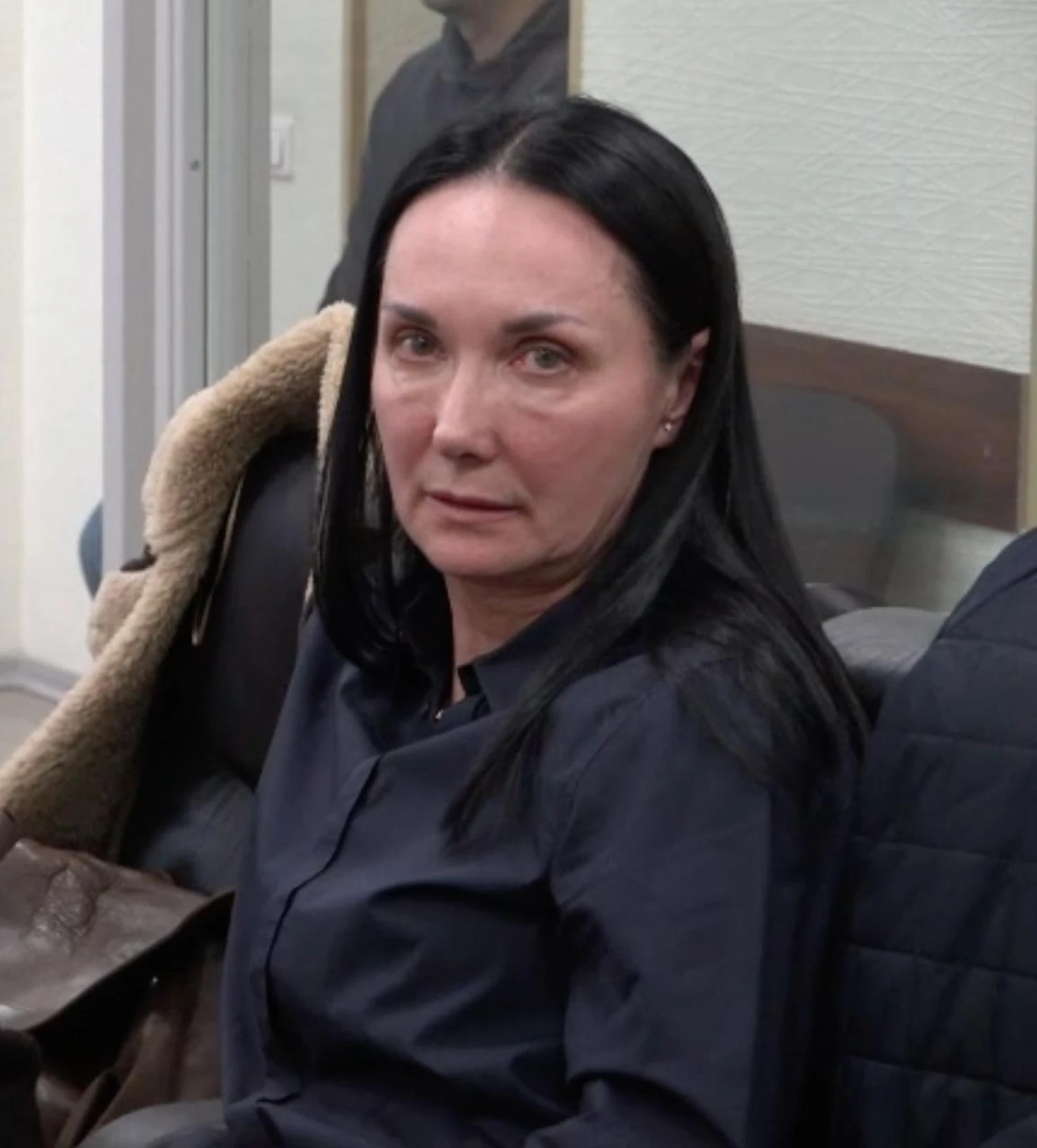
As previously reported, during Adnan Kivan's treatment, Bielotserkovska failed to ensure a proper response to complications, did not prescribe necessary medications, including antibiotics after surgery, and performed procedures that were contraindicated for the patient given his condition. The examination indicates a direct causal link between the doctor's actions and Kivan's death, who died on October 27, 2024. It should be noted that within a month after the developer's death, the clinic fired Bielotserkovska.
The doctor suspected of medical negligence has already found a new job. As Bielotserkovska's lawyer stated during the hearing, the suspect is currently working in one of the capital's private clinics and is accompanying the treatment of 17 patients.
In the same case, the head of the surgical department of Odrex, Vitaliy Rusakov, was also served with a notice of suspicion. Last week, the appellate court similarly changed his pre-trial detention measure from round-the-clock to night arrest.
Which, during the "curfew" conditions in Ukrainian cities, means that the Kyiv Court of Appeals effectively left both suspects in the patient's death case with the same restrictions that apply to all Ukrainians.
Such a decision by the Kyiv Court of Appeals causes outrage in society, which is further amplified by the behavior of the suspect Rusakov. For example, after the pre-trial detention measure was softened, Rusakov laughed and joked, and after the hearing, he posted a selfie with an electronic bracelet on social media. The families of the deceased patients called such actions a "cynical demonstration of disrespect" to all victims who died or suffered significant health deterioration due to "treatment" at Odrex.
New victims due to treatment at "Odrex"
Adnan Kivan's death became a turning point, after which other victims of "treatment" at the "Odrex" clinic dared to speak out. Their stories formed the basis of the documentary film "Wasp's Nest," which showed the scale of what was happening within the clinic's walls.
Svitlana Huk, whose husband died at "Odrex." While he was in intensive care, the clinic, according to her, billed 80-90 thousand hryvnias daily. The woman suspects that her husband might have been kept on life support even after clinical death – but not for salvation, but to continue billing. When the woman could no longer pay, she was directly offered to hand over documents for her apartment so that the clinic's lawyers could quickly sell it. After her husband's death, the clinic, without stopping, sued her, demanding an additional 900 thousand hryvnias.
Another patient, Volodymyr, came to "Odrex" for an operation, during which he was likely infected with the Serratia Marcescens bacterium. This bacterium is transmitted through dirty hands or instruments. The clinic did not deny this, stating that "this is intensive care – you can catch anything here." Such a response may indicate that the staff understood that the intensive care unit in the clinic did not meet the stated standards, was not sterile, and that this was a systemic problem, not a one-off case. The infection affected 85% of Volodymyr's lungs, he was put into a medical coma, and he lost 15 kg. Volodymyr's wife still repeats that her husband "miraculously survived this treatment."
Khrystyna Totkailo talks about her father, who, at the insistence of "Odrex" doctors, was prescribed aggressive chemotherapy, despite the warnings of Kyiv specialists. She recalls promises that they would "save his voice and larynx," and how her father returned home with virtually no chance of survival. The aggressive treatment, in her opinion, not only did not help – it broke him.
Kateryna Boichuk recalls how she sent her mother to a "expensive clinic with a good reputation," and three weeks later picked up her body. Her mother underwent surgery, but the doctors, according to Kateryna, could never determine a diagnosis. Daily calls at night, confusing explanations, endless sums in bills – and death. Kateryna says: "I trusted these doctors, and now I wouldn't even trust them with a cold prescription."
All these stories with different diagnoses, different circumstances, different people have one common feature – the feeling that the lives of patients at "Odrex" are valued significantly less than the money that can be obtained for "treatment." Victims and families of the deceased speak of medical errors, negligence, cynicism, but above all – of the absence of elementary humanity.
While the investigation continues, more and more people are coming forward with new stories. And each of them sounds like new evidence that the problem is much deeper than individual doctors. The problem, it seems, lies in the very structure of the "Odrex" clinic, which allows such an attitude towards people, their health, and their lives.
"Odrex" under pressure from new testimonies
These stories differ in diagnoses, patient age, and circumstances, but they all speak of one thing: human life at "Odrex" is not a value, but a resource. Victims speak of medical negligence, falsification of documents, financial pressure, cynicism, and a cold pursuit of profit at any cost.