










Interstellar Comet 3I/ATLAS made its closest approach to Earth: what NASA says about it
Kyiv • UNN
Interstellar Comet 3I/ATLAS made its closest approach to Earth on December 19, at a distance of 274 million kilometers. NASA has released unique images of this object, which originates from another star system.

The interstellar comet 3I/ATLAS made its closest approach to Earth on December 19, the International Space Station's X account reported, according to UNN.
Details
"The interstellar comet 3I/ATLAS made its closest approach to Earth on December 19 – approximately 170 million miles (about 274 million km) away," the ISS X message stated.
At the same time, they published stunning images of four other comets taken from the station since 2023.
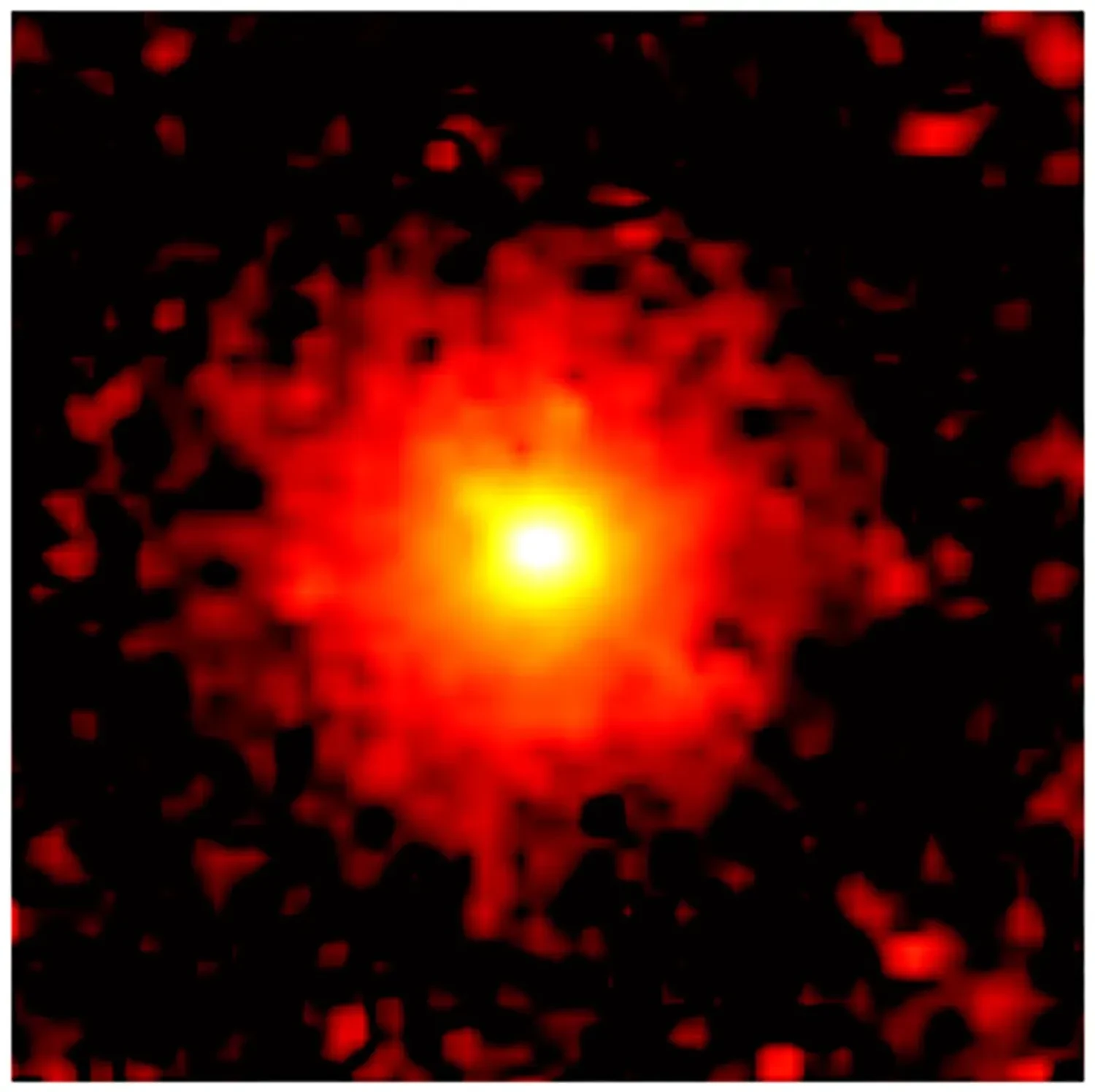
Meanwhile, NASA previously showed unique images of the interstellar comet 3I/ATLAS, which were provided to scientists by the SPHEREx spacecraft.
Where did this interstellar object come from?
As NASA reported, comet 3I/ATLAS formed in another star system and was somehow "ejected" into interstellar space, meaning the space between stars. For millions or even billions of years, it drifted until it recently reached our Solar System. It approached from the general direction of the constellation Sagittarius, where the central region of our galaxy, the Milky Way, is located. At the time of its discovery, 3I/ATLAS was approximately 410 million miles (670 million kilometers) from the Sun, within Jupiter's orbit.
How was it determined that 3I/ATLAS did not originate from our Solar System?
According to NASA, observations of the comet's trajectory show that it is moving too fast to be gravitationally bound to the Sun, and that it is on a so-called hyperbolic trajectory. In other words, it is not moving in a closed orbit around the Sun. It is simply passing through our Solar System and will continue its journey into interstellar space, never to be seen again.
How many interstellar objects have been discovered?
This is the third known interstellar object observed passing through our Solar System. Discovered in 2017, ‘Oumuamua was the first such object; the second was 2I/Borisov, which was discovered in 2019.
Is 3I/ATLAS an asteroid or a comet?
Through telescopic observations, as noted by NASA, astronomers can tell that 3I/ATLAS is active, meaning it has an icy nucleus and a coma (a bright cloud of gas and dust surrounding a comet as it approaches the Sun). This is why astronomers classify it as a comet, not an asteroid.
What is the size of 3I/ATLAS?
As NASA notes, astronomers do not yet know exactly how large comet 3I/ATLAS is, but from observations by the Hubble Space Telescope as of August 20, 2025, they can see that its nucleus diameter is no less than 440 meters and no more than 5.6 kilometers.
Is there a danger of this interstellar object colliding with Earth?
As NASA indicates, the answer is no. Although 3I/ATLAS's trajectory took it slightly beyond Mars' orbit, it was moving away from the Sun and will not approach Earth at all. At its closest approach, the comet will still be very far from our planet, almost twice the distance from the Sun: on December 19, 2025, 3I/ATLAS will be approximately 1.8 astronomical units (about 270 million kilometers) from Earth.
How fast is it moving?
According to NASA, very fast. When it was discovered in Jupiter's orbit, the interstellar comet was moving at about 137,000 miles per hour (221,000 kilometers per hour).
Since then, 3I/ATLAS has continued to move along its predicted (hyperbolic) path. Under the influence of the Sun's gravity, its speed, as expected, increased, reaching 153,000 miles per hour (246,000 kilometers per hour) at perihelion – its closest approach to the Sun.
Now, as it moves away from the Sun, the comet's speed, as expected, is decreasing as it continues to be affected by the Sun's gravitational pull. When the comet leaves the Solar System, it will be moving at the same speed it entered.
As comets approach the Sun, they heat up and release gas as their ice sublimates. This gas release can cause small perturbations or very minor changes in their trajectories. Observations of 3I/ATLAS show that these perturbations are indeed small and consistent with this process.
Where can you track the current position of the comet in the Solar System?
NASA's "Eyes on the Solar System" online simulation shows the current location and path of 3I/ATLAS as it moves through our Solar System.
Can the comet be seen from Earth?
In October 2025, the comet passed behind the Sun and can now be observed again from Earth. In fact, astrometric observations resumed on October 31.
3I/ATLAS can be observed even with a small telescope in the pre-dawn sky and will remain visible until spring 2026.