










How to care for petunias to make them bloom all summer: watering, fertilizing, pruning and protection
Kyiv • UNN
Petunia requires regular watering, nutrient-rich soil and pruning. The plant is planted after frosts in sunny areas.

Petunia is one of the most popular ornamental plants for gardens, balconies, terraces, and urban flower beds. It is grown for its long and abundant flowering. With proper care, petunias can decorate an area from late spring until the first autumn frosts.
The plant looks aesthetically pleasing in hanging baskets, pots, balcony boxes, and open ground. At the same time, petunia is not a crop that can simply be planted and forgotten. It requires regular watering, nutrient-rich soil, pruning, and protection from diseases and pests.
How to properly care for this flower is reported by UNN.
When and where to plant petunias
Petunias are planted in open ground or containers when the threat of night frosts has passed. In most regions of Ukraine, this is the end of April, May, or the beginning of June, depending on the weather.
If gardeners are dealing not with seeds but with petunia seedlings, it is advisable to harden off the sprouts before planting. To do this, they are taken outside or onto a balcony for several days, gradually increasing the time spent in the fresh air.
The planting site for petunias should be well-lit. These flowers bloom best in sunny areas where they receive at least 5-6 hours of light per day.
In partial shade, petunias can also grow, but flowering will be weaker, shoots longer, and the bush less compact and well-formed.
It is also important that the area is protected from strong wind, especially for trailing varieties with long shoots. In containers, petunias should be placed so that water does not stagnate near the roots after rain.
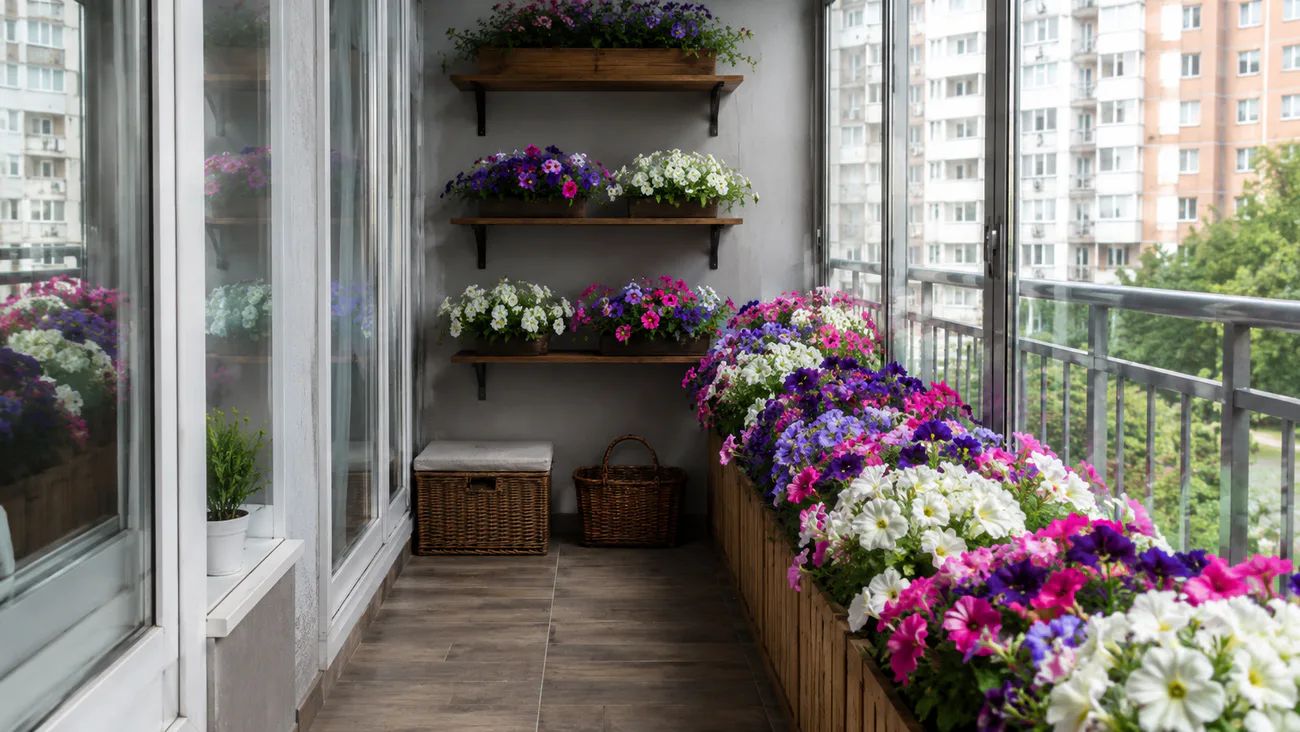
What soil is suitable for petunias
Petunias need light, loose, and nutrient-rich soil. It should drain water and air well, but at the same time retain enough moisture. For growing in pots and hanging baskets, you can use a ready-made substrate for flowering plants. Perlite or vermiculite is often added to it to prevent the soil from compacting after watering.
In open ground, petunias grow better in neutral or slightly acidic soils. If the soil is heavy, clayey, and remains wet for a long time after rain, it should be lightened with sand, compost, or high-quality garden substrate. The bottom of the container must have a drainage hole. Without it, the roots will suffer from excess moisture, which is a direct path to rot.
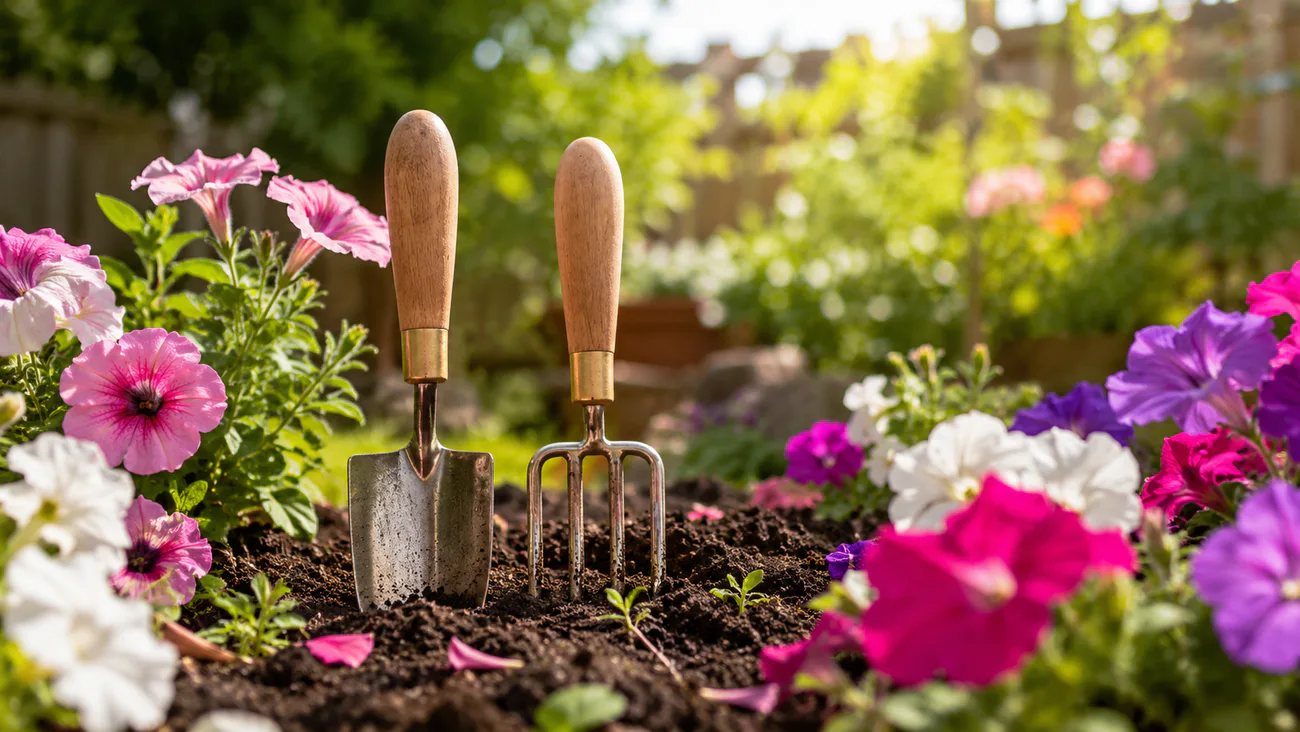
How to water petunias
Petunias love regular but moderate watering. The soil should not dry out completely, especially in hot weather, but constant waterlogging is no less dangerous for the plant.
In open ground, petunias are usually watered 2-3 times a week, but the frequency should be adjusted depending on temperature, rainfall, and soil condition. On hot days, plants in containers may need daily watering, and sometimes twice a day - in the morning and evening.
It is better to water petunias at the root, avoiding getting water on the leaves and flowers. This reduces the risk of fungal diseases and helps maintain the plant's decorative appearance. The water should be settled and not ice-cold. The best time for watering is morning or evening, when the sun is less active. If you water plants during the heat of the day, some of the moisture will quickly evaporate, and drops on the leaves can cause burns.
When petunias lack sufficient moisture, gardeners may notice limp leaves, drooping shoots, weak flowering, and rapid wilting of buds. If the soil is constantly wet, the leaves may turn yellow, and the root system begins to rot. Therefore, petunias should be watered when the top layer of soil has dried out, but the soil inside has not yet turned to dust.
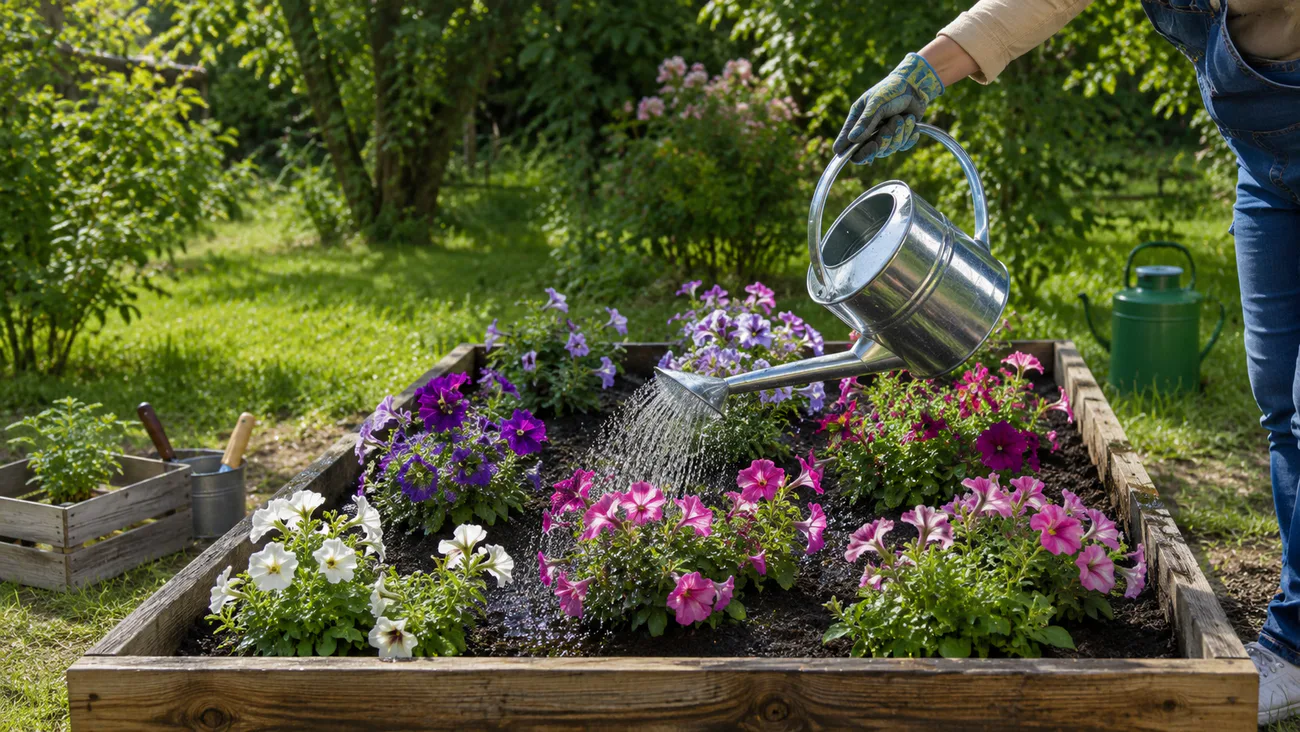
What to feed petunias
For abundant flowering, petunias require regular feeding. This is especially important for plants in containers, as the supply of nutrients in a small volume of soil is quickly depleted.
After planting seedlings, the first feeding is carried out approximately 10-14 days later, when the plant has adapted to its new location.
At the beginning of growth, petunias need nitrogen fertilizers, which help build green mass. But you should not overuse it. Excess nitrogen causes the plant to actively produce leaves but bloom worse. During bud formation and flowering, it is better to use complex fertilizers for flowering plants with a high content of phosphorus and potassium. They support bud formation, strengthen the root system, and extend the flowering period.
During the period of active growth, petunias should be fertilized once every 7-10 days, following the dosage specified in the product instructions. For weakened plants, foliar feeding on the leaves is sometimes used, but it should not be done in direct sunlight. If the leaves become lighter while the veins remain green, the plant may lack iron. In this case, use preparations with iron chelate.
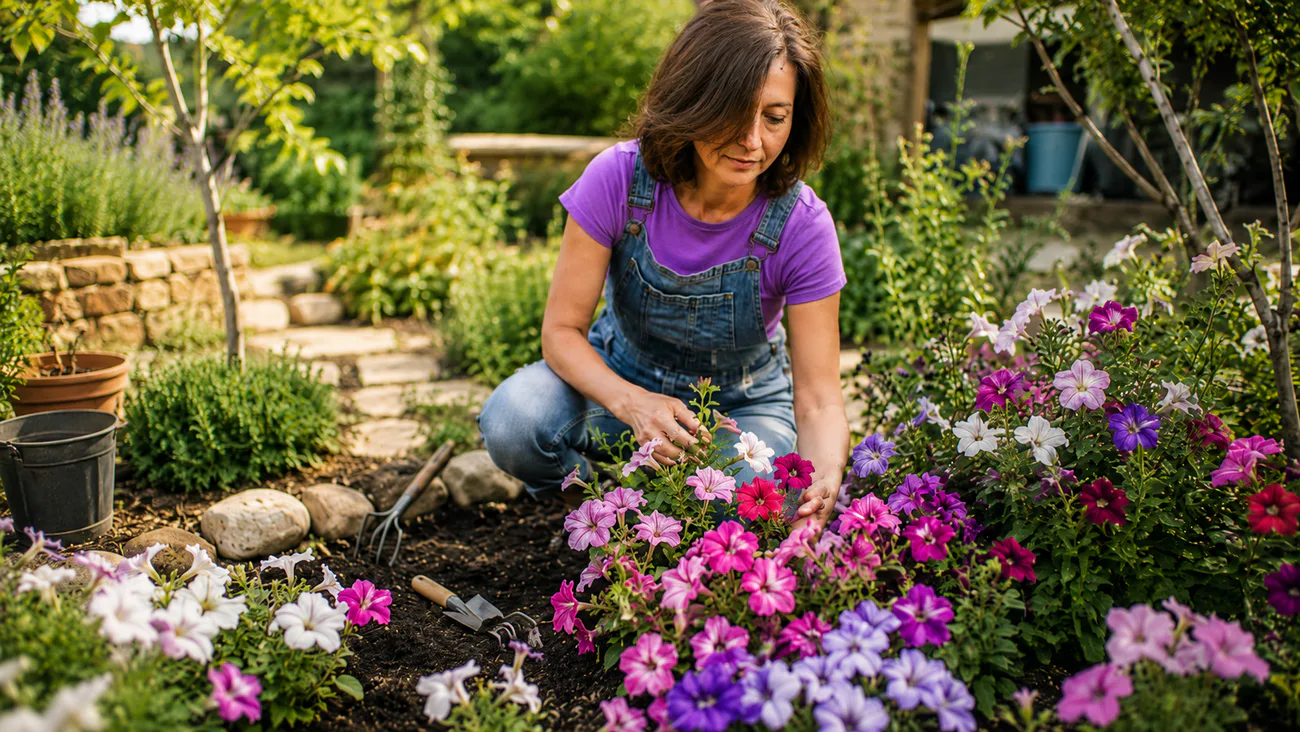
Pruning and shaping petunias
It is especially important to shape ampelous and cascading varieties, which are meant to create a voluminous flowering mass.
Throughout the season, wilted flowers should be regularly removed. This improves the plant's appearance and prevents it from wasting energy on seed production. If the petunia has stretched out by mid-summer, become sparse, and blooms weaker, it can be pruned. The shoots are shortened by about a third or half of their length, after which the plant is watered and fertilized. After some time, it produces new shoots and blooms more actively again.
Pruning is done with clean scissors. Do not break the shoots by hand, as this can more easily damage the plant.
Diseases and pests of petunias
Most often, petunias suffer from fungal diseases that develop due to excessive moisture, dense planting, and poor ventilation. Common problems include powdery mildew, gray mold, blackleg in seedlings, and root rot. To reduce the risk of diseases, avoid overwatering the soil, planting too densely, and leaving dry or rotten parts on the bush.
If white coating, dark spots, wet areas appear on the leaves, or the plant begins to wilt sharply, the affected parts should be removed. If necessary, use fungicides approved for ornamental plants. Treatment is carried out according to the instructions, in dry, windless weather, preferably in the evening.
Among the pests, petunias are also bothered by aphids, spider mites, whiteflies, and thrips.
Aphids usually settle on young shoots and buds, sucking sap and deforming the plant.
Spider mites more often appear in heat and dryness, leaving a thin web and light spots on the leaves.
If there are few pests, they can be washed off with water or the plants treated with a soap solution. If there are many, it is better to use insecticides or acaricides according to the type of pest.
How to prepare petunias for winter
In the climatic conditions of Ukraine, petunias are most often grown as annual plants. In autumn, after cooling and the first frosts, they lose their decorative value and usually do not overwinter in open ground. However, valuable varieties can be tried to preserve until the next season.
For wintering, choose a healthy bush without signs of diseases or pests. It is dug up or brought indoors together with the container before the onset of severe cold. The shoots are shortened, leaving about 10-15 cm. The plant is placed in a bright, cool place with a temperature of about 8-12 degrees.
Watering in winter is reduced: the soil should be slightly moist but not wet. Fertilizing is not carried out during the dormant period.
At the end of winter or the beginning of spring, the mother plant can be used for cuttings. Young shoots are cut, rooted in a light substrate, and gradually new plants are grown. This is convenient if you need to preserve a specific variety or color that performed well in the previous season.