










When to plant, how to fertilize and how to prune gooseberries: a complete guide for gardeners
Kyiv • UNN
Gooseberries require systematic care for a good harvest. The basic rules include proper planting, moderate watering, fertilizing and pruning.

Gooseberry is a popular berry crop grown for its sweet and sour fruits. The berries are eaten fresh, added to baked goods, compotes, jams, sauces, and frozen for the winter. The bush can bear fruit in one place for many years, but it gives a good harvest only with systematic care. If the gooseberry grows in the shade, suffers from a lack of moisture, thickening, or diseases, the berries become smaller and the plant weakens.
The main care for gooseberries includes proper planting, moderate watering, fertilizing, pruning, pest protection, and winter preparation. How to organize it so as not to harm the plant and to expect a generous harvest from it in the summer, UNN found out.
When and where to plant gooseberries in a homestead plot and garden
Gooseberries can be planted in spring or autumn. For most regions of Ukraine, autumn planting is more convenient. At the end of September or in October, when the heat has already passed, but there are still a few weeks before frost, the seedling has time to take root and will start growing faster in the spring. In spring, gooseberries are planted early, before the buds open.
The place for the bush should be sunny and protected from strong wind. In light shade, the gooseberry will survive, but the harvest will be weak and the berries more sour. You should not plant gooseberries in lowlands where water stagnates after rains or snow melts: excessive moisture near the roots provokes rot and fungal diseases, and the bush will die after some time.
If you plan to plant not just one bush but several, it is worth remembering that a distance of 1–1.5 meters should be left between them, and 1.5–2 meters between the rows themselves. This is necessary for good lighting, sufficient air circulation between the bushes, and convenient gooseberry care. Dense plantings of these berries get sick faster, and it is more difficult to harvest from them, especially if the variety is thorny.
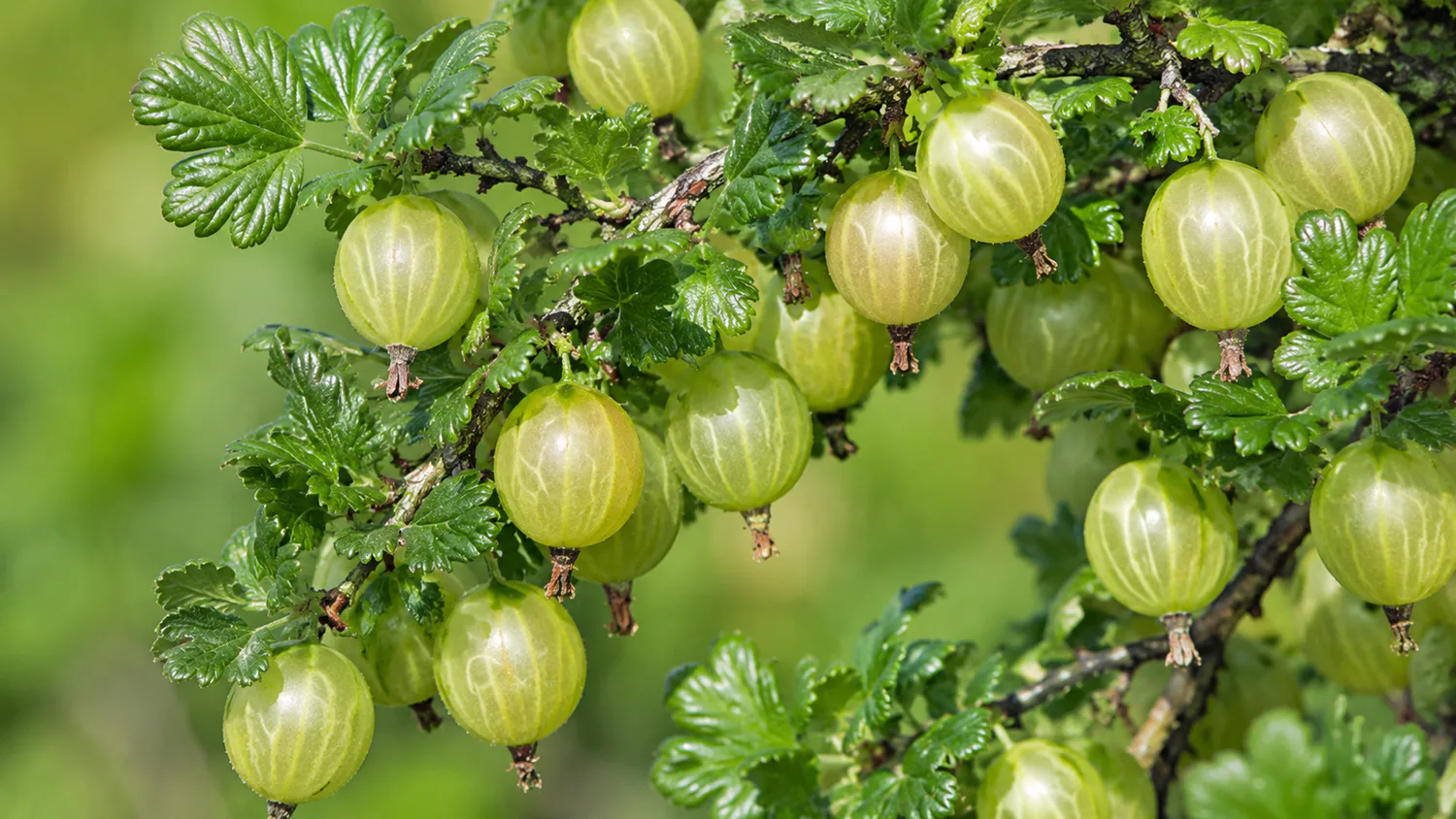
What soil is suitable for gooseberries
Gooseberries grow best in fertile, loose, and well-drained soils. Optimal are light or medium loams that retain moisture but do not become waterlogged. The soil should be neutral or slightly acidic. In overly acidic areas, the plant absorbs nutrients worse and produces fewer berries.
Before planting, the area is dug up, cleared of weeds, and organic matter is added. Humus or well-rotted compost, as well as phosphorus-potassium fertilizers, are added to the planting hole. Fresh manure should not be used: it can damage the roots and cause excessive green growth.
The planting hole should be about 40–50 cm wide and the same depth. "Heavy" soil is diluted with sand, compost, or humus. And more organic matter is added to sandy soil.
The seedling is planted slightly deeper than it grew in the nursery, then watered well and the tree trunk circle is mulched.
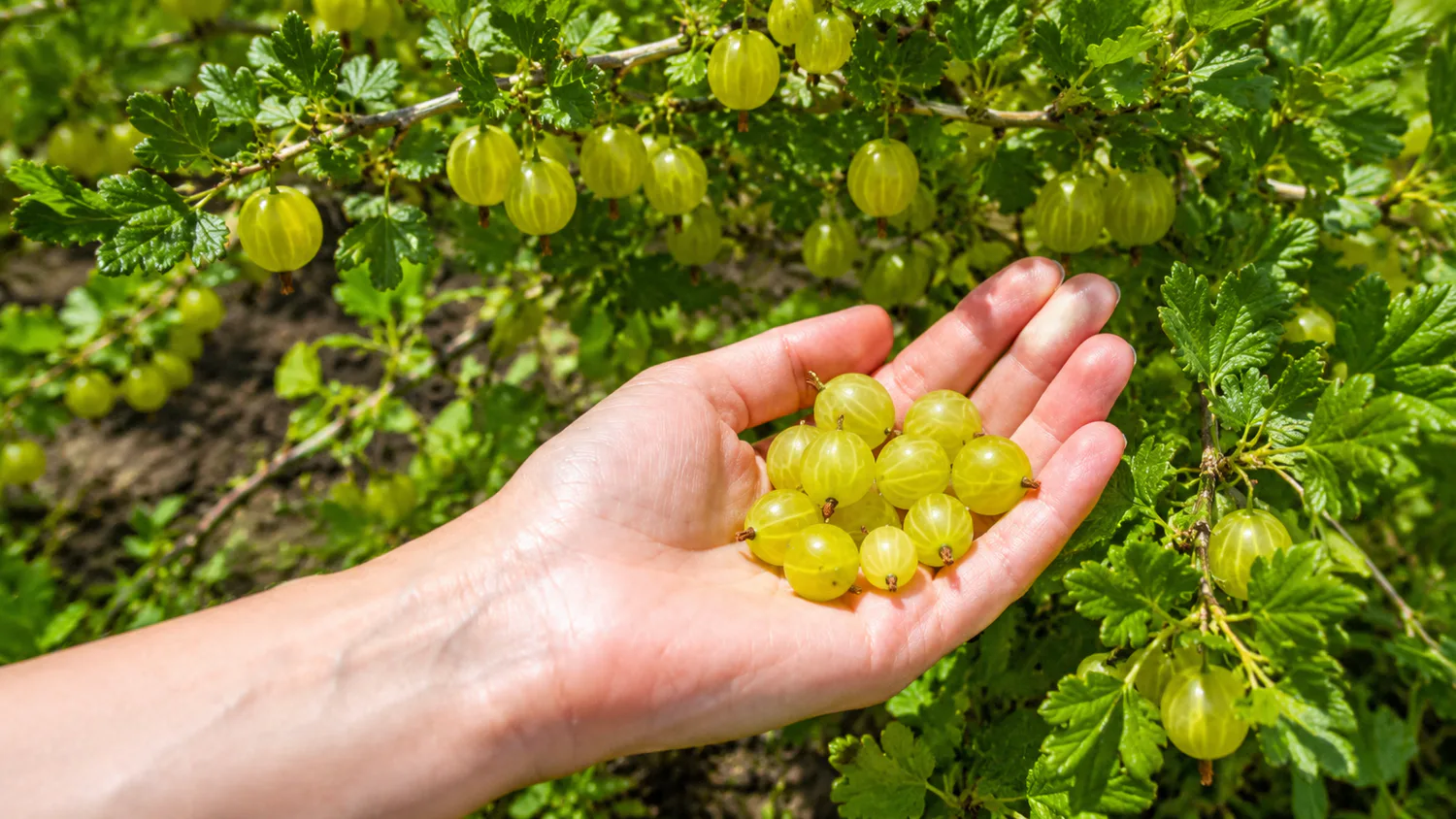
How to water gooseberries without harming them
Gooseberries do not like drought or stagnant water. They need the most moisture during shoot growth, flowering, fruit set, and berry ripening. If dry weather sets in during this period, part of the ovary may fall off, and there will be no good harvest.
It is better to water at the root and avoid getting water on the leaves and berries. A constantly wet crown creates conditions for powdery mildew and other fungal diseases. For an adult bush, 2–4 buckets of water per watering is usually sufficient.
When watering, you should focus on the condition of the soil. If the soil at a depth of 10–15 cm is dry, the plant needs water. After watering, the soil is loosened or mulched with compost, peat, mown grass, or humus.
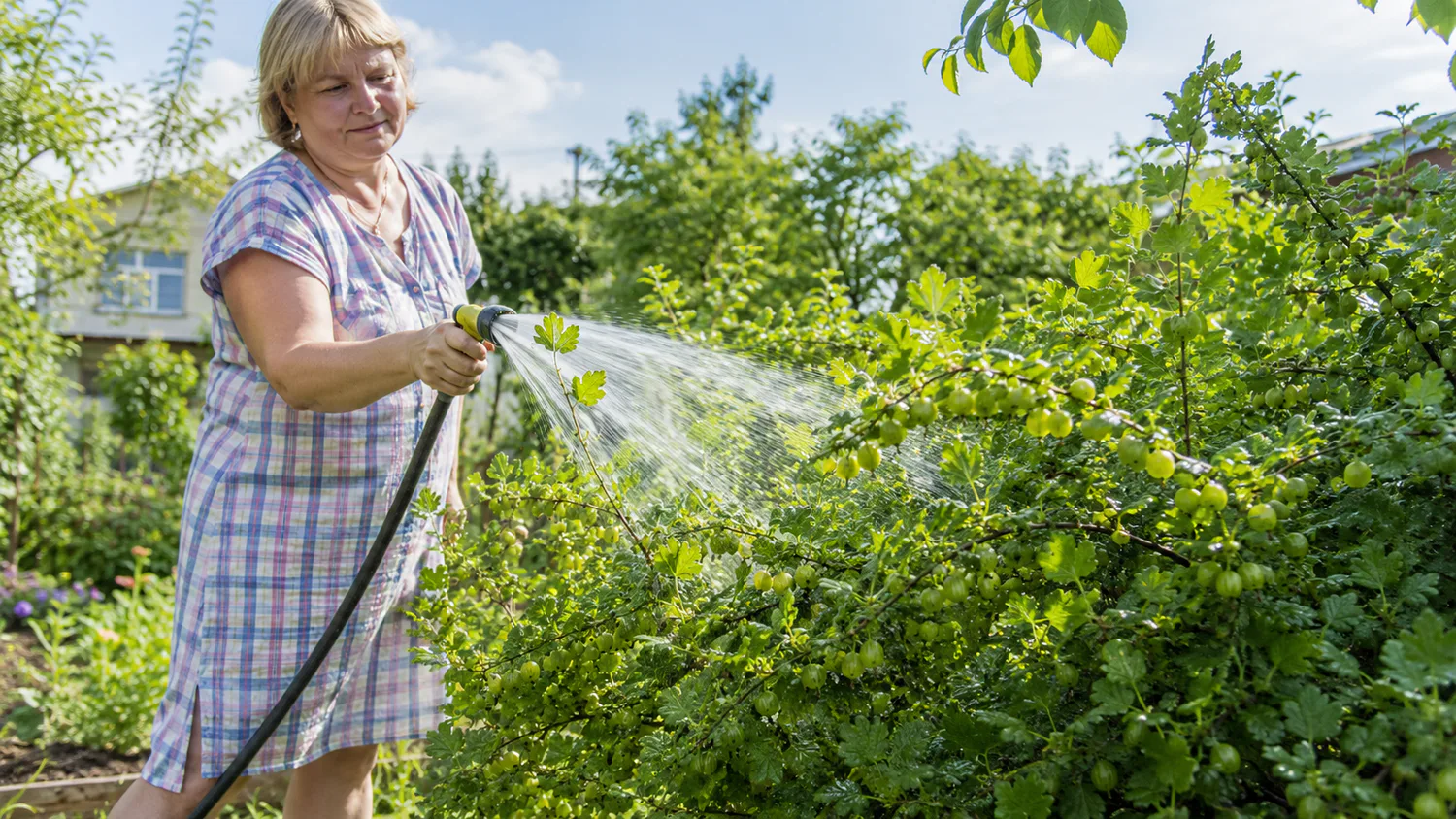
What to feed gooseberries
Fertilizing depends on the age of the bush and soil fertility. If compost and mineral fertilizers were applied during planting, the plant does not need active feeding in the first one or two years. But later, the supply of nutrients for the gooseberry is replenished annually.
In spring, gooseberries need nitrogen, which helps grow leaves and young shoots. For this, the soil is fertilized with urea, ammonium nitrate, or diluted organic infusions. But it is worth remembering: excess nitrogen is harmful, the bush thickens, ventilates worse, and becomes vulnerable to pests and diseases.
Before flowering and during berry formation, gooseberries need phosphorus and potassium. They promote fruiting, shoot ripening, and increase plant resistance. You can use complex fertilizers for berry crops or separately superphosphate and potassium sulfate.
After harvesting, the bush is also fed, as it sets buds for the next season. In autumn, compost, humus, and phosphorus-potassium fertilizers are appropriate. Nitrogen fertilizing at the end of summer and autumn is not needed, as it stimulates the growth of shoots that may not ripen before frost.
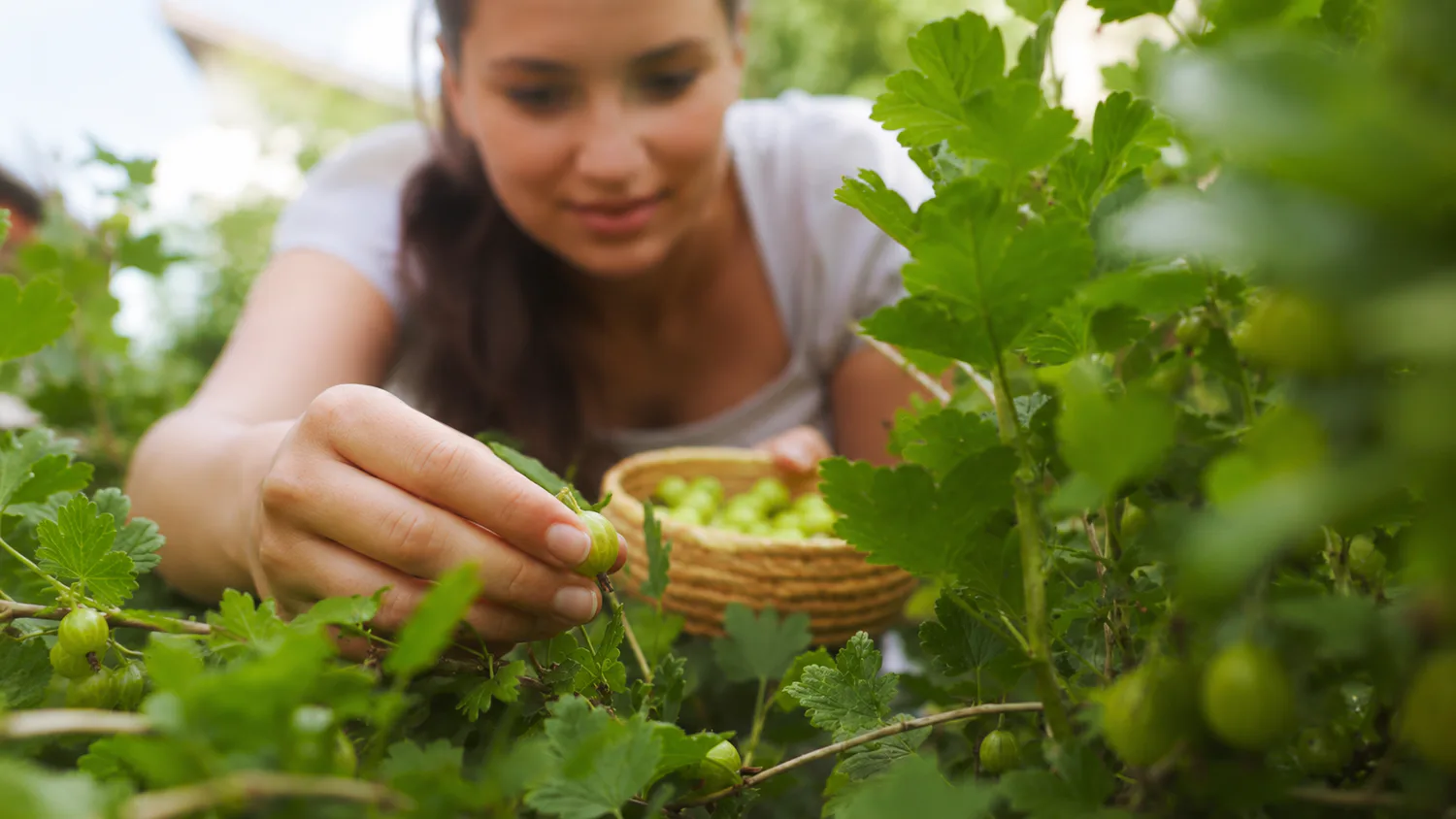
Pruning and shaping gooseberries
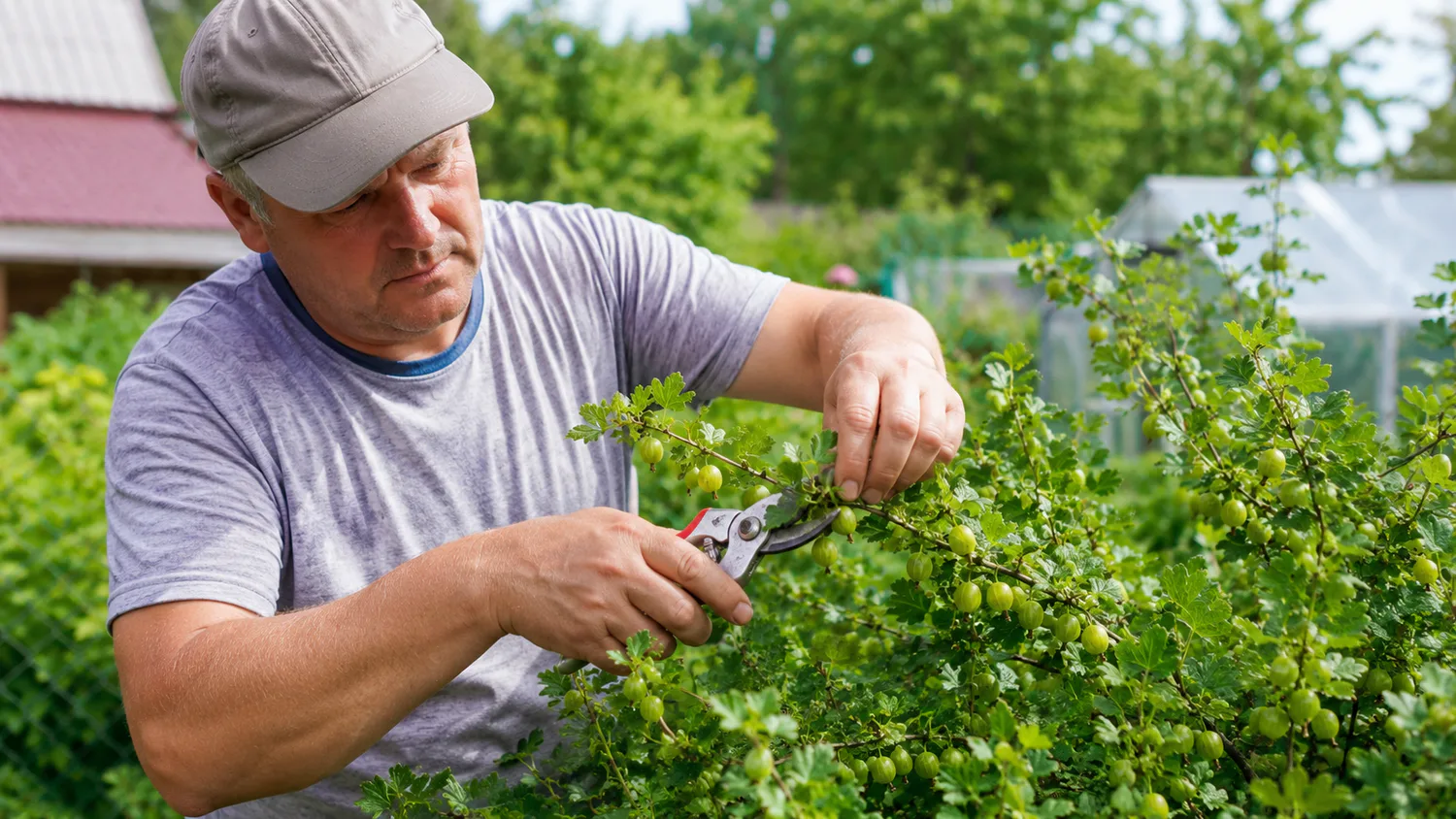
Gooseberries need pruning every year. Without it, the bush thickens, light penetrates poorly into the crown, berries become smaller, and diseases spread faster. The main pruning is carried out in early spring before bud break or in autumn after leaf fall.
First of all, dry, broken, frostbitten, diseased, and weak shoots are removed. Also, branches that lie on the ground, grow inside the bush, or interfere with each other are cut out. Cuts are made with a sharp pruner at the base, without leaving long stumps.
A young bush is formed gradually. Each year, several of the strongest shoots are left, and the excess ones are cut out. An adult formed bush usually has 12–20 strong branches of different ages. Young and middle-aged shoots bear fruit best. Old branches that are over 6–7 years old must be gradually removed.
If the bush is old or neglected, rejuvenating pruning is carried out gradually. Each year, part of the old branches is cut out, and strong young shoots are left to replace them.
Gooseberry diseases and pests: what you need to know and how to prevent them
The most common gooseberry disease is powdery mildew. It is a white or grayish coating on leaves, young shoots, and berries. Over time, it darkens, leaves become deformed, and fruits develop poorly. The disease actively spreads in dense plantings, with high humidity and poor ventilation.
For prevention, you need to prune the bushes, remove fallen leaves, do not overfeed the plants with nitrogen, and do not water them over the crown. If necessary, use approved fungicides or biological products, following the instructions.
Gooseberries can also be affected by anthracnose, septoria, rust, and other leaf spots. Signs are brown, reddish, or gray spots, yellowing, and premature leaf drop. Affected residues are removed, and the bushes are thinned out.
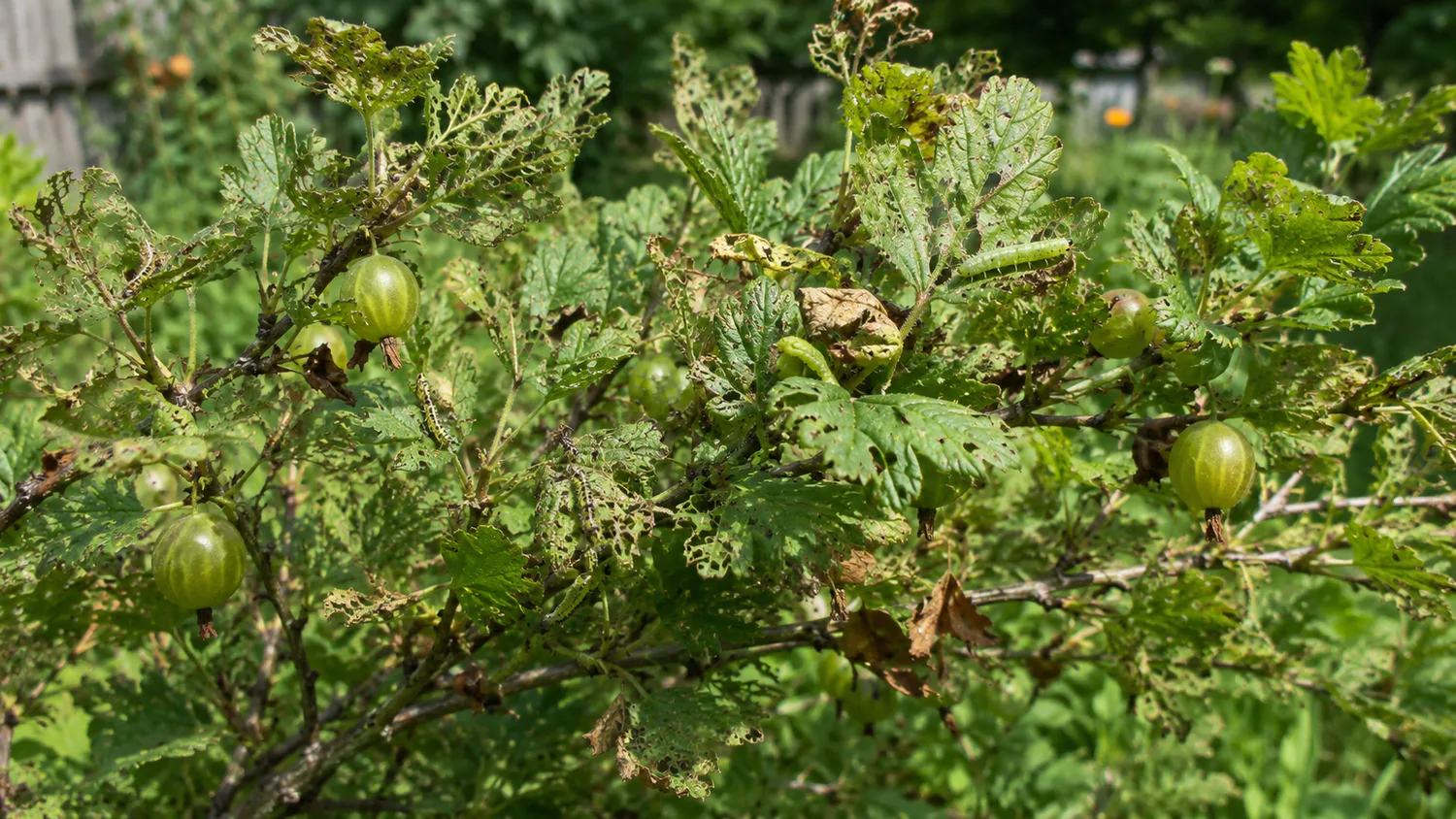
Among the pests, aphids, sawflies, moths, mites, and caterpillars are common. Aphids curl young leaves, sawflies eat the bush, and moths damage the berries. Plants should be regularly inspected for the presence of these pests. In case of significant infestation, insecticides or biological products approved for berry crops are used.
We emphasize that toxic preparations for pest control are not used during flowering to avoid harming bees.
How to prepare gooseberries for winter
Preparation for winter begins after harvesting. The bush is inspected, dry, diseased, and damaged branches are cut out, fallen leaves and old mulch are removed. This reduces the risk of overwintering pests and pathogens.
In autumn, gooseberries are fed with compost, humus, or phosphorus-potassium fertilizers. Nitrogen is not applied during this period, as it provokes the growth of young shoots that may freeze. If the autumn is dry, moisture-charging watering is carried out.
Before frost, the tree trunk circle is mulched with peat, compost, humus, or dry leaves. Young seedlings in regions with harsh or low-snow winters can be additionally covered with agrofibre or spruce branches. Adult healthy bushes of most varieties usually winter well without complex shelter.
TOP 8 low-maintenance garden plants18.06.26, 13:14 • 76063 views