










Dormition of the Mother of God 2026: date and significance of the feast
Kyiv • UNN
In 2026, the Dormition of the Mother of God is celebrated on August 15 according to the New Julian calendar. The feast symbolizes the end of summer and opens the autumn period of rituals and weddings.

In August 2026, Eastern-rite Christians in Ukraine celebrate one of the greatest and most revered church feasts — the Dormition of the Most Holy Mother of God. In folk tradition, this solemn day is called the First Most Pure (First Prechysta).
The feast closes the summer cycle of services, marks the end of the strict Dormition Fast (Spasivka), and opens the autumn period of traditional rites, matchmaking, and weddings.
UNN tells about the history of the feast, the traditions of its celebration, and folk omens on this day.
When is the Feast of the Dormition of the Most Holy Mother of God in 2026
The Dormition of the Mother of God is one of the Twelve Great Feasts — the 12 most important feasts of the church year. For the faithful, it is a day of deep spiritual joy, prayer, and reflection on eternal life, for the completion of the earthly journey of the Mother of God is seen not as a tragedy or death, but as a transition to heavenly glory and reunion with Her Son — Jesus Christ.
After the historic calendar reform carried out by the Orthodox Church of Ukraine (OCU) and the Ukrainian Greek Catholic Church (UGCC) on September 1, 2023, Ukrainian believers switched to the New Julian calendar. According to this calendar, most fixed church feasts are celebrated 13 days earlier.
The date of the celebration of the First Most Pure according to the New Julian calendar (OCU and UGCC) in 2026 falls on Saturday, August 15. However, some parishes that temporarily retain the old rite will continue this year to honor the Mother of God "according to the old style" — on August 28.
The celebration of the Dormition is preceded by a two-week Dormition Fast (popularly known as Spasivka). In terms of strictness of dietary restrictions, this fast is equated to Great Lent, but it is perceived easily by the faithful thanks to the abundance of fresh vegetables, fruits, berries, and the new grain harvest.
The Feast of the Dormition also holds a special place in the liturgical calendar, as it is the last major Twelve Great Feast of the church year (the church new year begins on September 1).
What is the Dormition of the Most Holy Mother of God
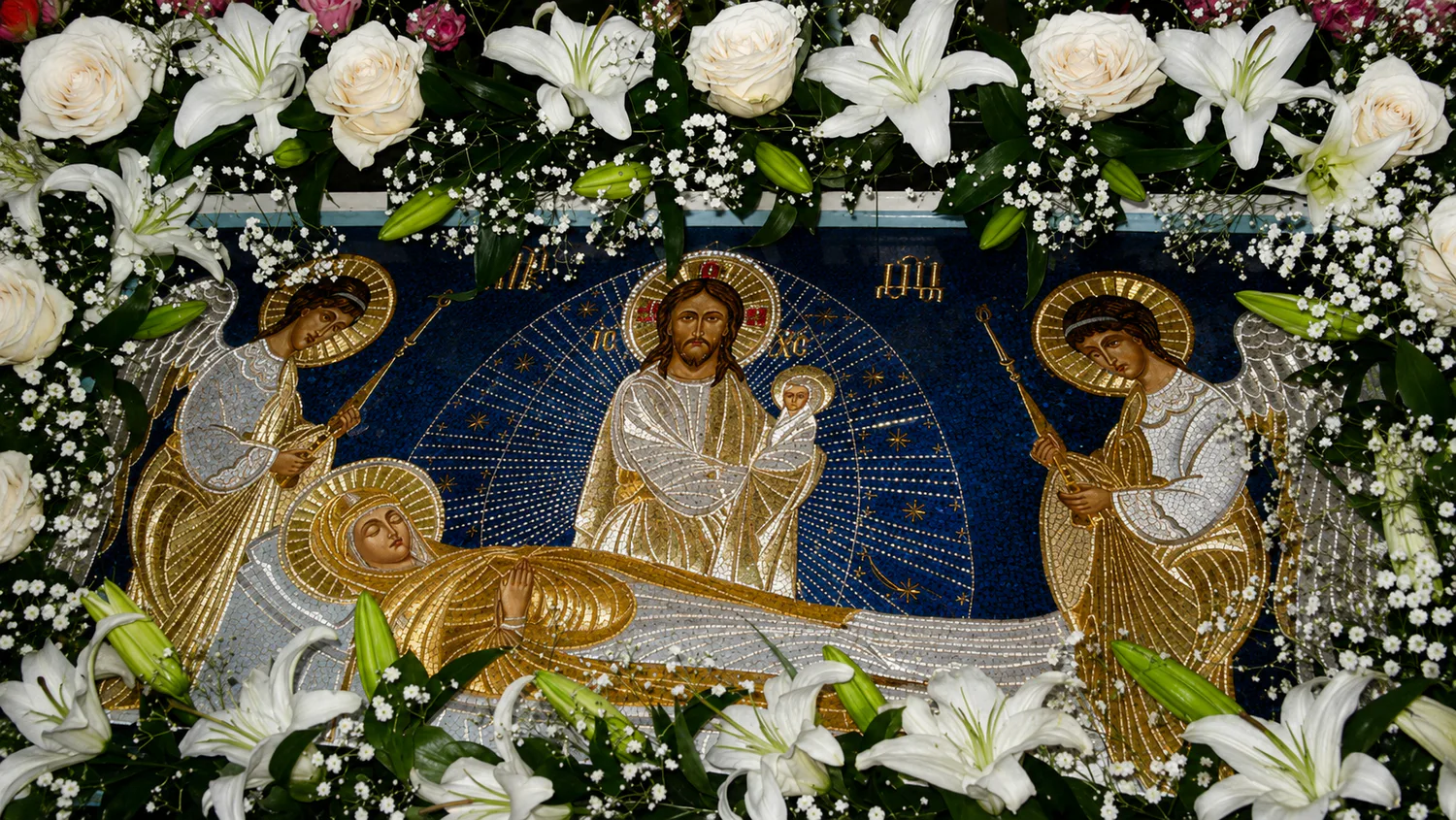
The word "dormition" in Old Church Slavonic means "falling asleep," "a quiet and peaceful sleep," not death in the ordinary sense of the word. Christian theology interprets the death of the Virgin Mary as a temporary sleep of the body and the transition of Her immortal soul to the Kingdom of Heaven. For the Mother of God, being free from personal sin, was not subject to the sentence of eternal death. Her bodily death was only a brief rest before the triumphant ascent into heavenly glory.
The folk name of this feast is the First Most Pure (Persha Prechysta). In Ukrainian ethnographic and church tradition, the autumn period is marked by three great feasts of the Mother of God, which the people respectfully called "Most Pure" (Prechysti):
- First Most Pure (August 15) — Dormition of the Most Holy Mother of God (symbolizes the end of summer, the completion of the harvest, and the blessing of the crops);
- Second Most Pure (September 8) — Nativity of the Most Holy Mother of God (beginning of the autumn cycle, thanksgiving for abundance);
- Third Most Pure (October 1) — Protection of the Most Holy Mother of God (protection and intercession, peak of the wedding season).
Regarding these days, Ukrainians have an ancient folk saying: "The First Most Pure sows the rye, the second waters it with rain, and the third covers it with snow."
For every believer, the Dormition of the Mother of God is a symbol of hope for resurrection and eternal life. It reminds that death is not the end of human existence, but only a door to meeting the Creator. By the example of Her life and earthly end, the Virgin Mary showed the height of spiritual purity, humility, and maternal love. It is no wonder that Christians turn to Her as the foremost Intercessor, Comforter, and Prayerful Supplicant for the entire human race.
History of the Feast of the Dormition of the Most Holy Mother of God
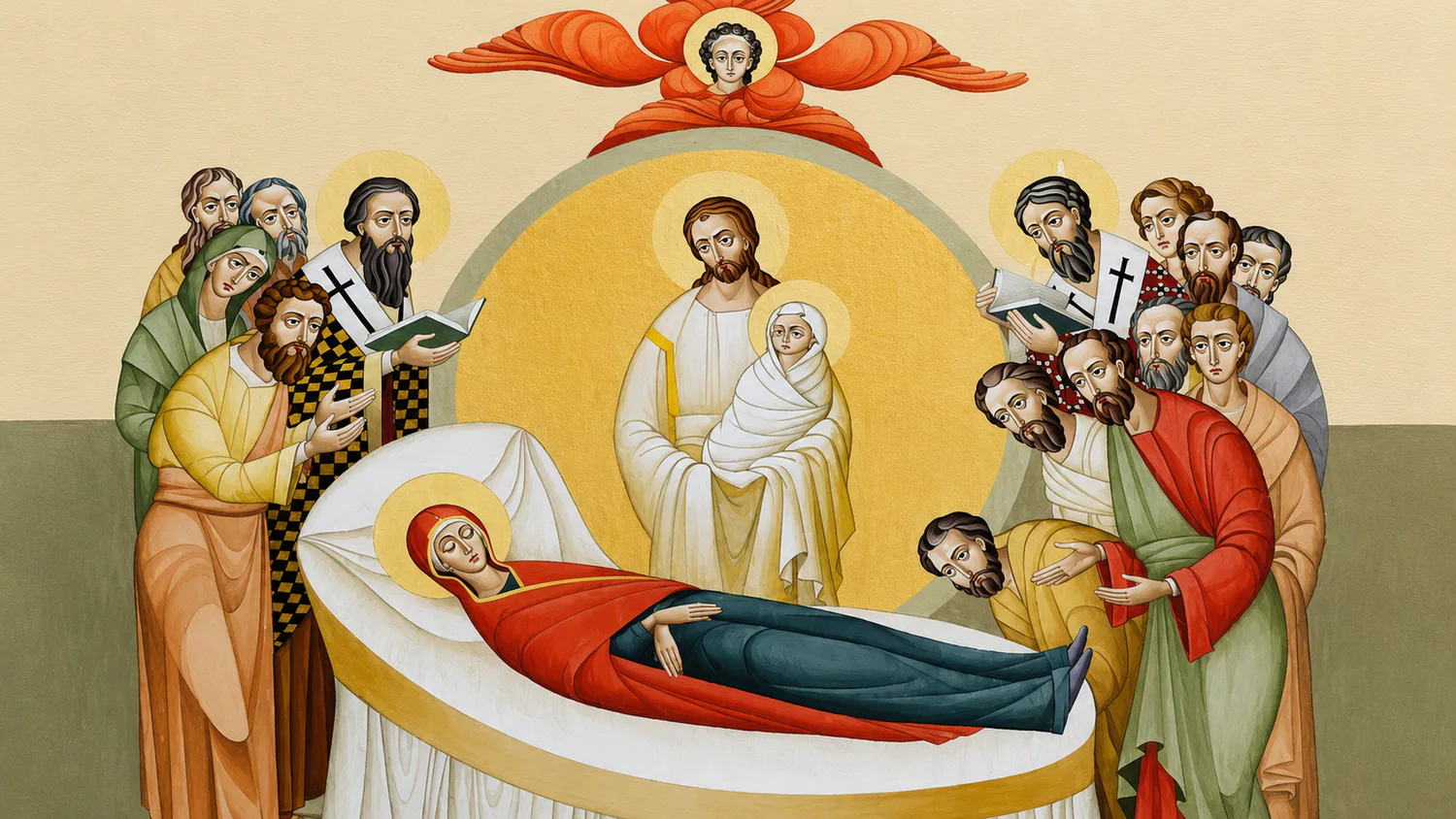
The history of the Dormition of the Mother of God is preserved in detail in the Holy Tradition of the Church and apocryphal texts of the first centuries of Christianity, although the last days of the earthly life of the Virgin Mary are not directly mentioned in the texts of the Four Gospels.
After the Crucifixion and Resurrection of Jesus Christ, the Most Holy Mother of God remained under the care of the holy Apostle John the Theologian, to whom Christ from the Cross entrusted the care of His Mother. She lived in Jerusalem, constantly prayed at Golgotha and near the Holy Sepulchre, awaiting the moment of meeting with Her Son.
Three days before the Dormition, during prayer on the Mount of Olives, the Archangel Gabriel appeared before the Virgin Mary. He announced to Her the imminent end of Her earthly journey and handed Her a heavenly palm branch that shone with unearthly light. This branch was to be carried before the funeral procession.
The Virgin Mary, in turn, wished to see all the disciples of Christ before Her death, who at that time were preaching the Gospel in various parts of the world. According to Holy Tradition, a miraculous event occurred: angels on clouds wondrously transported the apostles from all ends of the earth to the house of John the Theologian in Jerusalem.
On the day of the Dormition, the upper room was illuminated by divine radiance. Jesus Christ Himself, surrounded by angels and archangels, descended from heaven to receive the pure soul of His Mother. This moment is canonically depicted on Orthodox icons: Christ holds in His arms a small figure in white swaddling clothes, symbolizing the soul of the Mother of God, newly born for heavenly life.
After Her physical death, the apostles solemnly carried the body of the Mother of God to the Garden of Gethsemane, where Her righteous parents Joachim and Anna, as well as Her betrothed Joseph, were buried. The burial cave was sealed with a large stone.
However, among the apostles, by God's providence, the Apostle Thomas was absent. He arrived in Jerusalem only on the third day after the burial. Grieving that he could not bid farewell to the Most Holy Virgin, he asked for the tomb to be opened. When the apostles rolled away the stone, the body of the Mother of God was not found inside — only fragrant burial shrouds and many flowers lay in the cave.
That same evening, during a common meal, the Mother of God Herself appeared to the apostles surrounded by angels and said: "Rejoice! I am with you all the days." This became the final testimony that the Mother of God was resurrected and taken to Heaven not only in soul but also in body.
What can and cannot be done on the Dormition of the Most Holy Mother of God
For Ukrainians, the First Most Pure One has always been a feast of joy, gratitude for the harvest, and spiritual renewal. This day is associated with many both church and folk traditions.
What you should definitely do on the feast:
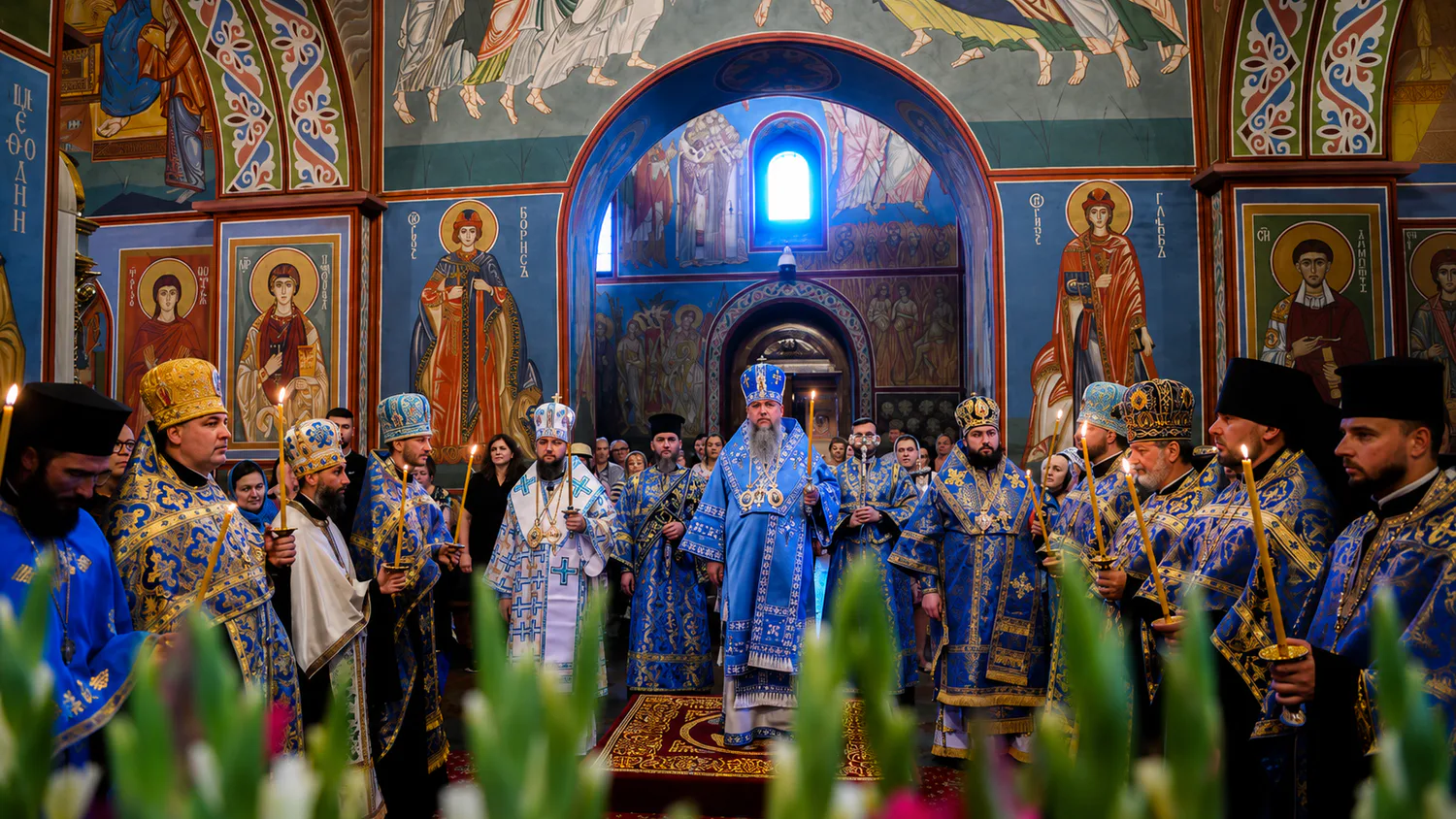
- attend a church service. Believers go to the festive Liturgy, pray before the icon of the Dormition, receive communion, and thank the Mother of God for Her protection;
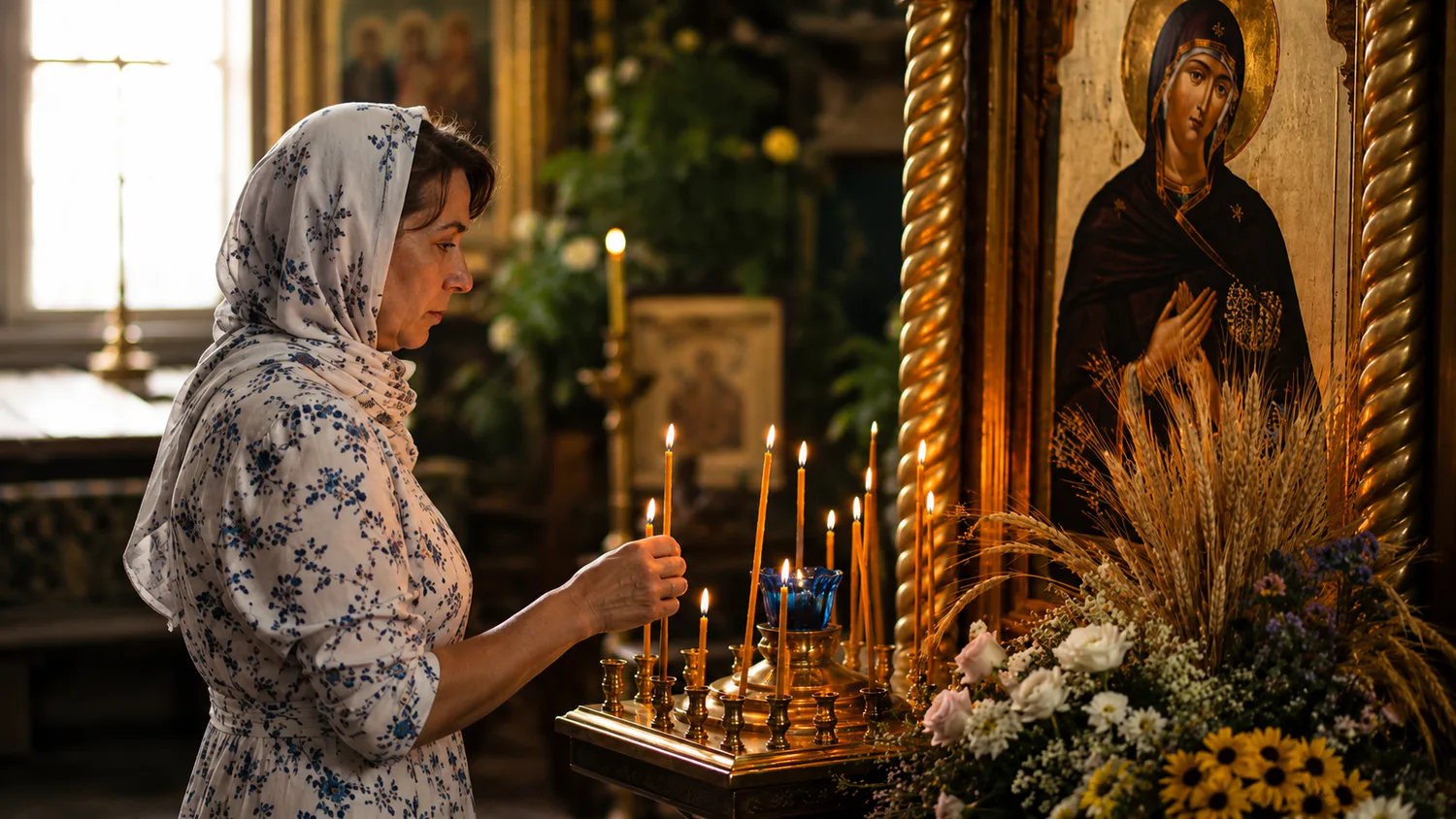
- bless ears of grain, bread, and flowers. People bring harvest bouquets of fresh wheat ears, rye, medicinal herbs, viburnum, and poppy seeds to church. The blessed grain is kept until the next sowing as a symbol of fertility and prosperity;
- pray for the family and the protection of Ukraine. Women turn to the Mother of God with requests for intercession for children, health for relatives, blessings for motherhood, and peace on Ukrainian soil;
- treat relatives and the needy to treats. Since the fast has ended, a rich festive table is prepared. Traditionally, bread and pies are baked from new flour, which are shared with neighbors, the poor, and those in difficult circumstances;
- prepare the harvest for the winter period. From the First Most Pure One, the active season of pickling cucumbers, tomatoes, cabbage, as well as collecting nuts and mushrooms in the forests, began;
- send matchmakers. From this day, young men began to send matchmakers to girls in order to have time to hold a wedding before the beginning of the Philip's Fast (after the Feast of the Intercession).
Strict prohibitions and restrictions on the feast of the First Most Pure One
Since ancient times, on the Dormition of the Most Holy Mother of God, there have been a number of warnings, the violation of which was considered a sin or a bad omen.
Thus, it was forbidden to work in the field, garden, build, clean the house, wash, or mend things. Because our ancestors believed that this day is intended for spiritual rest and prayers.
The use of piercing and cutting objects (needles, scissors, knives) was also prohibited. According to ancient custom, even the festive bread on the table is broken by hand, not cut with a knife.
On the First Most Pure One, it is also forbidden to walk barefoot on the dew. It is believed that the morning dew on the Dormition is the tears of the Mother of God and mother earth, who mourns for Her. Walking on such dew means attracting illnesses and misfortunes upon oneself.
On this day, you should also not wear old or uncomfortable shoes. Our ancestors believed that if you get a blister or injure your foot on the First Feast of the Assumption, the entire following year will be full of life's difficulties and obstacles.
On the Feast of the Assumption, it is forbidden to quarrel or wish evil. Cursing, conflicts, gossip, and insults on this day are considered a particular sin. Ukrainians believe that any evil wished upon another on the Assumption will return to the one who wished it.
Furthermore, you cannot refuse help to those in need. If a person asks for alms or support, you cannot refuse, so as not to bring hardship upon your own home.
And girls were forbidden to cut their hair on this great holiday. It was believed that a girl who gets a haircut on the Assumption might remain single for a long time.
Omens for the Feast of the Assumption of the Blessed Virgin Mary
The Ukrainian folk calendar closely linked the day of the Assumption with the change of seasons, the behavior of birds and animals, as well as observations of the weather. It was on the First Feast of the Assumption that they awaited signs that would indicate what autumn and the coming winter would be like.
Clear, sunny, and warm weather on August 15 foreshadowed a cool autumn and a rainy "Indian summer." If it rains on the Assumption, then the entire autumn will be damp, cold, and slushy. At the same time, rain also foreshadowed a dry and mild second half of autumn and a good harvest the following year.
Our ancestors considered thick morning fog on the Assumption of the Virgin Mary to be a harbinger of a rich mushroom harvest. And a rainbow in the sky on the day of the holiday symbolized a warm, dry, and long autumn.
If there was a lot of cobweb on the trees and in the air on August 15, it foreshadowed a frosty but low-snow winter. And thunder on the First Feast of the Assumption rumbled for a warm autumn and late cold spells.
Our ancestors also believed that if a girl had not chosen a fiancé or had not been betrothed by the Assumption, she would remain unmarried until spring.
Ukrainians considered dreams on the night of August 14 to 15 to be prophetic and believed that what was seen in a dream could come true within 24 days after the holiday.
The Feast of the Assumption of the Blessed Virgin Mary unites deep ecclesiastical grandeur and the rich folk culture of Ukraine. For the modern Ukrainian community, this is a day of unity, family comfort, sincere prayer for the defenders, and faith in a bright and peaceful future.