










Without new promises: will the NATO summit be a test of the Alliance's strength and what Ukraine should expect
Kyiv • UNN
On July 7-8, the 36th NATO summit is taking place in Ankara, where defense, investments, and support for Ukraine will be discussed. A fixation of annual funding for Ukraine at 70 billion euros is expected.

Today, the 36th NATO summit begins. It will take place against the backdrop of serious geopolitical tensions between the Alliance's member countries. What decisions may be made and what Ukraine should expect – read in the material of UNN.
The summit will take place on July 7–8 in Ankara (Turkey). The participation of heads of state and government of all 32 Alliance members is expected. The meeting will focus on three main issues: defense development, investments in the defense industry, and support for Ukraine. The allies, especially European countries, are trying to demonstrate unity, particularly on the issue of building a common defense. At the same time, the issue of supporting Ukraine is causing some discussions, and the summit itself will take place against the backdrop of deep geopolitical tensions.
Transatlantic relations on the eve of the summit
The United States, under the leadership of President Donald Trump's administration, has repeatedly made it clear that the defense of Europe is not a priority for them. The updated US National Security Strategy is clearly focused on protecting its own territory. Responsibility for security in Europe and the leading role in supporting Ukraine is placed on NATO allies.
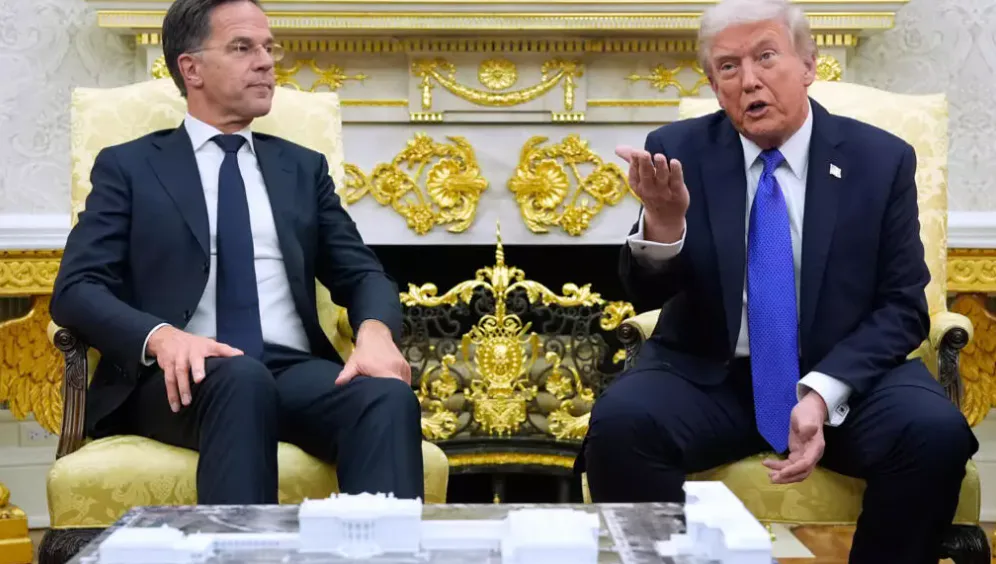
NATO Secretary General Mark Rutte and US President Donald Trump at the White House on April 8, 2026. AP photo
Another factor that added tension to relations between the Alliance's member countries was Trump's threats about a possible forceful annexation of Greenland and the imposition of tariffs on European states in response to support for Denmark. The situation was not improved by the US operation against Iran, which was criticized by leaders of some European countries, and Spain even refused to provide an airbase for American aircraft.
Against this backdrop, the situation with the allegedly canceled visit of US Secretary of Defense Pete Hegseth to Brussels, where, as some media wrote, he was to make a statement about additional reductions of US forces in Europe, is notable. This initiative of the minister was allegedly canceled due to the lack of a final common position on supporting Europe within the Trump administration. Although the US still believes that Europeans are not doing enough to increase their defense capabilities, it should not be forgotten that NATO is not only a defense but also a political alliance, and a final break with US allies is not needed. Especially since this could further free Russia's hands.
The challenges facing the allies in relations within the Alliance do not allow us to expect the adoption of revolutionary decisions. NATO Secretary General Mark Rutte has already described this summit with the phrase - "implementation, not new promises." Analysts at the Center for European Policy Analysis point out that the summit must first demonstrate whether the allies are capable of fulfilling their commitments.
Europe and its capacity for strengthening
According to last year's data, European allies and Canada increased defense spending by almost 19% compared to 2024. At the same time, some countries do not reach the set target level of 5% of GDP. While fresh data has not been released, analysts name Spain and the United Kingdom among the outsiders.
At the same time, EU countries have begun to demonstrate political steps towards building their own defense capabilities. Recently, EU Defense Commissioner Andrius Kubilius proposed the creation of a European Defense Union – a new institutional tool for uniting and strengthening defense capabilities. This format should integrate not only EU member states directly, but also the United Kingdom, Norway and, importantly, Ukraine.
We must learn from Ukraine. Ukrainian air defense destroys 80% of targets. Ukrainian drones stopped Russia's advance on land and in the Black Sea, and also devastated the Russian strategic bomber fleet
Europeans have also begun to attach greater importance to potential ballistic threats from Russia.
We also understand that Ukrainians have very specific knowledge – for example, in the field of ballistic missile defense. They face a challenge because the Russians are modernizing their ballistic missiles to change trajectory in flight, and traditional systems such as Patriot, SAMP/T or IRIS-T have some problems intercepting these Russian ballistic missiles. Cooperation between Ukrainian manufacturers, defense experts and European missile manufacturers will be extremely important, because ballistic missile defense also needs to be modernized at the European and Western level
In this context, it is notable that President Volodymyr Zelenskyy announced that a meeting of allies on the Ukraine-initiated Freyja program – a pan-European anti-ballistic shield based on the FP-7.x missile, produced by Fire Point – may take place in the near future. A number of European partners have already expressed interest in this system.
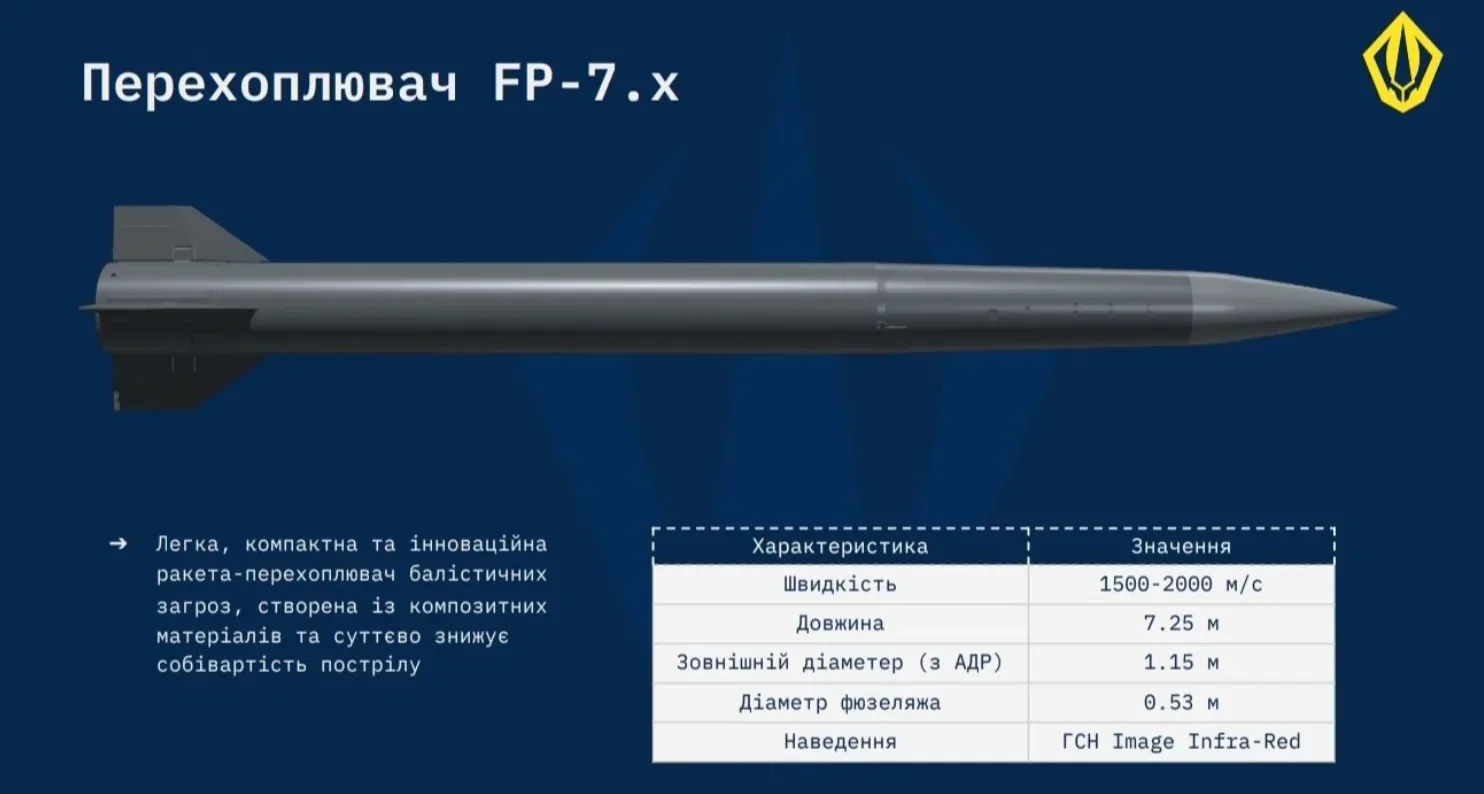
Pan-European anti-ballistic shield – who supported the FREYJA project?30.06.26, 13:42 • 80661 view
And the German company HENSOLDT has already signed a memorandum of cooperation with a Ukrainian company. The Germans will be responsible for the production, testing and supply of radar systems, as well as their integration into the complex. A key element will be the multifunctional radar TRML-4D, built on AESA technology, which is capable of simultaneously detecting and tracking up to 1500 air targets of various types.
It is known that the system will be built on an open architecture and integrated via the NATO Link 16 standard. The expected cost of one interceptor missile will be about 700 thousand dollars. For comparison, the cost of a missile for the American Patriot PAC-3 system is estimated at approximately 3.8 million dollars.
What the NATO summit can give Ukraine
This year, there was no discussion among Alliance members about whether to invite Ukrainian President Volodymyr Zelenskyy to the meeting of NATO member countries. This is likely due to successful Ukrainian strikes deep into the territory of the Russian Federation. Also, as part of the summit on July 8, a meeting between Zelenskyy and Trump is planned.
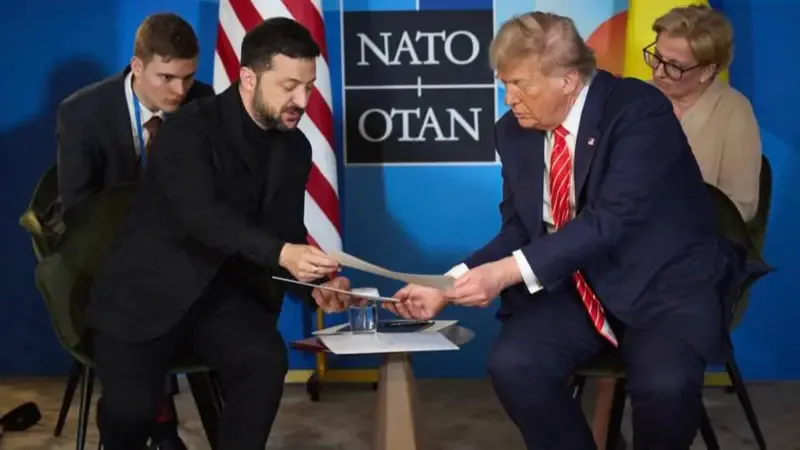
Meeting of Zelenskyy and Trump at last year's NATO summit
Among Ukraine's expectations from the summit: contributions through the PURL mechanism, which may be announced during the event, a decision on licenses for the production of Patriot systems in Ukraine, and acceleration of the creation of a European anti-ballistic program, a step towards the implementation of which was the agreement recently signed by the defense ministers of Ukraine and Germany.
It is also expected that the final communiqué of the summit will record annual funding for Ukraine in the amount of 70 billion euros: 40 billion under agreements between Kyiv and partners and 30 billion in loans from the EU. At the same time, discussions arose among allies specifically regarding the financing of Ukraine's defense needs. NATO ambassadors in Brussels have already agreed on a draft declaration with the amount of 70 billion euros in aid to Ukraine for 2026. However, the issue of recording intentions to continue funding remains controversial. Italy is reportedly opposed to this, while representatives of Germany insist that this will demonstrate the EU's resilience in supporting Ukraine.
NATO is changing
The Alliance is restructuring. Trump's statements about shifting responsibility to allies and the potential threat from the Russian Federation, which is becoming less and less illusory, are forcing European countries to seriously think about strengthening their own defense. It is important that these thoughts are converted into concrete decisions and smart defense investments, based on an understanding of modern challenges.