










Storks Odarka and Hrytsyk are incubating five eggs, periodically moving them - researchers explained why
Kyiv • UNN
Ukrainian storks Hrytsyk and Odarka are incubating five eggs, constantly changing each other. The birds move the eggs so that the embryo is on top and well heated by the parents' body.

The famous Ukrainian storks Grytsyk and Odarka continue to incubate five eggs, constantly changing each other every few hours. The birds also move the eggs, which has great biological significance. This was announced on her Facebook page by bird researcher Iryna Sarazhynska, reports UNN.
Details
According to the researcher, after the appearance of the second egg in the nest, the storks began to incubate the clutch more densely, constantly changing each other every few hours. Grytsyk and Odarka not only take turns sitting on the eggs in their shift, but also perform characteristic manipulations at certain intervals: they ventilate the clutch, loosen the litter, drain it with their beaks, turn and move the eggs, moving them.
Grytsyk and Odarka move the eggs for a reason, because this has a great biological meaning. Since the yolk with the embryo is suspended to the poles by protein cords (chalazae), the rotation of the egg helps the embryo to be on top and well warmed by the parents' bodies
"Chalazae act like the umbilical cord in mammals, their function in the egg is to hold the yolk in its position," the researcher added.
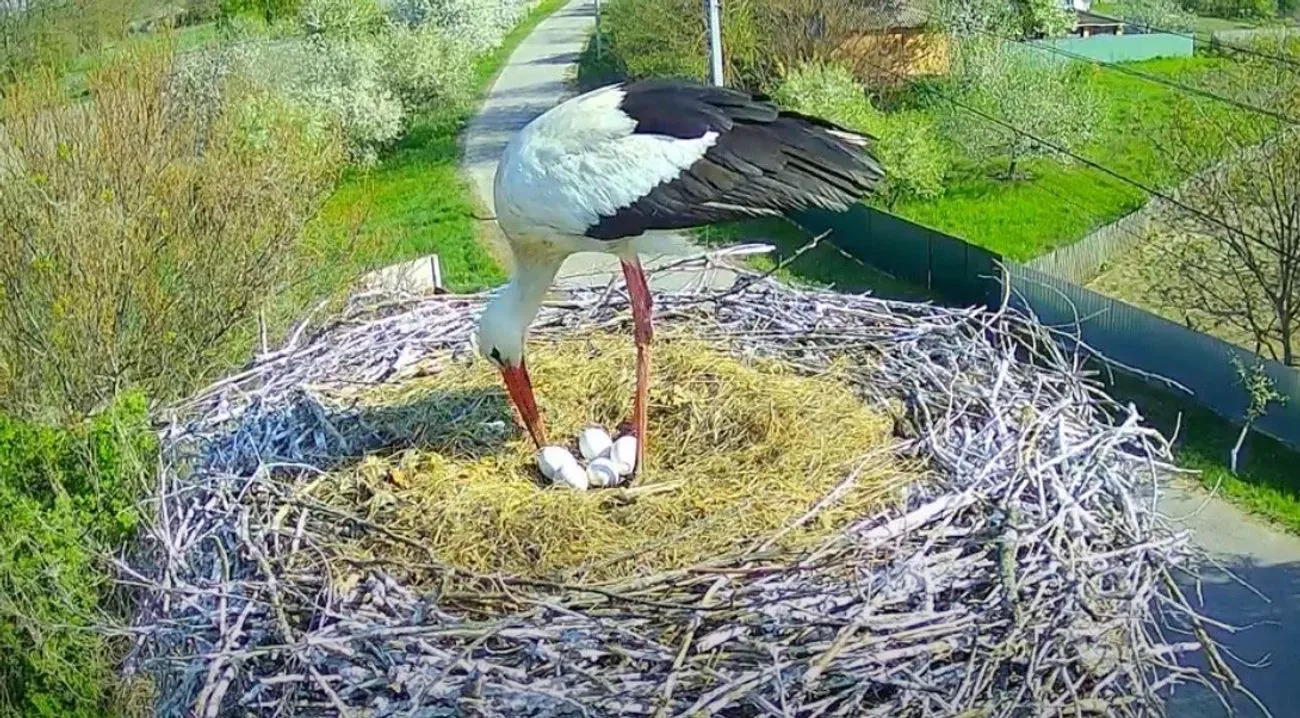
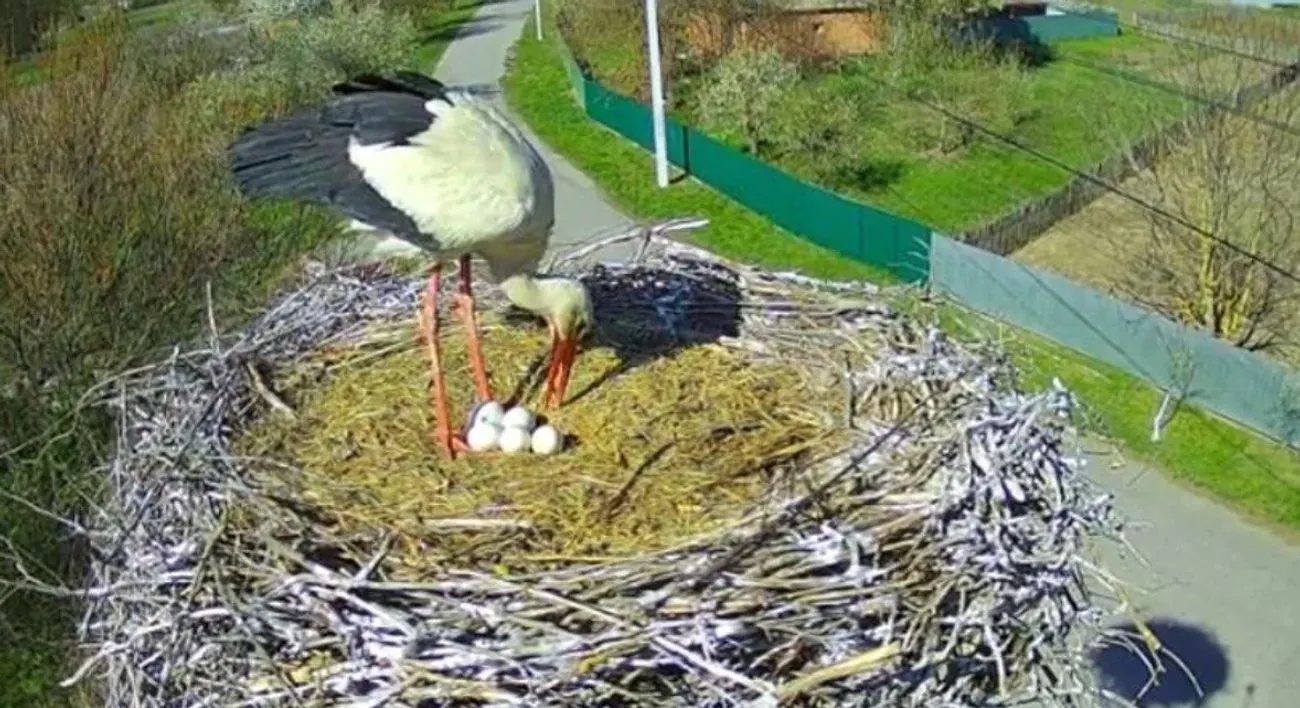
Iryna Sarazhynska explained that if the storks moved the egg, the yolk also turned, the oxygen supply improved, there is no stagnation, the embryo will not stick to the shell and will be maximally warmed by the brood spot, which is formed in birds during incubation.
"A brood spot, or apteria (from Greek ápteros – "without feathers") is an area on the abdomen and lower chest that appears as a result of the loss of down and part of the plumage. The capillary network increases in the skin of the brood spot, so its temperature is 1-2°C higher than in other areas of the skin, which contributes to better heating of the eggs during incubation," the researcher summarized.
Let us remind you
Stork Odarka from Poltava region laid the third egg, despite the fact that her partner Hrytsko left her. Scientists are hoping for Hrytsko's return, but there is already another bird in the nest with Odarka.
In Kyiv region, a stork tangled in a rope at height was rescued19.04.25, 18:27 • 11206 views