










Defense Union: Europe builds a new security model and sees Ukraine in it
Kyiv • UNN
The EU has initiated the creation of a European Defense Union, which plans to involve Ukraine. The discussion is no longer only about unmanned systems, but also about countering ballistic missiles

Just three years ago, discussions about a joint "European army" or "defense union" looked more like exercises by European intellectuals. But today, this is an agenda item that involves not only EU countries but also Britain, Norway, and Ukraine. How Europe is changing its approach to its own security and what place Ukraine occupies in this process, read in the material by UNN.
European Defense Union and directions for strengthening security
The main lobbyist for the new European security architecture has become EU Commissioner for Defense Andrius Kubilius. He proposed the creation of a European Defense Union – a new institutional tool for uniting and strengthening defense capabilities. This format is intended to integrate not only EU member states directly, but also Great Britain, Norway, and importantly – Ukraine.
Kubilius assigns Ukraine an important place in this defense union.
"We must learn from Ukraine. Ukrainian air defense destroys 80% of targets. Ukrainian drones stopped Russia's advance on land and in the Black Sea, and also devastated the Russian strategic bomber fleet," he emphasized.
The defense union proposed by Kubilius against the backdrop of the US's growing cooling towards supporting NATO, however, is not a replacement for the Alliance, but a strengthening of the European security direction itself.
As Kubilius points out, such a union could be built on intergovernmental agreements, and the main institutional body could be the European Security Council. According to Kubilius's estimates, countries that could potentially join the new union need to find 500 billion euros (this estimate applies to EU countries) in order to create the key forces and means that can take on the role played in Europe by American troops numbering 100,000 military personnel.
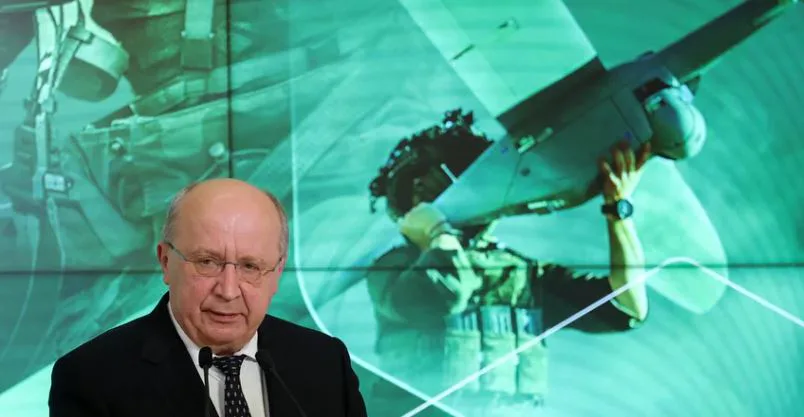
European Commissioner for Defense Andrius Kubilius
Whether the commissioner's idea will be implemented exactly in the proposed form – it is too early to assert. But the EU is already moving towards strengthening capabilities in the field of defense and security, and Kubilius's proposals and the recognition of Ukraine's role in this process confirm this once again. As expected, next week the European Commission will present the first proposals for further integration of the European defense products market "with a detailed analysis and next steps."
By the way, by 2030, EU members plan to allocate up to 2.5 trillion euros for their defense, and by 2035, the amounts could increase to 7 trillion.
A colossal potential for investments that open up new opportunities. And notably – Europe has already begun to rethink approaches to the distribution of defense expenditures. The Readiness Roadmap 2030 – outlines the specific directions the EU plans to move in: the European Initiative for Protection against Drones and the Eastern Flank Surveillance Service; the European Air Shield and the European Space Shield.
This roadmap outlines Ukraine's place, not only as one in need of assistance, but as a state whose defense industry should be integrated into the European one for the purpose of scaling up production.
Behind these documents and bureaucratic formulas lie concrete steps, the implementation of which we are already seeing, both at the level of private initiatives – signing agreements between Ukrainian and European defense manufacturers, and at the interstate level – for example, the signed agreement between Ukraine and Germany on cooperation in the development of an anti-ballistic missile program.
Why Patriot is no longer enough
Europeans attach great importance to countering potential ballistic threats. The same Kubilius points out that traditional interception systems are no longer sufficient.
"We also understand that Ukrainians have very specific knowledge – for example, in the field of anti-ballistic defense. They face a challenge because the Russians are modernizing their ballistic missiles to change trajectory in flight, and traditional systems such as Patriot, SAMP/T, or IRIS-T have some problems intercepting these Russian ballistic missiles. Cooperation between Ukrainian manufacturers, defense experts, and European missile manufacturers will be extremely important, because anti-ballistic defense also needs to be modernized at the European and Western level," Kubilius stated.
Ukraine, which is already demonstrating to the whole world how to effectively counter enemy attack UAVs with relatively inexpensive means, can indeed also offer solutions in countering the ballistic threat. Yes, our state is desperately seeking missiles for the same Patriots, but this is only part of the overall picture. In parallel, the development of its own capabilities is also underway.
When industry can provide a solution
While Brussels coordinates roadmaps and mandates, the Ukrainian company Fire Point is already building a system that responds to modern challenges.
This year, Fire Point presented the concept of Freyja – a missile defense system based on the FP-7.x interceptor missile, which has already passed flight tests.
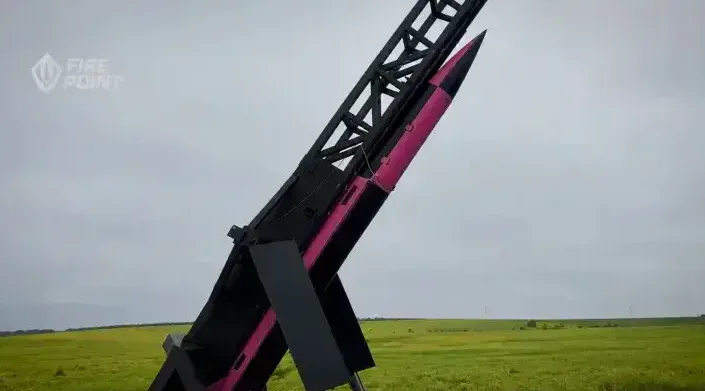
FP-7.x interceptor missile
"The missile is ready as a missile. From an aerodynamic point of view, it fully executes all control commands, and it does so rigidly and aggressively – exactly as needed to shoot down ballistic targets. We did that.
But this is only one element of the system. To actually shoot down ballistic targets, the missile still needs to be integrated with a seeker head, a command center, and radars," said co-founder and chief designer of the company, Denys Shtilerman, the other day.
The FP-7.x performs the maneuvers necessary to shoot down ballistic targets and is potentially capable of countering modernized Russian missiles.
As Shtilerman explained, shooting down ballistic missiles will become possible when a full complex is created: a seeker head from a leading European company, integration with C2 centers, a protected channel for transmitting target designation and correction commands (datalink), resistant to any EW suppression, and integrated radars.
"We are already working on each of these components together with European partners. We are doing everything to protect the sky over Ukraine and over the entire continent as quickly as possible," Shtilerman emphasized.
The defense industry has always been a sensitive area, and therefore the details of the project's implementation are known only to those involved. But from the information that is publicly available, one can speak of a real interest among Europeans in building the pan-European ballistic shield Freyja – on June 16, on the sidelines of the Eurosatory-2026 exhibition in Paris, Fire Point and the German radar manufacturer Hensoldt signed a memorandum of understanding regarding the integration of components into the Freyja ground-based air defense system, designed to detect and intercept ballistic targets. This is the result of the work of Ukrainians with European partners, who backed their trust in the Ukrainian company with a specific document.
The design of the system proposed by the Ukrainians corresponds precisely to the problem described by Kubilius – the inability of old systems to intercept maneuverable ballistic missiles. Fire Point CEO Iryna Terekh stated: "We were left without radars for the implementation of Freyja, but now we have them, and we can move from concept to practical implementation of the pan-European anti-ballistic shield." Hensoldt will be responsible for the TRML-4D radars, capable of simultaneously tracking over 1,500 targets at a range of up to 250 km.
Above we cited Shtilerman's words about ongoing work with Europeans. It is obvious that Hensoldt is not the only company that will join the construction of the shield, which was immediately conceived as a large-scale pan-European project. From open sources, it is known that the Italian manufacturer Leonardo may join Freyja. The command post will likely be deployed based on the Norwegian Kongsberg Fire Distribution Center complex. One of the key features of the system will be an open architecture and the use of Network Access Nodes modules, which will allow the integration of additional solutions and components.
The economic argument in favor of the Ukrainian interceptor missile is also significant: the FP-7.x will cost approximately 700 thousand dollars – compared to 3.8 million dollars for one American PAC-3 for Patriot.
Freyja is already gaining momentum, and its implementation could become a concrete step towards building a new European security architecture, the necessity of which our partners have already realized.